Artwork
Hanuman and Rama
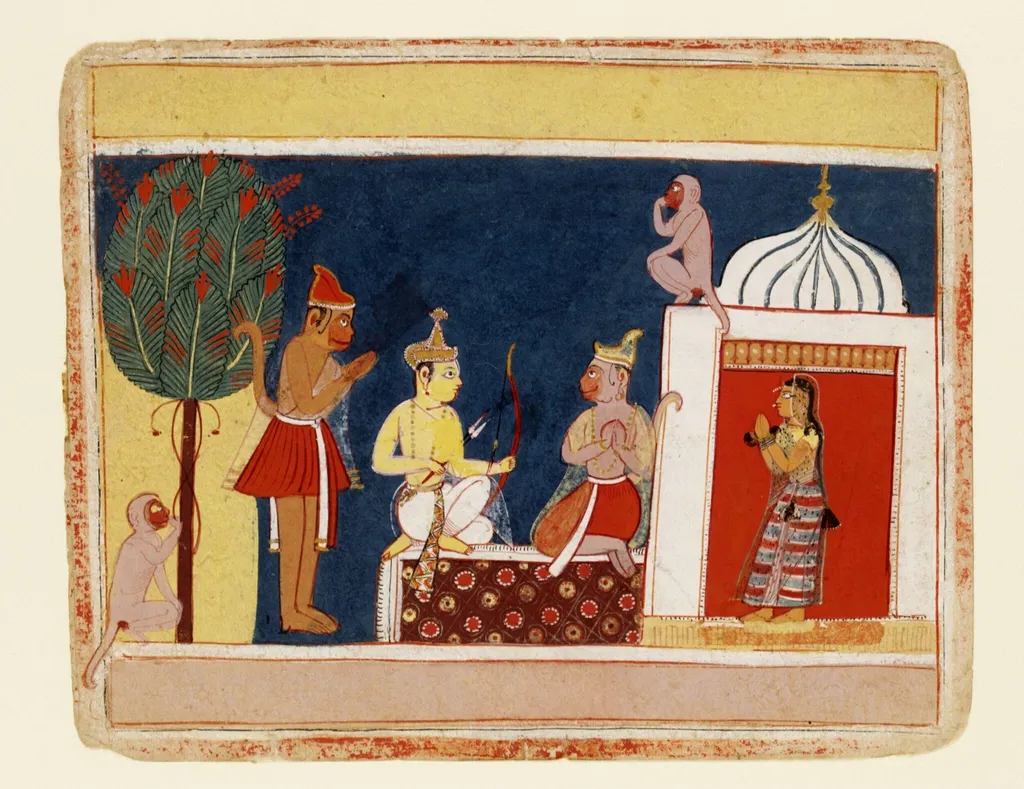
Hanuman and Rama is a paint painting by the Baroque artist Unknown. It dates from 1635 and is held in the collection of the Victoria and Albert Museum.
About this work
Overview
This 17th-century opaque watercolour on paper depicts a scene from the Ramayana, specifically the Kishkindhaya kandam section, featuring Hanuman, Rama, and accompanying figures in a narrative illustration.
Subject & Meaning
The painting illustrates a pivotal moment of interaction between Hanuman (a monkey-like deity), Rama (depicted with a crown), and a female figure, set against the backdrop of a building, conveying a story from Hindu epic literature.
Technique & Style
Executed with opaque watercolour on paper, the work showcases intricate detail and a vibrant palette (red, yellow, blue, green) against a dark blue background, aligning with the aesthetic traditions of Indian miniature painting, yet also bearing characteristics reminiscent of the Baroque movement.
History & Provenance
Attributed to an unknown Indian artist, the painting dates back to 1635, serving as an illustrative piece for the Ramayana's Kishkindhaya kandam.
Context
Created during a period of flourishing manuscript illustration in India, this piece reflects the blending of traditional Indian artistic motifs with broader international influences, such as the Baroque style.
Legacy
While the artist remains anonymous, the painting contributes to the visual heritage of Ramayana illustrations, exemplifying the enduring tradition of depicting epic narratives through Indian art.
Artist & collection









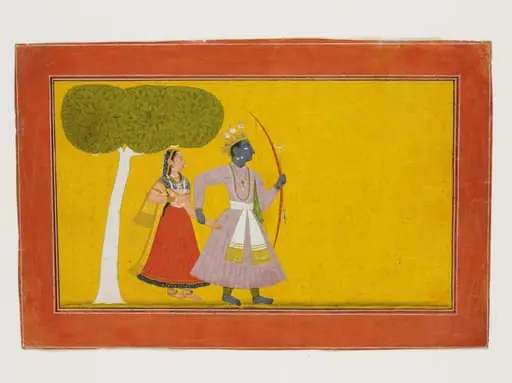 Rama and Sita
 Rama and Sita
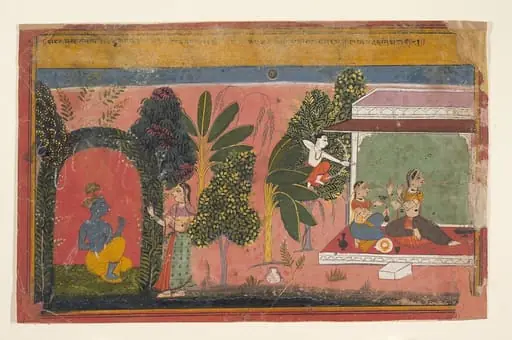 Untitled
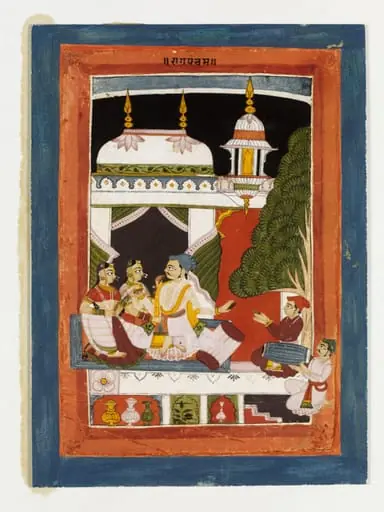
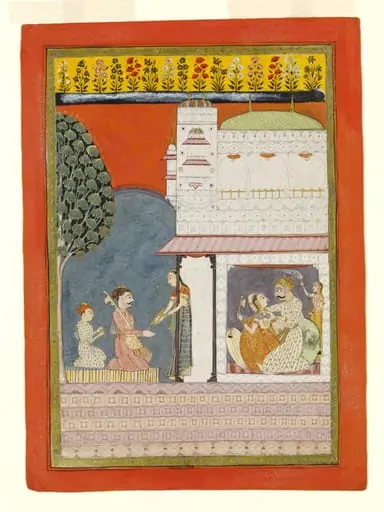 Pancham Ragini
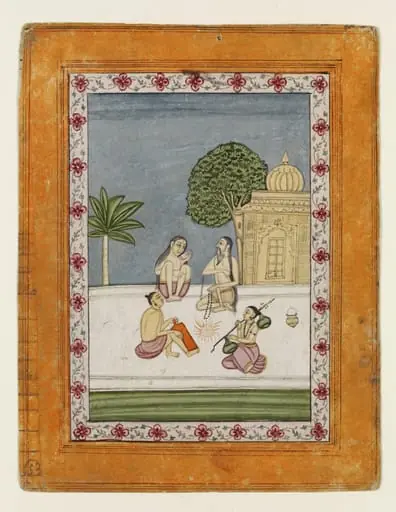 Devagandhari Ragini
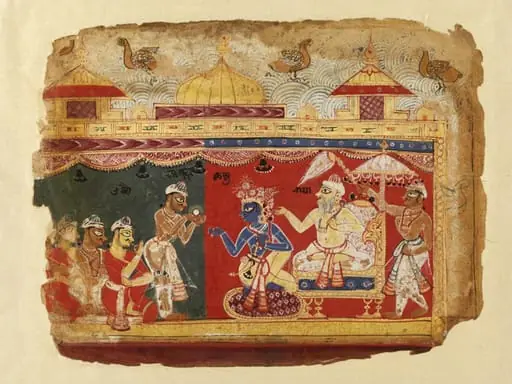 Akrura and Krishna
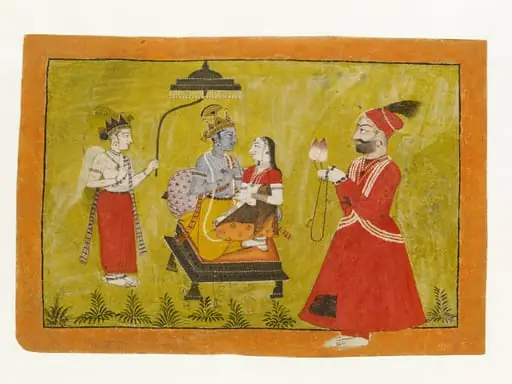 Raja Ajmer Chand of Bilaspur
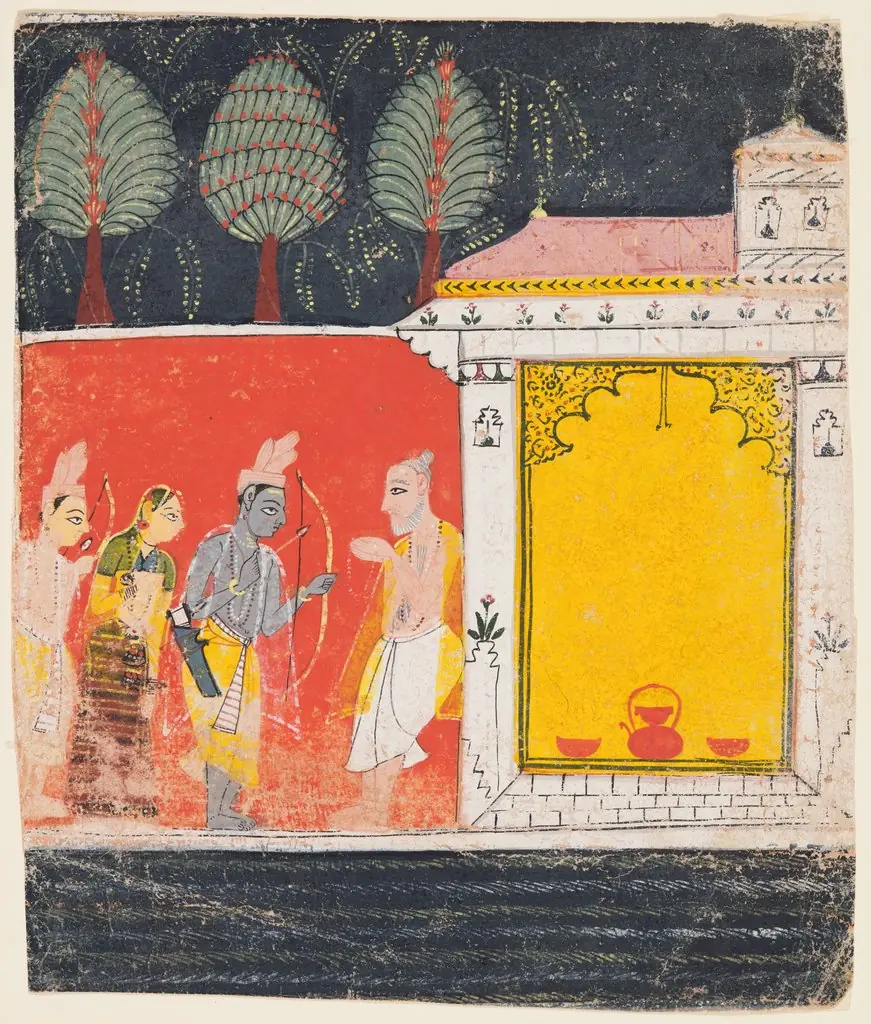 Rama, Sita, and Lakshmana visit the hermitage of the sage Bharadvaja at Prayaga, from Chapter 48 of the Ayodhya Kanda (Book of Ayodhya) of a Ramayana (Rama’s Journey)
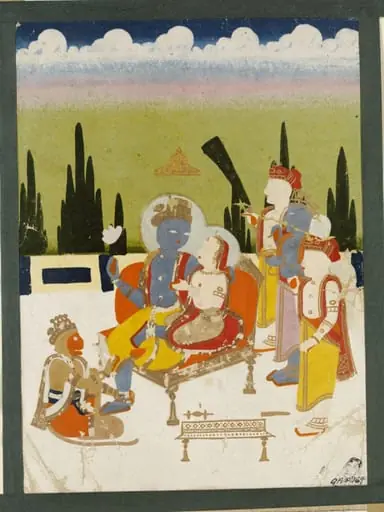
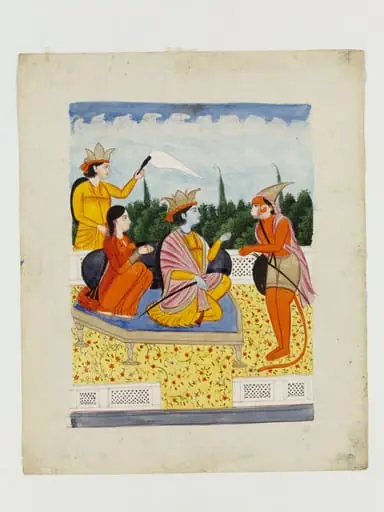 Hanuman, Rama and Sita and Lakshmana
- Pancham Raga