Artwork
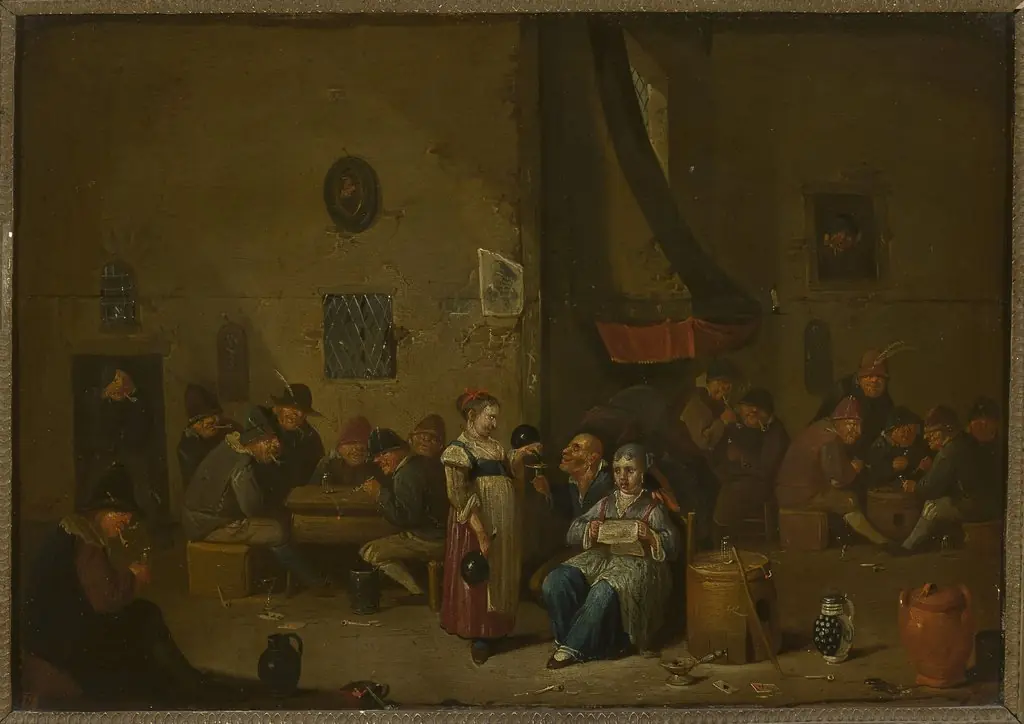
Interior with gamblers and drinkers
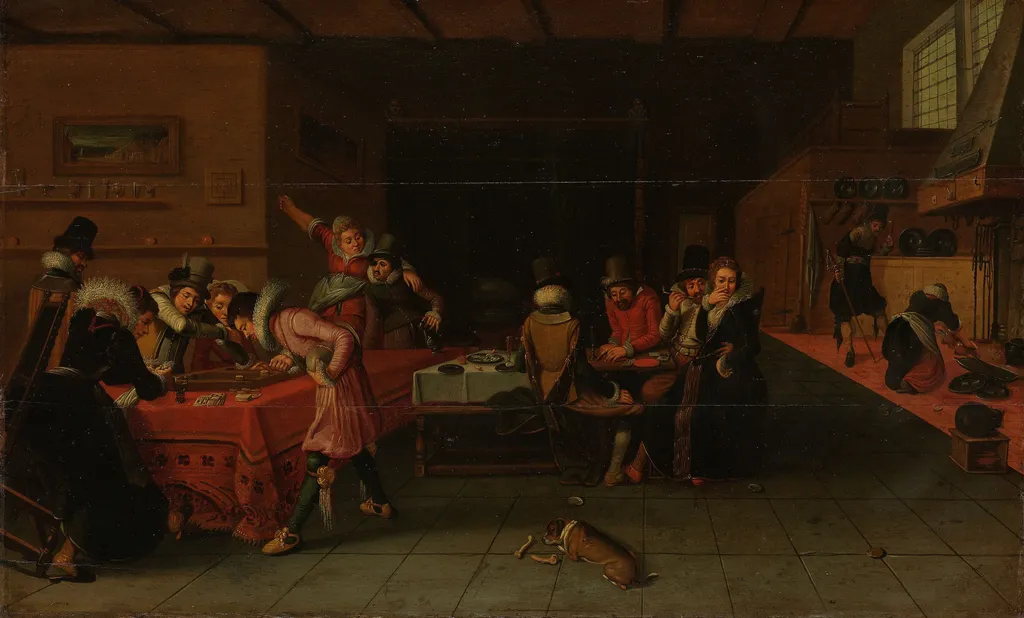
Interior with gamblers and drinkers is an oil painting by the Dutch Golden Age artist Unknown. It dates from 1620 and is held in the collection of the Rijksmuseum.
About this work
Technique & Style
The brushwork and composition reflect the genre scene tradition of the period, emphasizing everyday activities with a focus on narrative detail and chiaroscuro.
The work is an oil painting executed on wooden panel, measuring 57 cm in height by 92 cm in width. Executed circa 1620 in the Dutch Republic, it depicts a scene of gamblers and drinkers within an interior setting. The brushwork and composition reflect the genre scene tradition of the period, emphasizing everyday activities with a focus on narrative detail and chiaroscuro.
The surface shows signs of age-related wear consistent with its century-old execution, though no restoration records are noted.
History & Provenance
The painting Interior with gamblers and drinkers was created in 1620 by an anonymous artist in Holland, executed in oil on panel measuring 57 cm by 92 cm. It entered the collection of the Rijksmuseum and the Lambert van Meerten Museum, where it remains on display.
The work's provenance is tied to its acquisition by these institutions, reflecting a continuous ownership chain from its creation to the present. Its commission and patronage are not documented, but its genre as a scene of everyday life aligns with Dutch painting traditions of the early 17th century.
Overview
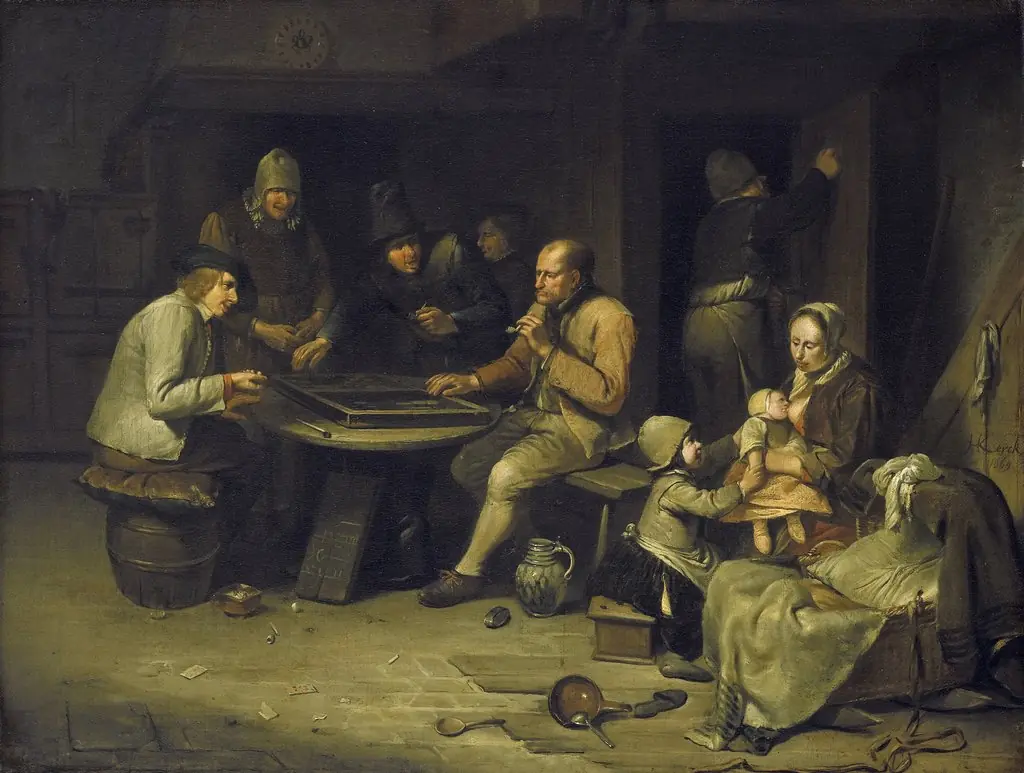
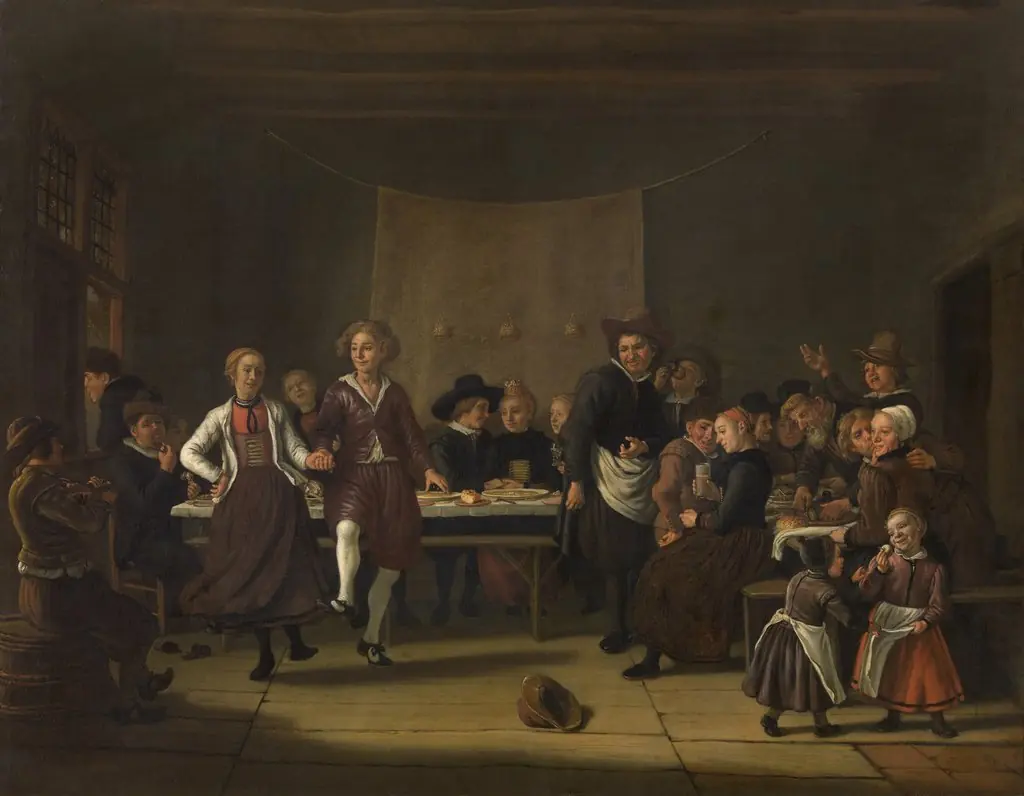
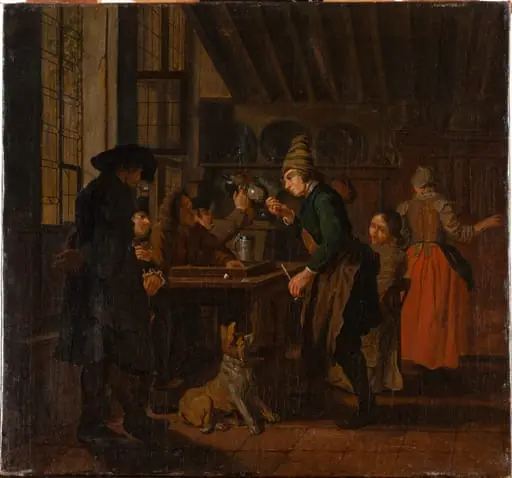
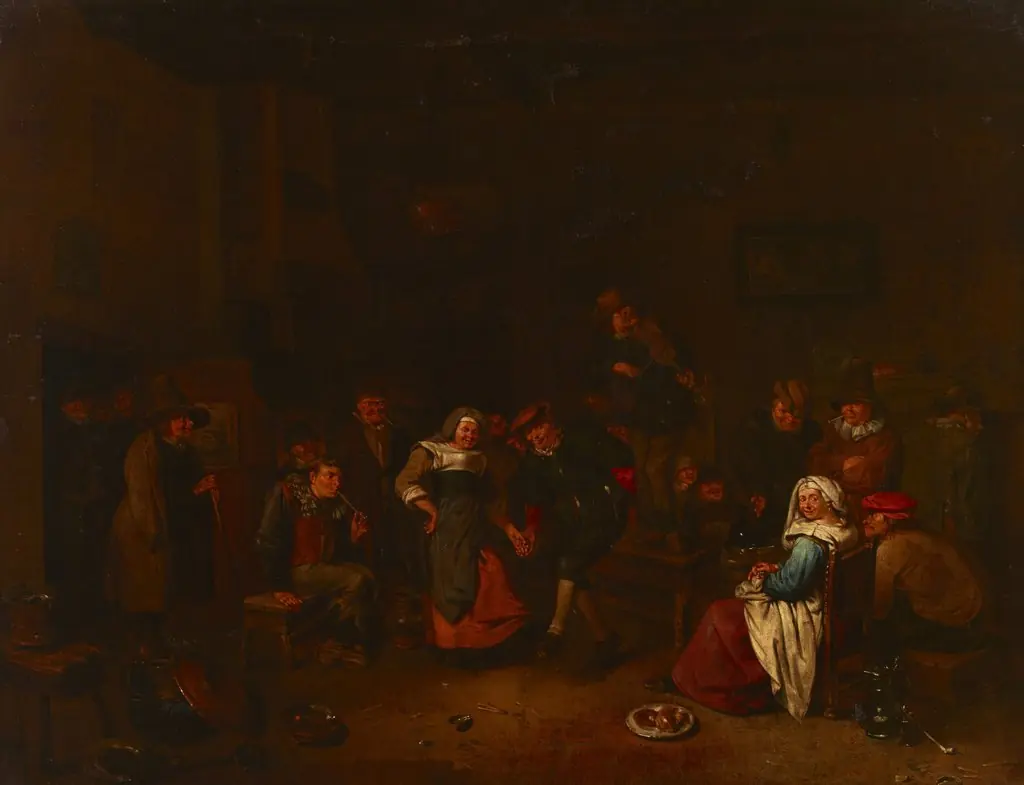
This oil painting depicts a lively, crowded interior scene where individuals engage in card games and drinking around a long table, with some standing and others seated amidst a sleeping dog and dimly lit, wood-paneled surroundings.
Subject & Meaning
The subject centers on everyday life, capturing a moment of communal leisure activity. The composition conveys a sense of intimacy and shared experience among the participants, with the sleeping dog adding a note of tranquility.
Context
The use of chiaroscuro and the depiction of everyday life suggest influences from 17th-century European traditions, particularly Dutch or Flemish interiors, which often emphasized natural lighting and mundane themes.
Legacy
While the painting's impact or influence on later art movements is not specified, its use of chiaroscuro reflects a broader artistic technique that has been widely admired and employed across various periods.
Artist & collection