Artwork
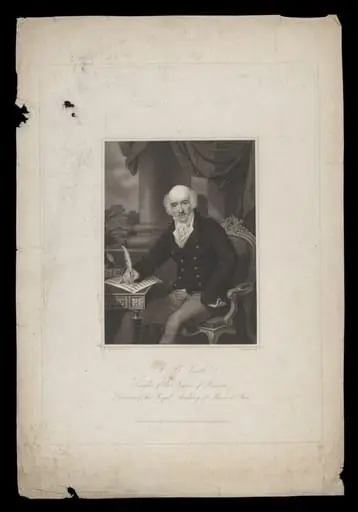
J.J. Farquharson, Esq: Aet 74
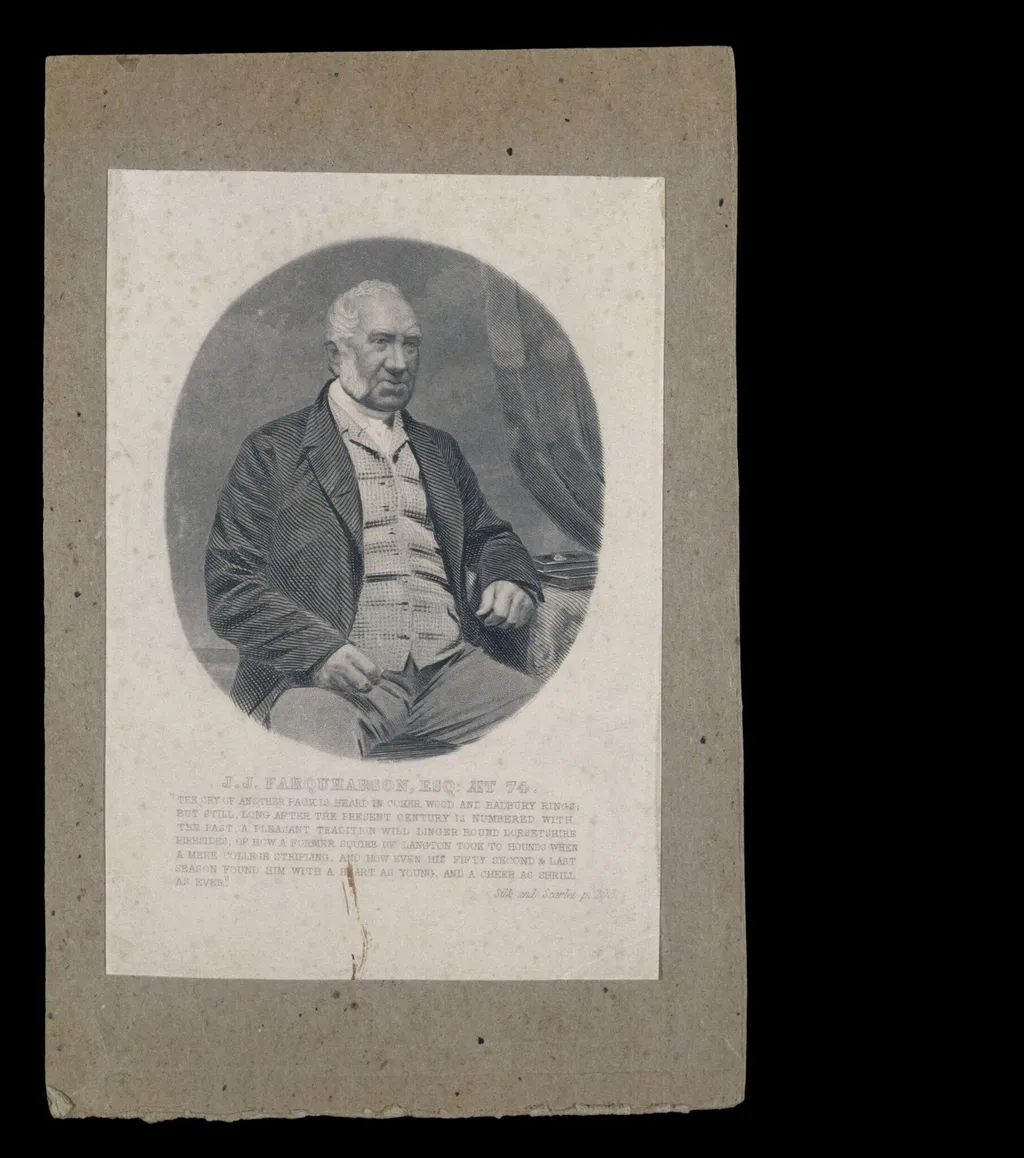
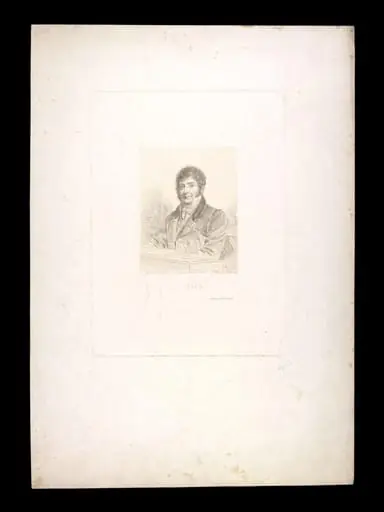
J.J. Farquharson, Esq: Aet 74 is a print by the Romanticist artist Unknown. It dates from 1833 and is held in the collection of the Victoria and Albert Museum. This print depicts James J.
About this work
Overview
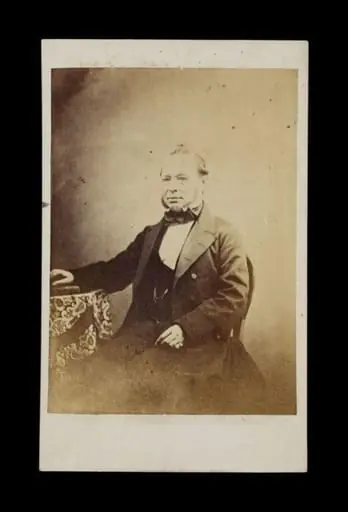
The plain background eliminates distraction, directing attention to his posture and facial expression.
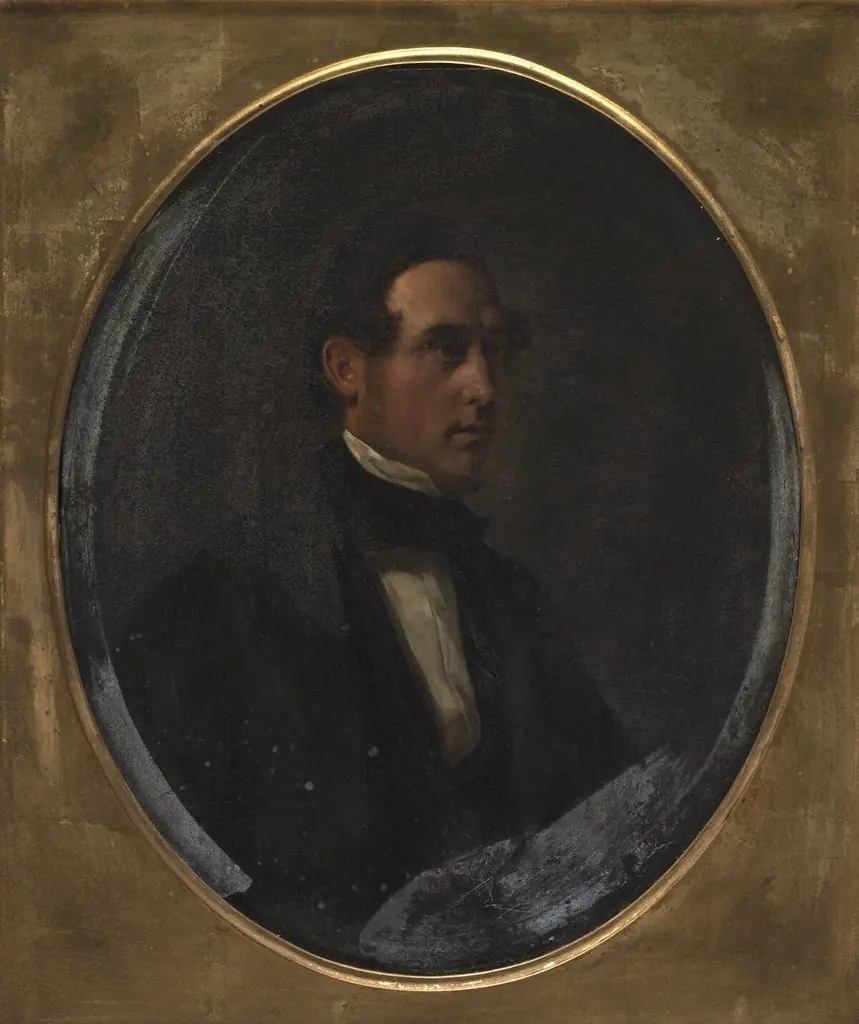
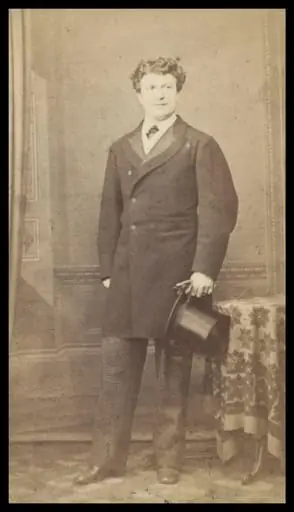
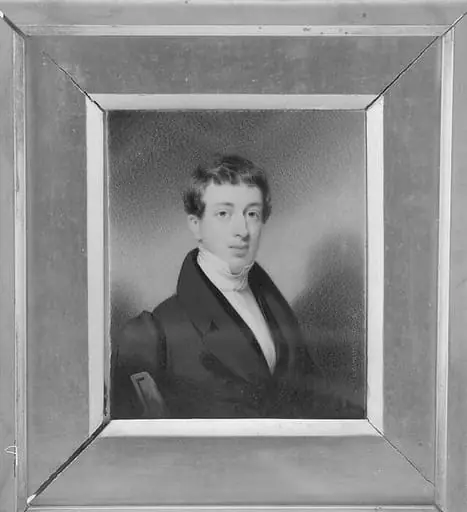
This print depicts James J. Farquharson, aged 74, seated in a simple chair, rendered with quiet precision. Dressed in a dark coat and a patterned vest, he holds a folded document or book in his lap. The plain background eliminates distraction, directing attention to his posture and facial expression. A brief inscription identifies him as a former squire of Langton, signaling his local social standing.
Subject & Meaning
Farquharson is presented not as a nobleman but as a landed gentleman of modest regional influence. The term 'squire' reflects his role as a local landholder, often involved in community affairs. His stillness and formal attire suggest dignity rather than grandeur.
The folded object in his lap may imply literacy, responsibility, or quiet contemplation, traits associated with his position in rural society.
Technique & Style
The print employs fine, controlled lines to define texture in fabric and the softness of aged skin. Shading is subtle, avoiding dramatic contrast, which reinforces the restrained tone. The composition is frontal and centered, typical of portraiture meant to convey stability and character rather than movement or emotion. Details like the vest’s pattern are rendered with care but without embellishment.
History & Provenance
The print likely originated as a reproductive engraving, possibly made from a painted portrait or drawing. Its purpose was likely to circulate Farquharson’s image among local acquaintances or family. No record of the original artist or publisher is provided, but such prints were commonly produced in the 19th century for middle- and upper-rural audiences seeking to preserve familial or civic identity.
Context
In early 19th-century England, squires like Farquharson occupied a liminal space between aristocracy and common gentry. They managed estates, upheld local order, and often served as justices or magistrates. Portraits of such figures, even in modest print form, affirmed social continuity in a time of rapid change. This image reflects a culture that valued quiet authority over ostentation.
Legacy
The print survives as a quiet testament to the social fabric of rural England. While not widely known today, it contributes to the visual record of non-elite gentry, individuals whose influence was local but deeply embedded in community life. Its preservation in institutions like the Victoria and Albert Museum underscores its value as a document of everyday historical identity.
Artist & collection