Artwork
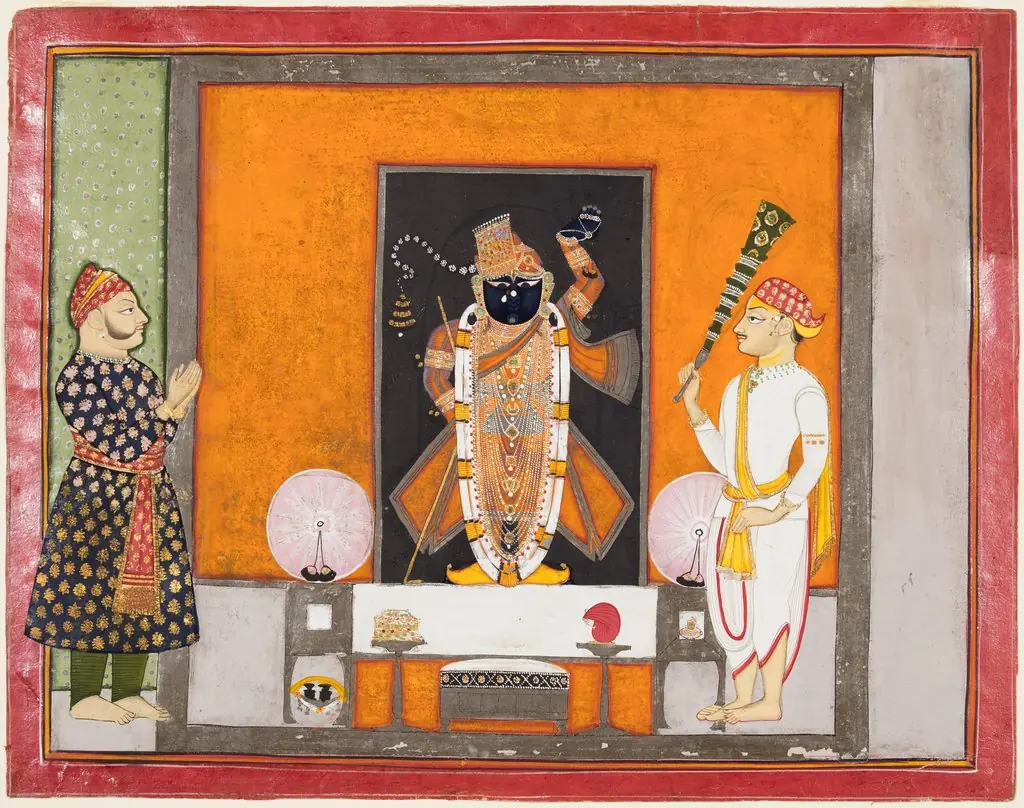
Maharao Kishor Singh II of Kota (r. 1819–28) Worshiping Krishna as Brij Rajji
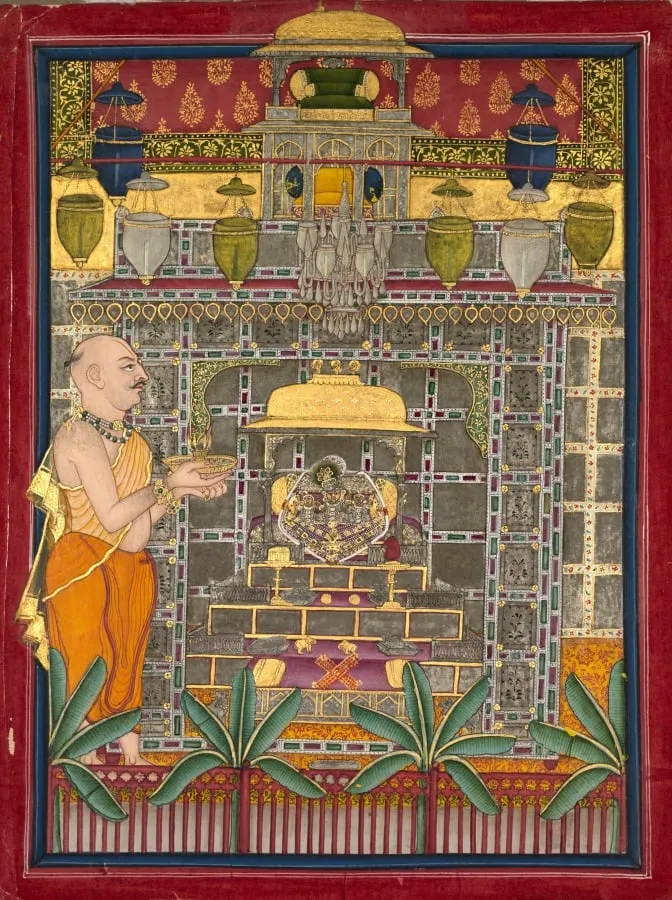
Maharao Kishor Singh II of Kota (r. 1819–28) Worshiping Krishna as Brij Rajji is an unspecified painting by the Patna School of Painting artist Unknown. It dates from 1825 and is held in the collection of the Cleveland Museum of Art. The painting portrays the ruler of Kota, Maharao Kishor Singh II, kneeling before a small shrine.
- Accession no.
- 1978.71
- Credit line
- James Albert and Mary Gardiner Ford Memorial Fund
About this work
Overview
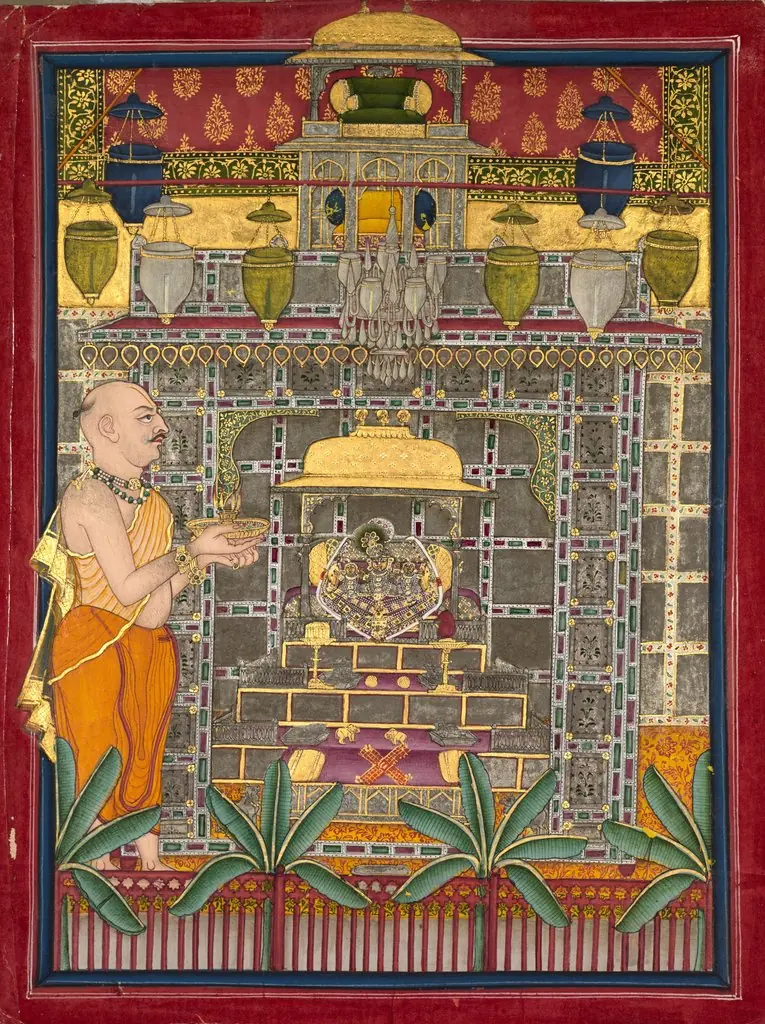
The painting portrays the ruler of Kota, Maharao Kishor Singh II, kneeling before a small shrine. He is dressed in the garb of a Pushti Marg priest and holds a five‑flame lamp. The altar contains a metallic triad of deities with Krishna at the centre, flanked by two female figures, all set within a reflective kiosk.
Subject & Meaning
The work records a specific devotional practice unique to Kota, where a locally revered image of Krishna is venerated. The king’s participation underscores the intertwining of political authority and religious patronage, while the surrounding toys, brass elephants, silver cows, balls, and a pachisi board, symbolise offerings meant to entertain the deity and his companions.
Technique & Style
Rendered with meticulous attention to light, the artist emphasizes the gleam of metallic panels and hanging glass lamps that flood the shrine with reflected illumination. Fine brushwork delineates the intricate details of the priest’s attire and the miniature objects on the steps, creating a vivid sense of the ritual’s tactile richness.
History & Provenance
Created during Maharao Kishor Singh II’s reign (1819‑1828), the painting likely served as a visual record of the king’s pious activities. It has remained in the collection of the Kota royal family before being transferred to a regional museum, where it is displayed as part of the courtly art of early‑19th‑century Rajput states.
Context
The scene reflects the Pushti Marg tradition, a Vaishnavite sect that emphasized devotion through ritual and music. In the early 1800s, Kota’s court adopted this practice, distinguishing its religious identity from neighboring Rajput kingdoms. The inclusion of games and toys mirrors contemporary courtly pastimes and the integration of everyday objects into sacred settings.
Artist & collection









- Maharao Kishor Singh II of Kota (r. 1819–28) Worshiping Krishna as Brij Rajji
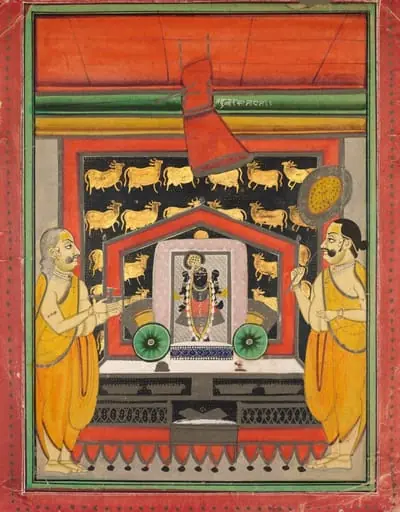 Worship of Dvaraka Nathji at Kankroli
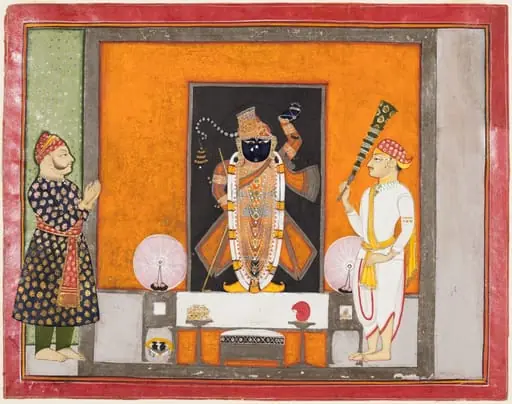 Maharao Ram Singh II of Kota (r. 1828–66) Worships Brij Nathji as the Bridegroom
 Maharao Ram Singh II of Kota (r. 1828–66) Worships Brij Nathji as the Bridegroom
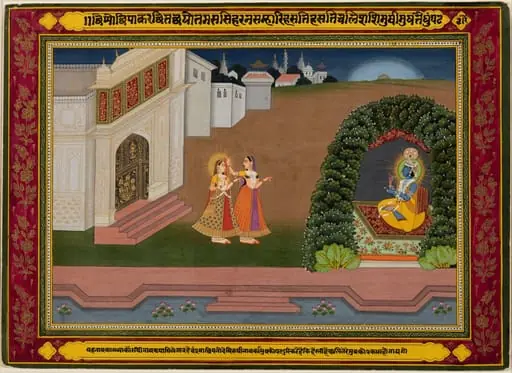 Radha’s Confidante Brings Her to Krishna, based on poetry of Bihari (Indian, 1595–1663)