Artwork
Mucius Scaevola
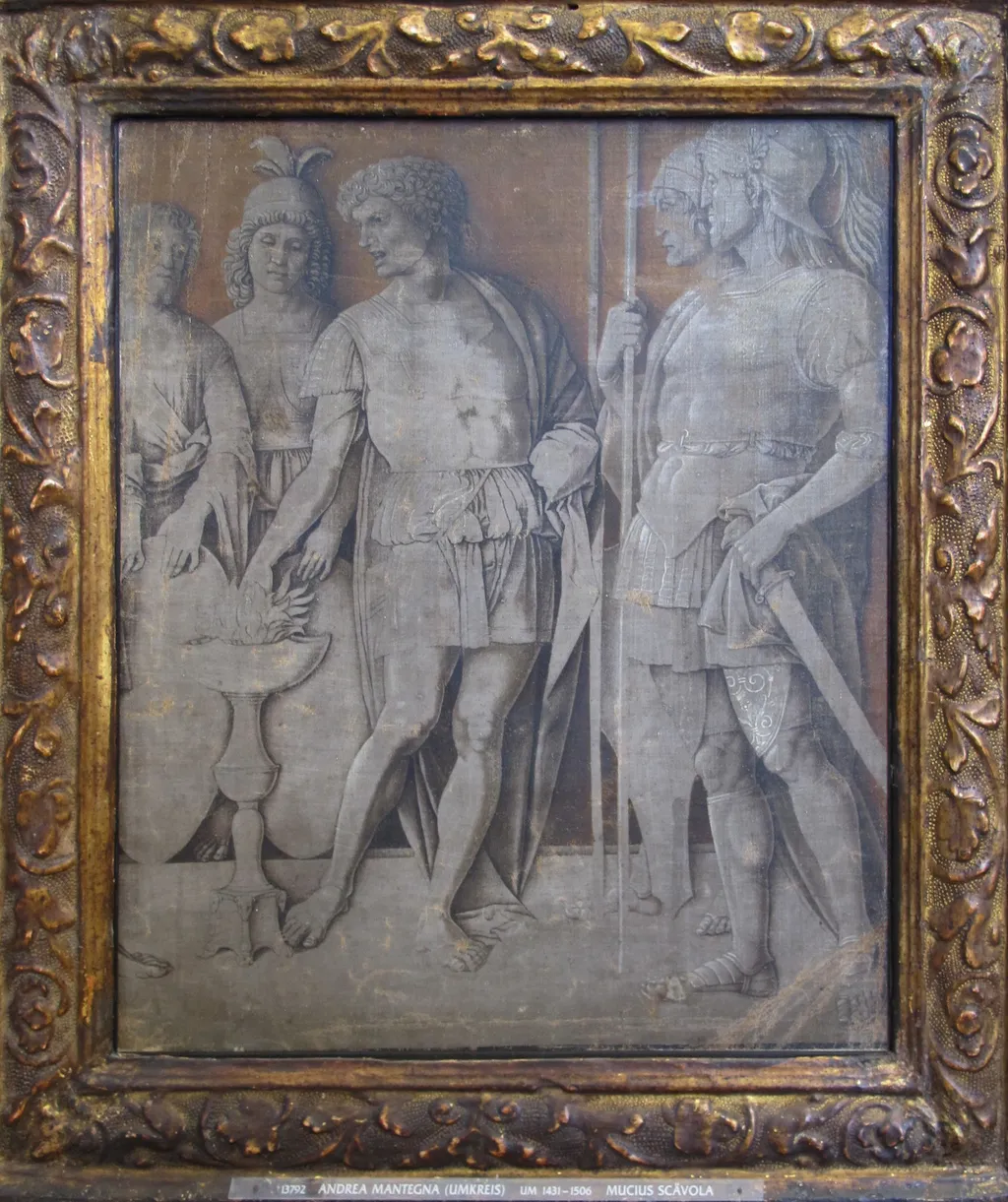
Mucius Scaevola is an oil painting by the Early Renaissance artist Unknown. It dates from 1450 and is held in the collection of the Bavarian State Painting Collections. The canvas presents a small group of figures arranged against a dark backdrop.
About this work
Subject & Meaning
The choice of this subject reflects the period's renewed interest in Roman history and its use as a vehicle for ethical instruction.
The painting depicts Gaius Mucius Scaevola, a legendary Roman hero whose story exemplifies Roman virtue and courage. According to the historical tradition, Mucius thrust his right hand into a fire to demonstrate his indifference to pain and his willingness to sacrifice for Rome, after being captured during an attempt to assassinate the Etruscan king Porsenna. As a history painting, the work belongs to a genre that drew on classical antiquity to convey moral and civic lessons.
The subject's self-mutilation serves as a powerful symbol of stoicism, patriotism, and individual sacrifice for the state, values highly prized in Renaissance culture. The choice of this subject reflects the period's renewed interest in Roman history and its use as a vehicle for ethical instruction.
History & Provenance
The painting titled Mucius Scaevola was created in 1450 by Andrea Mantegna. Executed in oil paint on canvas, the work measures 40.7 cm in height and 34.2 cm in width. It is classified as a history painting depicting the Roman figure Gaius Mucius Scaevola.
The artwork is currently held in the Alte Pinakothek, which is part of the Bavarian State Painting Collections in Munich. No further details regarding the original commission, specific patron, or the chain of ownership prior to its current location are provided in the available records.
Overview
The canvas presents a small group of figures arranged against a dark backdrop. A man on the left clutches a bowl emitting a flame, a centrally positioned figure stands with his arms crossed, a woman stands behind them, and a man on the right holds a spear. The overall composition is subdued, with muted tones that emphasize the grouping and the central figure.
Technique & Style
Executed in oil, the work employs chiaroscuro to model the figures, creating depth through contrasts of light and shadow. The muted palette reinforces the somber atmosphere, while the illumination of the bowl’s flame serves as a focal point. The handling of form and volume reflects a controlled, academic approach to figure painting.
Context
The painting’s compositional choices, dark background, dramatic lighting, and a small narrative group, align with traditions of history painting that prioritize moral or heroic subjects. The inclusion of classical elements such as a spear and a ritual fire situates the work within a broader European artistic interest in antiquity.
Artist & collection









- The Burial of Sarah
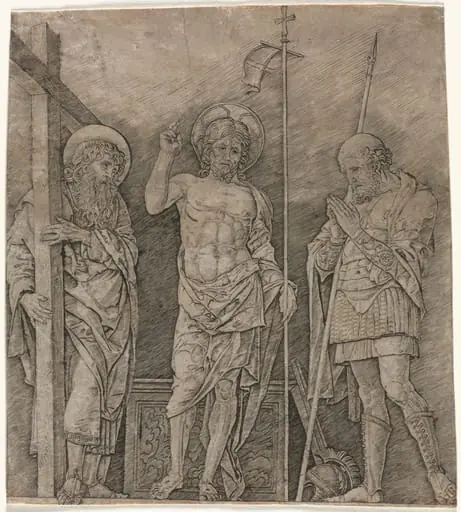 The Risen Christ between St Andrew and Longinus
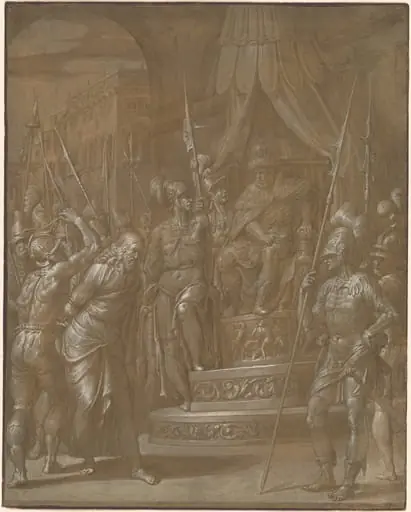 Christ before Herod
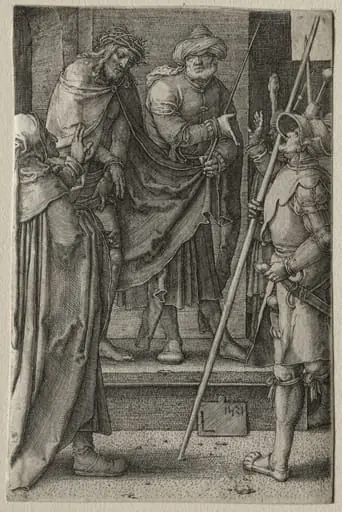 The Passion: Christ Presented to the People
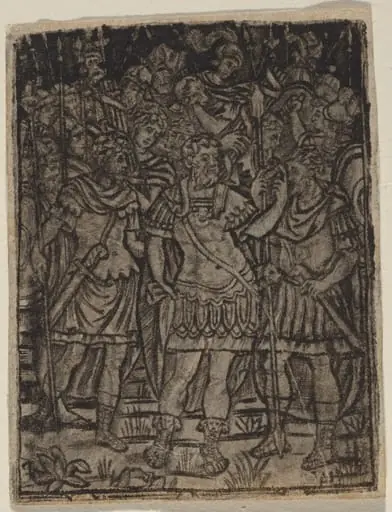 Roman General Addressing His Troops
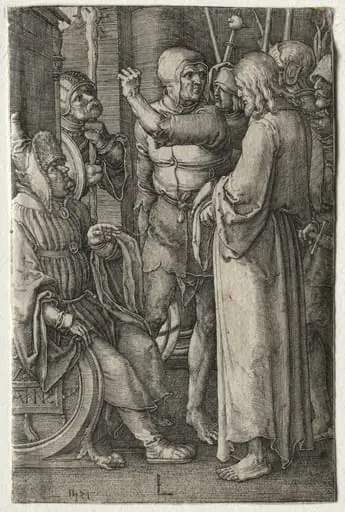 The Passion: Christ Before the High Priest
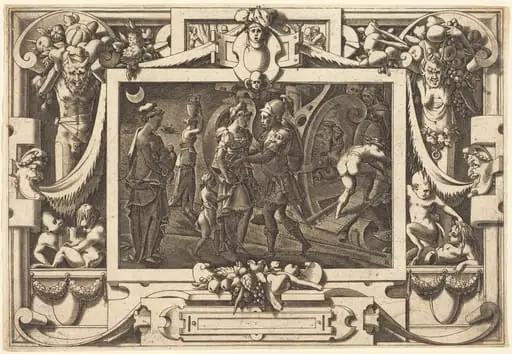 Medea Embarks with Jason
 The Triumph of Julius Caesar: Soldiers Carrying Banners and Standards
 The Passion: Christ before Caiaphas
 Salome Receiving the Saint John the Baptist's Head
 De prediking van Johannes de Doper, linkerpaneel van een drieluik
![The meeting of Abram [Abraham] and Melchizedek, the high priest and king of Salem, who brings bread and wine (Genesis 14:18-24), by Ambrosius Francken I](https://artifactworldgallery.com/img/ambrosius-francken-i--the-meeting-of-abram-abraham-and-melchizedek-the-high-priest--cf91f2909de106ea-w320.webp) The meeting of Abram [Abraham] and Melchizedek, the high priest and king of Salem, who brings bread and wine (Genesis 14:18-24)
The meeting of Abram [Abraham] and Melchizedek, the high priest and king of Salem, who brings bread and wine (Genesis 14:18-24)