Artwork
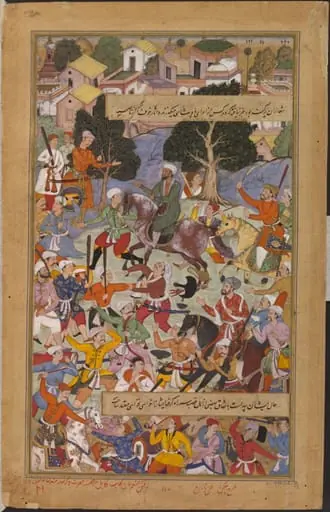
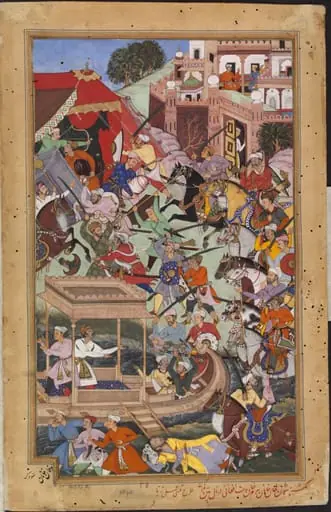
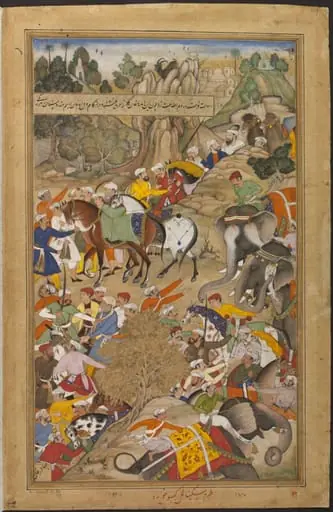
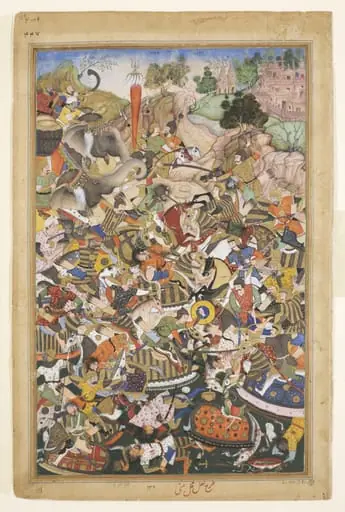
Mughal ruler Humayun defeating the Afghans before reconquering India, folio from an Akbar-nama (Book of Akbar) of Abu’l Fazl (Indian, 1551–1602)
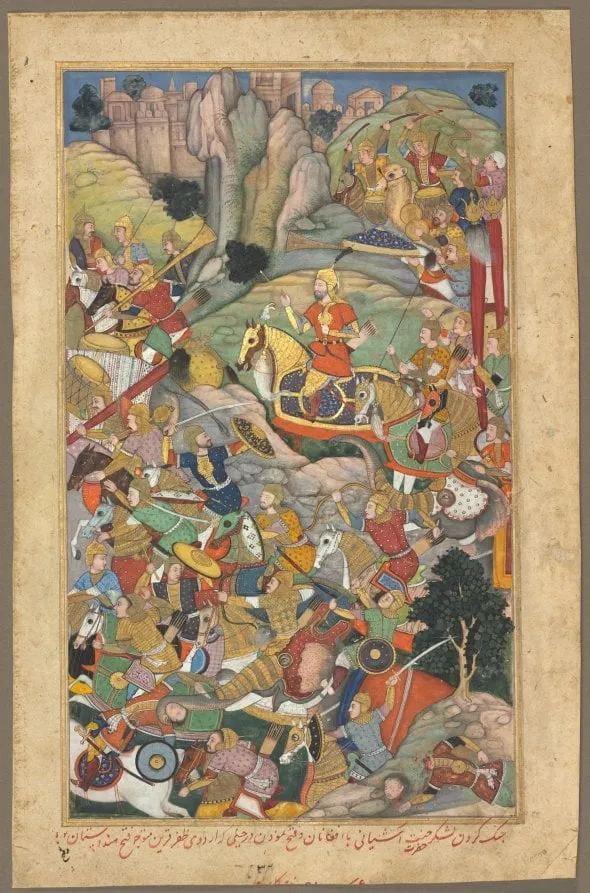
Mughal ruler Humayun defeating the Afghans before reconquering India, folio from an Akbar-nama (Book of Akbar) of Abu’l Fazl (Indian, 1551–1602) is an unspecified painting by the Mughal Painting artist Unknown. It dates from 1590 and is held in the collection of the Cleveland Museum of Art.
- Accession no.
- 1971.77
- Credit line
- Andrew R. and Martha Holden Jennings Fund
About this work
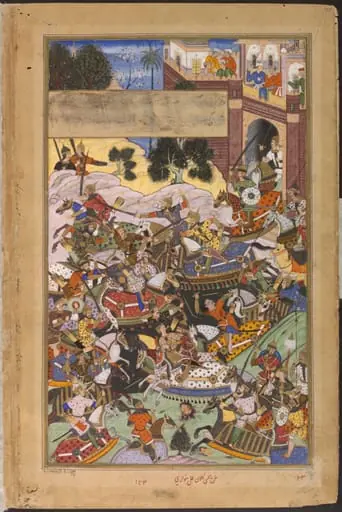
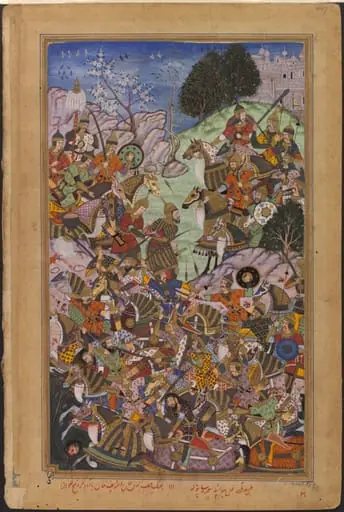
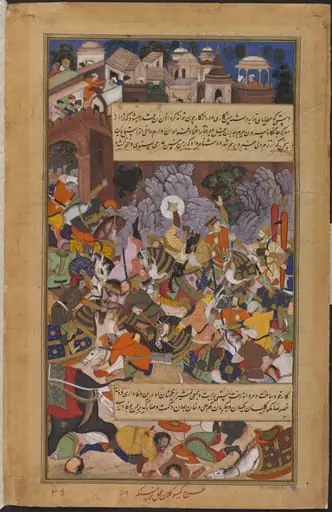
You see a crowded battle scene on a small, colorful page, soldiers on horseback, banners flying, and one rider in gold and red standing out at the top.
You see a crowded battle scene on a small, colorful page, soldiers on horseback, banners flying, and one rider in gold and red standing out at the top.
This painting was made for Akbar, the emperor who wanted to honor his father’s victory. But here’s the twist: the battle never really looked like this. Artists shaped the story to make Humayun look heroic, even if the details were invented. It’s less about history and more about power and legacy.
If you like this, look up court of Akbar (reigned 1556–1605) for more royal stories told through art.
Overview
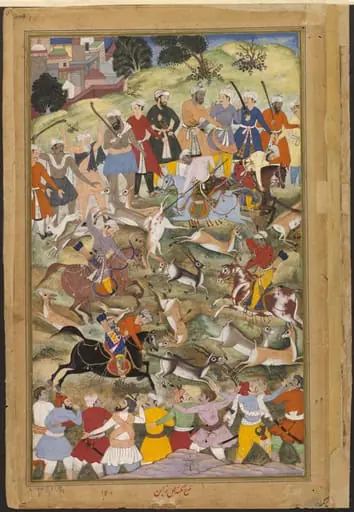
This folio from an Akbar-nama depicts a pivotal moment in Mughal history: Humayun's 1555 reconquest of northern India from the Afghans, aided by Iranian forces. The illustration, however, takes creative liberties with historical events.
Subject & Meaning
Humayun, the second Mughal emperor, is prominently featured on horseback, distinguished by his golden helmet and red tunic, set against a hillside. His inclusion in the battle scene is symbolic, as historical records indicate he did not participate directly in this conflict. The image was selected by his son, Akbar, to honor his father's legacy and emphasize the dynasty's military prowess.
Technique & Style
The painting is characterized by a crowded, vibrant composition on a small page, with soldiers on horseback, flying banners, and a clear visual hierarchy that places Humayun centrally. The artistic choices reflect the Mughal court's blend of Persian and Indian influences, typical of illustrations in an Akbar-nama.
History & Provenance
Created for Emperor Akbar (reigned 1556–1605), this folio is part of a biography of Akbar that highlights key events of his father's reign. The work is attributed to the court of Abu’l Fazl, a prominent figure in Akbar's administration, between 1551 and 1602.
Context
The illustration serves as more than a historical record; it is a political tool to legitimize and glorify Mughal rule under Akbar. By depicting Humayun's victory in a heroic light, the artwork reinforces the empire's military strength and the lineage of its rulers.
Legacy
This folio exemplifies how the Mughal court used art to narrate and shape historical memory. It influences the understanding of Mughal visual and political strategies, demonstrating how art was employed to convey imperial power and family lineage.
Artist & collection