Artwork
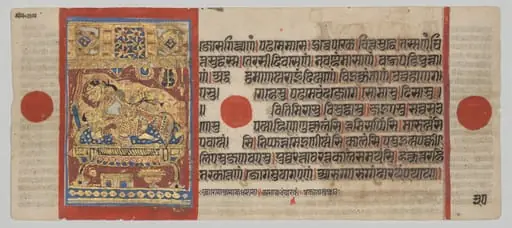
Nemi Enthroned, Folio 54 (verso), from a Kalpa-sutra
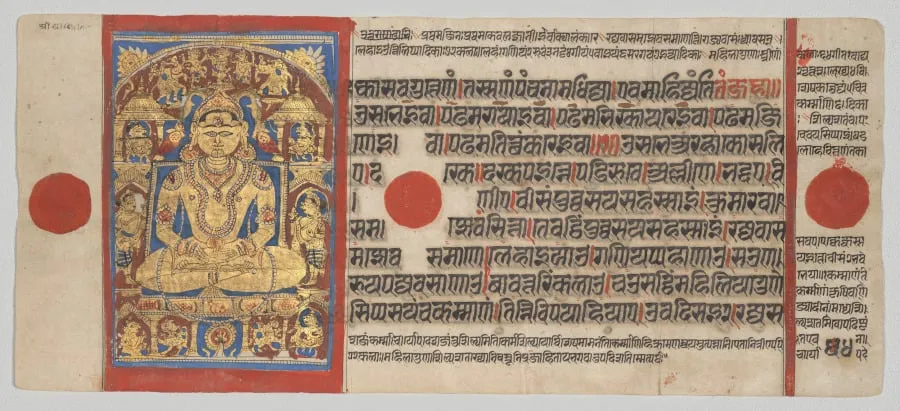
Nemi Enthroned, Folio 54 (verso), from a Kalpa-sutra is an unspecified painting by the Mughal Painting artist Unknown. It dates from 1488 and is held in the collection of the Cleveland Museum of Art. This folio originates from a manuscript of the Kalpa-sutra, a sacred Jain text produced in Gujarat, India, during the late medieval period.
- Accession no.
- 1932.119.54.b
- Credit line
- Edward L. Whittemore Fund
About this work
Overview
This folio originates from a manuscript of the Kalpa-sutra, a sacred Jain text produced in Gujarat, India, during the late medieval period.
This folio originates from a manuscript of the Kalpa-sutra, a sacred Jain text produced in Gujarat, India, during the late medieval period. It depicts Arishtanemi, the 22nd Jina, seated in meditation within a red shrine. The painting’s vivid pigments and stylized forms reflect regional Jain artistic conventions, where spiritual presence is conveyed through symbolic rather than naturalistic representation.
Subject & Meaning
Arishtanemi, one of the 24 Jinas who achieved liberation from rebirth, is portrayed in eternal stillness, adorned with royal regalia to signify spiritual sovereignty rather than worldly power. Two attendants, often identified as Krishna and Balarama, hold fly whisks, a gesture of reverence. In Jain belief, these figures are not deities but elevated beings who honor the Jina’s transcendence, reflecting Jainism’s distinct theological framework.
Technique & Style
The painting employs mineral pigments on paper, with bold outlines and flat planes of color characteristic of western Indian manuscript illumination. Gold leaf highlights the Jina’s crown and jewelry, emphasizing his spiritual radiance. The shrine’s red background contrasts with the golden figure, creating visual focus without perspective or depth, aligning with Jain aesthetic priorities centered on sacred symbolism over illusionistic space.
History & Provenance
This folio comes from a devotional manuscript commissioned for Jain monastic use, likely in the 15th or 16th century in Gujarat. Such texts were ritually handled and recited, serving both as liturgical aids and objects of veneration. Its survival reflects the enduring patronage of Jain communities in western India, who preserved these manuscripts through generations despite political and religious shifts.
Context
Jain art of this period prioritized clarity and reverence over narrative complexity. Manuscripts like this one were produced in specialized workshops, often under monastic supervision. The inclusion of Krishna and Balarama illustrates the cultural overlap between Jain and Hindu traditions in Gujarat, even as Jain theology maintained its distinct view of divinity, rejecting supreme gods in favor of liberated souls.
Legacy
Folios such as this continue to inform the study of Jain visual culture and manuscript traditions in South Asia. They demonstrate how religious identity was visually encoded through iconography, color, and composition. Today, these works are preserved in institutional collections, offering insight into the devotional practices and artistic ingenuity of medieval Jain communities.
Artist & collection









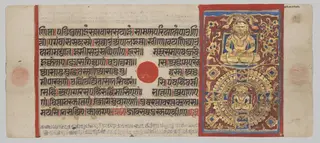
- Nemi's Omniscience and First Teaching (below) and Nemi in the Realm of Liberation (above), Folio 51 (recto), from a Kalpa-sutra
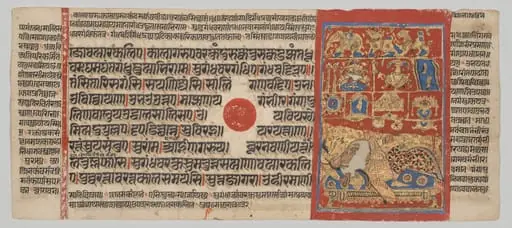 The Fourteen Dreams of Queen Trishala, folio 14 (recto), from a Kalpa-sutra
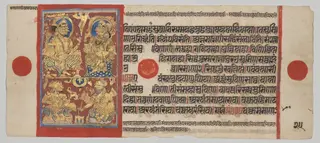 King Siddhartha and Queen Trishala with the Dream Interpreters, Folio 25 (verso), from a Kalpa-sutra
 Birth of Mahavira, folio 30 (verso), from a Kalpa-sutra
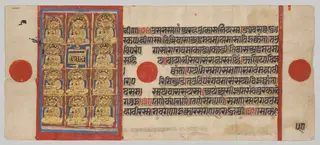 The Eleven Principal Disciples (Ganadharas) of Mahavira, Folio 57 (verso), from a Kalpa-sutra
 Text, Folio 51 (verso), from a Kalpa-sutra