Artwork
Portrait of a Woman
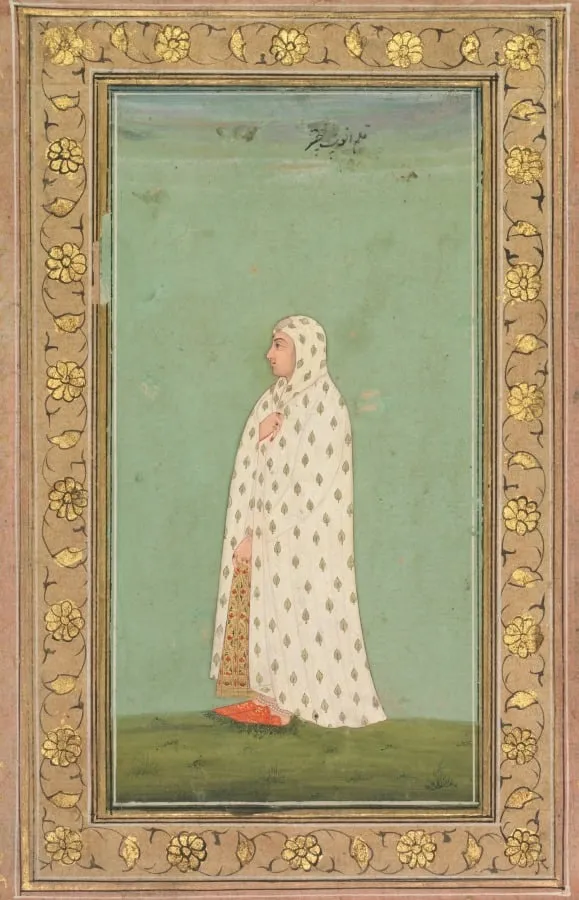
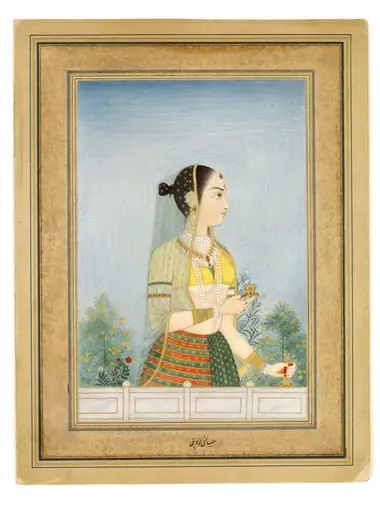
Portrait of a Woman is an unspecified painting by the Baroque artist Unknown. It dates from 1688 and is held in the collection of the Cleveland Museum of Art. This portrait depicts a woman from the royal court of Bikaner, a Rajput kingdom in northwestern India.
- Accession no.
- 1987.1110
- Credit line
- Gift of Flora D. Glass and Elwood G. Glass Jr.
About this work
Overview
This portrait depicts a woman from the royal court of Bikaner, a Rajput kingdom in northwestern India. She is rendered in a detailed, intimate style typical of late 17th- to early 18th-century Rajasthani painting. Her attire and the subtle inclusion of a woven mesh suggest a cultural practice of selective visibility, blending modesty with awareness of the surrounding world.
Subject & Meaning
The woman is portrayed with direct gaze, asserting presence despite the veil. The white cloak, adorned with gilded leaf motifs, signifies status and refinement. The fine mesh stitched into the hood allows her to observe without being fully seen, a practical and symbolic negotiation of privacy within a courtly environment where female royalty navigated public and private spheres with care.
Technique & Style
The painting employs fine brushwork to render the intricate gold leaf patterns, applied with delicate precision over a white ground. The mesh is suggested not with literal texture but through subtle linear detailing, integrating function into aesthetic. The background is flat and unadorned, focusing attention on the figure’s form and the interplay of light, fabric, and veil.
History & Provenance
The work survives as part of a small corpus of portraits documenting the private lives of royal women in Rajput courts.
Created in the court of Bikaner, likely during the reign of Maharaja Anup Singh or his successors, the portrait reflects the cosmopolitan nature of the region’s elite. Bikaner’s rulers maintained close ties with Mughal culture, and Muslim women in the court adopted distinctive dress. The work survives as part of a small corpus of portraits documenting the private lives of royal women in Rajput courts.
Context
In Bikaner’s royal household, Muslim women of high status wore the chadar, a draped garment often enhanced with metallic embroidery. The inclusion of a viewing screen was a practical adaptation to purdah customs, allowing mobility and observation without full exposure. Such portraits were not public displays but intimate records, possibly commissioned for personal or familial use within the zenana.
Legacy
This portrait contributes to a broader understanding of gender, visibility, and power in Rajput courts. It challenges assumptions about seclusion by revealing agency in how women engaged with their environment. As one of few surviving images of such attire, it informs contemporary scholarship on material culture and the nuanced expressions of identity in pre-colonial India.
Artist & collection









 Portrait of a Woman
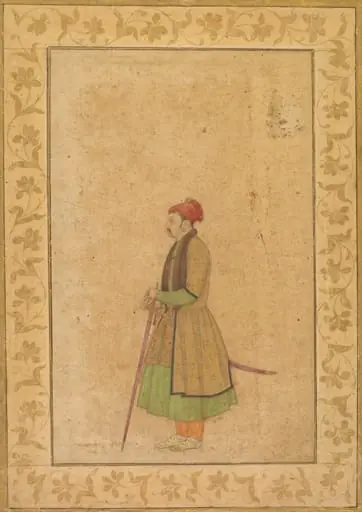 Portrait of Raja Ram Singh of Amber (r. 1667-1688) with a Deccan Sword (recto)
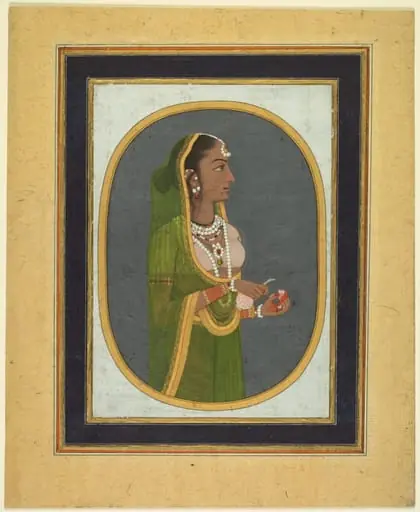 Court Lady Pouring Wine (recto); Calligraphy of Lyrical Quatrains (verso)
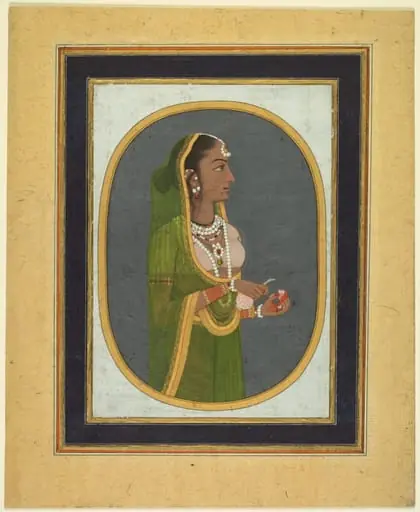 Court Lady Pouring Wine (recto)
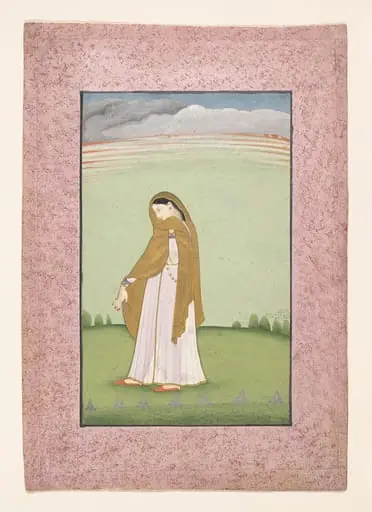 Untitled
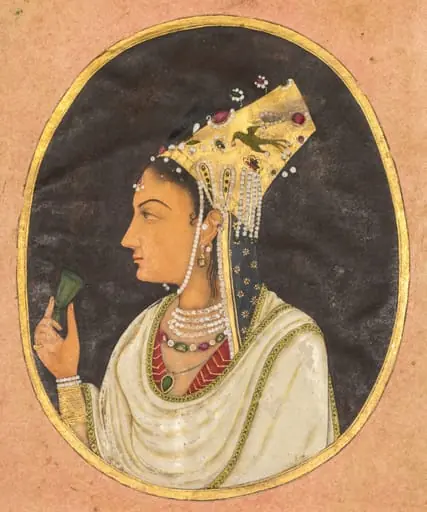 Oval portrait of a woman in a Chaghtai hat
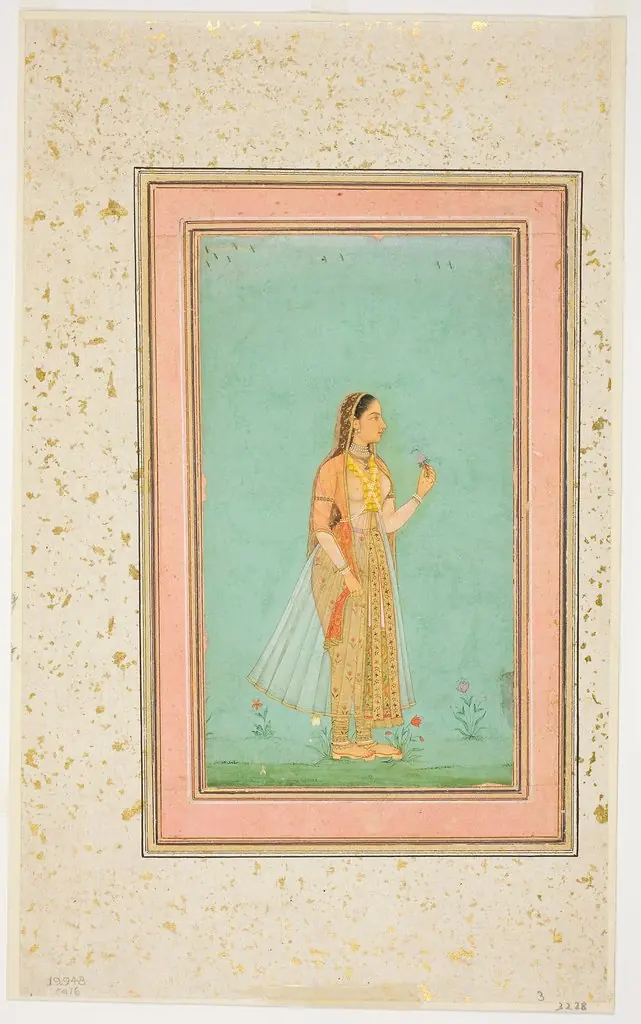 Beauty Holding a Flower
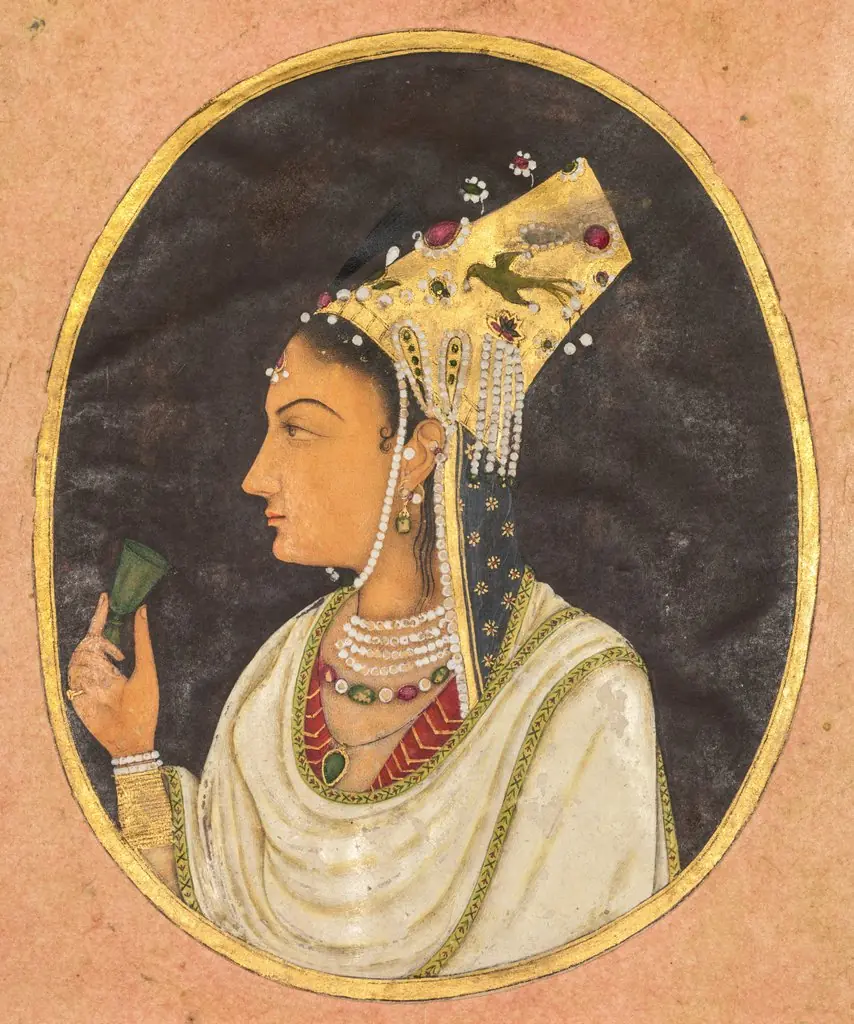 Oval portrait of a woman in a Chaghtai hat
 Jewel Portrait of a Young Girl
 Maharaja Abhi Singh (1725-50).
 Rani Golapati
- Royal Woman Holding a Flower