Artwork
Saint Martin
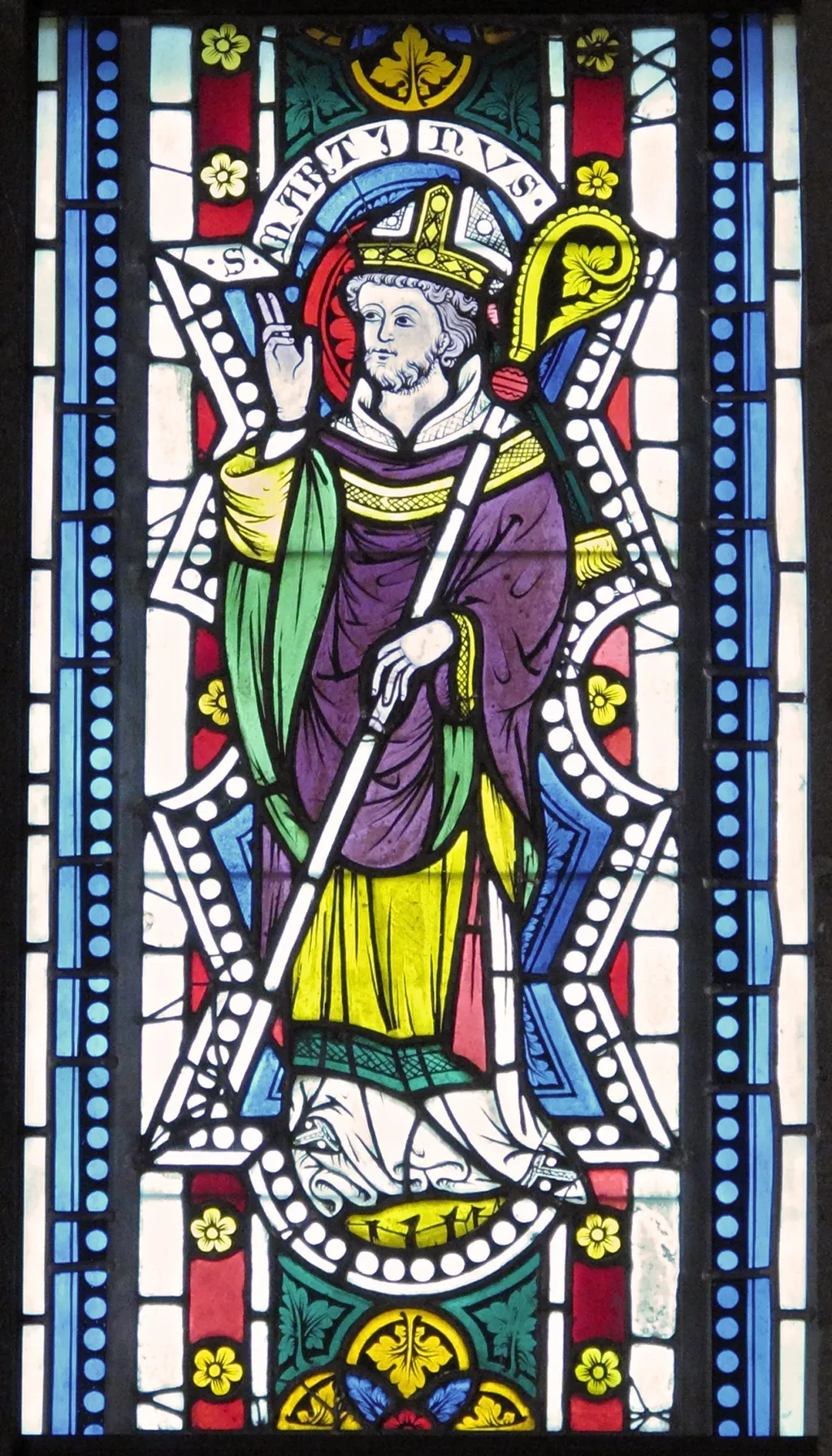
Saint Martin is an unspecified painting. It dates from 1350 and is held in the collection of the Metropolitan Museum of Art.
About this work
History & Provenance
The religious painting known as Saint Martin is dated to circa 1350 and was created by an anonymous artist.
The religious painting known as Saint Martin is dated to circa 1350 and was created by an anonymous artist. It depicts a man and falls within the genre of religious art. The piece is currently held in the collection of the Metropolitan Museum of Art.
The provided sources do not contain specific inventory or accession numbers, nor do they list any past exhibitions, and no details regarding commissioning patrons, the artist's identity, or a chain of ownership prior to its current location are recorded.
Overview
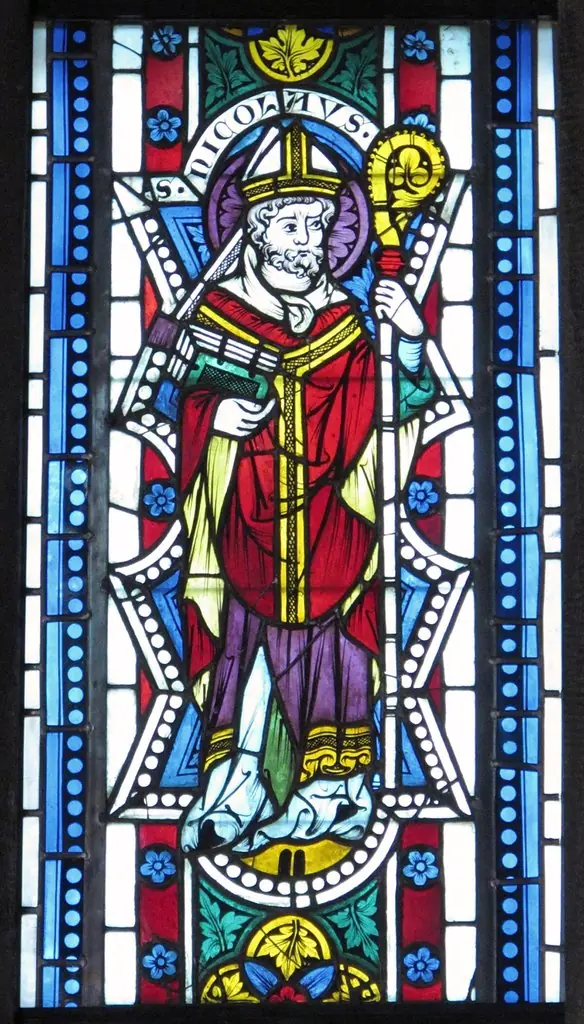
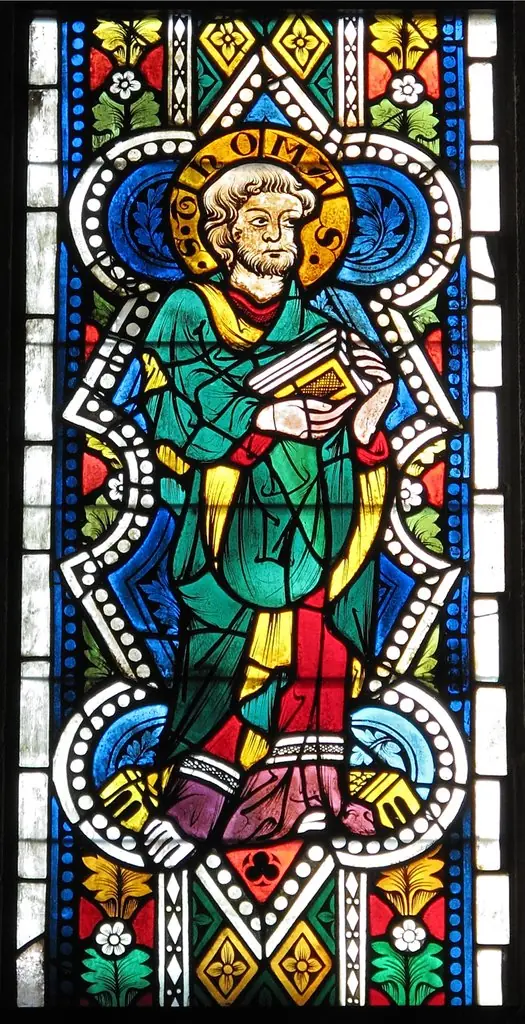
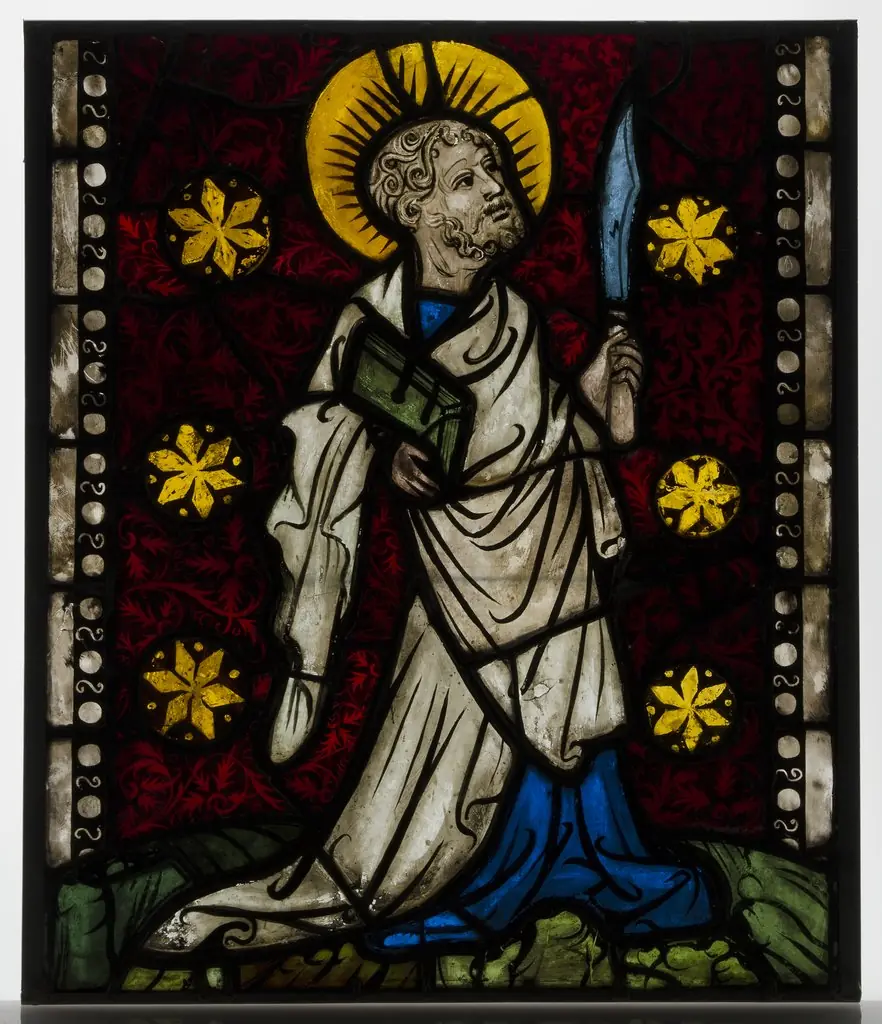
This painting, titled Saint Martin, depicts a tall, regal figure rendered with vibrant hues and strong outlines, evoking the appearance of a stained-glass panel. The saint is adorned in a purple robe, green sleeves, and a yellow sash, topped with a golden crown. His right hand grasps a staff, while his left gestures upwards, conveying a sense of spiritual focus. The background is filled with intricate patterns of red, blue, and yellow.
Subject & Meaning
The artwork portrays Saint Martin, identifiable by his golden crown and staff, which are traditional symbols of his ecclesiastical authority. A golden halo encircles his head, containing the Latin inscription "SPES," signifying "hope." This detail underscores a key theological virtue.
The upward-pointing left hand suggests a connection to the divine, reinforcing the saint's spiritual devotion and heavenly orientation.
Technique & Style
The artist employs a vivid color scheme, featuring rich purples, greens, and yellows that stand out against the darker surrounding elements. The figure's face is rendered with simplicity, characterized by a calm expression and a short beard, contributing to a serene demeanor. The composition's clarity and defined forms, along with the decorative floral and geometric patterns in the background, reflect an aesthetic akin to medieval ecclesiastical art.
Artist & collection