Artwork
Sepulchral portrait of Ms Nieborowska from Hyżne
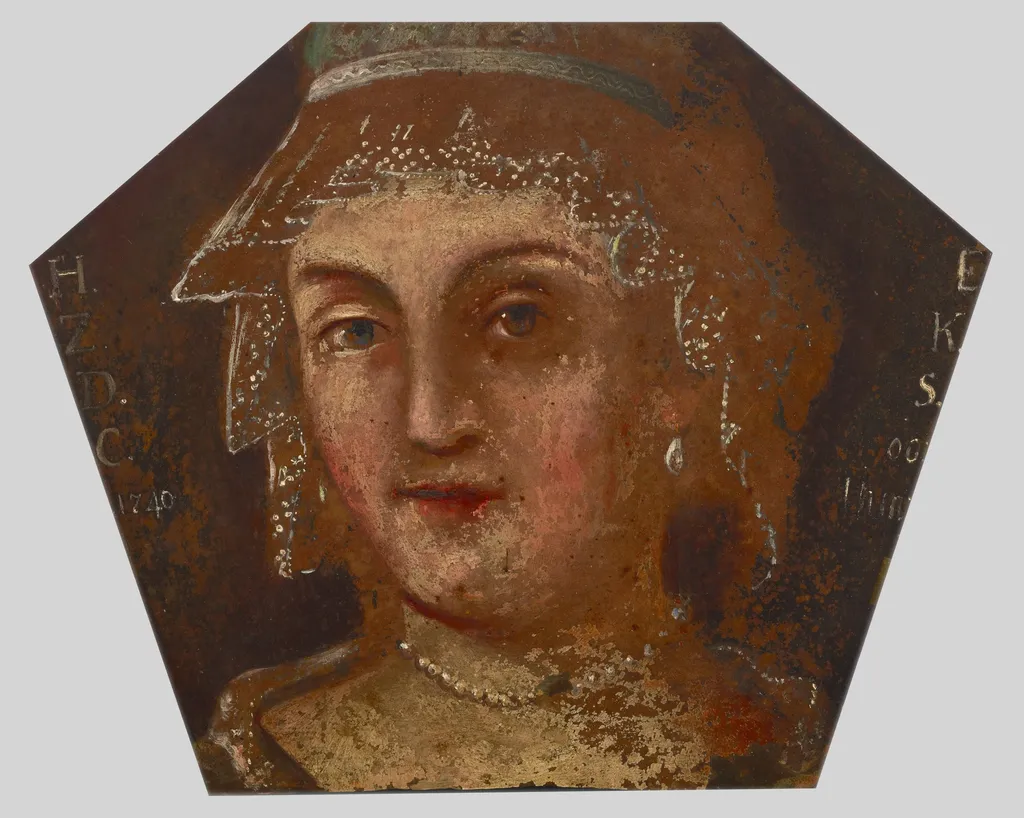
Sepulchral portrait of Ms Nieborowska from Hyżne is an unspecified painting by the Rococo painting artist Unknown. It dates from 1740 and is held in the collection of the National Museum in Kraków. The work is an 18th‑century oil portrait of a woman identified as Ms.
About this work
The artist's attention to detail is evident in the delicate folds of her clothing and the subtle play of light on her features.
This painting is a portrait of a woman, likely from the 18th century. She is depicted wearing a headscarf and a pearl necklace, with a subtle, enigmatic expression. The artist's use of color and texture creates a sense of depth and dimensionality.
The woman's face is the central focus of the painting, with the background fading into the shadows. Her eyes seem to hold a quiet intensity, drawing the viewer's gaze. The artist's attention to detail is evident in the delicate folds of her clothing and the subtle play of light on her features.
The National Museum in Kraków is home to this painting, offering a glimpse into the artistic traditions of the past.
Overview
The work is an 18th‑century oil portrait of a woman identified as Ms. Nieborowska from Hyżne. Rendered in a modest size, the painting presents the sitter in a headscarf and pearl necklace, her face illuminated against a dim, receding background. The National Museum in Kraków holds the piece, where it exemplifies the period’s portraiture conventions.
Subject & Meaning
The composition centers on the sitter’s visage, her gaze directed outward with a restrained intensity that suggests both personal dignity and a subtle introspection. The headscarf and jewelry indicate her social standing, while the muted expression invites contemplation of the private interior life of an 18th‑century noblewoman.
Technique & Style
The artist employs a restrained palette, allowing delicate tonal shifts to model the flesh and fabric. Fine brushwork captures the soft folds of the scarf and the lustrous surface of the pearls, while chiaroscuro creates depth, pushing the face forward and allowing the background to dissolve into shadow.
History & Provenance
The portrait entered the collection of the National Museum in Kraków through acquisition in the early 20th century, reflecting the museum’s effort to preserve regional aristocratic portraiture. Its provenance prior to museum ownership remains documented only through family archives linking the work to the Nieborowski estate.
Context
Portraits of this type were common among the Polish szlachta, serving both as records of lineage and as visual affirmations of status. The inclusion of a pearl necklace aligns with contemporary fashion trends, while the subdued lighting reflects the influence of Baroque chiaroscuro adapted to a more intimate, domestic setting.
Artist & collection









 Portrait of a Lady
 Äbtissin Auguste Dorothea von Braunschweig-Wolfenbüttel
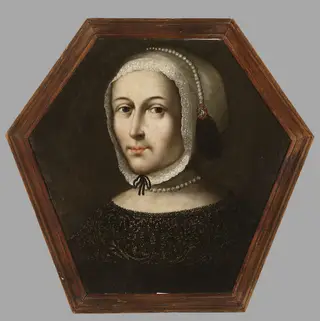 Coffin portrait of a woman in a white cap
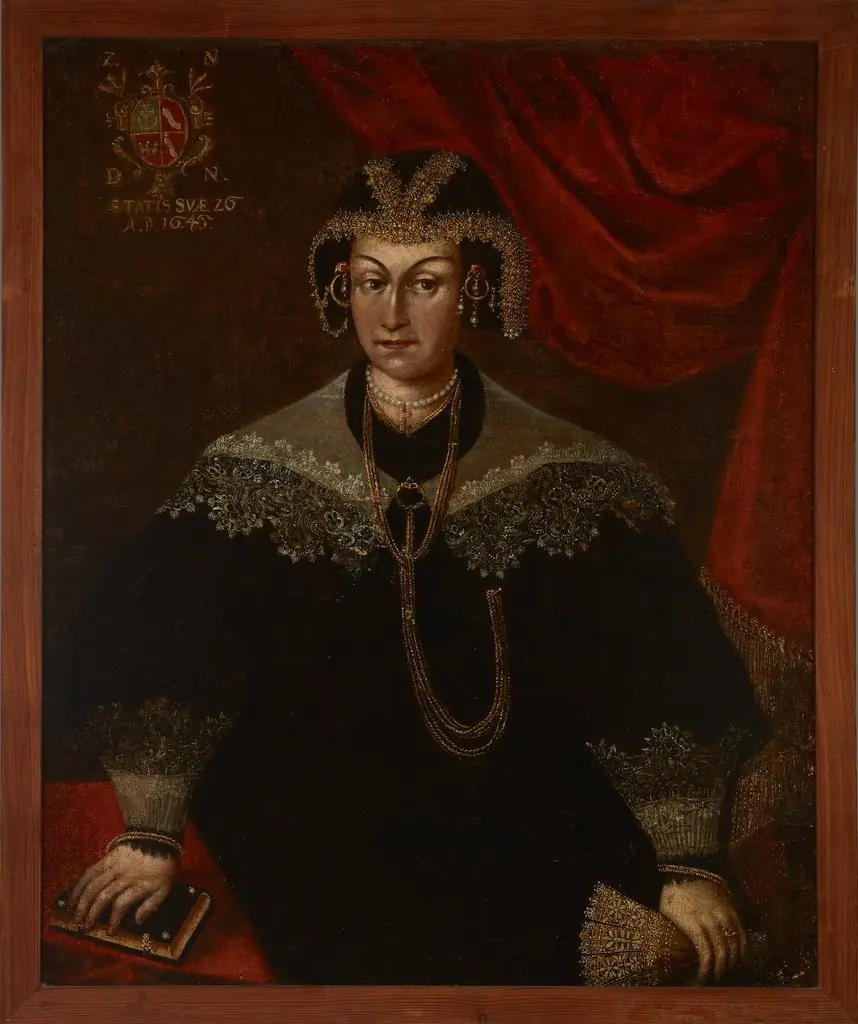 Portrait of an unknown woman
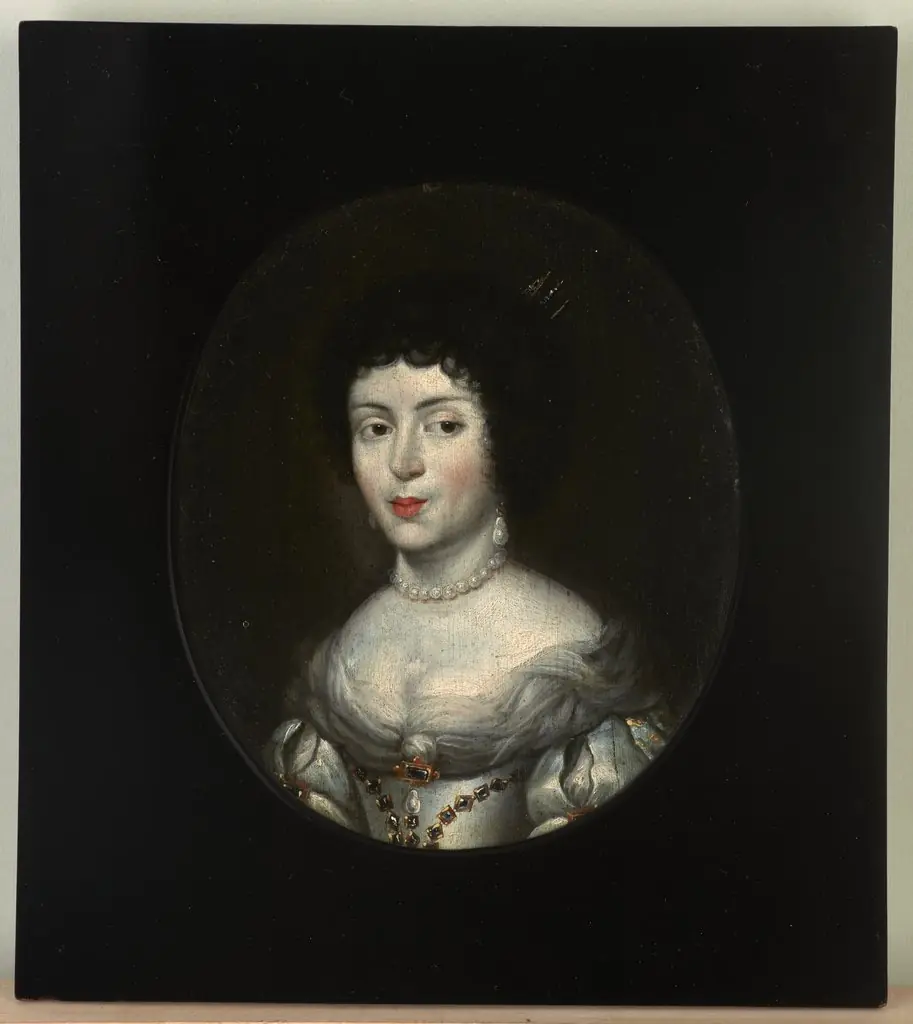 Portret Marii Kazimiery de la Grange d'Arquien Sobieskiej, zwanej Marysieńką (1641-1716), królowej Polski, żony Jana III Sobieskiego
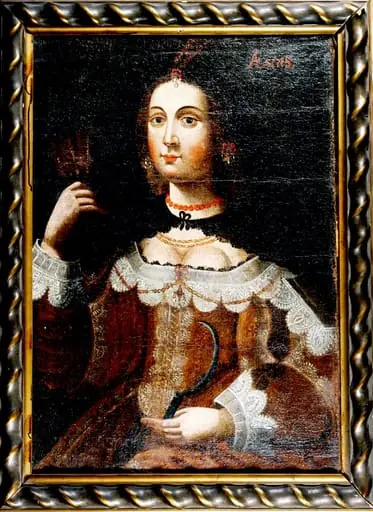 Portret de femeie
 Pratap Singh
 Portrait of Urszula Mniszchech née Zamoyska (1750–1808), wife of Michał Jerzy Wandalin Mniszch, Grand Marshal of the Crown
 Anna van Hannover (1709-59). wife of Prince Willem IV
 Portret van een vrouw