Artwork
Shri Raga, from a Ragamala (Garland of Melodies)
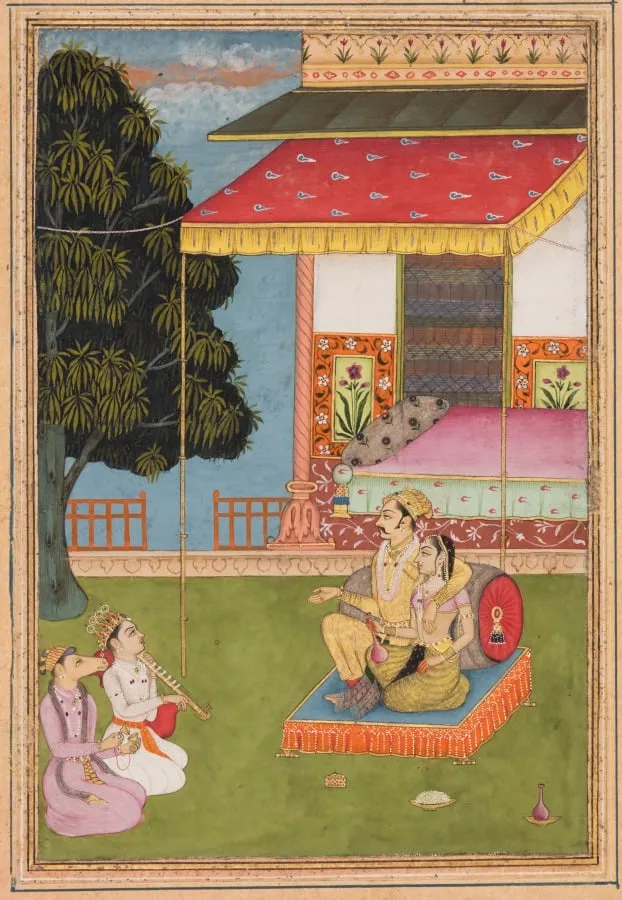
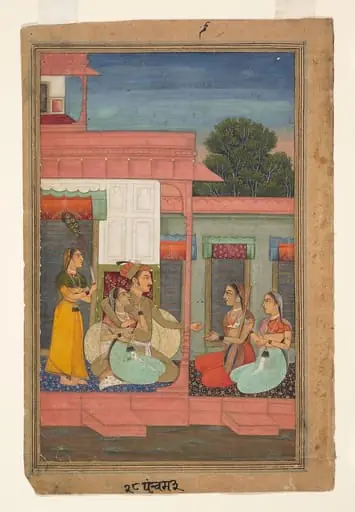
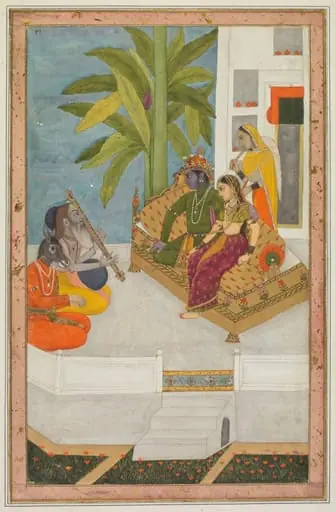
Shri Raga, from a Ragamala (Garland of Melodies) is an unspecified painting by the Baroque artist Unknown. It dates from 1695 and is held in the collection of the Cleveland Museum of Art. The painting depicts a royal pair seated on a terrace, drinking wine while a musician strums a vina.
- Accession no.
- 2018.193
- Credit line
- Purchase and partial gift from the Catherine and Ralph Benkaim Collection; Severance and Greta Millikin Purchase Fund
About this work
Overview
The painting depicts a royal pair seated on a terrace, drinking wine while a musician strums a vina. Beside them, a horse‑headed deity, identified as Tumbaru, strikes cymbals, providing rhythmic accompaniment. The scene is rendered in the vibrant palette typical of Rajput court art, with intricate detailing of costume and architecture.
Subject & Meaning
The composition illustrates a moment of courtly leisure, linking music, hospitality, and divine favor. Tumbaru, a horse‑headed god associated with wealth, reinforces the theme of prosperity, while the shared wine and music suggest harmony and auspicious celebration within the royal household.
Technique & Style
Executed in the Rajput miniature tradition, the work employs fine brushwork and bright mineral pigments on paper. The figures are outlined with delicate ink lines, and the architectural backdrop is rendered with stylised perspective, emphasizing decorative pattern over realistic depth.
History & Provenance
The piece belongs to a Ragamala series, visual representations of musical modes, commissioned for the Diwali festival, the Hindu celebration of light. Such series were often produced for royal patrons to accompany seasonal rituals and to invoke good fortune for the kingdom.
Context
Created in the Rajput kingdom of Bikaner, the painting reflects the court’s patronage of the arts and its integration of Hindu devotional iconography with secular court life. Diwali commissions like this one were intended to align the ruler’s realm with celestial order and to promote communal well‑being.
Artist & collection