Artwork
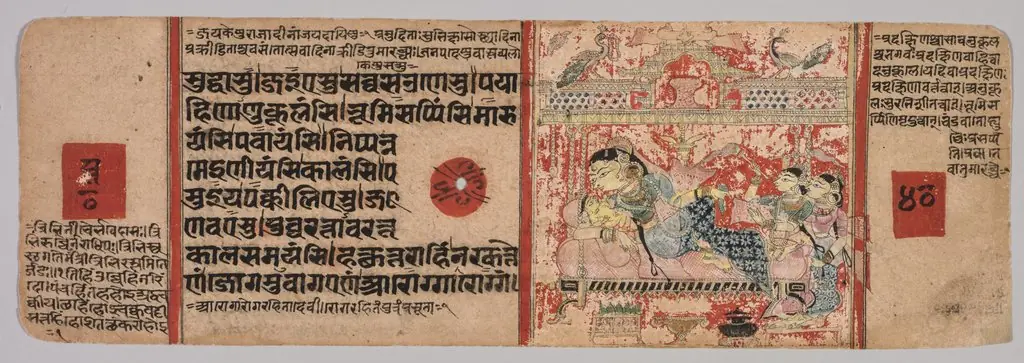
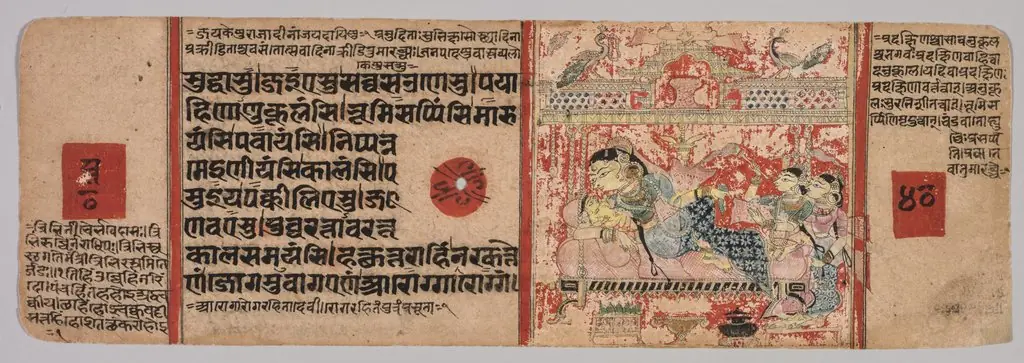
Text describing the pregnancy of Queen Trishala, folio 40 (recto) from a Kalpa-sutra
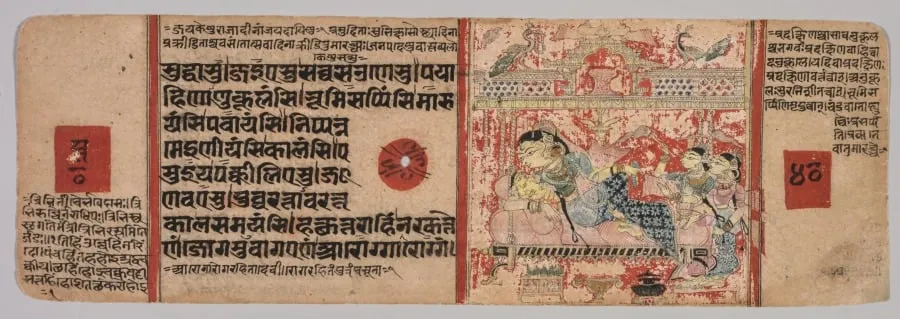
Text describing the pregnancy of Queen Trishala, folio 40 (recto) from a Kalpa-sutra is an unspecified painting by Unknown. It dates from 1400 and is held in the collection of the Cleveland Museum of Art. This folio is part of a handwritten Jain manuscript, the Kalpa-sutra, which chronicles the lives of the Tirthankaras.
- Accession no.
- 1976.27.a
- Credit line
- Gift of Dr. Norman Zaworski
About this work
Overview
Created in western India, likely Gujarat, it illustrates the birth narrative of Mahavira, the 24th and final Tirthankara.
This folio is part of a handwritten Jain manuscript, the Kalpa-sutra, which chronicles the lives of the Tirthankaras. Created in western India, likely Gujarat, it illustrates the birth narrative of Mahavira, the 24th and final Tirthankara. The page features a stylized depiction of Queen Trishala’s pregnancy, rendered in flat, vivid pigments with minimal spatial depth, consistent with regional manuscript traditions of the period.
Subject & Meaning
The scene portrays Queen Trishala during the final months of her pregnancy, a time considered spiritually significant in Jain tradition. Her serene posture and the surrounding celestial flowers symbolize divine favor and purity. The absence of male figures and the focus on her solitude emphasize the sacred, inward nature of the event, aligning with Jain ideals of non-attachment and spiritual preparation for the birth of a Tirthankara.
Technique & Style
The artist employed opaque watercolor on paper, using bold outlines and unmodulated hues to define forms. There is no attempt at perspective or shading; instead, spatial relationships are suggested through layering and scale. Gold leaf accents highlight divine elements, while tiny floral motifs float as symbolic emanations of auspiciousness. The composition prioritizes narrative clarity over naturalism, typical of medieval Jain manuscript painting.
History & Provenance
This folio originates from a 15th-century illuminated Kalpa-sutra produced in Gujarat, a center for Jain manuscript production. Such texts were commissioned by wealthy lay patrons for ritual use in monastic communities. The manuscript’s survival suggests careful preservation within Jain religious circles, where textual and visual devotion were closely intertwined.
Context
Jain manuscripts like this one served both liturgical and didactic purposes, aiding in the transmission of sacred narratives to monastic and lay audiences. The emphasis on the Tirthankara’s birth reflects Jain cosmology, where such events are marked by cosmic signs and moral purity. Regional styles in western India favored symbolic representation over illusionistic space, distinguishing them from contemporary Mughal or Rajput traditions.
Legacy
This folio exemplifies a sustained tradition of Jain visual storytelling that persisted for centuries. Its aesthetic principles, flat planes, symbolic color, and narrative focus, continue to inform contemporary Jain artistic practices. As a preserved artifact, it offers insight into how religious communities encoded spiritual ideals through image and text, maintaining continuity across generations.
Artist & collection









- Text describing the pregnancy of Queen Trishala, folio 40 (recto) from a Kalpa-sutra
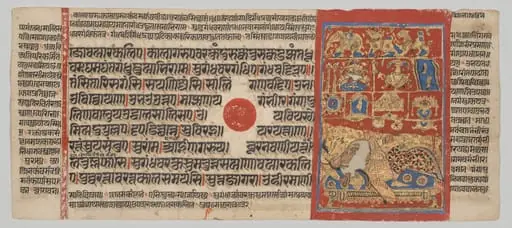 The Fourteen Dreams of Queen Trishala, folio 14 (recto), from a Kalpa-sutra
 Folio 40 from a Kalpa-sutra: Text (recto); Birth of Mahavira (verso)
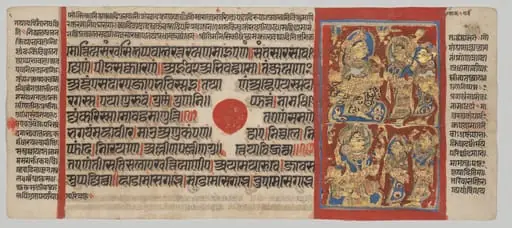 Queen Trishala's Grief and Happiness, Folio 29 (recto), from a Kalpa-sutra
 Text, folio 12 (verso), from a Kalpa-sutra
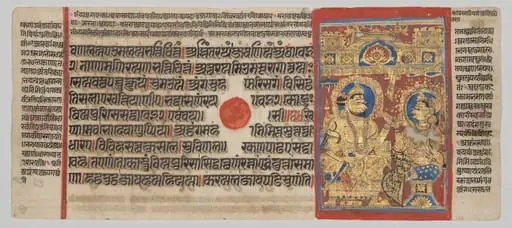 King Siddhartha and Queen Trishala Sit Alone to Discuss Her Dreams, Folio 24 (recto), from a Kalpa-sutra
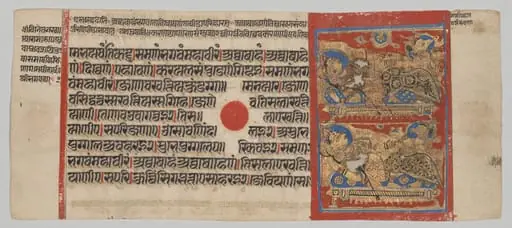 Transfer of the Embryo of Mahavira, Folio 12 (recto), from a Kalpa-sutra
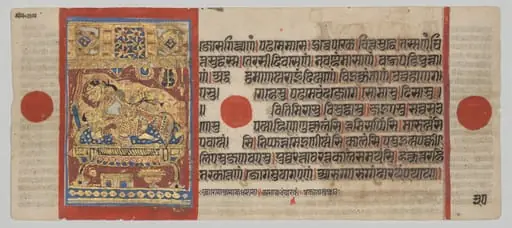 Birth of Mahavira, folio 30 (verso), from a Kalpa-sutra
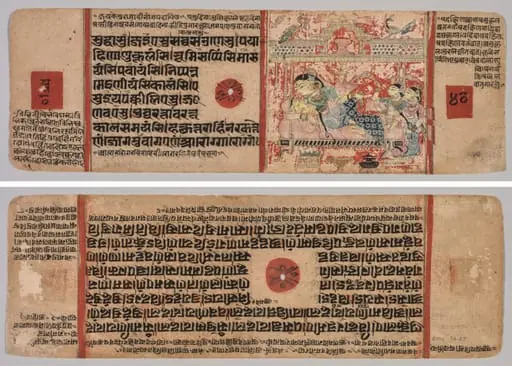 Folio 40 from a Kalpa-sutra: Text (recto); Birth of Mahavira (verso)
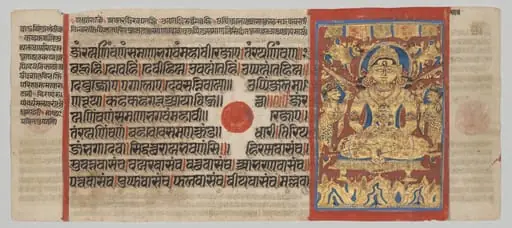 Ritual Bath of Mahavira, Folio 31 (recto), from a Kalpa-sutra
 Text, Folio 29 (verso), from a Kalpa-sutra