Artwork
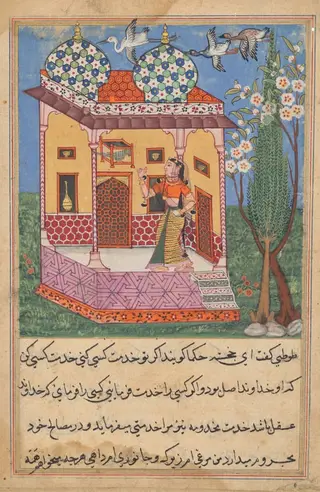
The origin of music from a fabulous bird of India which had seven holes in its beak, from a Tuti-nama (Tales of a Parrot): Fourteenth Night
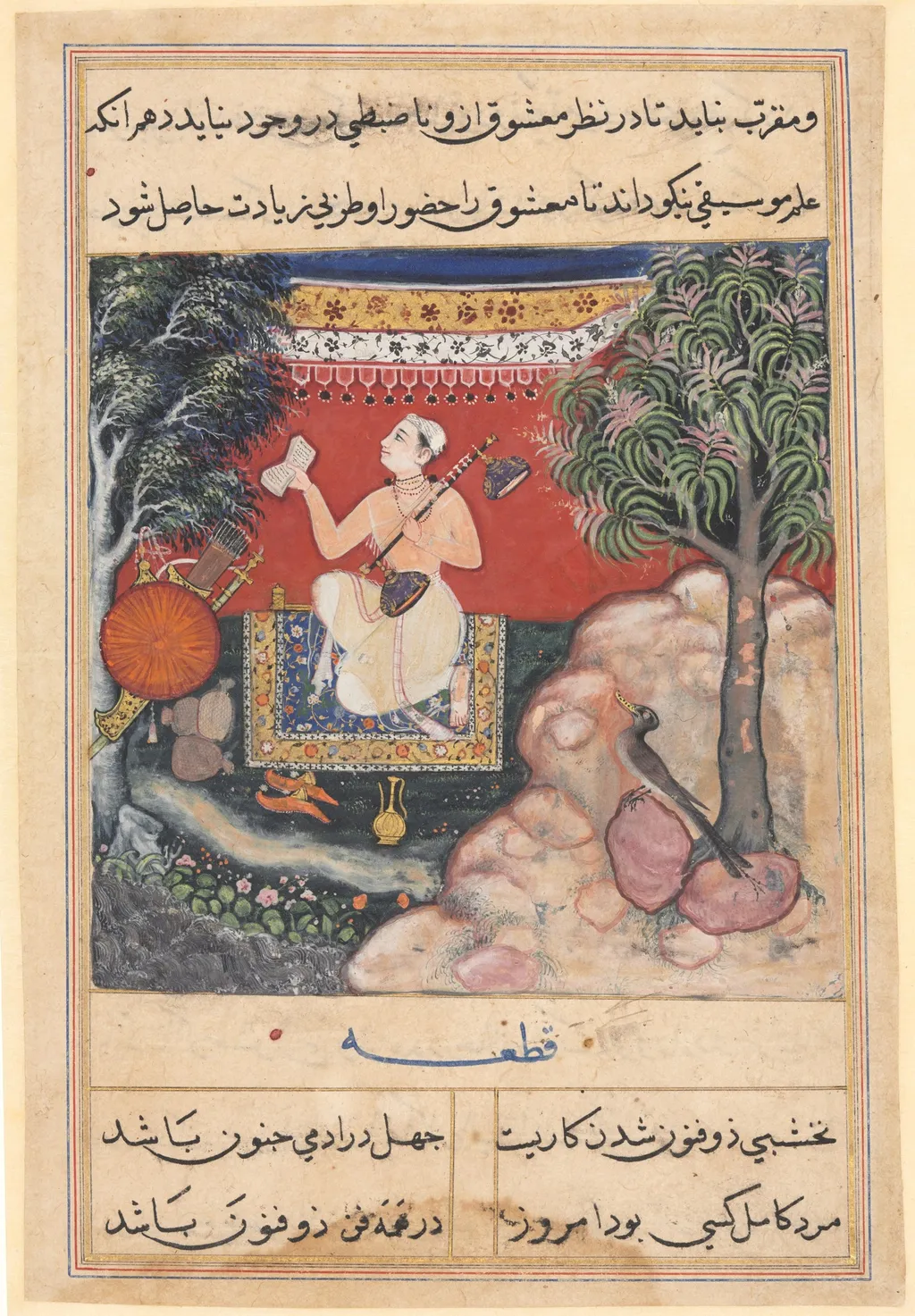
The origin of music from a fabulous bird of India which had seven holes in its beak, from a Tuti-nama (Tales of a Parrot): Fourteenth Night is an unspecified painting. It dates from 1560 and is held in the collection of the Cleveland Museum of Art. The work depicts a seated figure in a tranquil outdoor setting, surrounded by foliage, rocks and assorted objects.
About this work
Technique & Style
The painting depicts the mythical origin of music through a seven-holed Indian bird, drawn from the Fourteenth Night of the Tuti-nama manuscript.
The painting depicts the mythical origin of music through a seven-holed Indian bird, drawn from the Fourteenth Night of the Tuti-nama manuscript. It is executed in tempera and ink on paper, a technique typical of Mughal manuscript illumination. The composition features flat, decorative planes of color and intricate patterning characteristic of 16th-century Indian miniature painting, with stylized figures and rhythmic line work emphasizing narrative flow.
The work was created in the Mughal Empire and is housed in the Cleveland Museum of Art, where it is cataloged under accession number 1962.279.110.b.
History & Provenance
This miniature painting was produced in the Mughal Empire around 1560, within the manuscript known as the Tuti-nama (Tales of a Parrot).
It entered the Cleveland Museum of Art in 1962 as accession 1962.279.110.b, where it remains in the permanent collection.
The painting is part of the Cleveland Museum of Art's collection, listed under accession number 1962.279.110.b. It has been featured in exhibitions at the museum, including the 1962 exhibition "Indian Miniatures: A Selection of Paintings from the Collection" and the 1995 exhibition "Mughal India: Art, Architecture, and Culture".
Overview
The work depicts a seated figure in a tranquil outdoor setting, surrounded by foliage, rocks and assorted objects. The man, dressed in a white dhoti, necklace and turban, rests on an elaborately patterned rug while playing a stringed instrument. Nearby items include a drum, a book and a bird, all rendered in muted greens, browns and blues that emphasize the natural atmosphere.
Subject & Meaning
The scene illustrates a narrative from the Indian tale collection known as the Tuti‑nama, specifically the episode titled “Fourteenth Night,” which recounts the origin of music from a mythical seven‑hole bird. The figure’s musical activity and the presence of the bird suggest a visual interpretation of that legend, linking artistic creation to the bird’s mythical song.
Artist & collection

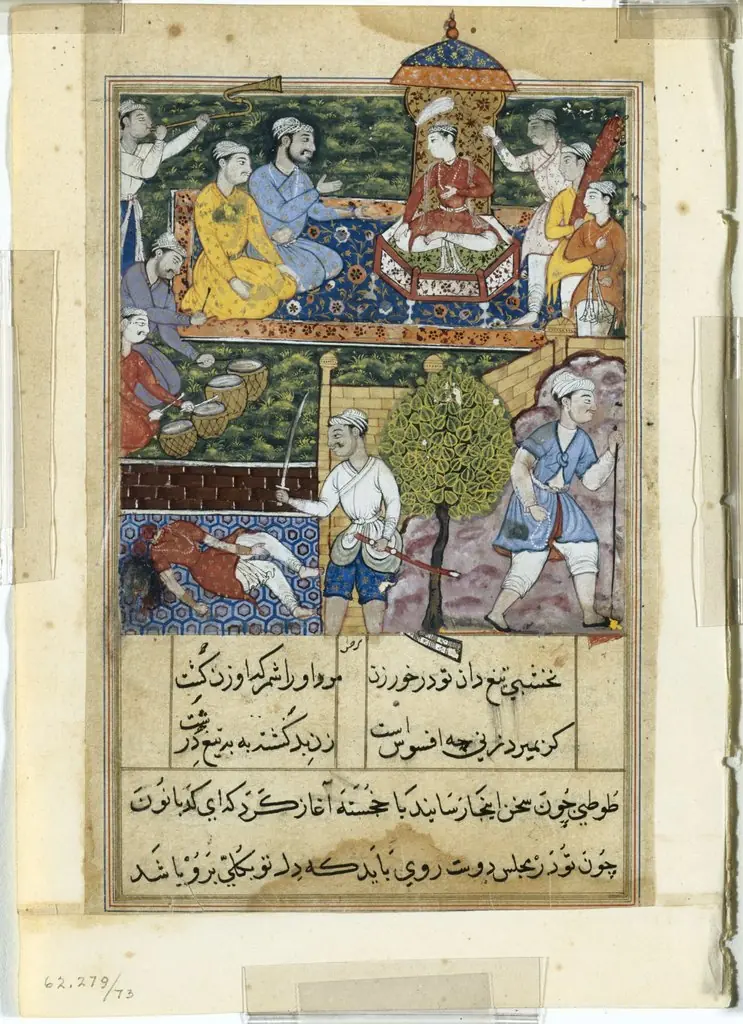 The young prince is crowned and the wicked handmaiden is executed, from a Tuti-nama (Tales of a Parrot): Eighth Night
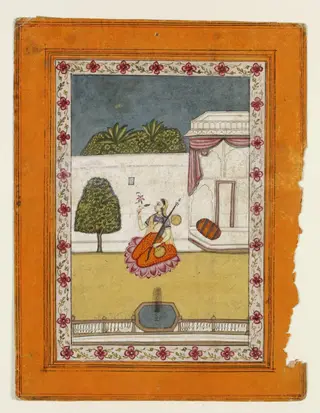 Gujjari Ragini
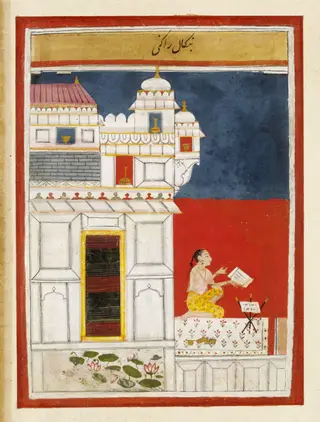 Bangali Ragini
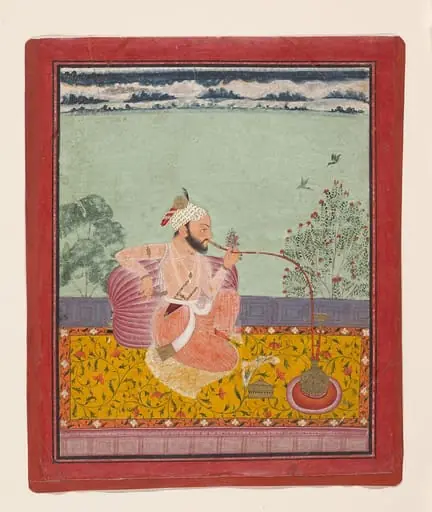 Untitled
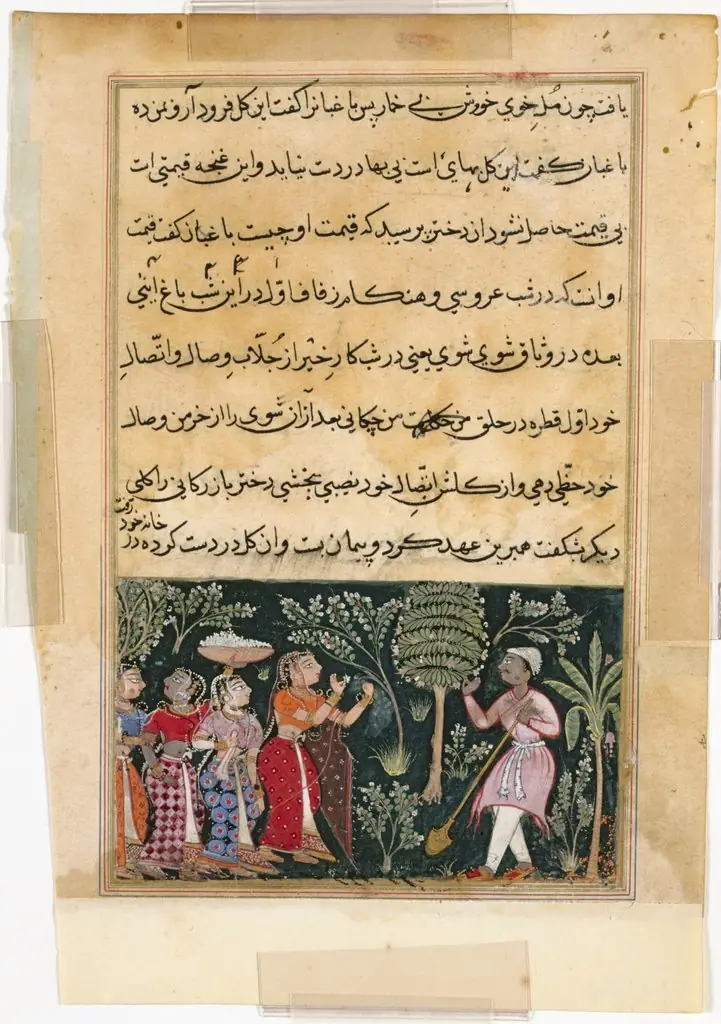 The daughter of the merchant of Mazanderan asks the gardener for the rose, from a Tuti-nama (Tales of a Parrot): Twelfth Night
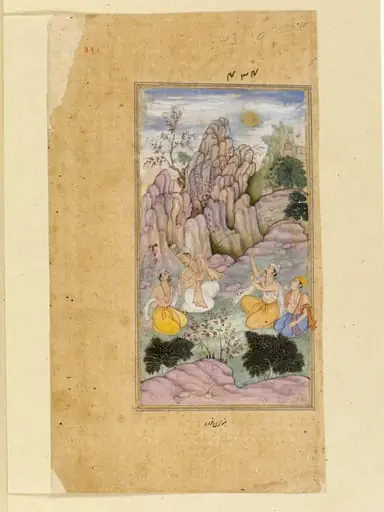 Untitled
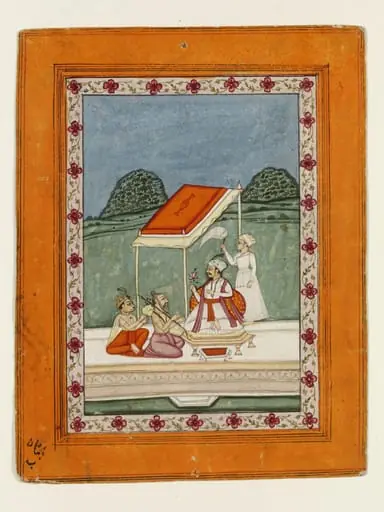 Sri Raga
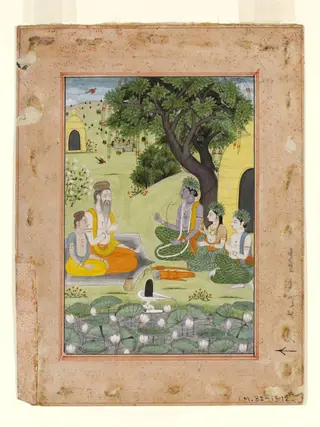 Rama, Sita and Lakshmana
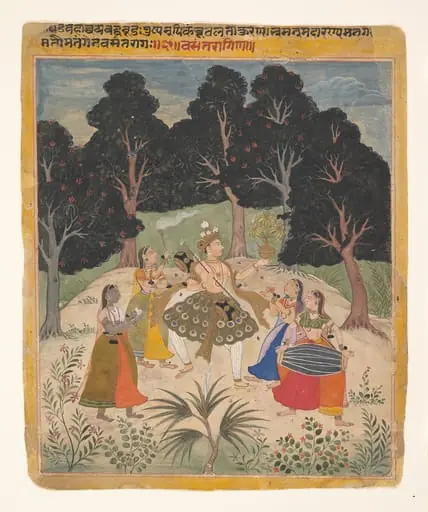 Untitled
- The origin of music from a fabulous bird of India which had seven holes in its beak, from a Tuti-nama (Tales of a Parrot): Fourteenth Night
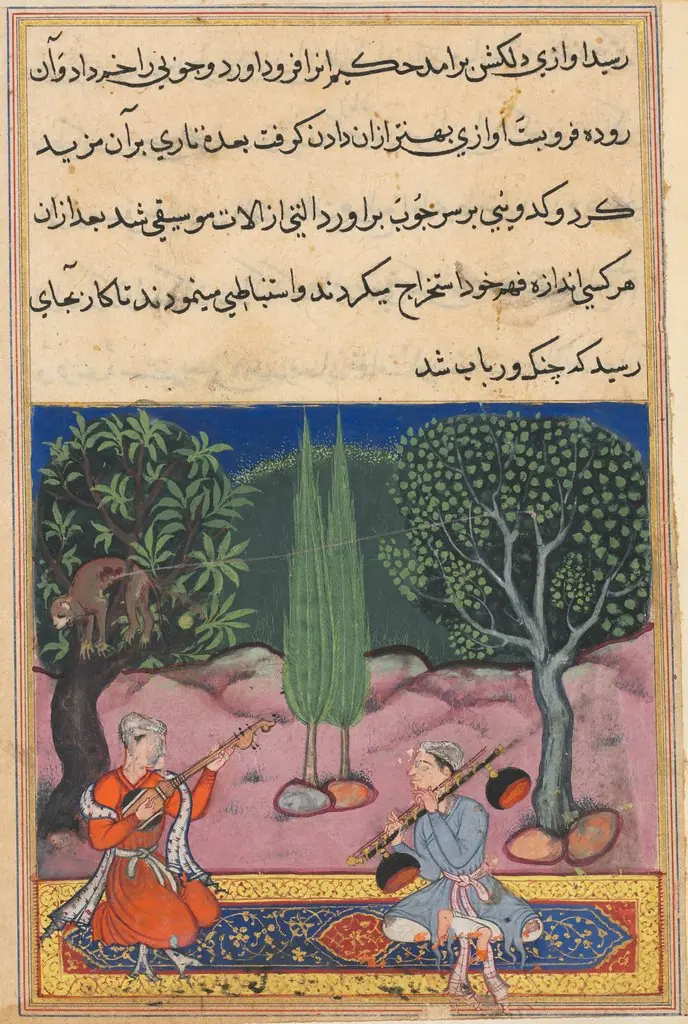 The invention of musical instruments from the intestines of a monkey, from a Tuti-nama (Tales of a Parrot): Fourteenth Night
 The Parrot Addresses Khujasta at the Beginning of the Twenty-sixth Night, from a Tuti-nama (Tales of a Parrot)