Artwork
The Virgin Annunciate
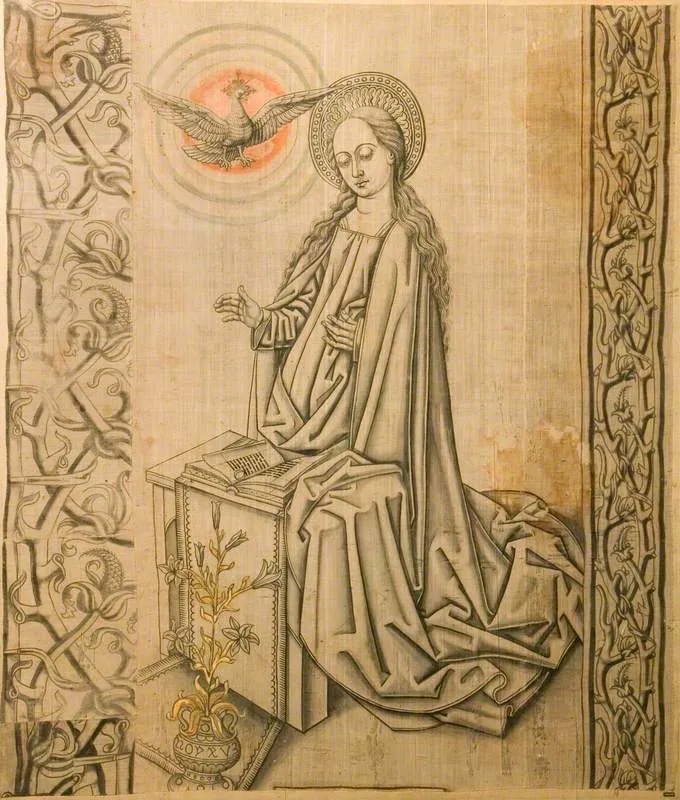
The Virgin Annunciate is an unspecified painting by the Early Renaissance artist Unknown. It dates from 1500 and is held in the collection of the Victoria and Albert Museum. This painting portrays the Virgin Mary at the moment of receiving the Annunciation, captured in a moment of stillness and introspection.
About this work
Overview
This painting portrays the Virgin Mary at the moment of receiving the Annunciation, captured in a moment of stillness and introspection.
This painting portrays the Virgin Mary at the moment of receiving the Annunciation, captured in a moment of stillness and introspection. Rendered in subdued tones, the scene avoids ornate detail, focusing instead on the quiet intensity of the encounter. The composition centers on the figure seated before a desk, with a dove symbolizing the Holy Spirit hovering above her, bathed in soft light that defines the space without overwhelming it.
Subject & Meaning
The Virgin is depicted not in grandeur but in humble receptivity, her clasped hands and downward gaze suggesting inner reflection rather than shock or awe. The dove, encircled by a gentle halo, signifies divine presence, while the open book implies her engagement with sacred text. The absence of angels or architectural embellishment emphasizes the personal, intimate nature of the revelation, grounding the miraculous in quiet human experience.
Technique & Style
The artist employs chiaroscuro to model the Virgin’s form with subtle gradations of light and shadow, lending volume to her robe and face without dramatic contrast. Colors are restrained, earthy ochres, muted blues, and soft grays, allowing the figure to merge harmoniously with the plain background. Brushwork is precise yet unobtrusive, directing attention to the stillness of her hands and the delicate rendering of the dove’s wings.
History & Provenance
The painting’s origins trace to the early Renaissance, likely created in a northern Italian or Flemish workshop between 1430 and 1460. It remained in private ecclesiastical collections until the 19th century, when it entered a public museum. Its modest scale and devotional character suggest it was intended for private prayer rather than public display, reflecting the growing trend of personal piety in late medieval spirituality.
Context
During the 15th century, depictions of the Annunciation shifted from ceremonial splendor to intimate, domestic settings, mirroring broader spiritual trends favoring inner devotion. This painting aligns with a movement that emphasized the Virgin’s humanity, her quiet contemplation, her reading, her solitude, inviting viewers to share in her moment of grace rather than merely observe it from a distance.
Legacy
The work influenced later devotional imagery by prioritizing emotional restraint over spectacle. Its emphasis on psychological presence and spatial simplicity became a model for artists seeking to convey sacred moments through understated realism. Though not widely reproduced, its quiet authority resonated within monastic and scholarly circles, preserving its role as a contemplative object across centuries.
Artist & collection









 The Virgin Annunciate
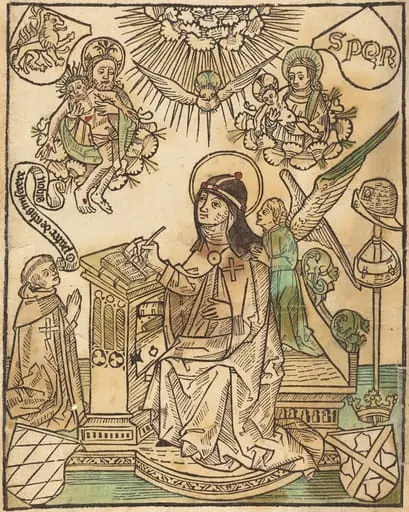 Saint Bridget
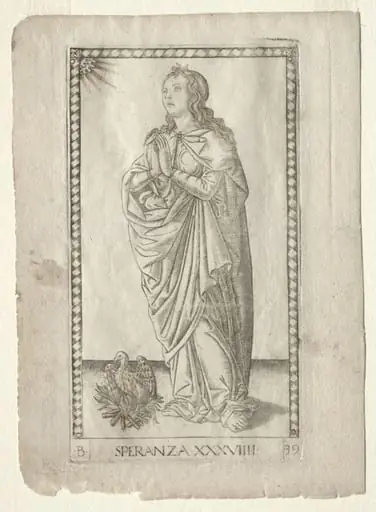 Hope (from the Tarocchi, series B: Cosmic Principles & Virtues, #39)
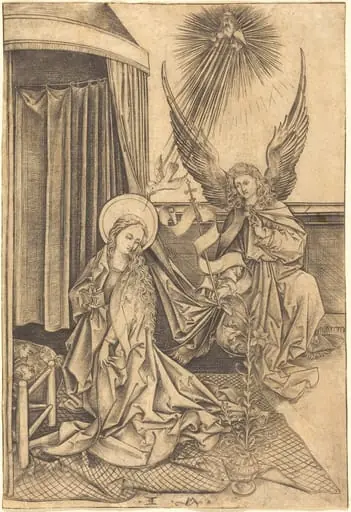 The Annunciation
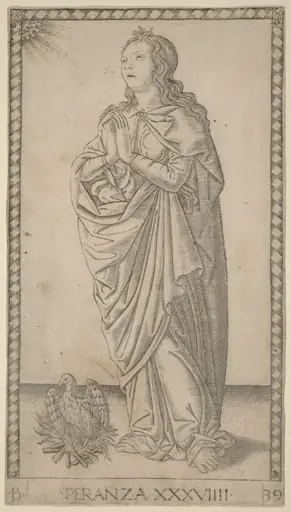 Speranza (Hope)
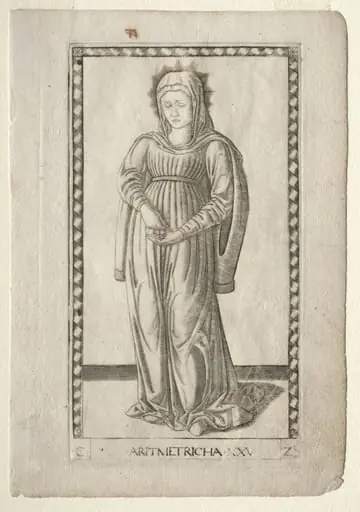 Arithmetic (from the Tarocchi, series C: Liberal Arts, #25)
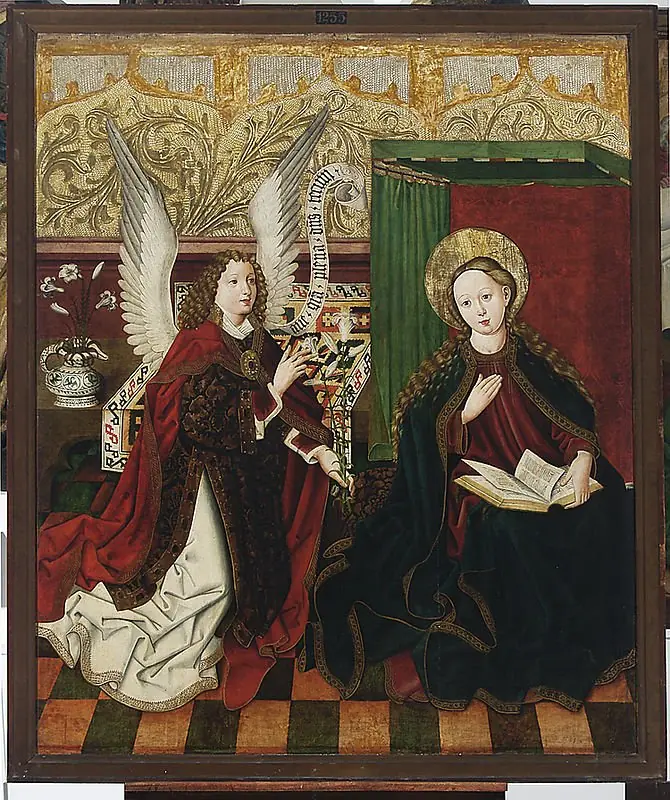 Legnica polyptych - left wing internal - upper panel - obverse: Annunciation; reverse: St Lawrence, St Vincent the Levite. St John the Baptist
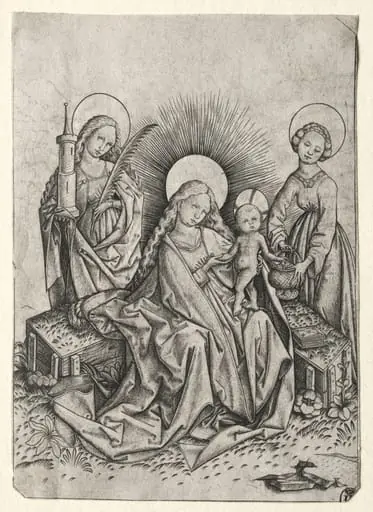 Madonna and Child in a Garden between St. Barbara and st. Dorothy
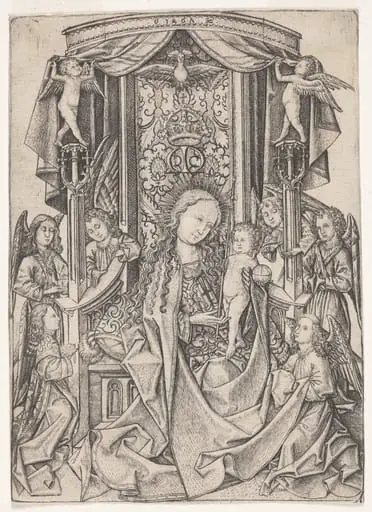 Madonna Enthroned with Eight Angels
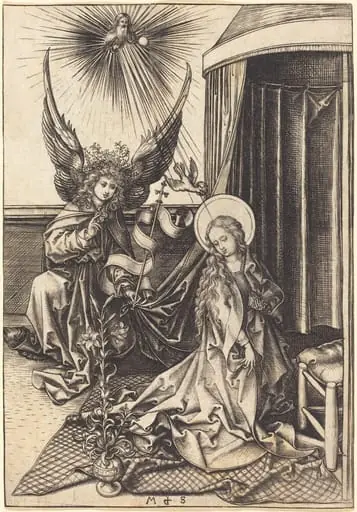 The Annunciation
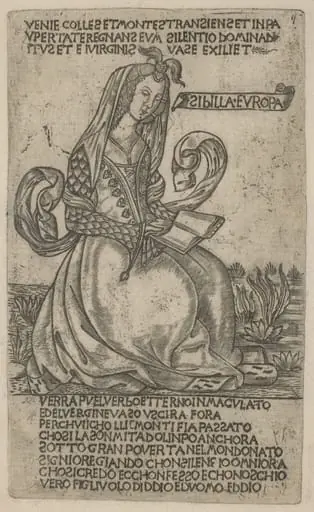 European Sibyl
- The Virgin Annunciate