Artwork
The Virgin Annunciate
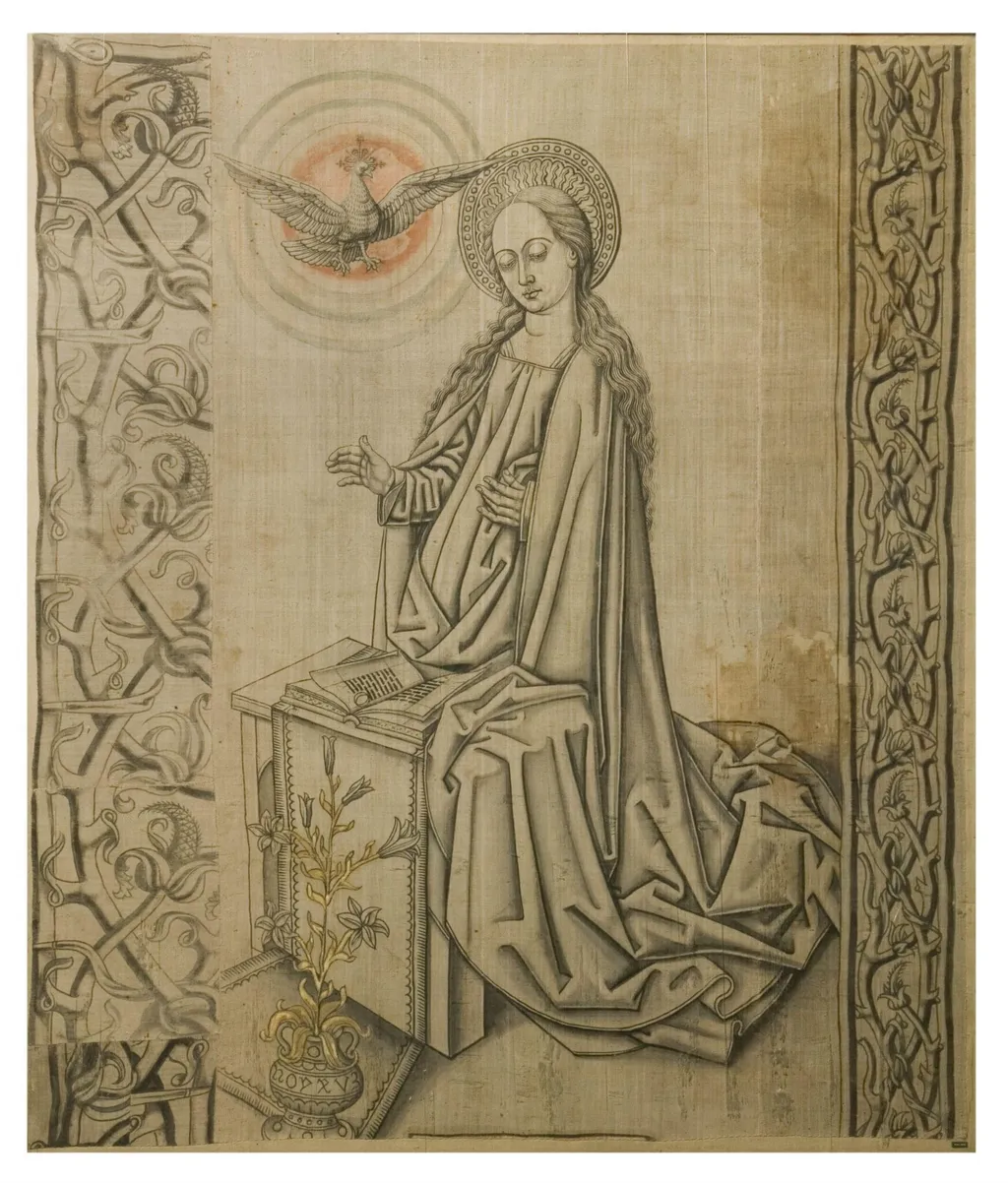
The Virgin Annunciate is a paint painting by the Early Renaissance artist Unknown. It dates from 1500 and is held in the collection of the Victoria and Albert Museum.
About this work
Overview
Its portable, lightweight support made it practical for religious institutions, and its survival is uncommon given the perishable nature of textile supports.
This fragmentary painting on cloth, dated around 1500, depicts the Annunciation in grisaille, a monochromatic technique rare in surviving works of its kind. Originally part of a much larger composition, possibly over three meters tall, it was likely used liturgically, such as to cover altarpieces during Lent. Its portable, lightweight support made it practical for religious institutions, and its survival is uncommon given the perishable nature of textile supports.
Subject & Meaning
The Virgin Mary is shown kneeling in prayer before an open book, a symbol of her acceptance of divine will. A white lily rests at her side, representing purity, while the Holy Spirit descends as a dove above her. The absence of the Archangel Gabriel, whose figure once faced her, is masked by a relocated border fragment, suggesting the work was later reconfigured after damage or division.
Technique & Style
Executed in grisaille on linen, the painting mimics the tonal subtlety of engraving, reflecting Netherlandish influences common in late medieval Spain. The restrained palette and fine linear detail echo Flemish models imported via trade and print. The halo’s stylized rendering points to a Valencian origin, where local artists adapted northern European prototypes into regional devotional imagery.
History & Provenance
The fragment was discovered in a Spanish convent, likely part of a dismantled altarpiece or organ shutter. Its textile support and stylistic traits align with works produced in Valencia during the late 15th century, a center where Flemish artistic models were widely copied. The painting’s survival as a fragment underscores the fragility of cloth-based religious art, most of which perished over time.
Context
In late medieval Spain, Netherlandish paintings and their engraved reproductions heavily influenced local artistic production. Artists in Valencia and elsewhere adopted Flemish compositions and techniques due to trade networks and the circulation of prints. This work exemplifies how imported visual culture was localized, serving devotional needs while retaining northern formal conventions.
Legacy
As one of the few surviving examples of grisaille painting on cloth from this period, it offers insight into a once-common but now nearly vanished category of religious art. Its existence highlights the mobility of devotional imagery across Europe and the adaptability of Spanish workshops in integrating foreign styles into their own liturgical practices.
Artist & collection









 The Annunciation
 The Annunciation
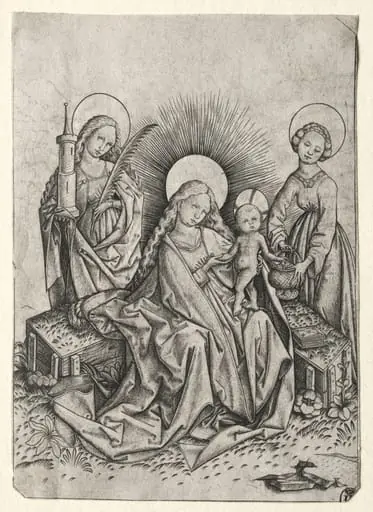 Madonna and Child in a Garden between St. Barbara and st. Dorothy
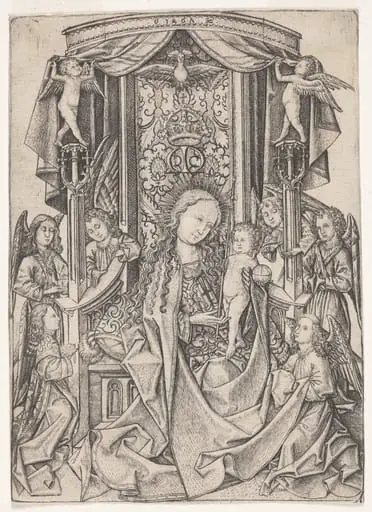 Madonna Enthroned with Eight Angels
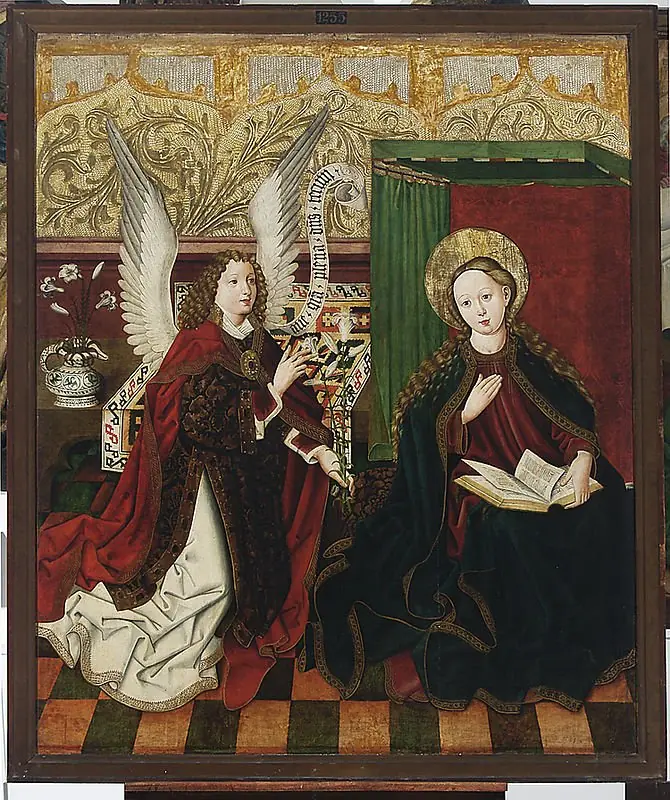 Legnica polyptych - left wing internal - upper panel - obverse: Annunciation; reverse: St Lawrence, St Vincent the Levite. St John the Baptist
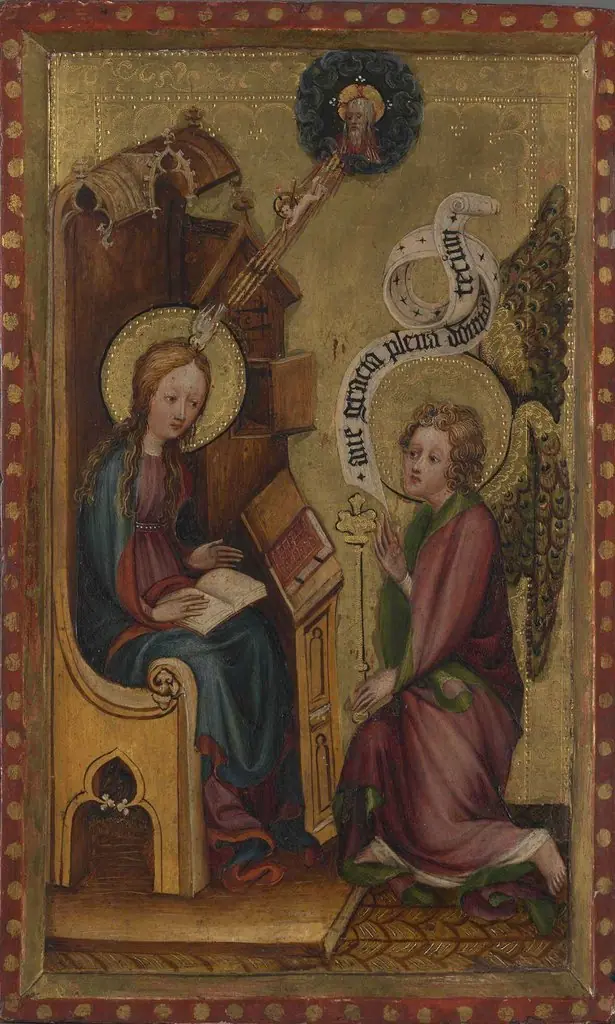 Die Verkündigung an Maria Rückseite: Teil einer Anbetung der Könige
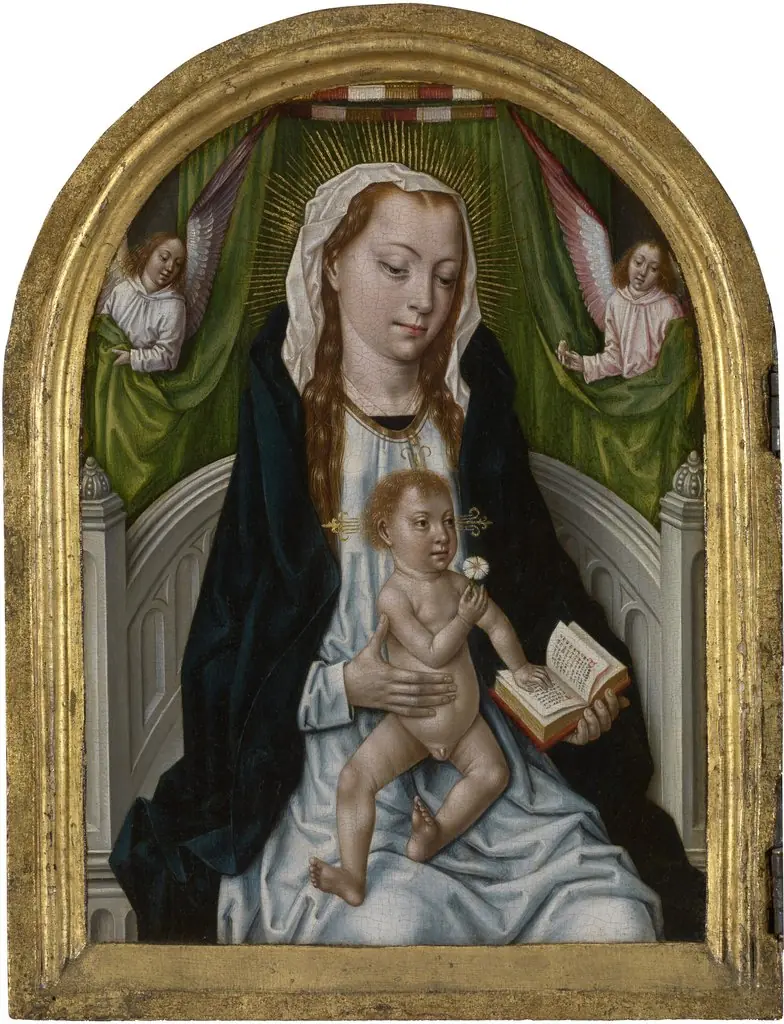 Virgin and Child with Angels
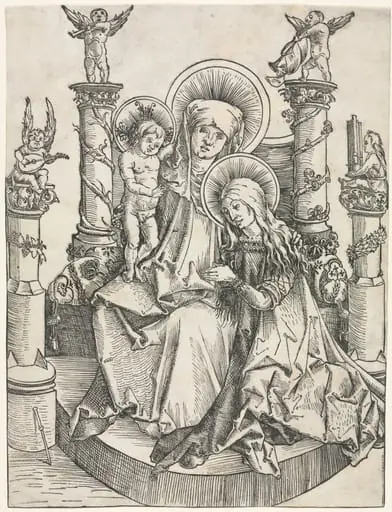 St. Anne, the Virgin and Christ Child