Artwork
Untitled
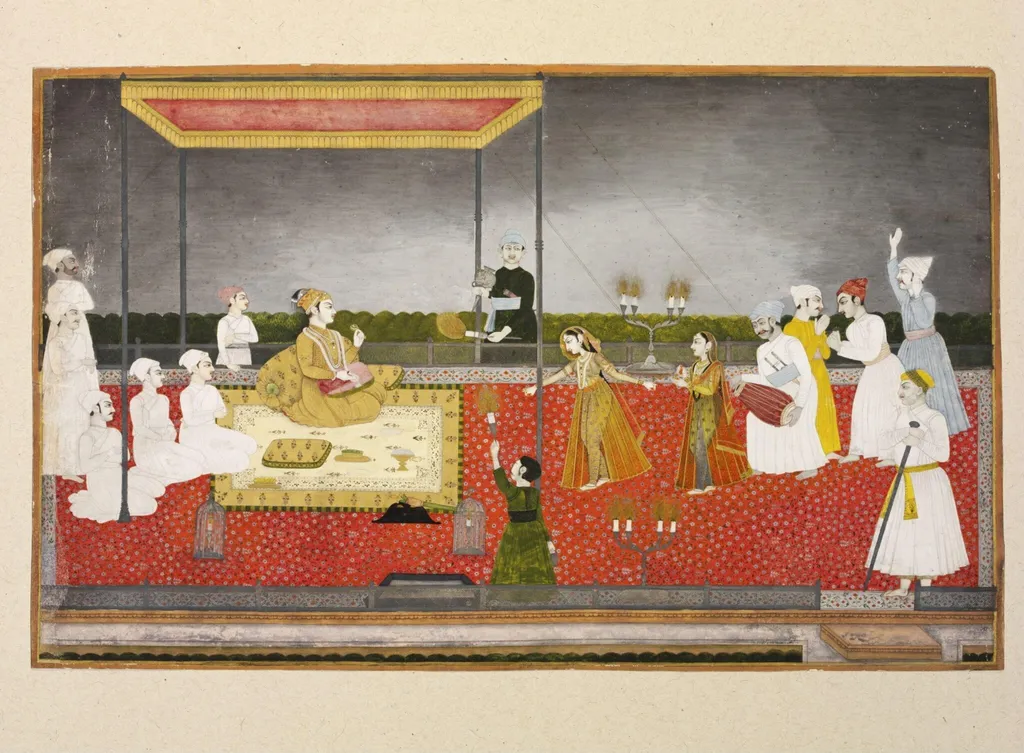
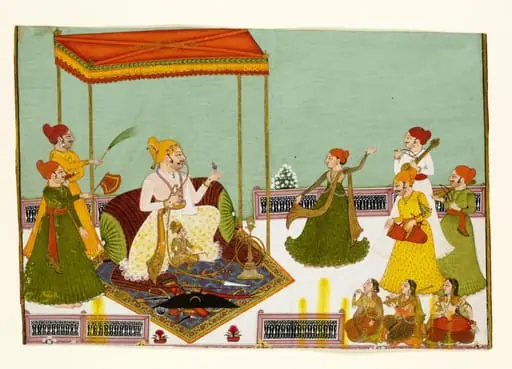
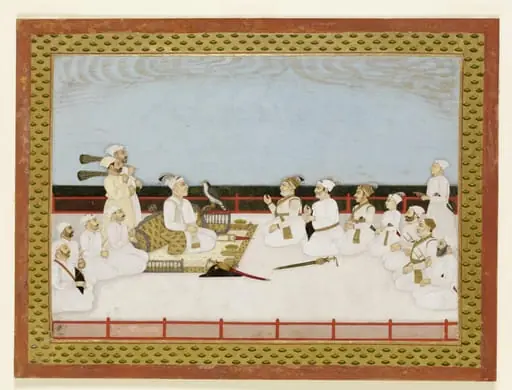
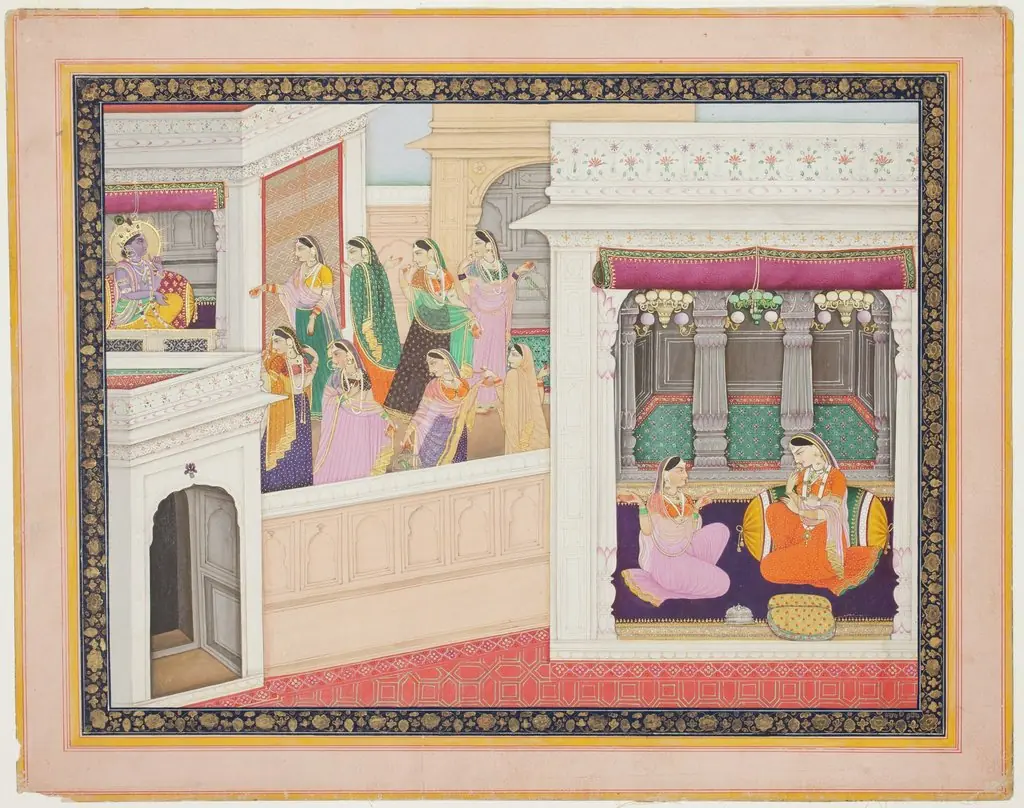
Untitled is a paint painting by the Rococo painting artist Unknown. It dates from 1755 and is held in the collection of the Victoria and Albert Museum. This opaque watercolor on paper, dated 1755, portrays a courtly gathering on a terrace.
About this work
Overview
A noble figure, possibly the prince Shaukat Jang, sits beneath a canopy on a raised platform, surrounded by attendants, musicians, and a dancer.
This opaque watercolor on paper, dated 1755, portrays a courtly gathering on a terrace. A noble figure, possibly the prince Shaukat Jang, sits beneath a canopy on a raised platform, surrounded by attendants, musicians, and a dancer. The composition is divided into two lively groups, one on the left with officials holding documents, the other on the right on a red carpet with performers and a woman in green.
Subject & Meaning
The central figure is presented as a ruler in regal attire, his sword and shield placed nearby, emphasizing authority and martial prestige. The surrounding courtiers and musicians suggest a ceremonial audience, while the dancer and vocalists convey the celebratory atmosphere of a royal darbar, reflecting the patron’s penchant for opulent display and cultural patronage.
Technique & Style
Executed in opaque watercolor, the work employs bold pigments, predominantly reds, yellows, and whites, against a dark border, creating a vivid contrast. Fine details such as a fan in a hand, miniature lanterns, and intricate costume patterns demonstrate a careful hand, though the overall finish is slightly less polished than comparable darbar scenes of the period.
History & Provenance
The painting originates from the mid‑18th century Indian courtly tradition and is attributed to the same timeframe as other documented darbar scenes. While the exact artist remains unidentified, the work’s style and subject matter align it with court commissions associated with Shaukat Jang’s reign, known for lavish patronage of the arts.
Context
Courtly gatherings like the one depicted were central to the political and cultural life of Indian princely states in the 1700s. Such scenes served both as records of royal ceremony and as visual affirmations of the ruler’s power, wealth, and support for music and dance, reinforcing the social hierarchy within the palace environment.
Artist & collection