Artwork
Venus in der Schmiede des Vulkan
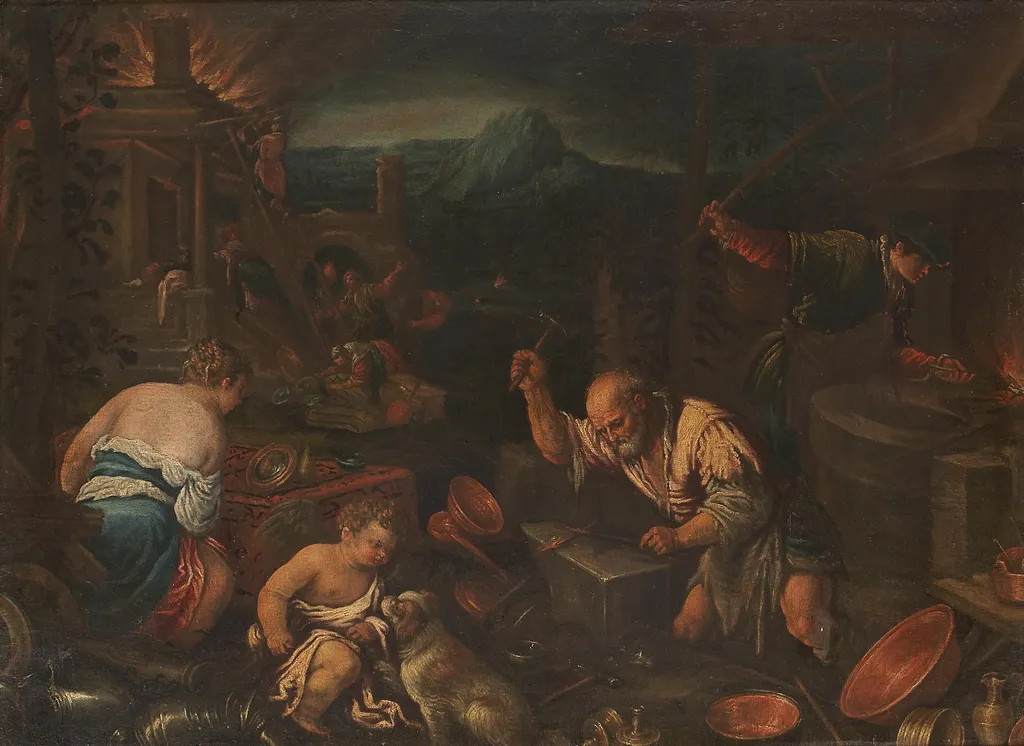
Venus in der Schmiede des Vulkan is an unspecified painting by the Early Baroque Italian artist Unknown. It dates from 1598 and is held in the collection of the Kunsthistorisches Museum.
About this work
Subject & Meaning
This mythological scene reflects Renaissance interest in allegorical representations where the divine and the earthly intersect through skilled labor.
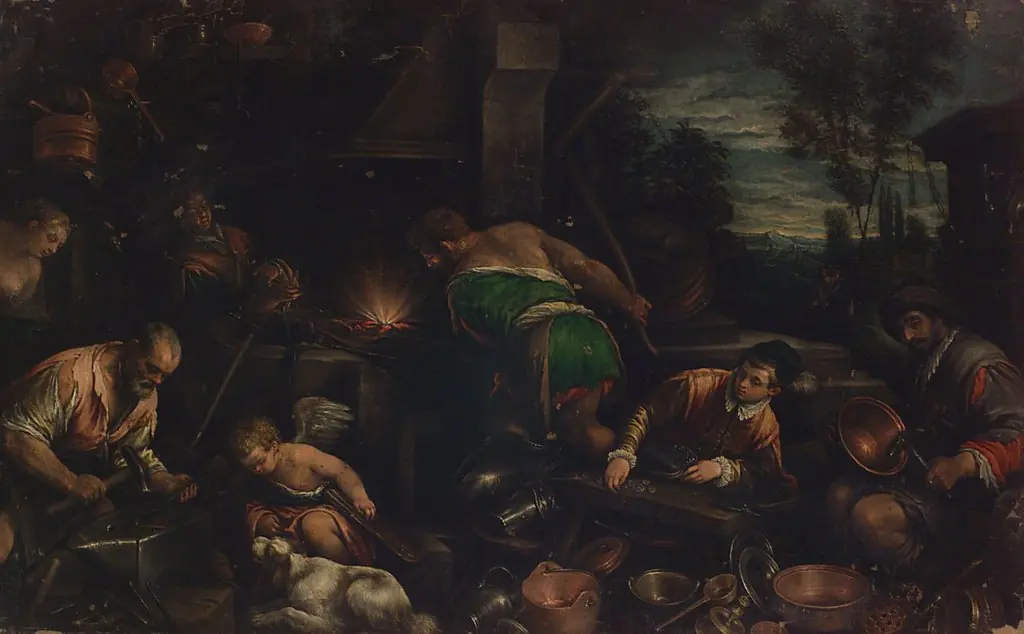
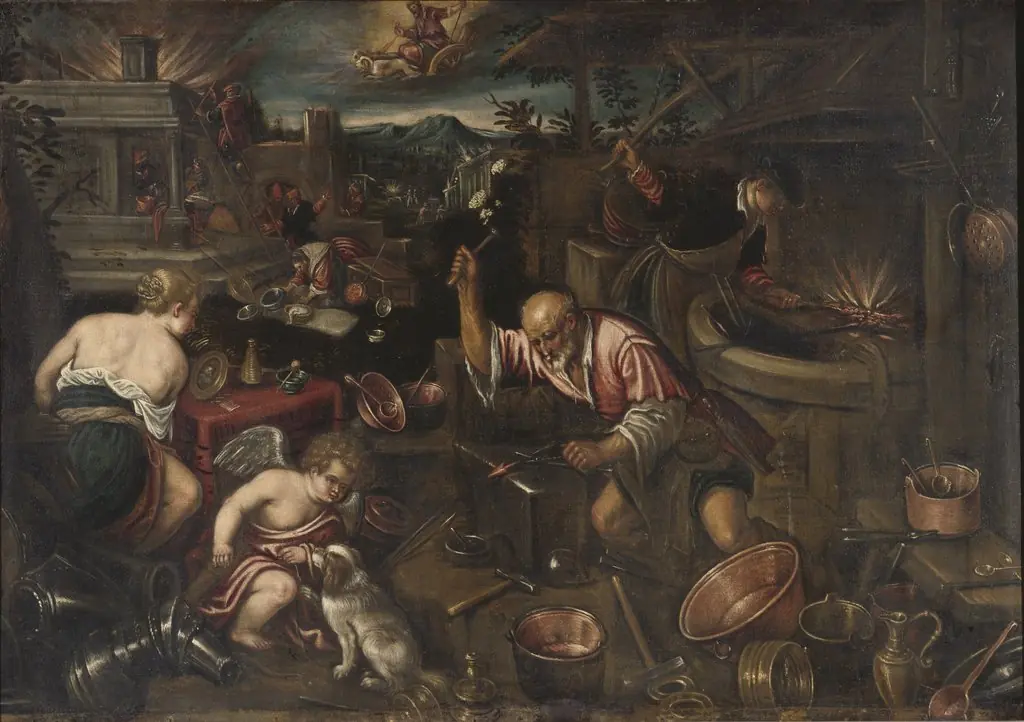
The painting portrays Venus, the goddess of love, within a forge setting, merging themes of divine beauty with the artisanal process of metalworking. By placing her in Vulcan's smithy, the work juxtaposes sensuality with the transformative labor of the blacksmith, suggesting a symbolic link between creation in both love and craft. This mythological scene reflects Renaissance interest in allegorical representations where the divine and the earthly intersect through skilled labor.
History & Provenance
The painting Venus in der Schmiede des Vulkan was created in 1595. It is identified as a work executed after the style or composition of Bassano. The piece is classified as a mythological painting depicting the goddess Venus. Today, the artwork is held in the collection of the Kunsthistorisches Museum, where it remains located.
The painting Venus in der Schmiede des Vulkan is part of the collection at the Kunsthistorisches Museum. It is listed in the museum's inventory under the accession details associated with its provenance as a work derived from the style of Bassano and painted in 1595. The work has been exhibited in the museum's galleries as part of its permanent display of mythological paintings.
Overview
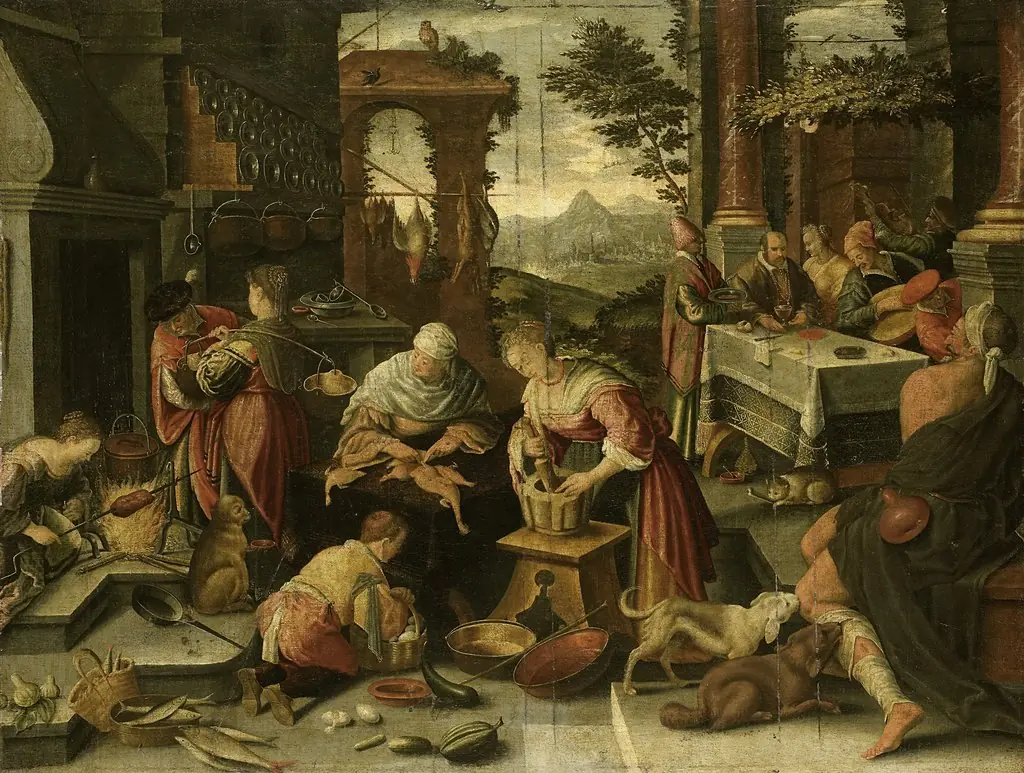
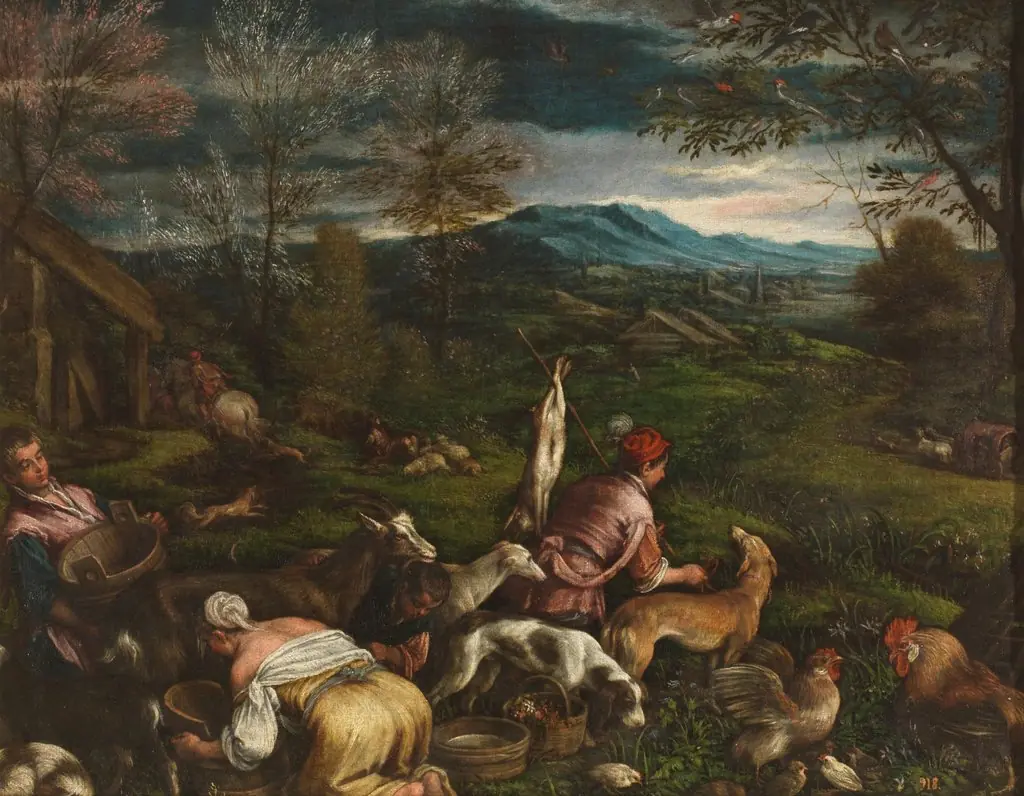
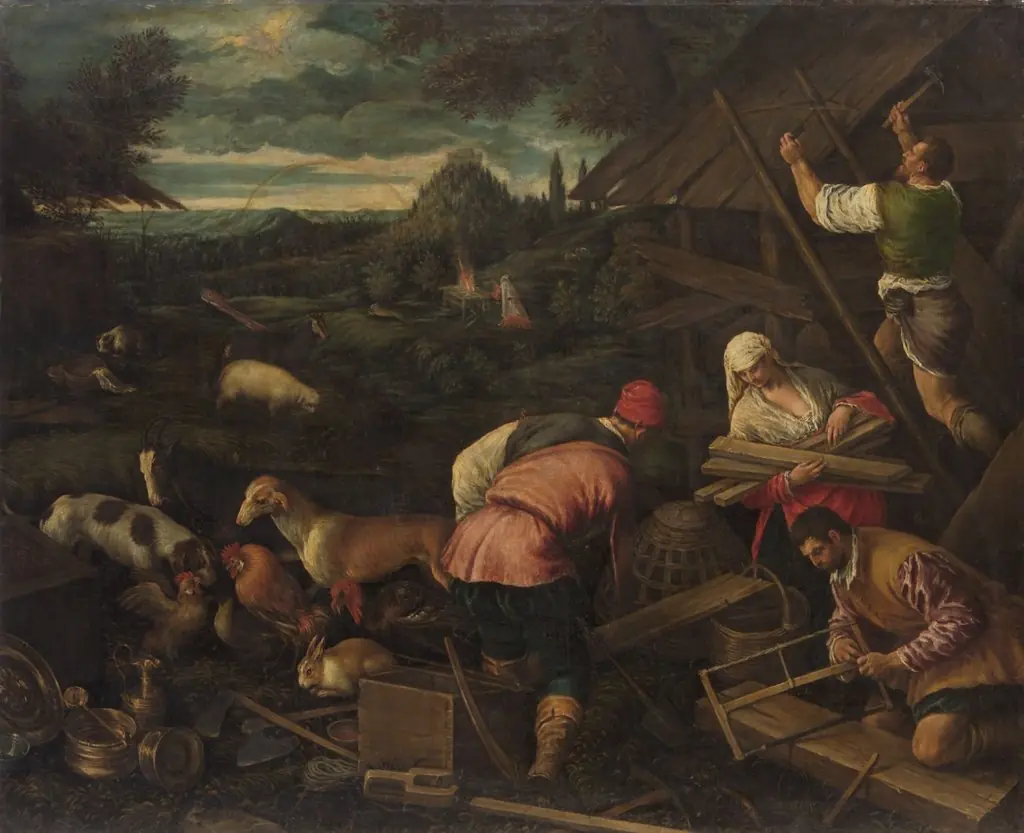
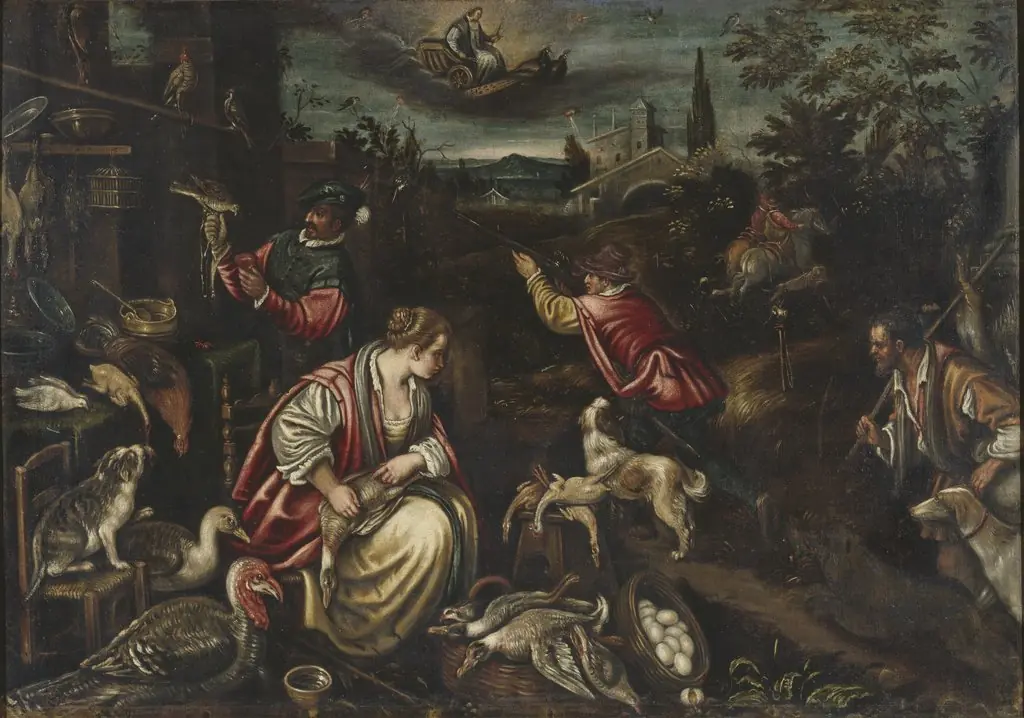
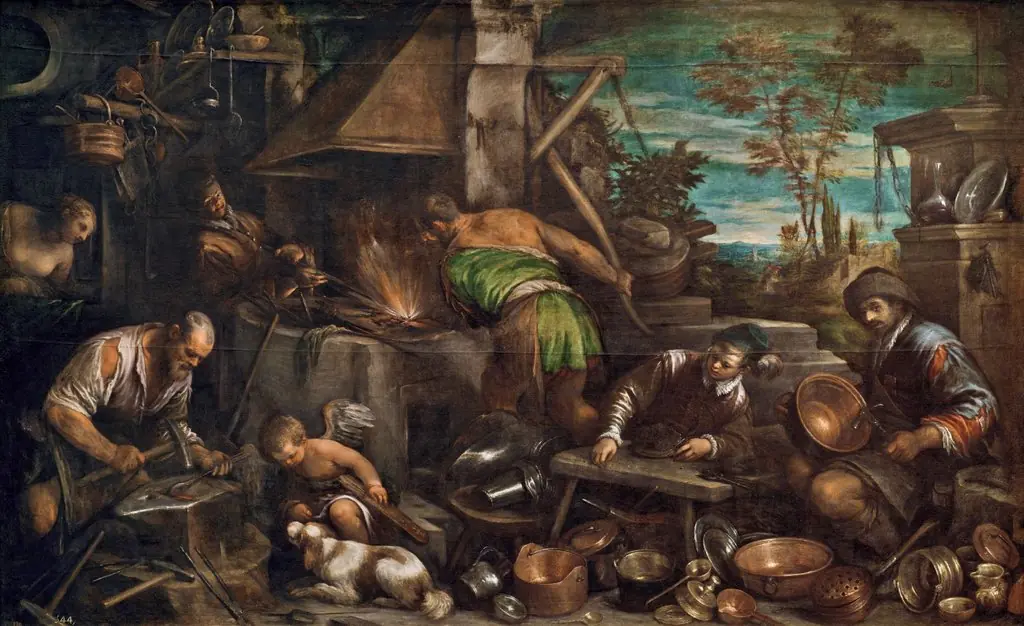
Venus in der Schmiede des Vulkan is a painting depicting a scene in a workshop or forge, featuring multiple figures set against a predominantly dark color palette with shades of brown and black.
Technique & Style
The artist employed chiaroscuro to create depth and volume, with strong contrasts between light and dark enhancing the three-dimensionality of the figures and surroundings.
Context
The mountainous landscape in the indistinct background suggests a classical or mythological setting, blending myth (Venus and Vulkan) with everyday activity (forge work).
Artist & collection