Artwork
Willem III, Count of Holland, Ordering the Beheadal of the Bailiff of Zuid Holland, 1336
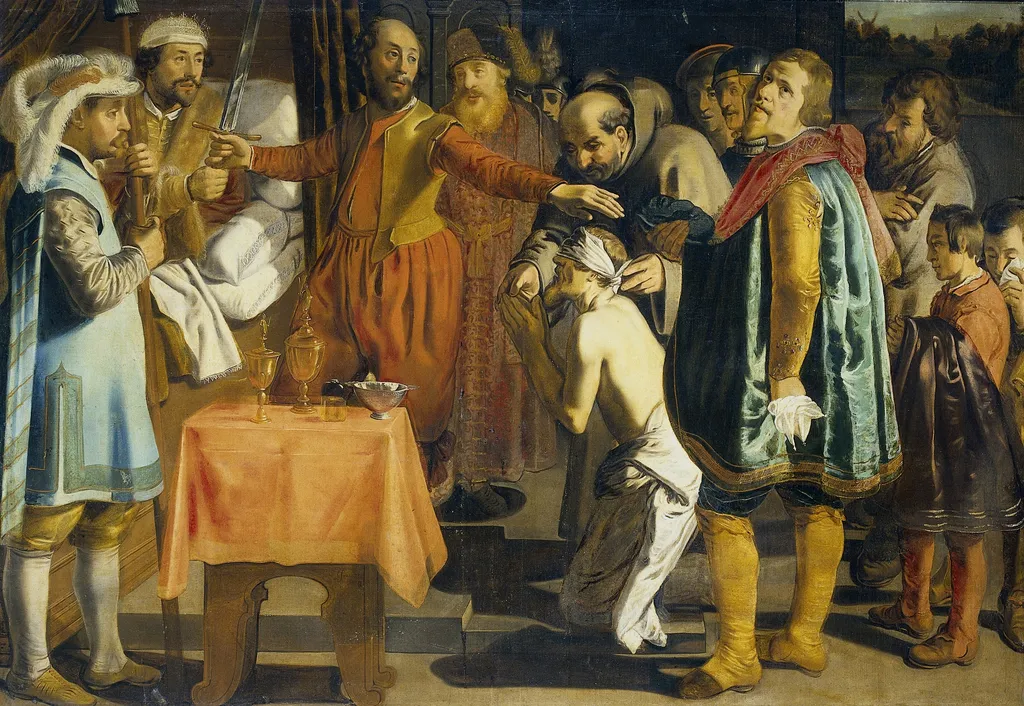
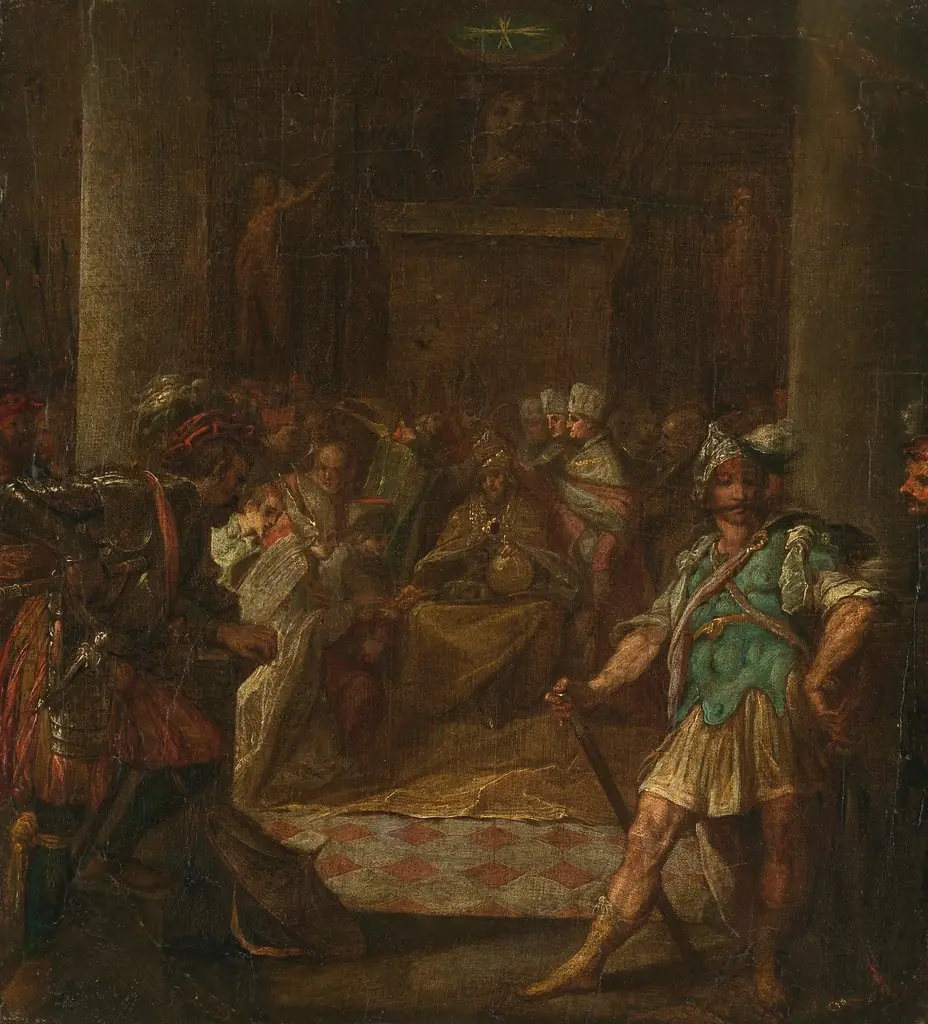
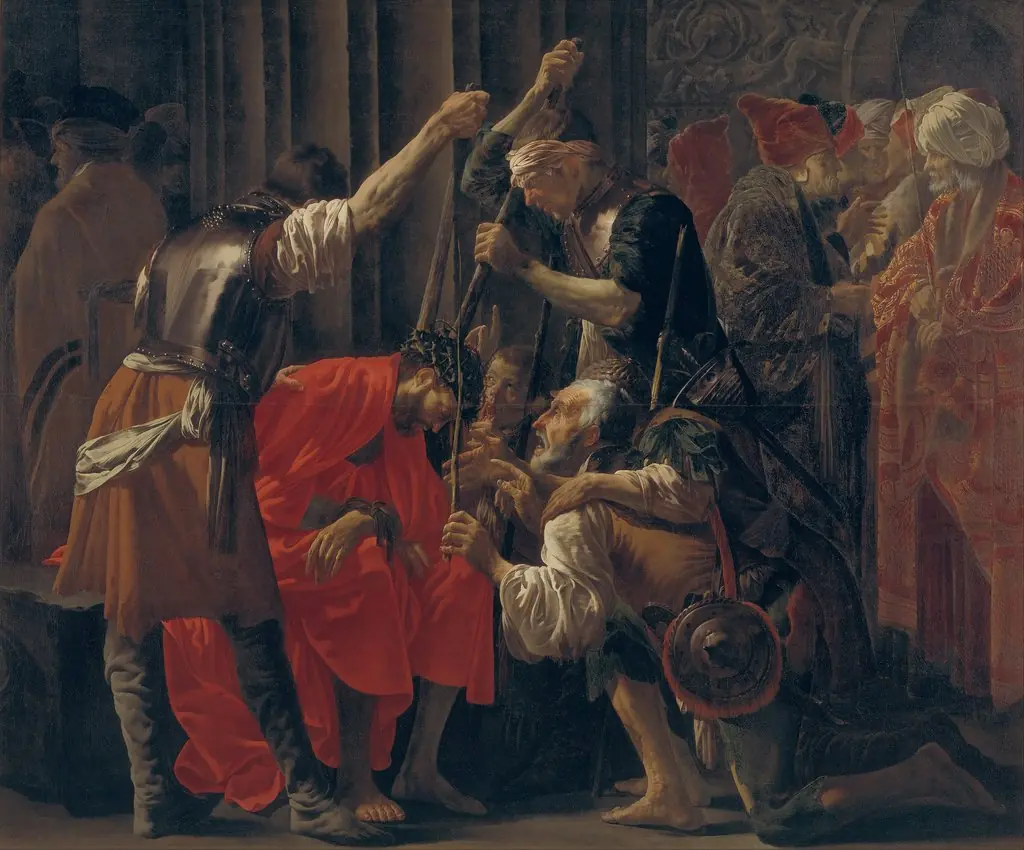
Willem III, Count of Holland, Ordering the Beheadal of the Bailiff of Zuid Holland, 1336 is an oil painting by the Dutch Golden Age artist Unknown. It dates from 1634 and is held in the collection of the Rijksmuseum. The canvas portrays a dramatic episode from 1336 in which Willem III, Count of Holland, orders the execution of the bailiff of Zuid Holland.
About this work
Technique & Style
The classification as a history painting indicates a narrative focus consistent with the subject matter of Count Willem III.
Created in 1634 by Simon Henrixz, this history painting is executed in oil paint on a canvas support. The work measures 135 cm in height and 195 cm in width. Produced in the Northern Low Countries, the piece utilizes standard materials for seventeenth-century panel or canvas works of this scale, though specific details regarding its current condition, handling history, or distinct stylistic maneuvers are not provided in the available records.
The classification as a history painting indicates a narrative focus consistent with the subject matter of Count Willem III.
History & Provenance
The painting was commissioned by the Dutch city authorities to depict a decisive moment of justice in 1336, reflecting political authority during the reign of Willem III, Count of Holland. It was created in 1634 in the Northern Low Countries, executed in oil on canvas, and originally entered the collection of the Rijksmuseum, where it remains housed today. The work measures 135 cm in height and 195 cm in width, aligning with the dimensions recorded in its provenance documentation.
Overview
The canvas portrays a dramatic episode from 1336 in which Willem III, Count of Holland, orders the execution of the bailiff of Zuid Holland. Set in a dimly lit interior, the composition centers on a figure in a yellow vest gesturing toward a table draped in red, while a beheaded man is displayed nearby. The work is executed in oil on canvas and dates from the 17th century, reflecting a historical narrative rendered for a later audience.
Subject & Meaning
The scene captures a moment of judicial authority and violent retribution: the count commands the beheading, and the severed head, held by a armored attendant, symbolizes the enforcement of law and the political tensions of medieval Holland. The kneeling figure, covering his face, conveys shock or remorse, underscoring the moral gravity of the act.
Context
The painting reflects the 17th‑century Dutch interest in moralizing history paintings, a genre that combined narrative detail with didactic purpose. By portraying a medieval legal episode, the artist aligns contemporary concerns about authority and justice with a distant past, offering viewers a lens on the evolution of governance in the Low Countries.
Artist & collection