Artwork
Winter
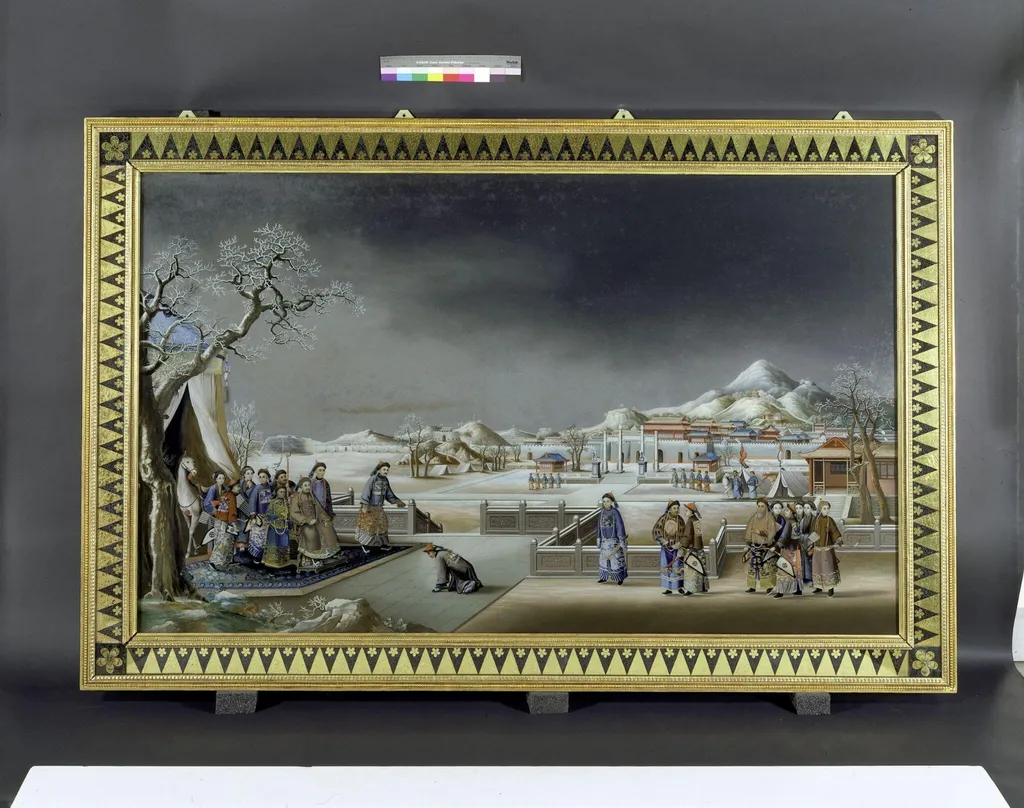
Winter is a glass painting by the Romanticist artist Unknown. It dates from 1804 and is held in the collection of the Victoria and Albert Museum.
About this work
Overview
Both are among the largest known examples of Chinese glass painting, distinguished by their scale and intricate detail.
This work is a reverse painting on glass, depicting a Chinese emperor in a winter court setting. Unlike traditional paintings on canvas, the image was applied in reverse on the back of a glass panel, with colors and gold leaf layered in reverse order to be viewed correctly from the front. The piece is part of a pair, its companion showing a summer scene.
Both are among the largest known examples of Chinese glass painting, distinguished by their scale and intricate detail.
Subject & Meaning
The scene portrays an imperial audience in a snow-dusted landscape, with the emperor seated beneath an ornate pavilion surrounded by bare trees and architectural elements. The setting conveys authority and seasonal stillness, aligning with traditional Chinese court iconography. The winter theme may symbolize reflection, endurance, or the emperor’s enduring rule.
The companion summer panel balances this with a scene of leisure, suggesting a cyclical view of imperial life across the seasons.
Technique & Style
The painting employs reverse glass technique, where pigments and gilding are applied in reverse sequence, details first, background last, to ensure correct viewing from the front. Fine brushwork renders architectural elements and figures with precision, while gold leaf highlights robes and ornamentation. The use of layered color and contrast creates depth despite the rigid medium. The style blends Chinese compositional conventions with European expectations of imperial portraiture, reflecting cross-cultural artistic exchange.
History & Provenance
Commissioned by Richard Hall, a senior East India Company official stationed in Canton between 1785 and 1802, the panels were sent to China around 1803 to be painted by local artisans. After their return to Britain, they remained in Hall’s London home until his death in 1834. They passed through his family until 1936, when his great-grandson Amyand John Hall bequeathed them to the Victoria and Albert Museum, where they remain today.
Context
Reverse glass painting flourished in southern China during the 18th century, particularly in Guangzhou, where artisans catered to foreign traders. These works were often made as souvenirs or diplomatic gifts, blending Chinese craftsmanship with Western demand for exotic imagery. Hall’s commission was unusual in its scale and intent, intended not as a trade item but as a personal memento of his time in China, reflecting growing European fascination with Qing court culture.
Legacy
The pair of glass paintings stands as a rare testament to transnational artistic collaboration in the late 18th century. Their survival and preservation in a major museum underscores their significance as both technical achievements and cultural artifacts. They illustrate how global trade networks facilitated the exchange of materials, techniques, and visual languages, leaving behind objects that resist easy categorization as purely Chinese or European.
Artist & collection









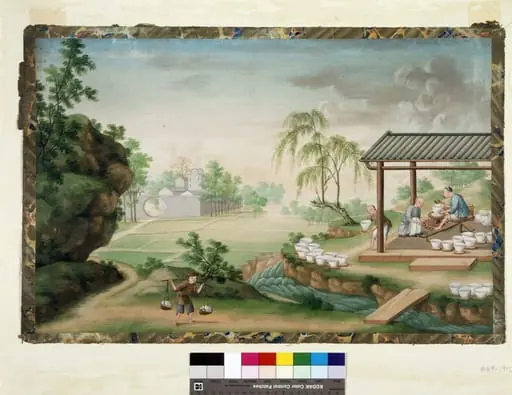
- Making Basins
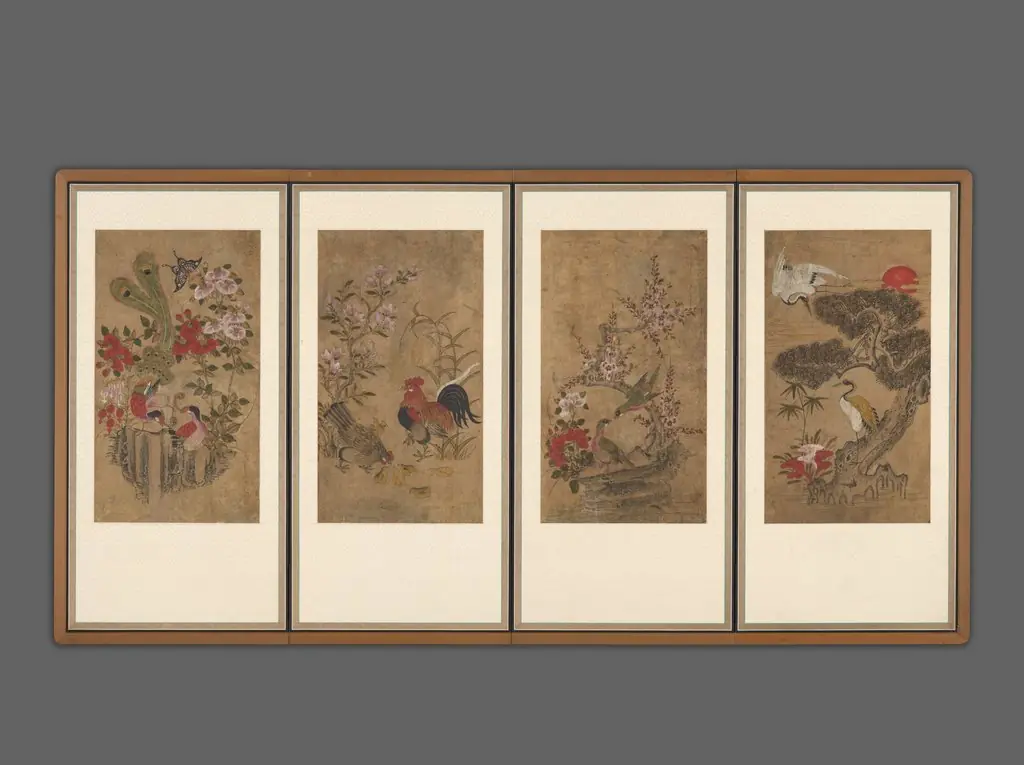 Birds and Flowers
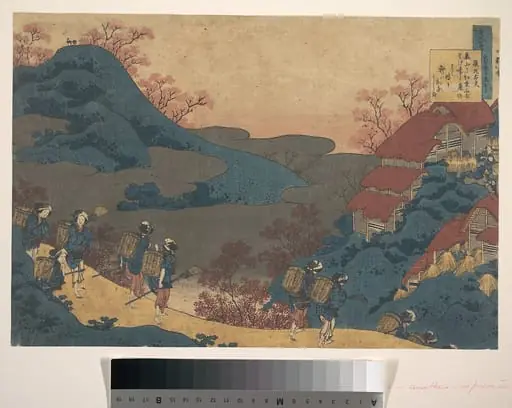 百人一首 乳母かゑとき 猿丸太夫|Poem by Sarumaru Dayū, from the series One Hundred Poems Explained by the Nurse (Hyakunin isshu uba ga etoki)
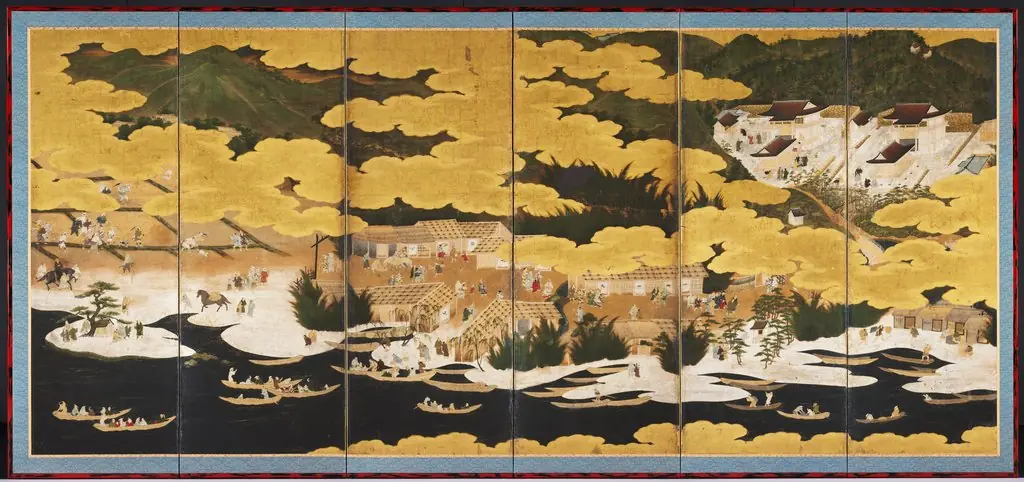 Famous Views of Ōmi
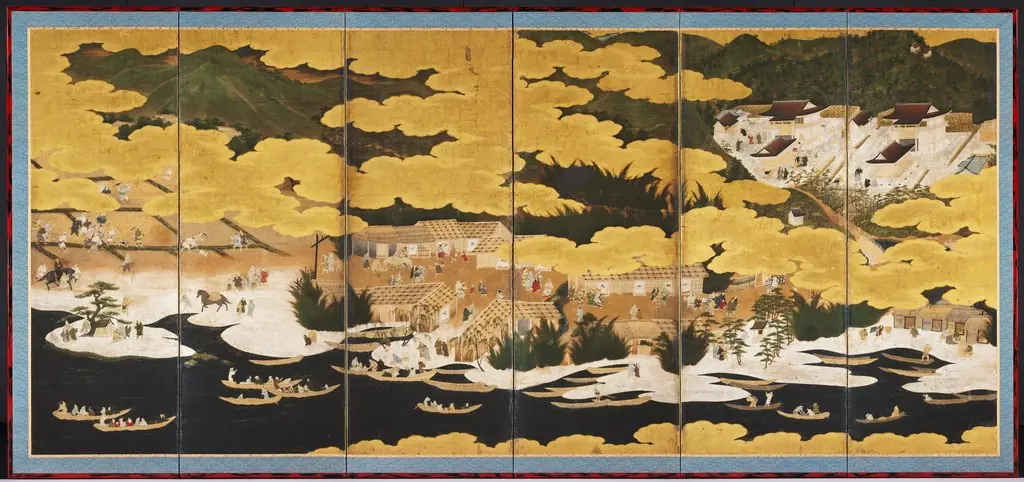 Famous Views of Ōmi
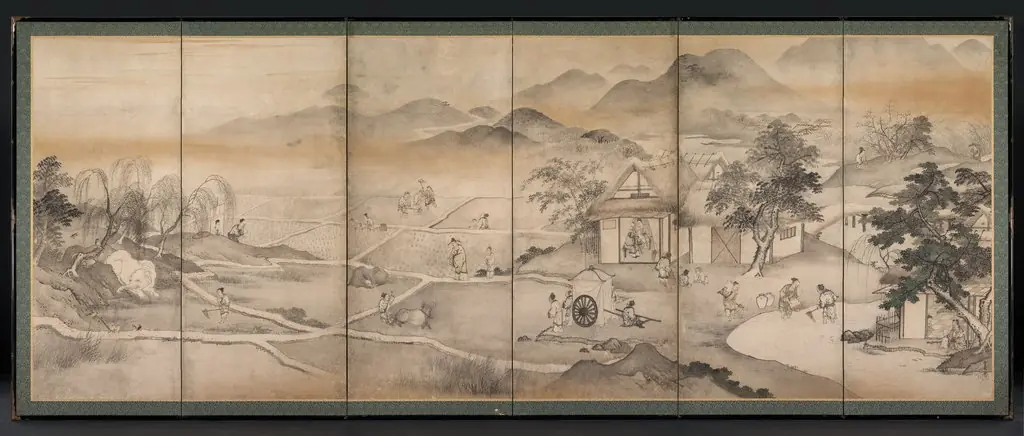 Emperor Yao Visiting Yu Chonghua
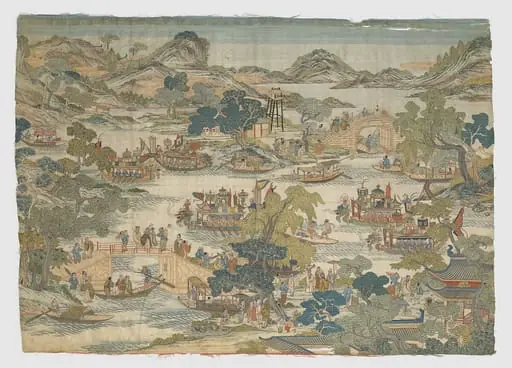 清 緙絲龍舟競渡圖|Dragon-boat festival performance
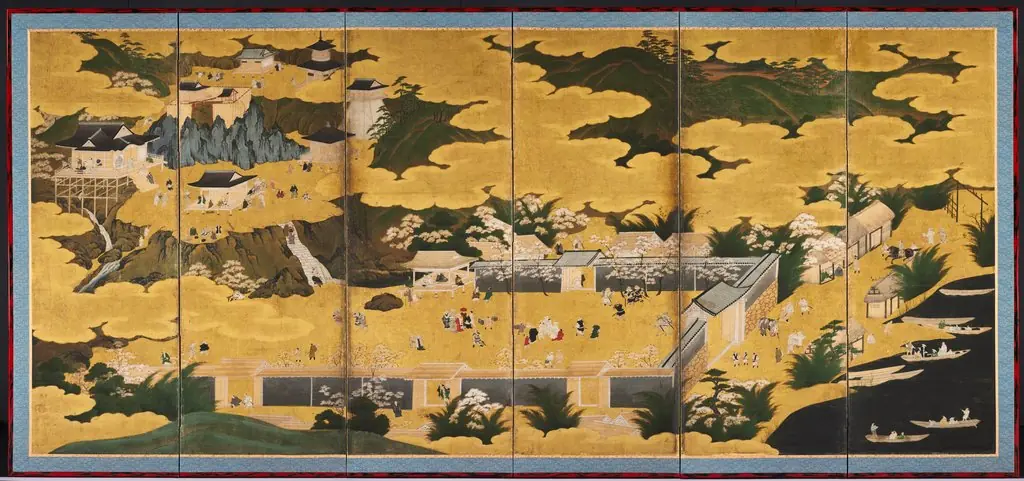 Famous Views of Ōmi
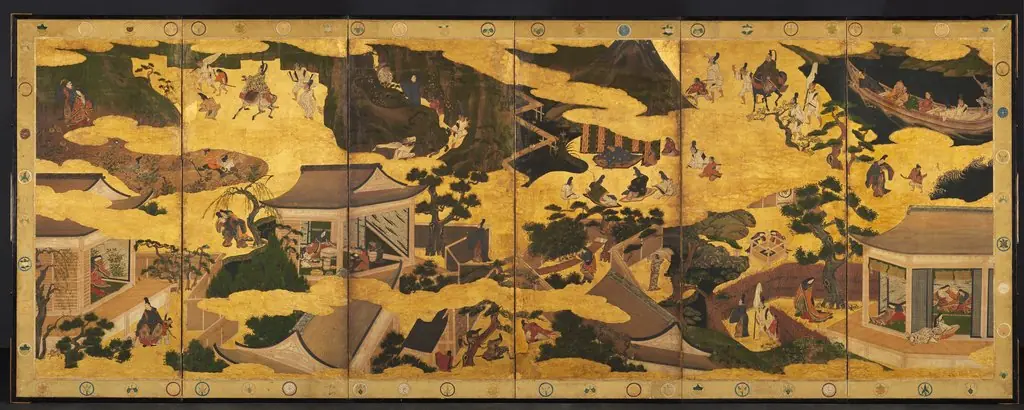 Scenes from the Tales of Ise
 Views of Kyoto
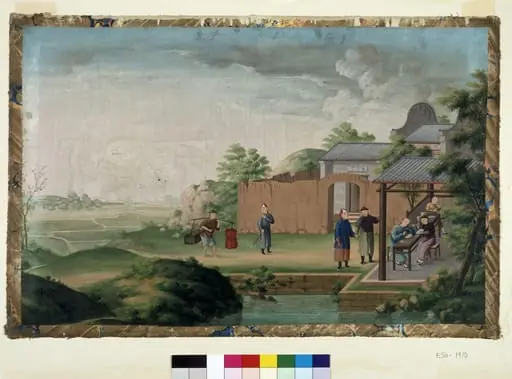 Potters Painting in Underglaze Blue
 Shaping Outsides and Footrims of Bowls