Artwork
Apparition of the Apostle Peter to Saint Peter Nolasco
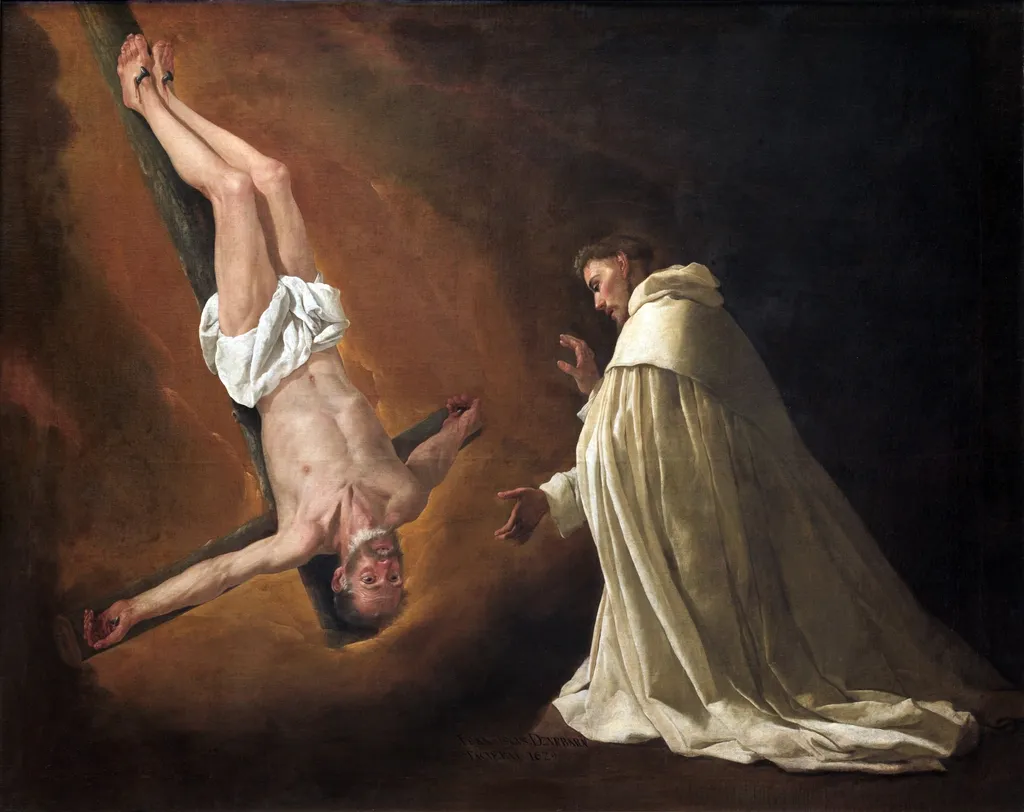
Apparition of the Apostle Peter to Saint Peter Nolasco is an oil painting by the Early Baroque Italian artist Francisco de Zurbarán. It dates from 1629 and is held in the collection of the Museo del Prado.
About this work
Subject & Meaning
The diagonal composition and suppression of spatial references create a timeless, otherworldly atmosphere in which the divine and human realms converge.
The painting depicts a consoling vision in which the Apostle Peter appears to Saint Peter Nolasco, founder of the Mercedarian order, which ransomed Christian captives from Muslim owners during the Reconquista. According to hagiographic tradition, Nolasco had wished to travel to Rome to visit the Apostle's tomb but was prevented from doing so; over three successive nights Peter comforted him and urged him to remain in Spain to continue his evangelizing mission, appearing on the third night in the manner of his martyrdom, crucified upside-down.
Zurbarán renders the apparition as an elderly, anatomically precise figure wrapped in a luminous white loincloth, surrounded by a golden aura that illuminates the right side of the canvas. Nolasco kneels with arms outstretched, gazing directly at the apostle, dressed in an ivory cloak with gilded folds against a dark, neutral ground. The diagonal composition and suppression of spatial references create a timeless, otherworldly atmosphere in which the divine and human realms converge.
The work forms a pair with Zurbarán's companion painting depicting Nolasco's vision of the Heavenly Jerusalem, and both belong to a cycle of twenty-two canvases commissioned in 1628 by the Convent of Mercy in Seville to celebrate Nolasco's recent canonization.
Technique & Style
The painting is executed in oil on canvas, measuring 179 × 223 cm. The artist's hand is evident in the brilliant white drapery and the fusion of divine and human realms. The composition employs a diagonal arrangement with suppressed spatial references, creating an atemporal atmosphere through its monumental figures.
The Apostle Peter is rendered with rigorous anatomical precision, his face a naturalistic portrait of an old man. His perizonium is a dazzling white, and the figure's glow forms a golden aura that illuminates the right side of the canvas. Saint Peter Nolasco appears with open arms, wearing an ivory cape with golden folds that stand out against the neutral, dark background.
The work demonstrates particular skill in expressing the figures' emotions, tactile values, and textural quality, with a chromatic palette centered on whites and grays within an austere composition.
History & Provenance
The painting was produced in 1629 by Francisco de Zurbarán as part of a commission of twenty-two canvases depicting the life of Saint Peter Nolasco, ordered on 29 August 1628 by Juan de Herrera, head of the Convent of the Casa Grande de la Merced Calzada in Seville, to mark the saint's recent canonization. The series was intended for the convent's claustro de los Bojes, and Zurbarán, assisted by helpers, was required to deliver the works within a year; only about eleven of the canvases are known to survive today, dispersed among various museums and private collections.
The work remained at the Merced Calzada convent in Seville until before 1808–1810, when it was sold to Manuel López Cepero, then dean of Seville Cathedral. In 1821 López Cepero ceded the painting to Ferdinand VII of Spain in exchange for other works from the royal collections. It subsequently passed from the Royal Collection into the holdings of the Museo del Prado in Madrid, where it is catalogued as P001237.
The artwork was included in the exhibition "Zurbarán," organized by The Metropolitan Museum of Art in New York in 1987. It was also featured in a dedicated Zurbarán retrospective held at the Museo del Prado in 1988.
Context
Executed in 1629, this canvas forms part of a twenty-two-painting cycle commissioned for the Convent of Mercy in Seville to commemorate the recent canonization of Peter Nolasco. Art historians regard this work, alongside its pendant depicting the Heavenly Jerusalem, as the artistic pinnacle of the now-dispersed series. The composition demonstrates Zurbarán's mastery of tactile textures and austere chromatics, particularly in the rendering of white fabrics against dark backgrounds.
Scholars note that the artist likely adapted the iconography from earlier engravings by Johann Friedrich Greuter or drawings by Jusepe Martínez. The painting is frequently cited as a prime example of the artist's ability to merge naturalistic anatomical precision with a timeless, spiritual atmosphere through the suppression of spatial references.
Overview
Francisco de Zurbarán’s 1629 oil on canvas, titled Apparition of the Apostle Peter to Saint Peter Nolasco, is part of the Prado Museum’s collection in Madrid. The work bears the artist’s signature in Latin at its lower edge, confirming its authorship and date. The composition presents a dramatic encounter between two figures rendered in stark contrast against a dark backdrop.
Own this work as a print
Artist & collection
Artist
Francisco de Zurbarán was a Spanish Baroque painter. He is known primarily for his religious paintings depicting monks, nuns, and martyrs, and for his still-lifes. Zurbarán gained the nickname "Spanish Caravaggio",…

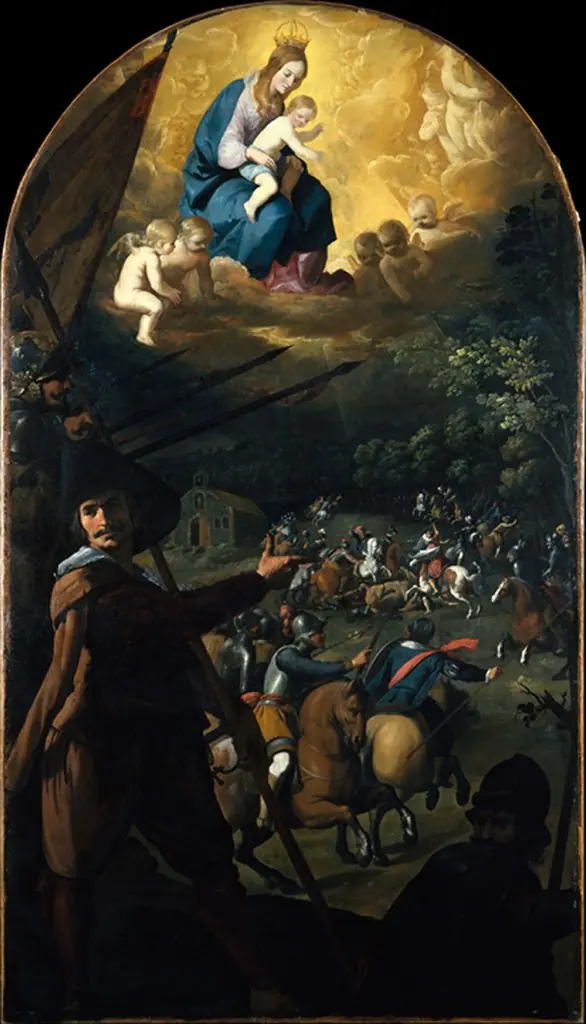

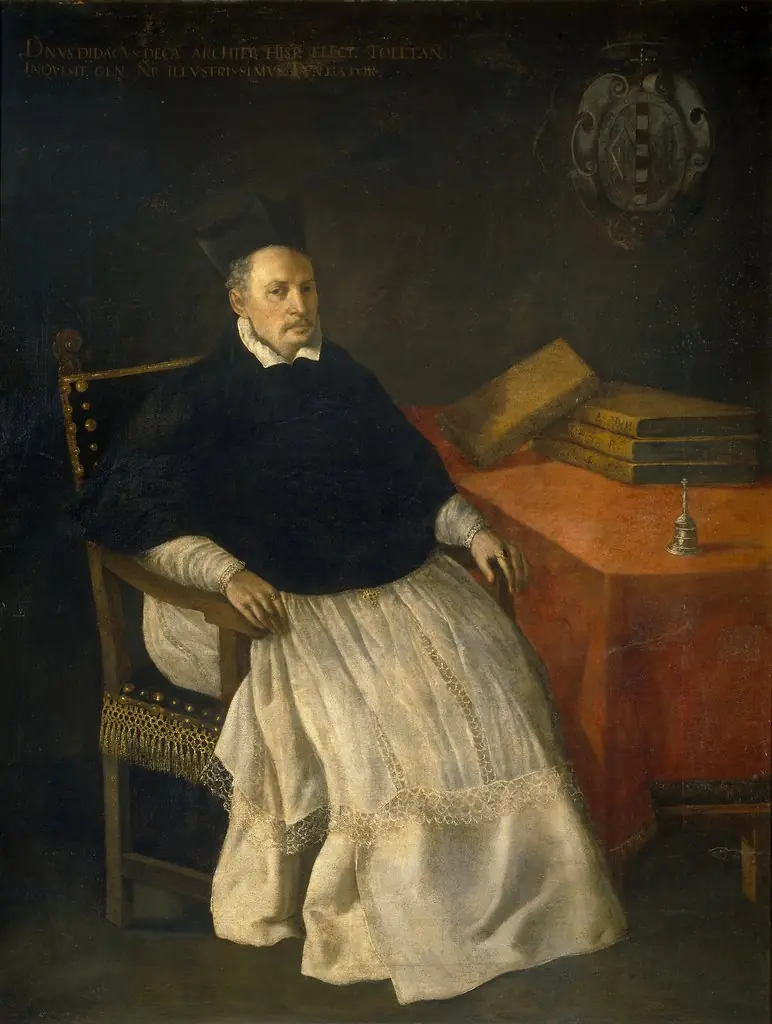
- Crucifixion of Christ
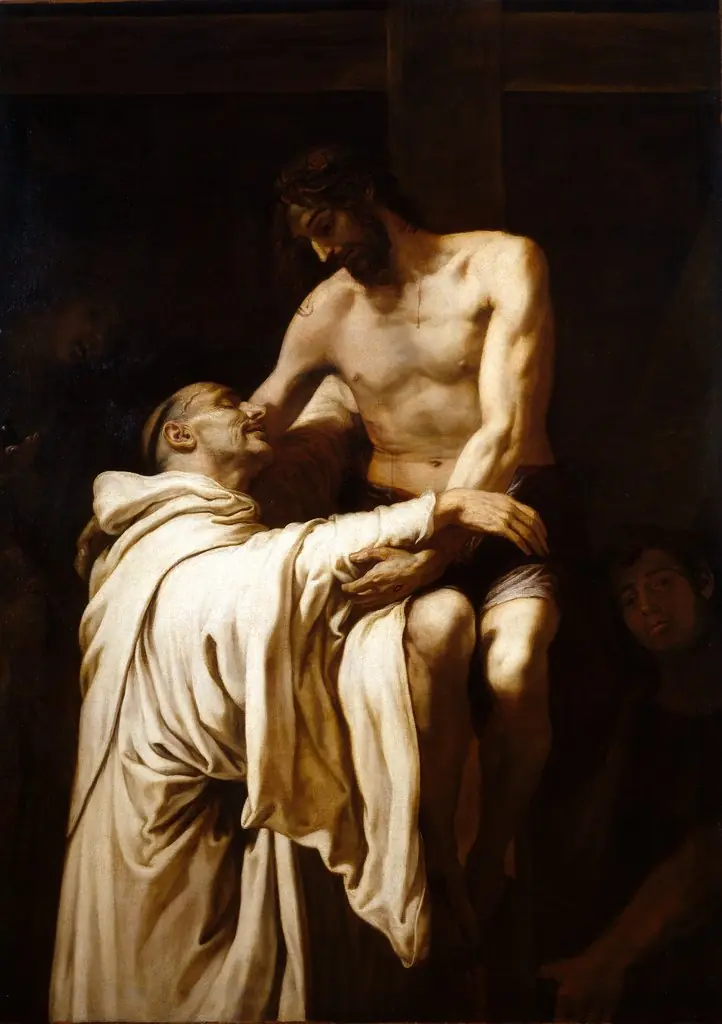 Christ embracing Saint Bernard
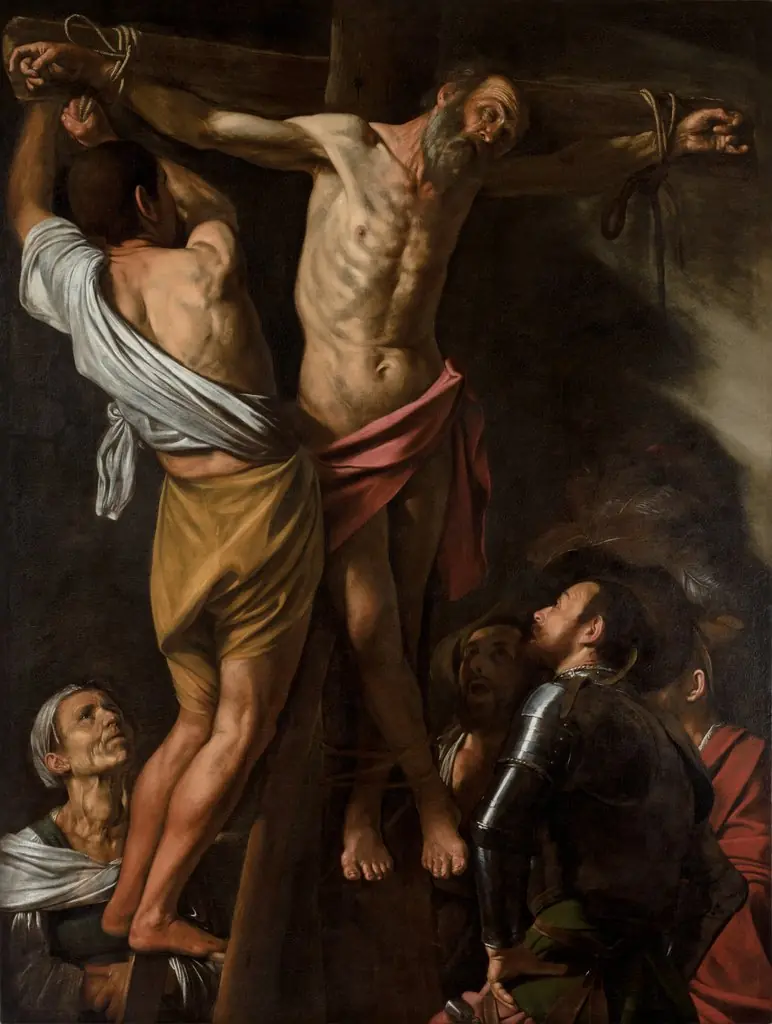 The Crucifixion of Saint Andrew
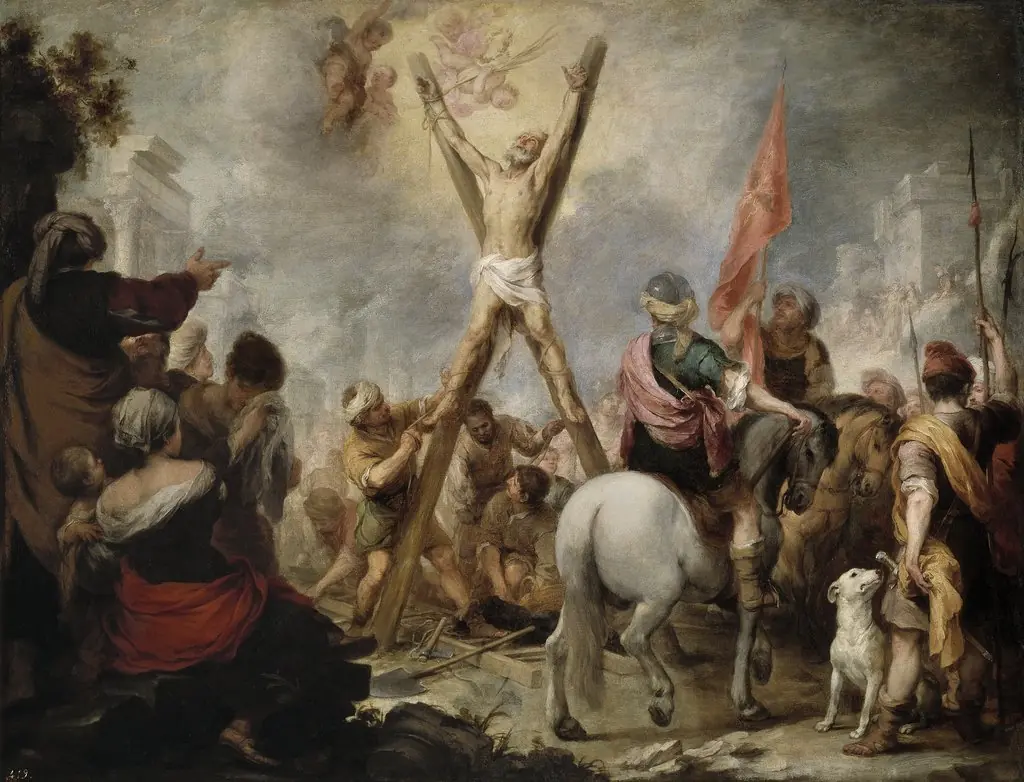 The Martyrdom of St. Andrew
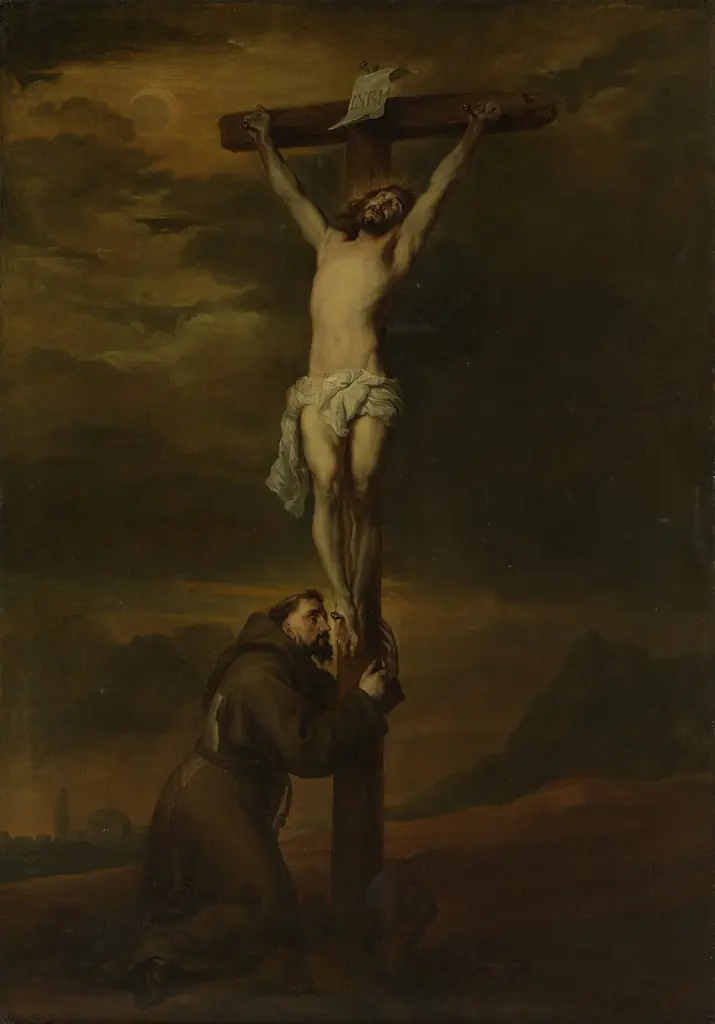 St Francis at the foot of the cross
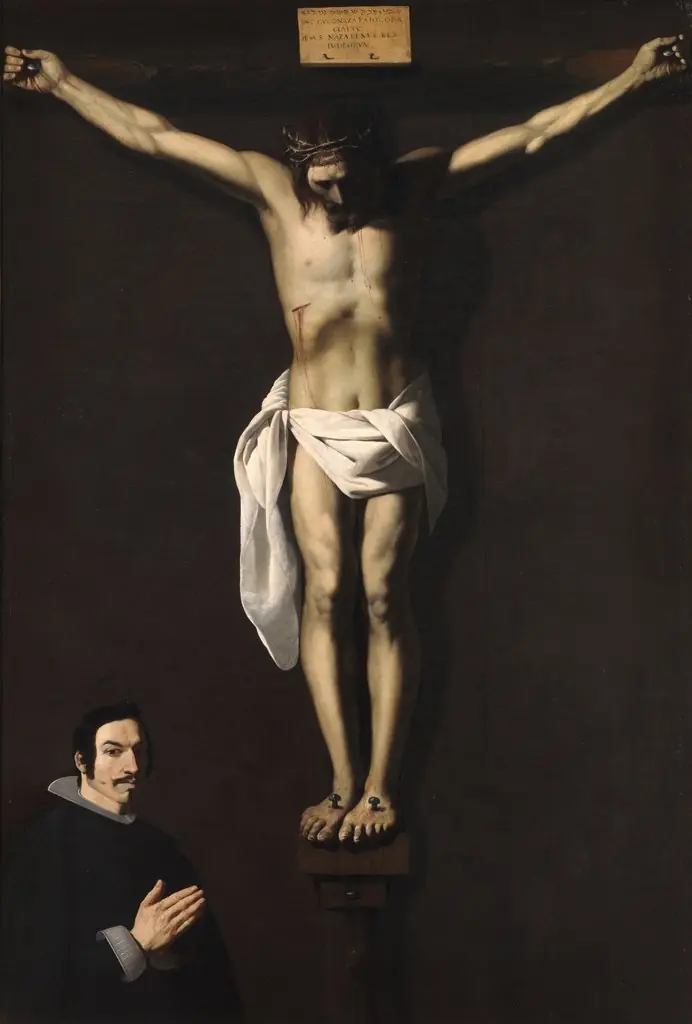 The Crucified Christ with a Donor
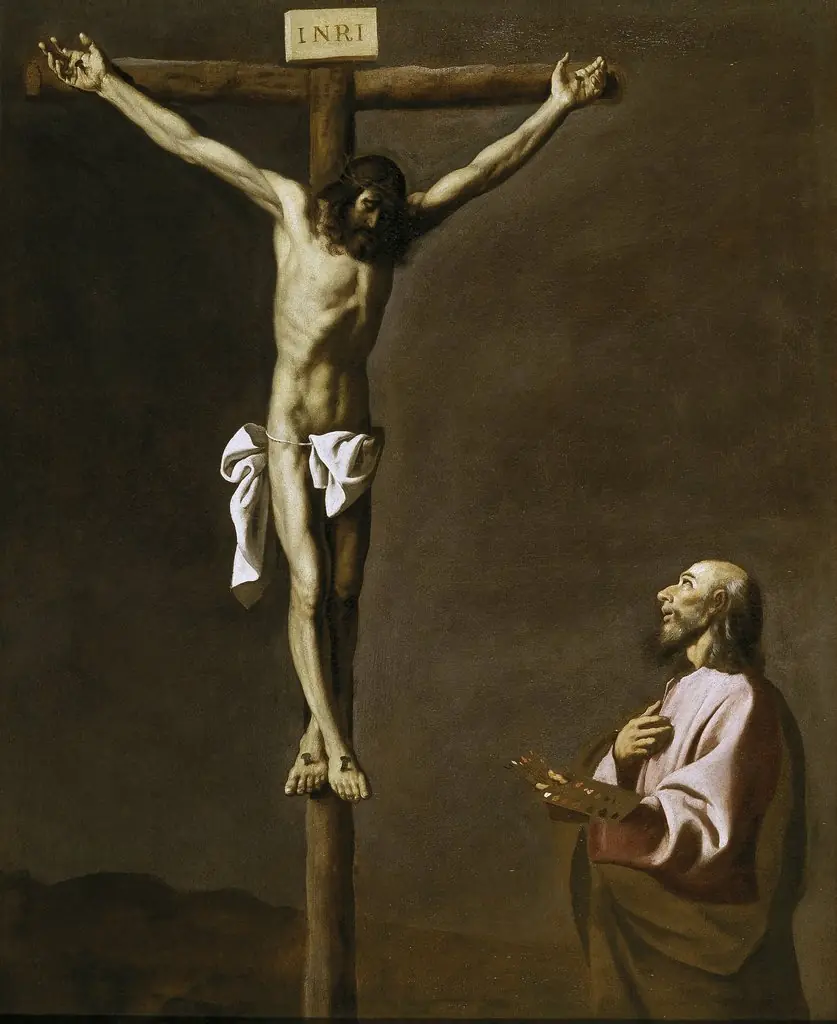 Saint Luke as a painter, before Christ on the Cross
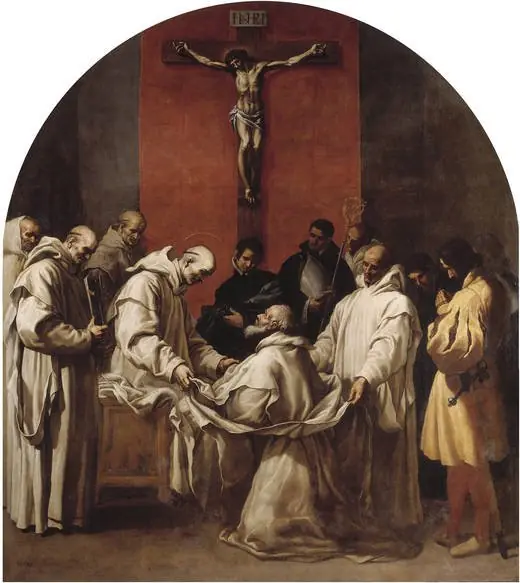 Bishop Hugo wears the Carthusian Habit
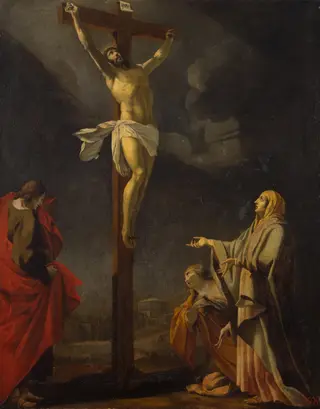 The Crucifixion
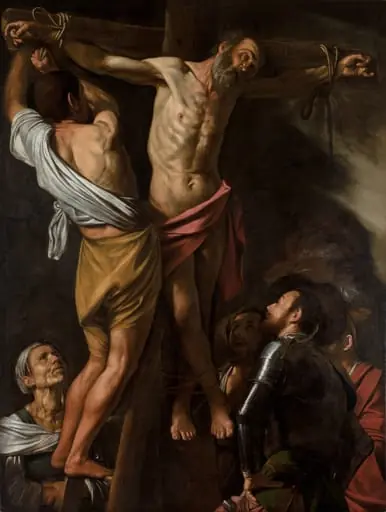 The Crucifixion of Saint Andrew
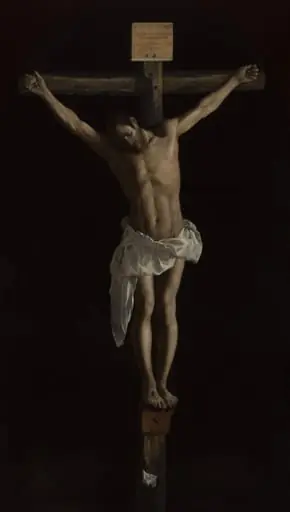 The Crucifixion
 Christ on the way to Calvary