Artwork
Portrait of Doge Leonardo Loredan
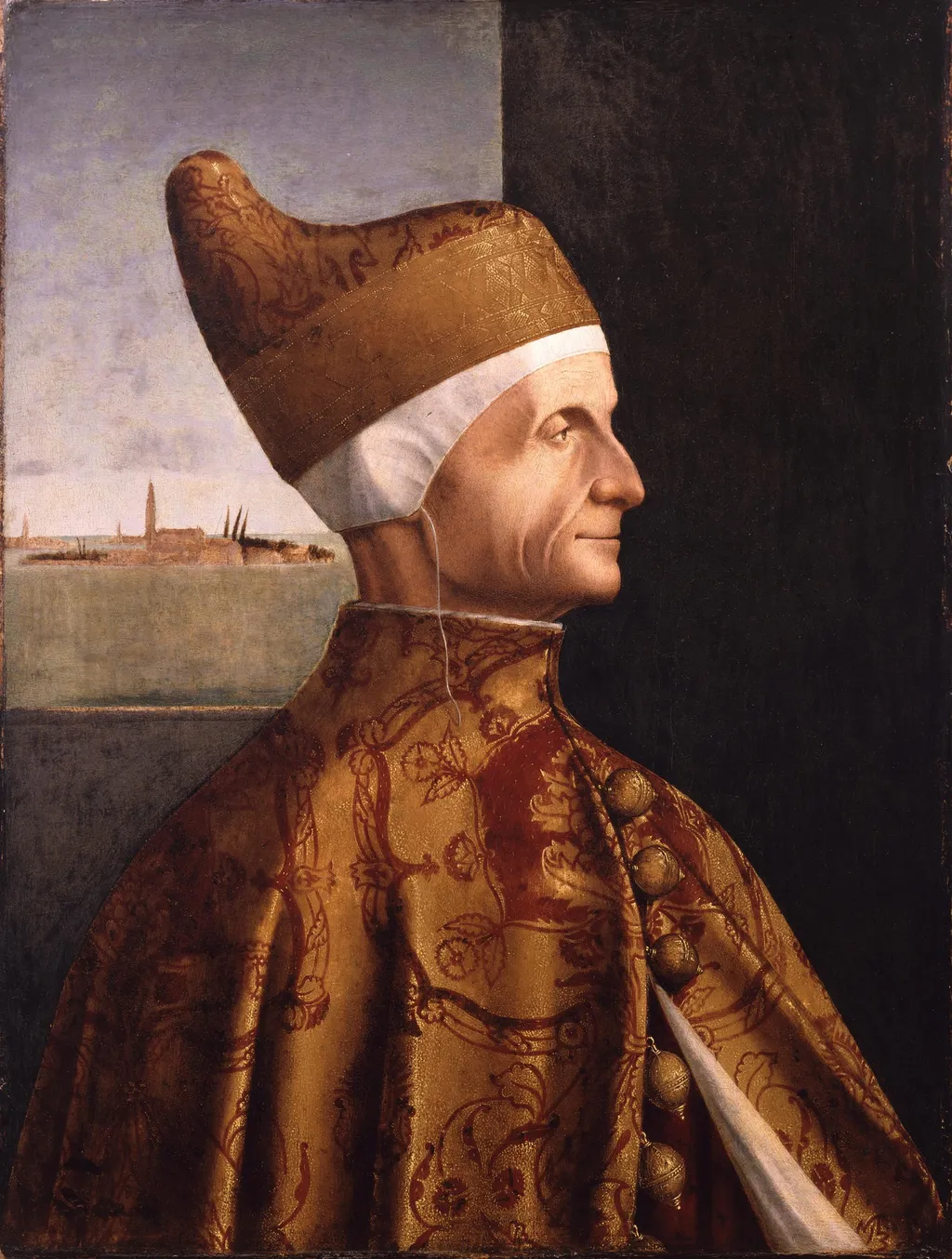
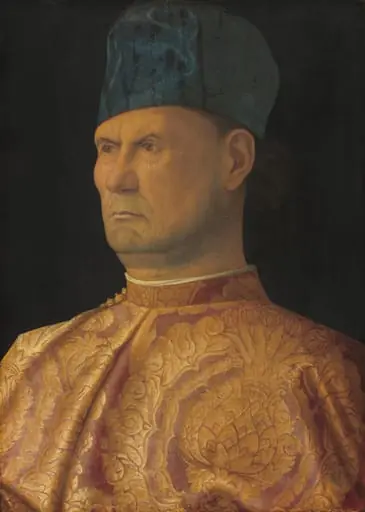
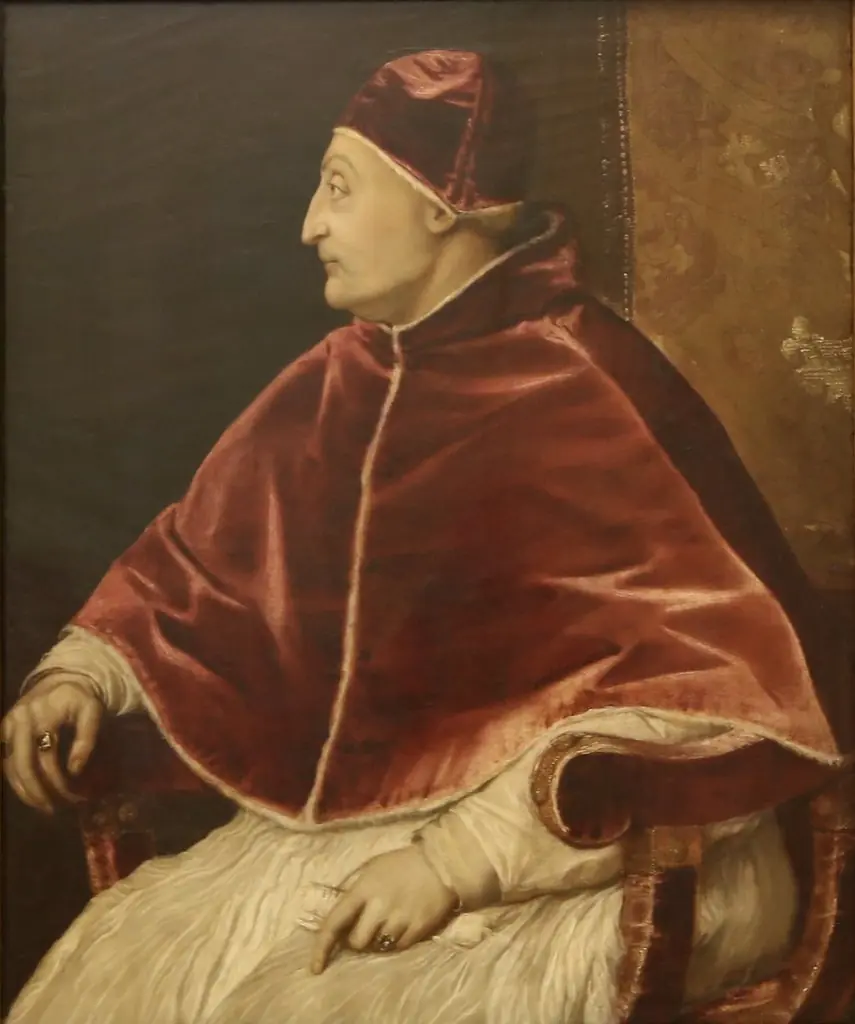
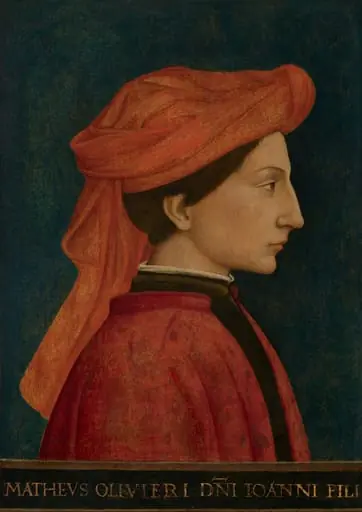
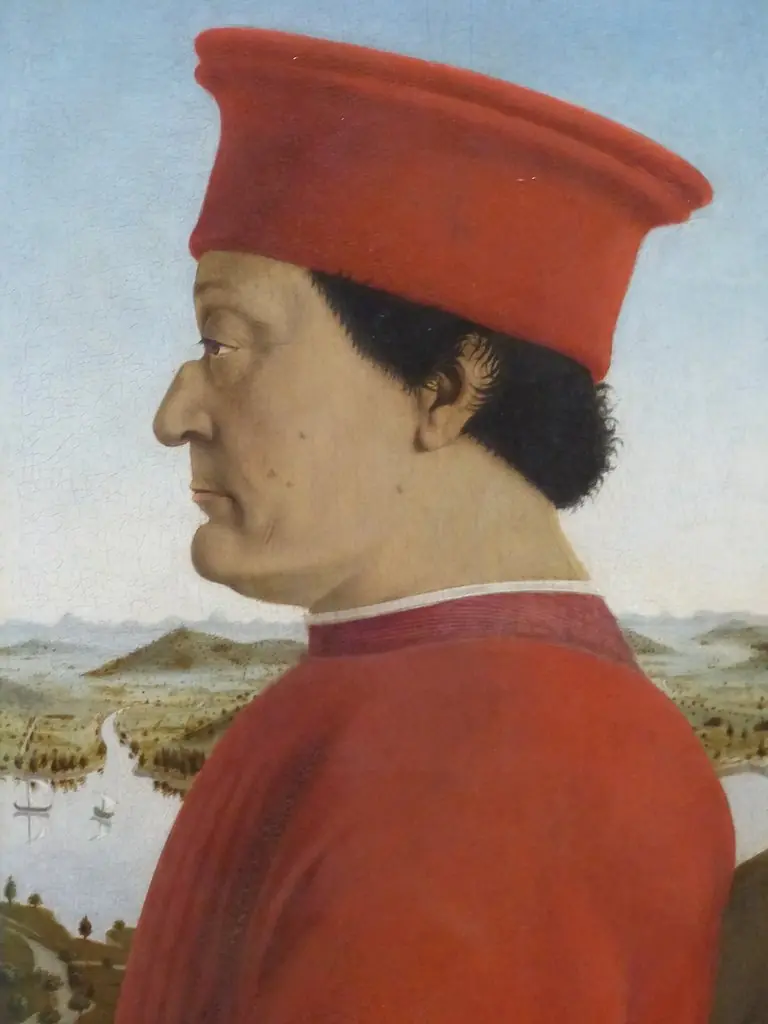
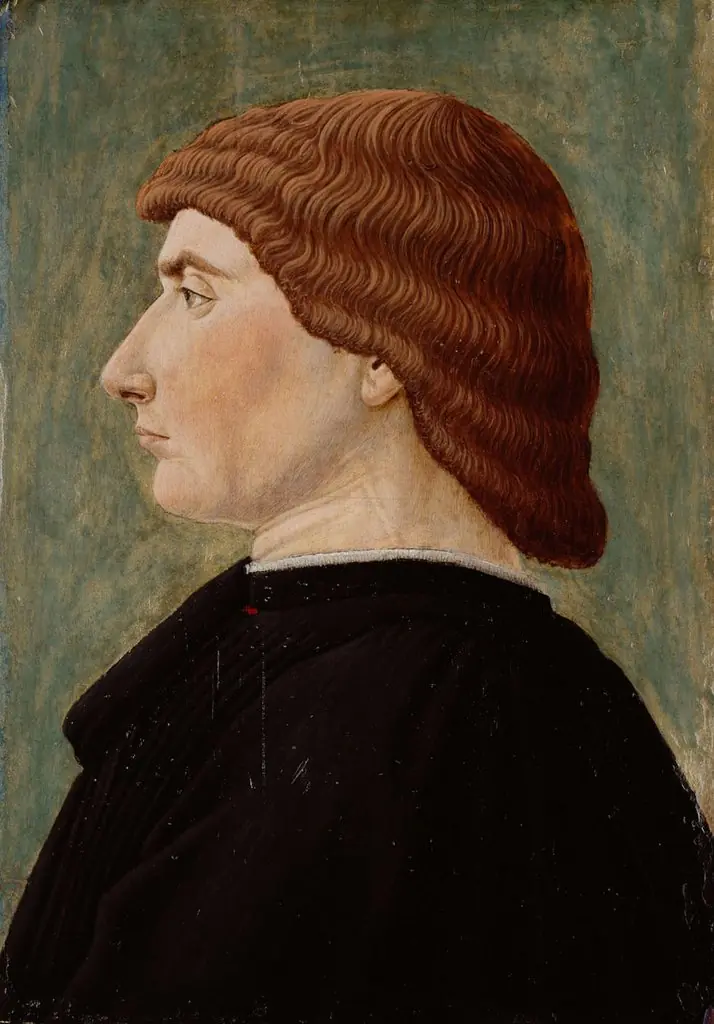
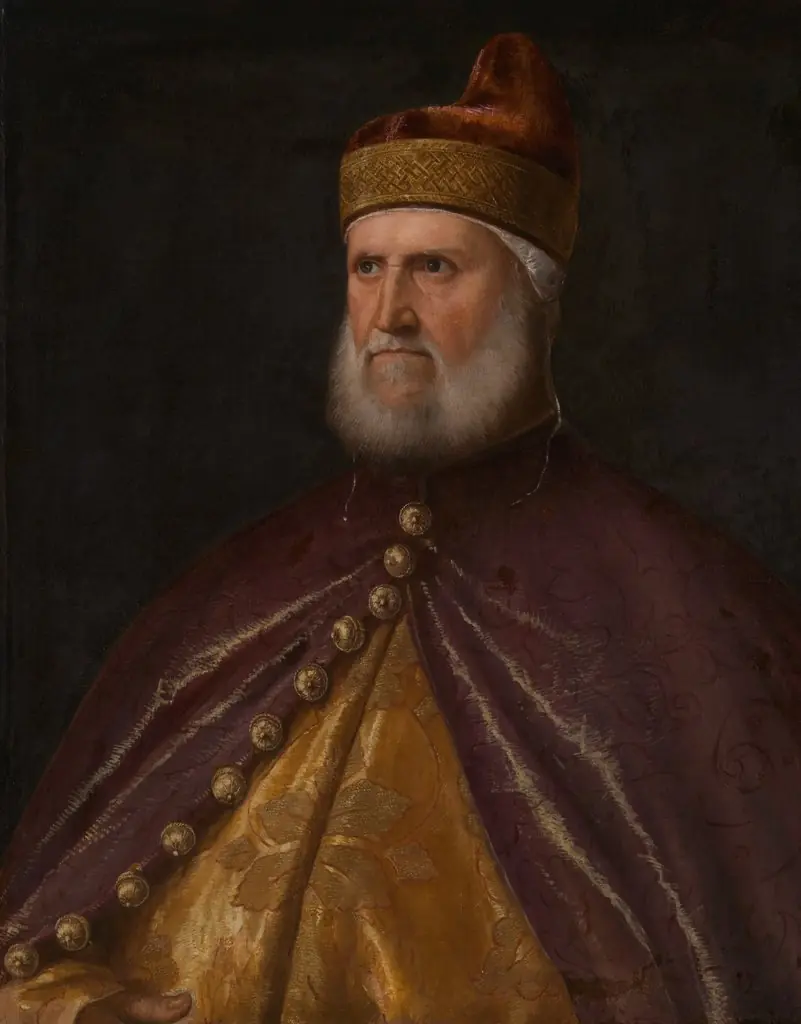
Portrait of Doge Leonardo Loredan is an oil painting by the High Renaissance artist Vittore Carpaccio. It dates from 1502 and is held in the collection of the Accademia Carrara. Painted in 1502, this oil portrait depicts Leonardo Loredan, the Doge of Venice, rendered in profile against a distant skyline.
About this work
Overview
Painted in 1502, this oil portrait depicts Leonardo Loredan, the Doge of Venice, rendered in profile against a distant skyline.
Painted in 1502, this oil portrait depicts Leonardo Loredan, the Doge of Venice, rendered in profile against a distant skyline. The work is attributed to Vittore Carpaccio, a Venetian artist known for meticulous detail and rich coloration. Executed on a rectangular support, the painting reflects the refined aesthetic of early 16th-century Venetian portraiture, emphasizing dignity through composition and material precision.
Subject & Meaning
Leonardo Loredan, seated in profile, wears the ceremonial robes of his office: a crimson and gold garment adorned with elaborate embroidery, a high collar, and a distinctive pointed hat. A white headband beneath the hat signals his status. His stern expression and composed posture convey authority and gravitas, aligning with the expected image of a Venetian ruler. The portrait functions as a visual affirmation of civic leadership, not personal charisma.
Technique & Style
Carpaccio employed oil paint to achieve subtle gradations in skin tone and luminous textures in fabric. The robe’s intricate patterns are rendered with fine brushwork, while the distant cityscape and water suggest depth through atmospheric perspective. Influenced by Netherlandish precision and Antonello da Messina’s modeling, the painting balances realism with symbolic formality, avoiding overt emotion in favor of restrained elegance.
History & Provenance
The portrait has been held in the Accademia Carrara since at least the 19th century, though its earlier ownership is undocumented. It was likely commissioned during Loredan’s tenure as Doge, which began in 1501. As a state portrait, it may have been displayed in a public or governmental space before entering private or institutional collections, preserving its role as a civic artifact.
Context
Created during the High Renaissance, the portrait reflects Venice’s unique artistic priorities: a focus on material splendor and civic identity rather than classical idealism. Unlike Florentine portraiture, which emphasized psychological depth, Venetian works like this one prioritized the visual language of power, rich textiles, heraldic colors, and formal pose, to reinforce institutional legitimacy.
Legacy
Carpaccio’s portrait of Loredan remains a key example of Venetian Renaissance state imagery. Its influence can be seen in later civic portraits that valued symbolic detail over individual expression. Though not widely copied, its compositional clarity and material fidelity helped define how Venetian leaders wished to be remembered in paint, anchoring the Doge’s image in the city’s visual culture.
Own this work as a print
Artist & collection

Artist
Vittore Carpaccio (UK: kar-PATCH-ee-oh, US: -PAHTCH-, Italian: ; c. 1460/65 – c. 1525) was an Italian painter of the Venetian school who studied under Gentile Bellini. Carpaccio was largely influenced by the style of…