Artwork
Adoration of the Magi
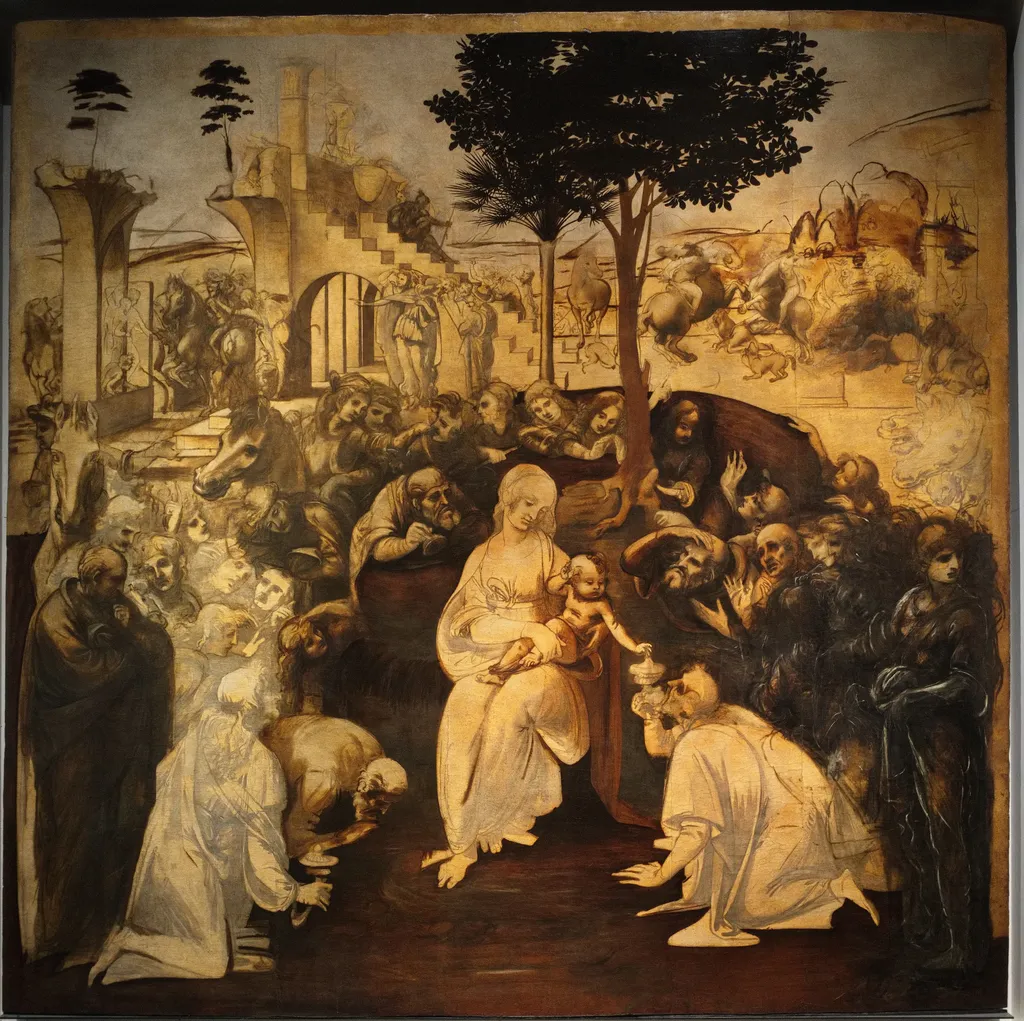
Adoration of the Magi is a charcoal painting by the Early Renaissance artist Leonardo da Vinci. It is held in the collection of the Uffizi Gallery.
About this work
Overview
Measuring 243 by 246 centimeters, the panel is constructed from ten vertically glued planks reinforced by two horizontal crossbeams.
The Adoration of the Magi is an unfinished religious painting by the Italian Renaissance master Leonardo da Vinci, dated to 1482. Conceived as an altarpiece for the Augustinian monks of San Donato in Scopeto near Florence, the work was abandoned when Leonardo departed for Milan that same year, leaving the composition largely in the preparatory underdrawing stage. Measuring 243 by 246 centimeters, the panel is constructed from ten vertically glued planks reinforced by two horizontal crossbeams. The painting entered the Uffizi Gallery in Florence by 1670, where it remains today, housed in Room 15. Its radical departure from traditional depictions of the subject marks a pivotal moment in Renaissance art, replacing processional lineups with a dynamic, swirling composition centered on the Virgin and Child.
Subject & Meaning
The artwork depicts the Virgin Mary and the Christ Child forming a strict triangular composition at the center, surrounded by kneeling Magi and a semicircle of onlookers. Leonardo broke from traditional horizontal processions, placing the figures in an open-air theater where movement constantly spirals back toward the central group. The background juxtaposes Christian and pagan worlds. On the left, workmen repair the ruin of a pagan building, possibly the Basilica of Maxentius, which medieval legend claimed collapsed upon Christ's birth. On the right, a battle among horsemen rages, interpreted variously as a symbol of the bestial folly of humanity, the enmity between the Magi's different homelands, or the defeat of ignorance and violence according to Augustinian doctrine. Two prominent trees divide the foreground from the background. The palm tree represents the Virgin and the triumph of martyrdom, while the carob tree, whose seeds historically measured precious stones, symbolizes Christ as king of kings and nature's gift to the newborn.
Technique & Style
Executed on a large wooden panel, the work employs a combination of charcoal, ink, watercolor, and oil paint. The surface presents a nearly monochrome appearance dominated by warm browns, ochres, and muted earth tones, with lighter passages illuminating the central figures against darker surroundings. Leonardo's handling varies considerably across the surface. The central group is rendered with smooth brushwork, while the background features loose, gestural strokes. The painting remains largely unfinished, with fully modeled passages coexisting alongside preparatory sketches and visible underdrawing. Strong contrasts between light and shadow create spatial depth. The overall composition was heavily influenced by Rogier van der Weyden's Entombment of Christ, specifically borrowing the high horizon, the slightly raised viewpoint, and the central figural group poised before a rock formation. Leonardo's emphasis on expressive gestures and animated hands reflects his own theoretical writings on painting, aiming to reveal the inner intentions of his figures.
History & Provenance
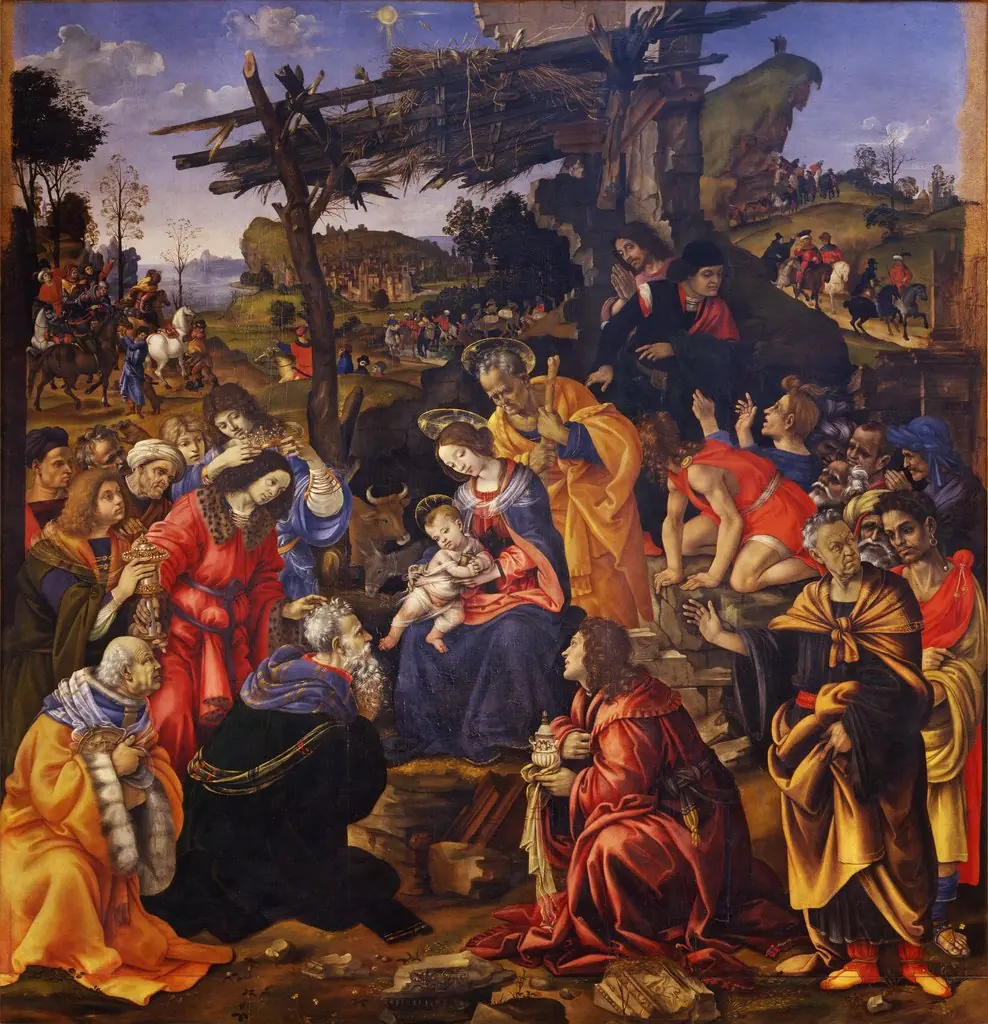
Leonardo received the commission for the altarpiece from the monks of San Donato in Scopeto around 1480 or 1481, likely through his father, Ser Piero da Vinci, who served as the convent's notary. A precise contract in the Florence State Archives stipulated a delivery period of 24 to 30 months. Uniquely, the painter was required to pay 150 florins toward the dowry of a woman named Salvestro di Giovanni's daughter, with colors and gold at his own expense, in exchange for 300 florins and a third of a piece of land in the Val d'Elsa. Leonardo left Florence for Milan in 1482, leaving the work incomplete. The monks eventually commissioned a replacement from Filippino Lippi in 1496. The convent itself was destroyed during the siege of Florence in 1529. Giorgio Vasari later recorded seeing Leonardo's panel in the collection of Amerigo Benci. It subsequently passed into the Medici collection at the Villa di Castello before entering the Uffizi Gallery permanently by 1670. A major restoration by the Opificio delle Pietre Dure took place between October 2012 and March 2017, removing centuries of dirt and old varnish to reveal the original underdrawing.
Context
The Adoration of the Magi represents Leonardo's first major commission and a direct response to earlier treatments of the theme by contemporaries like Sandro Botticelli. By lowering the Virgin and Magi to grant the background a dominant role, Leonardo redefined the spatial and narrative possibilities of the subject. In 2002, art diagnostician Maurizio Seracini conducted an extensive technical survey using high-resolution digital scans, thermography, ultrasound, ultraviolet, and infrared techniques, producing over 2,400 detailed infrared photographic records. Seracini concluded that none of the visible paint on the surface was applied by Leonardo, asserting that only the underdrawing is his, while an unknown later artist added the paintwork and varnish to make the panel salable. Seracini conjectured that the monks originally rejected Leonardo's sensational scenario of emaciated figures and a background battle, relegating the panel to storage until its later resurrection and overpainting. Despite this debate, the composition's power was immediately felt, profoundly influencing Raphael's leaning and kneeling figures in the Dispute of the Sacrament in the Vatican Stanze.
Legacy
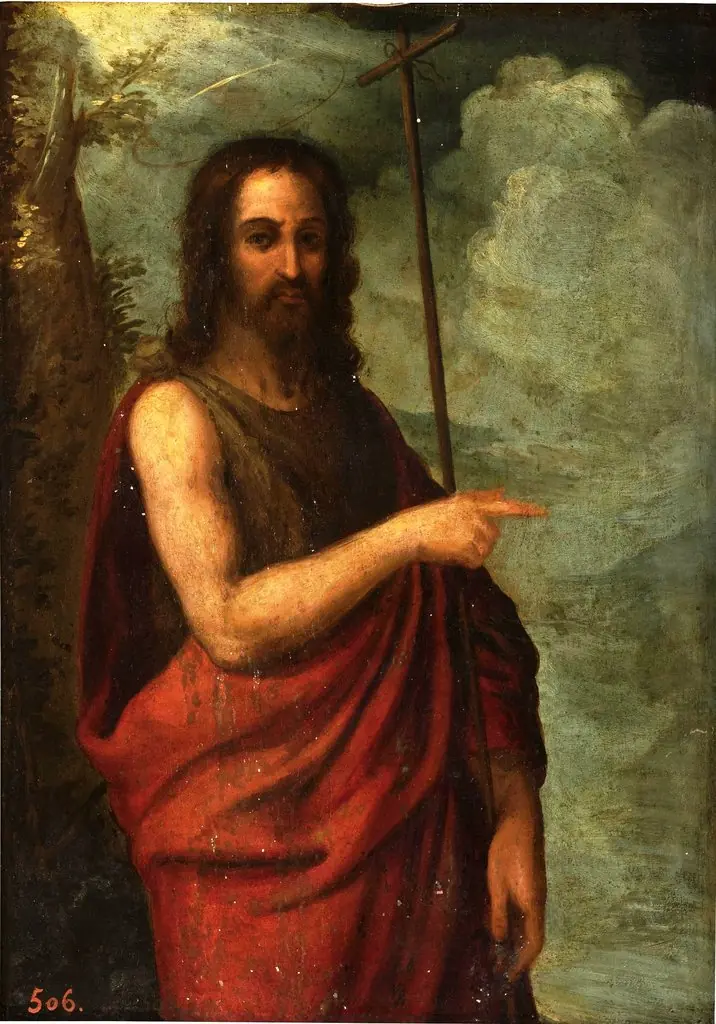
The panel's radical compositional structure exerted a profound influence on Renaissance art, echoing through the works of Filippino Lippi, who adopted its dynamic movement for his own subsequent Adoration, and Domenico Ghirlandaio, who expanded upon the composition for his 1488 Adoration at the Ospedale degli Innocenti. The sketch also prefigures several of Leonardo's own future themes, with the battling horses anticipating the Battle of Anghiari, the Virgin foreshadowing the Virgin of the Rocks, and the figure raising an index finger against a tree heralding his later Saint John the Baptist. The nuanced tonal variations of the surface captivated later audiences, with some critics viewing the work as a precursor to Rembrandt's use of light and shadow. In modern culture, the painting achieved a cinematic afterlife, featured prominently during the opening sequence of Andrei Tarkovsky's final film, The Sacrifice, accompanied by the Erbarme dich segment of Bach's St. Matthew Passion.
Own this work as a print
Artist & collection

![Ginevra de' Benci [obverse], by Leonardo da Vinci](https://artifactworldgallery.com/img/leonardo-da-vinci--ginevra-de-benci-obverse--afb6ec3a3e65f392-w320.webp)
![Wreath of Laurel, Palm, and Juniper with a Scroll inscribed Virtutem Forma Decorat [reverse], by Leonardo da Vinci](https://artifactworldgallery.com/img/leonardo-da-vinci--wreath-of-laurel-palm-and-juniper-with-a-scroll-inscribed-vi--4cdfe8467ad2438a-w320.webp)
- Adoration of the Magi
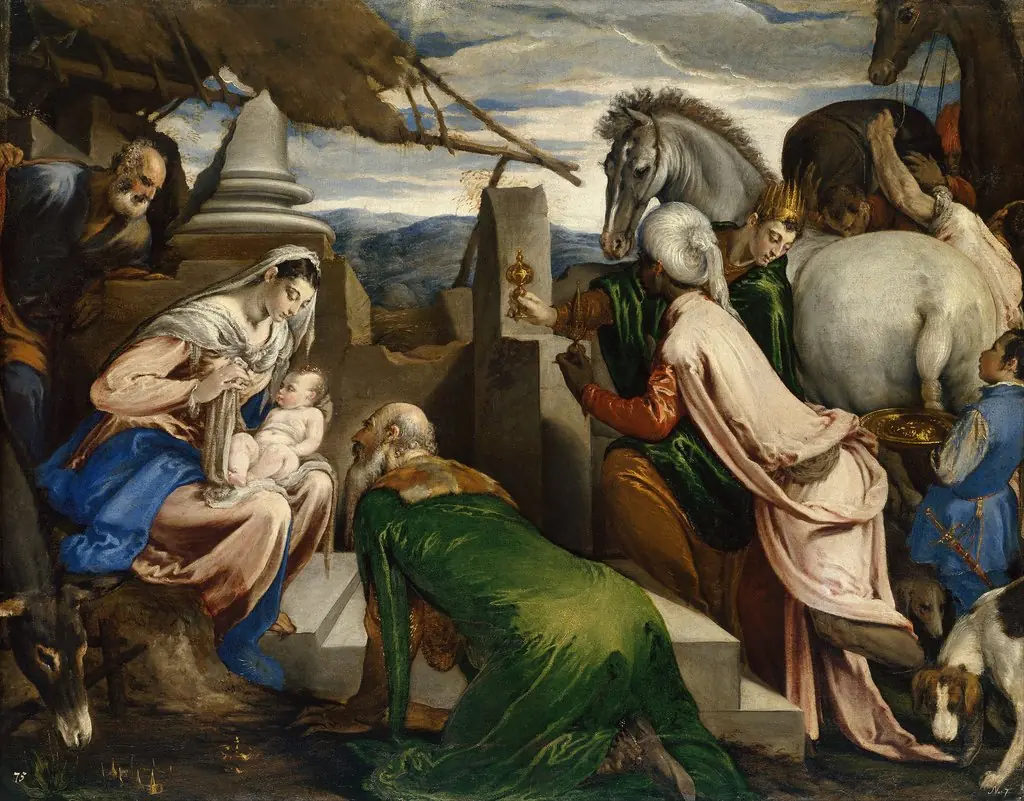 Adoration of the Magi
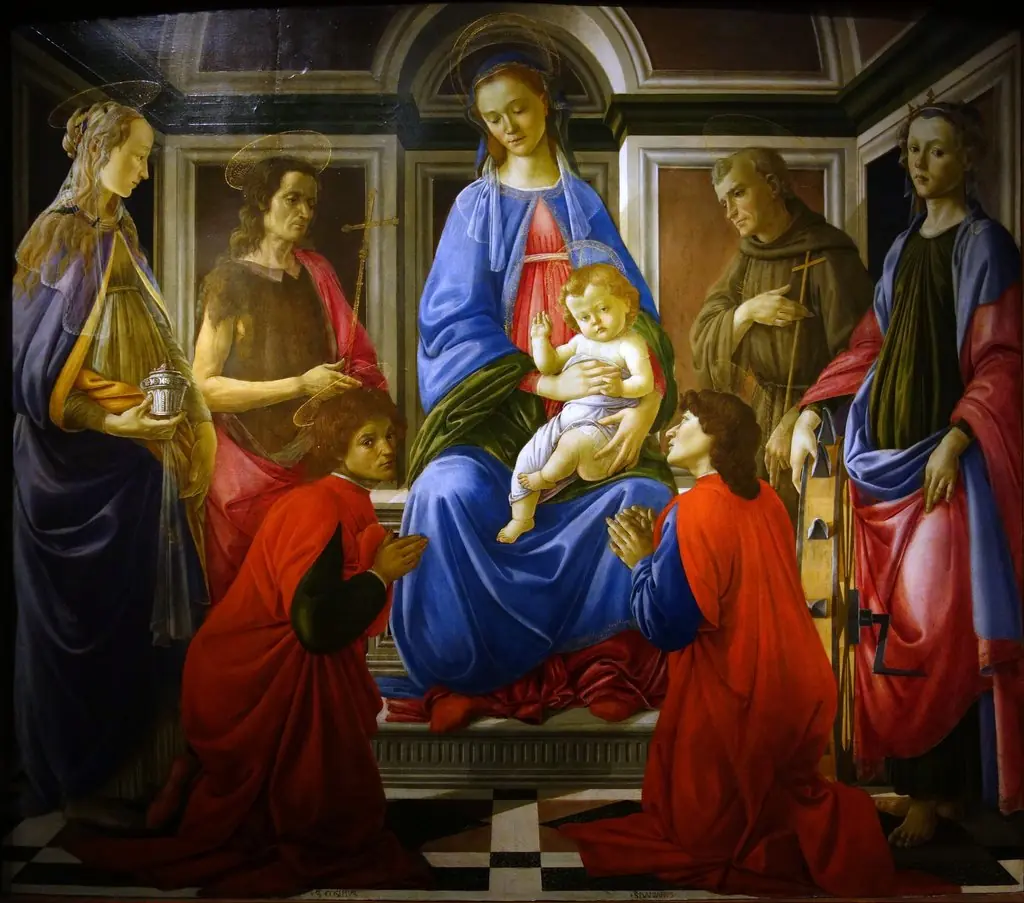 Sant'Ambrogio Altarpiece
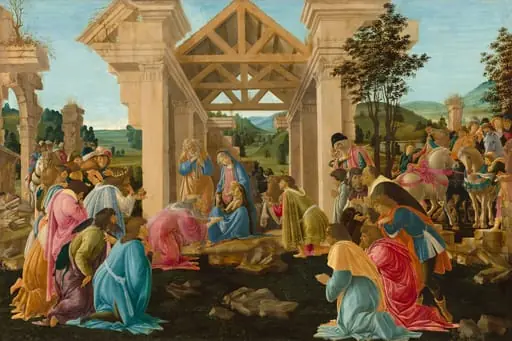 The Adoration of the Magi
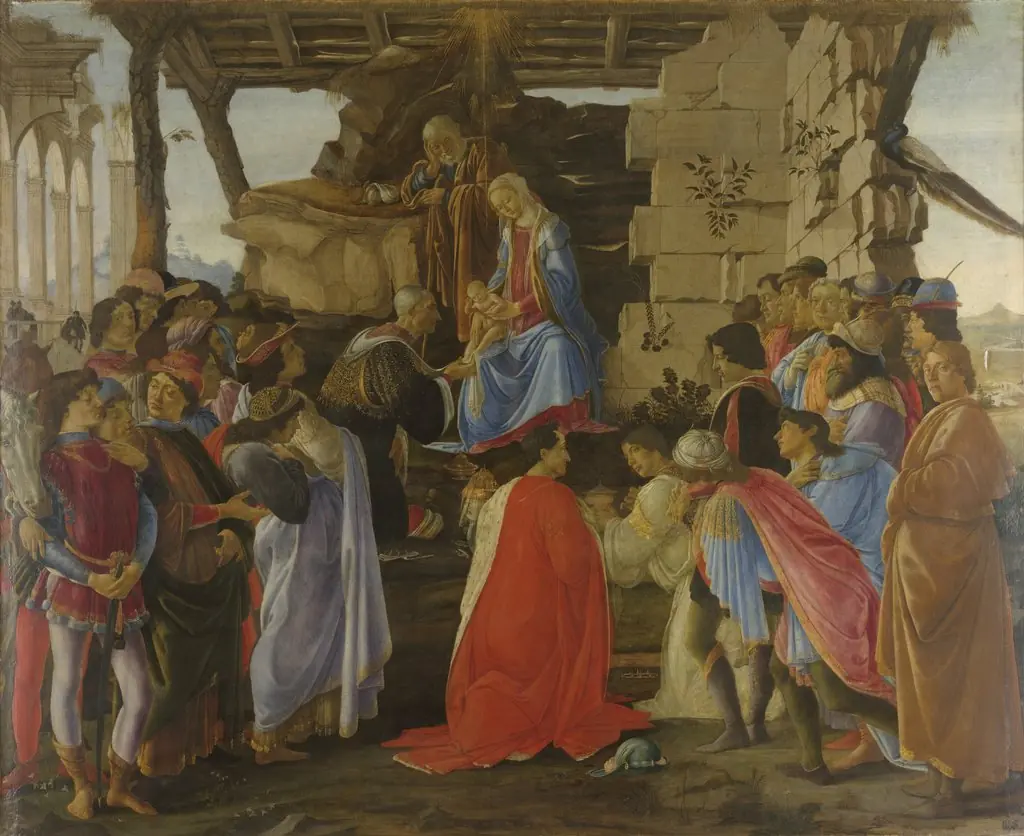 Adoration of the Magi
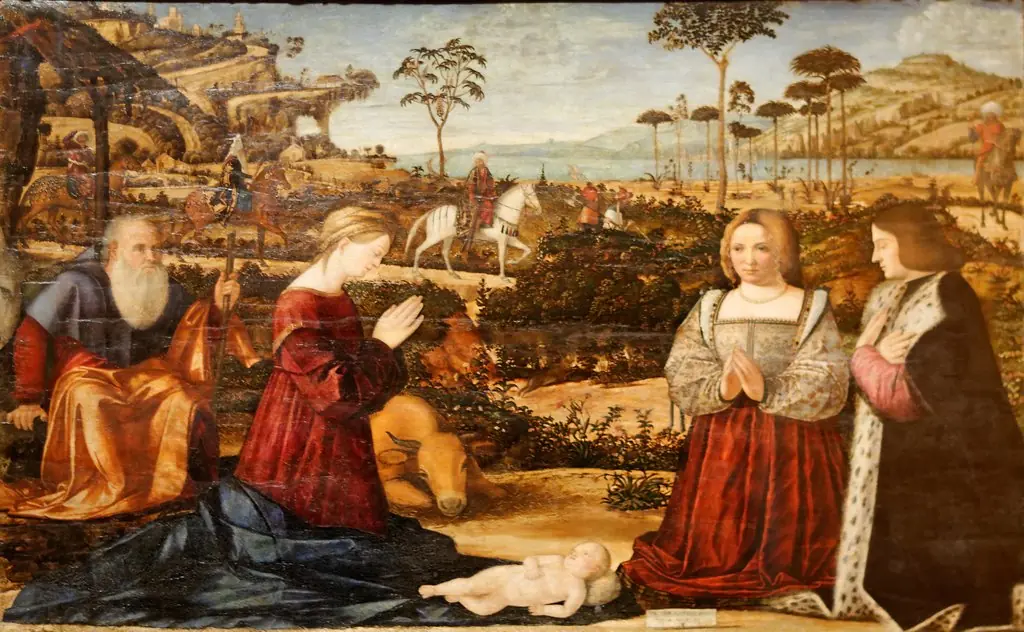 Holy Family and Donors
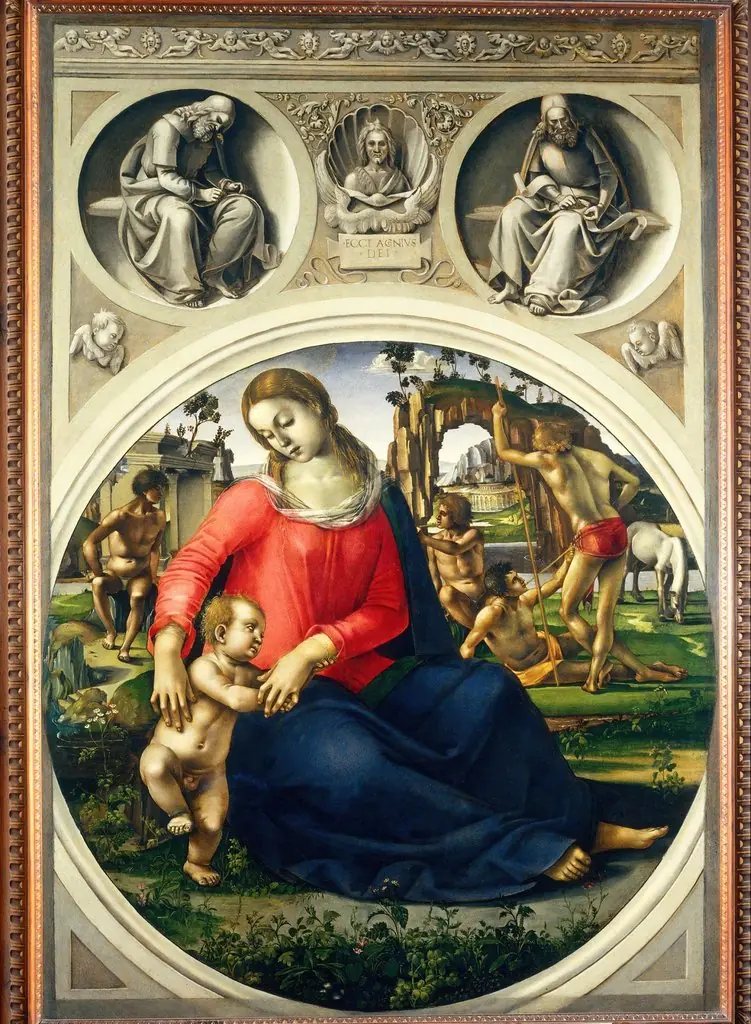 Madonna and Child
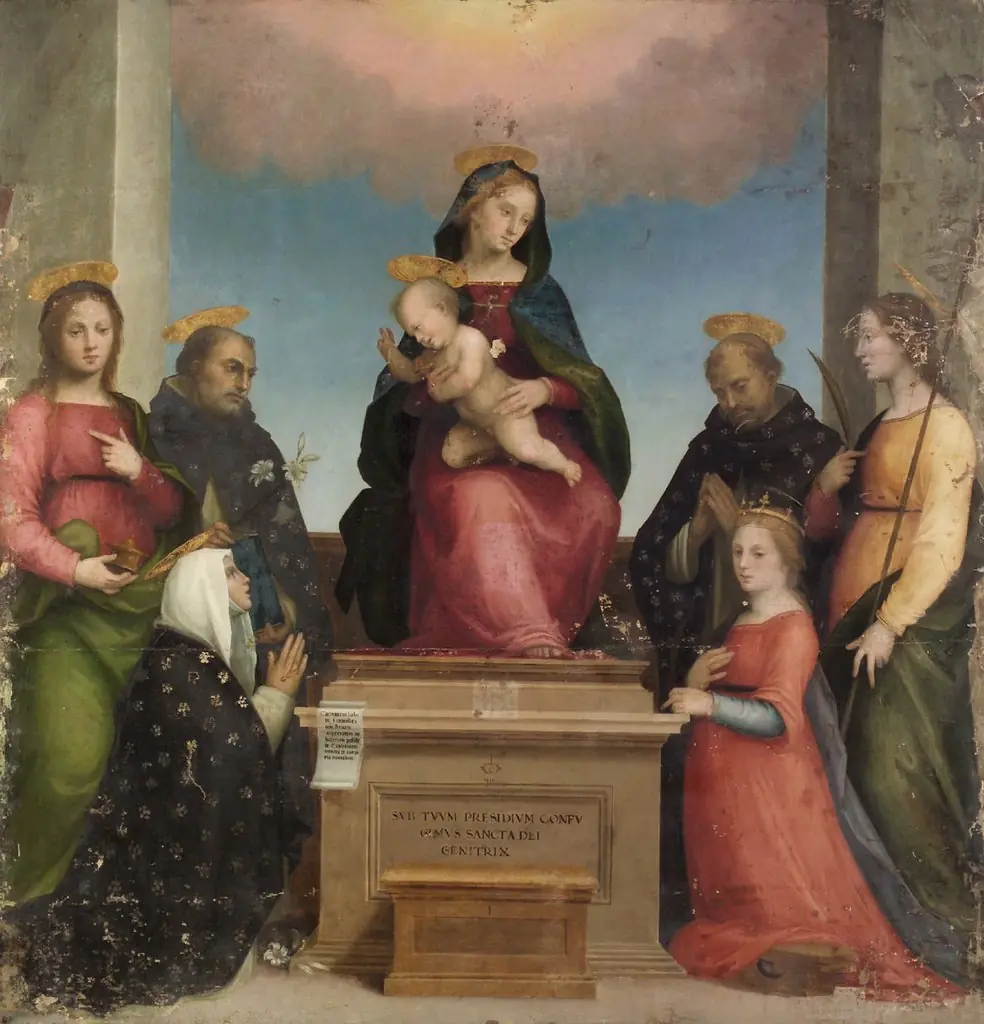 Maria mit Kind und den Hll. Katharina von Siena, Katharina von Alexandrien, Maria Magdalena, Dominikus, Petrus Martyr und einer Märtyrerin
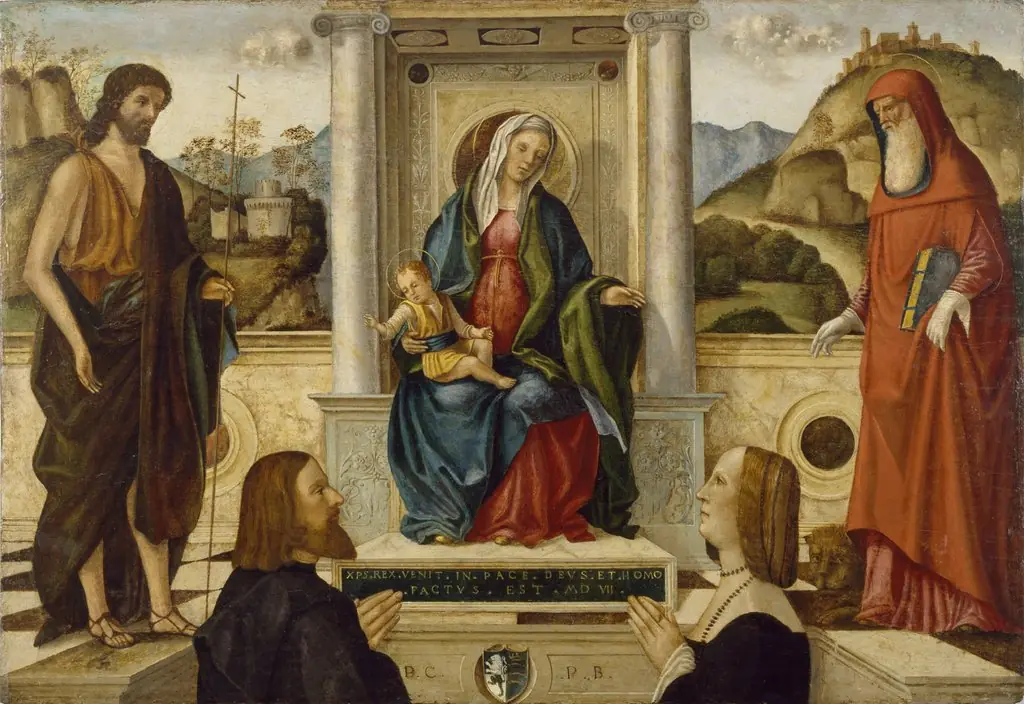 Madonna and Child Enthroned with Saints and Donor
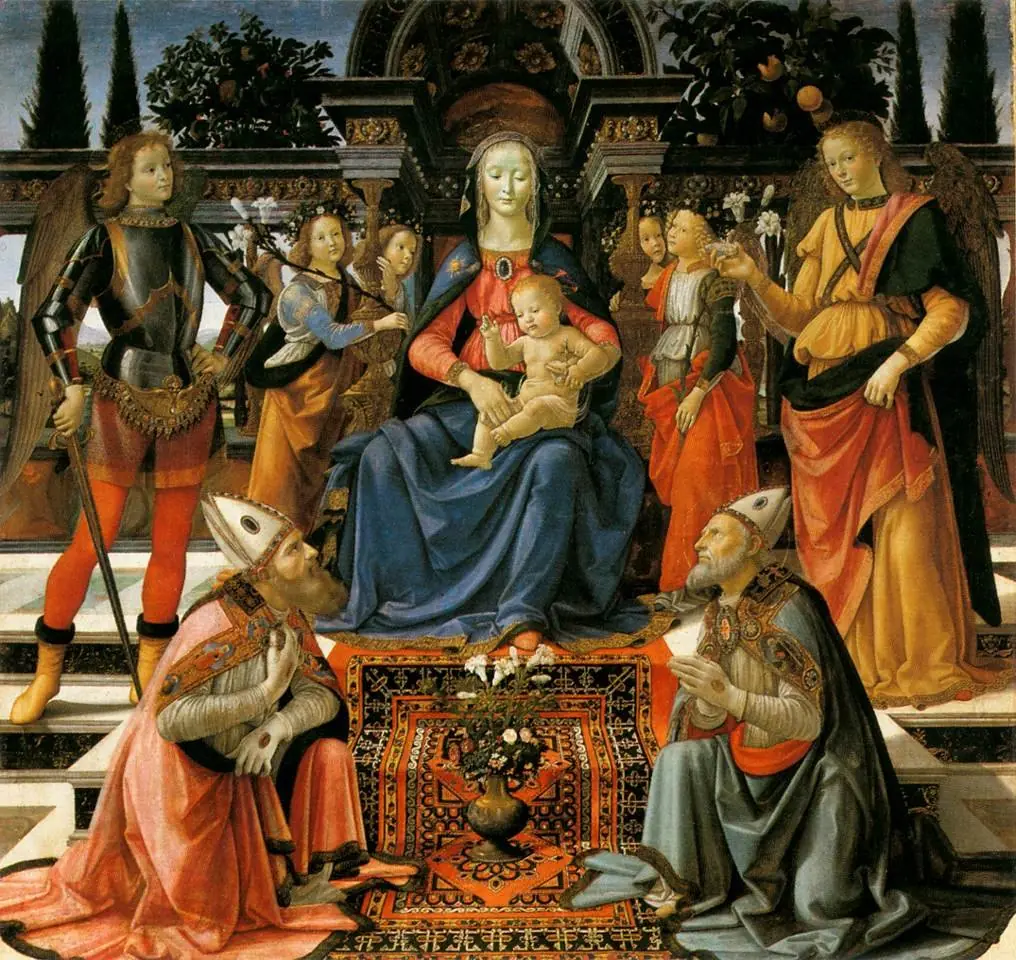 Madonna and Child Enthroned with Saints
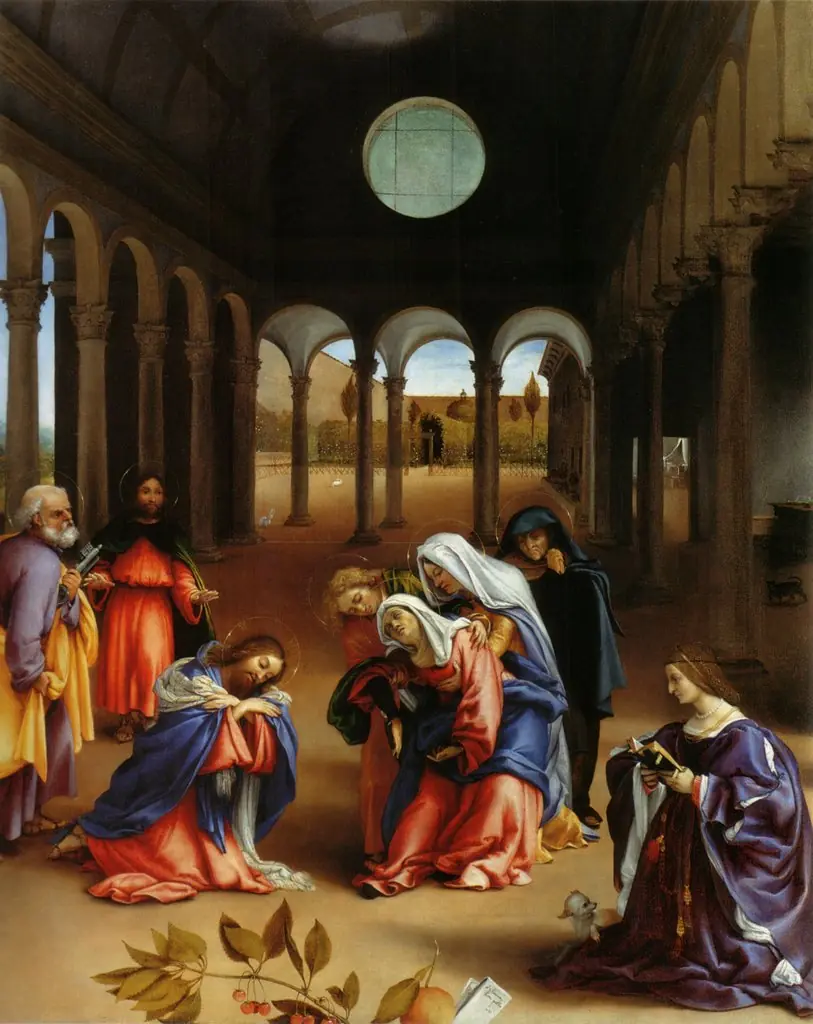 Christ taking leave of his Mother