
Subject
Butterfli
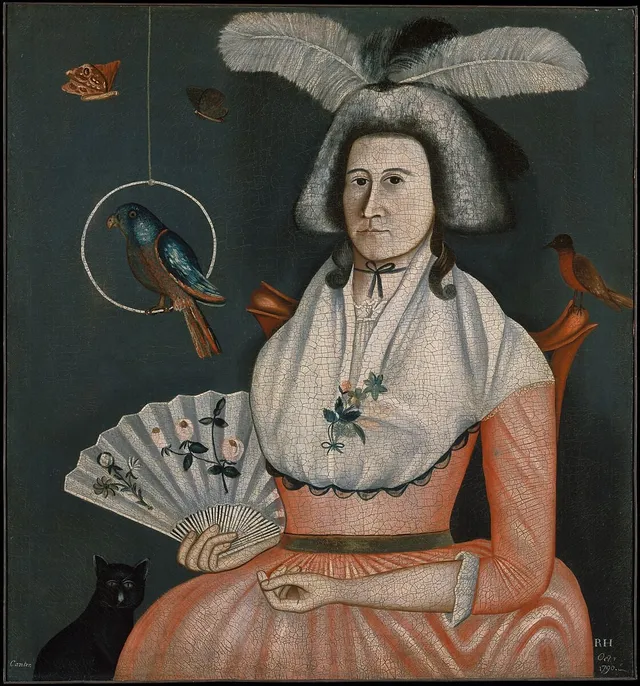
Butterfli is a subject in art. The gallery holds 25 works in this subject in art, including works by Rufus Hathaway, Katsukawa Shunshō and Thomas Badger.
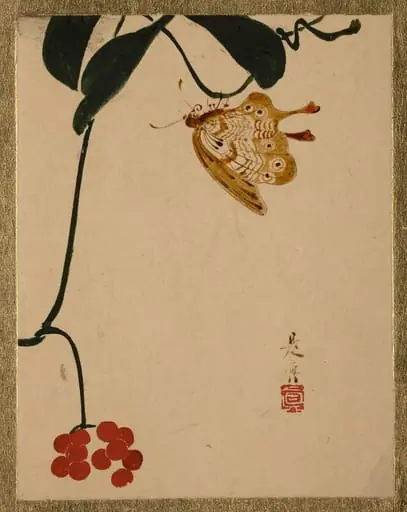
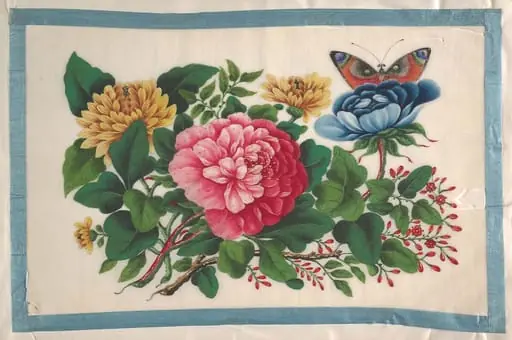
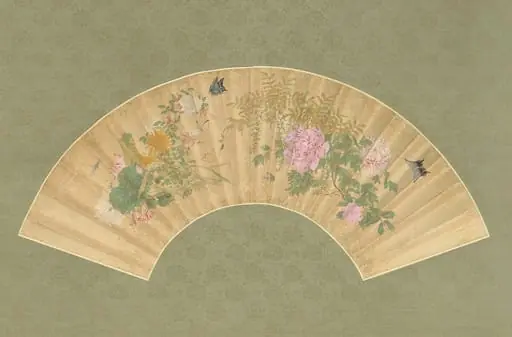
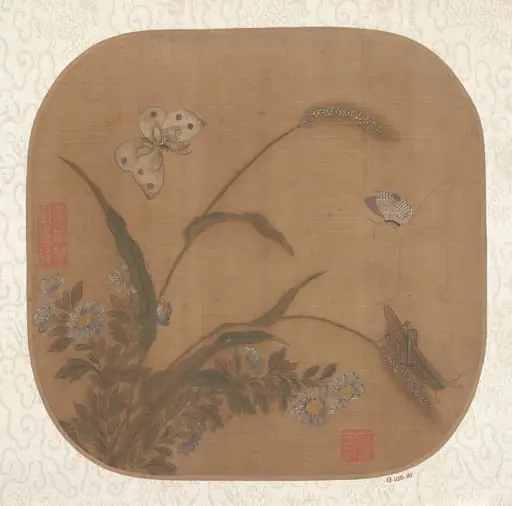
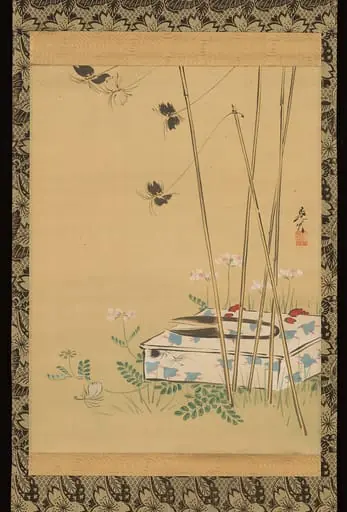
Across cultures the butterfly has carried meaning out of all proportion to its size, and its life in art begins not as a study of an insect but as an emblem of the soul. In the Greco-Roman world the word *psyche* meant both "soul" and "butterfly," and the goddess Psyche, beloved of Eros, was depicted with butterfly wings; the metamorphosis from earthbound caterpillar to winged creature offered an irresistible figure for the spirit's release from the body. In China the same image acquired a philosophical charge through Zhuangzi's celebrated "butterfly dream," which dissolves the boundary between dreamer and dream, self and other. Early Christian and Renaissance painters in turn read the chrysalis and emergent wing as a sign of resurrection and eternal life, embedding the motif in devotional and allegorical pictures.
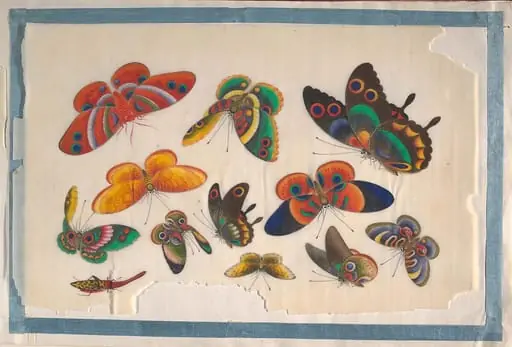
The butterfly came into its own during the Dutch Golden Age, where it bridged art and the new science of natural history. In vanitas and flower still lifes by Rachel Ruysch, Adriaen Coorte and Maria van Oosterwyck—who almost invariably included a red admiral as a symbol of the risen Christ—a butterfly lent living animation to a bouquet while quietly reminding viewers of life's brevity. Maria Sibylla Merian (1647–1717) transformed the genre: her voyage to Dutch Surinam (1699–1701) produced *Metamorphosis insectorum Surinamensium* (Amsterdam, 1705), which depicted complete life cycles on their host plants, fusing rigorous observation with compositional beauty.
East Asian painting cultivated a parallel tradition. In Joseon Korea, Nam Gye-u (1811–1888)—nicknamed "Nam Nabi," Butterfly Nam—bred and studied butterflies to render them with extraordinary precision in works such as *Butterflies and Peonies*, where the insects signified marital love and conjugal harmony. In Qing China the monk-painter Xugu (1823–1896) exploited the rebus of *Cat and Butterfly* ("mao die"), a homophone for octogenarian longevity, making such paintings auspicious gifts.
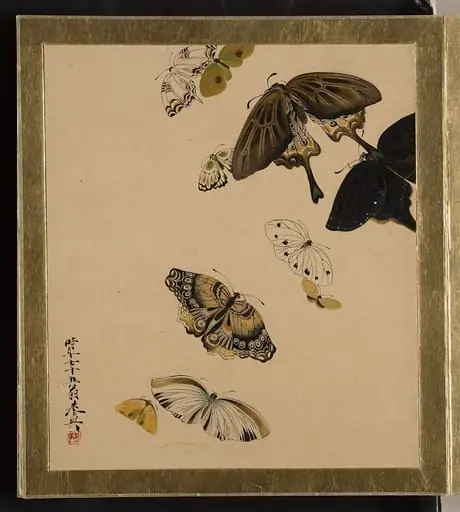
The motif's reach extends from these holdings—including American folk portraits like Rufus Hathaway's *Molly Wales Fobes*—through Art Nouveau ornament to Damien Hirst, whose 1991 installation *In and Out of Love* and later kaleidoscope and stained-glass works knowingly revive the butterfly's ancient associations with the soul, death and resurrection, confirming its enduring place across still life, natural-history illustration and contemporary art.
Key artists


Works
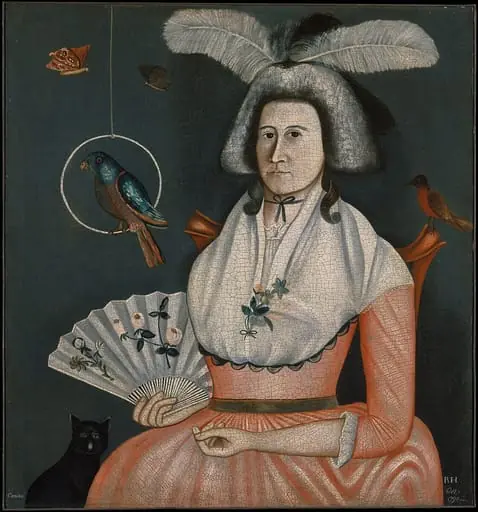 Molly Wales Fobes
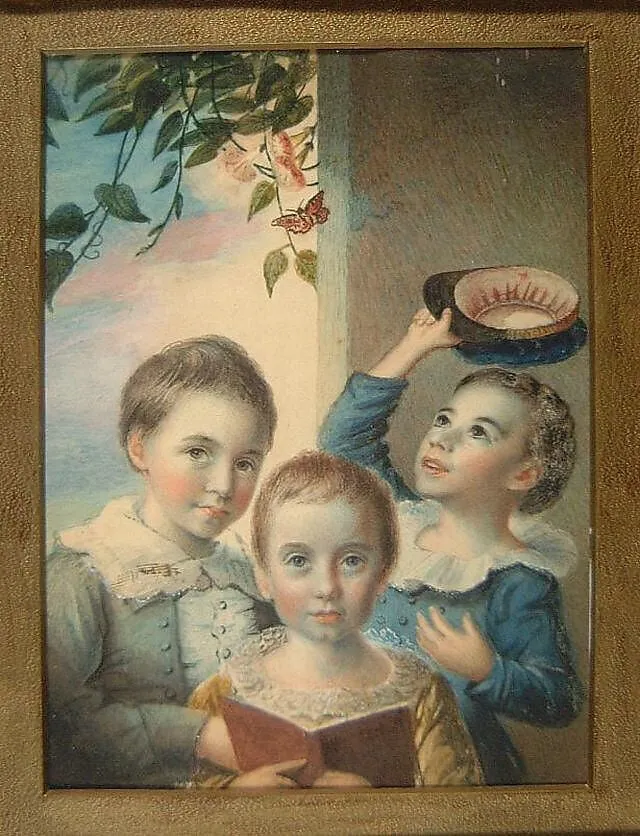
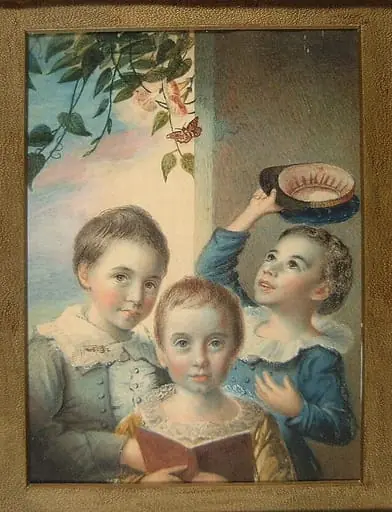 Portrait of Three Boys
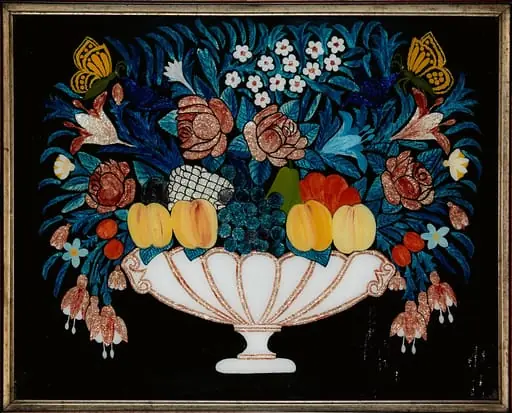 Still Life—Flowers and Fruit in White and Pink Bowl
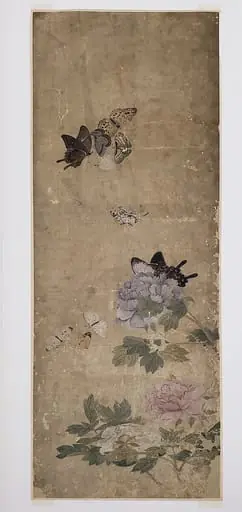 전 일호 남계우 나비와 모란 조선|傳 一濠 南啓宇 蝴蝶圖 朝鮮|Butterflies and Peonies
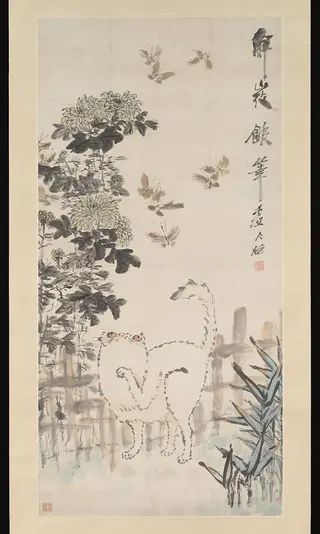 清 虛谷 蝶貓圖 軸|Cat and Butterfly
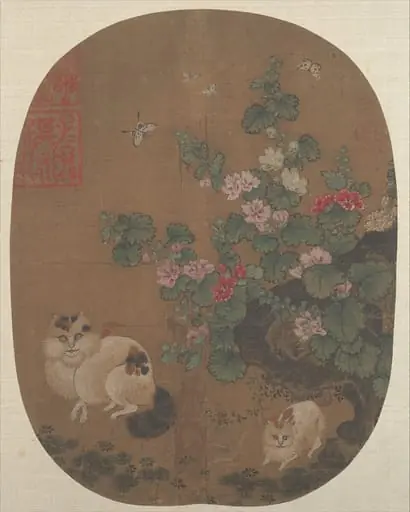 Untitled
 Untitled
 Untitled
 Untitled
 Untitled
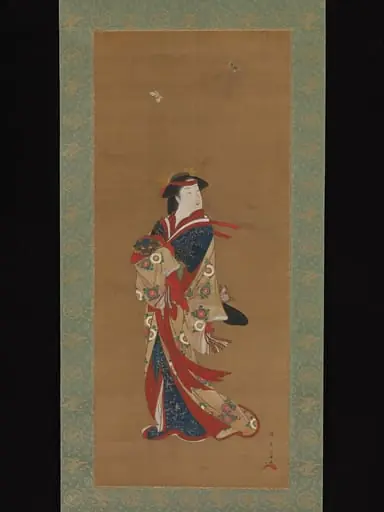 Untitled
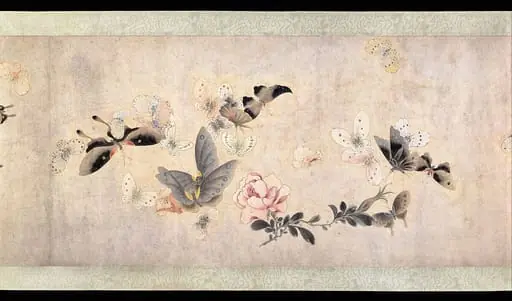 清 佚名 傳馬荃 花蝶圖 卷|Flowers and Butterflies
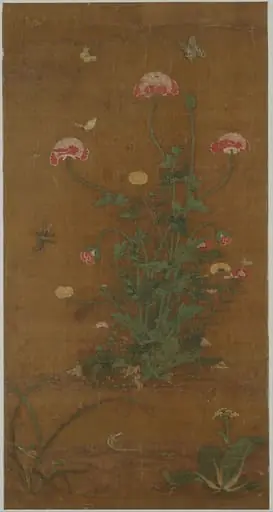 元/明 呂敬甫 花蝶圖 軸 |Flowers
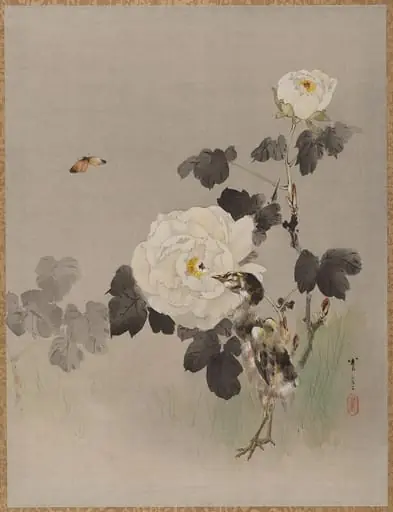 Untitled
 Untitled
 Untitled
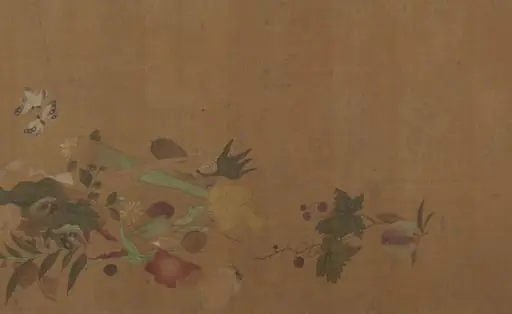 清 佚名 傳錢選 花果草蟲圖 卷|Flowers and Insects
 Untitled
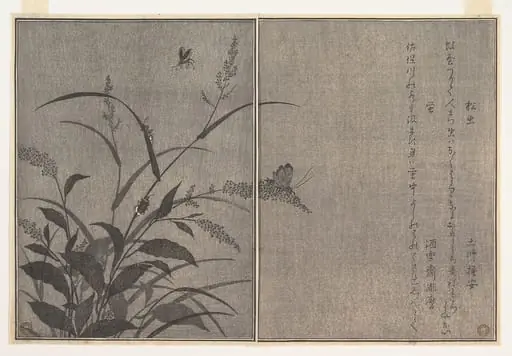 『画本虫撰』 「松虫」「虫蛍」|Tree cricket (Matsumushi); Firefly (Hotaru), from the Picture Book of Crawling Creatures (Ehon mushi erami)
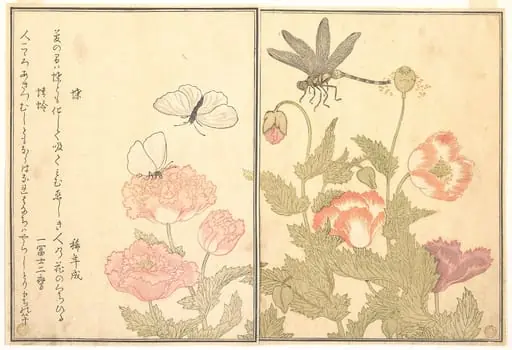 『画本虫撰』 「蝶」「蜻蛉」|Butterfly (Chō); Dragonfly (Kagerō or Tonbo), from the Picture Book of Crawling Creatures (Ehon mushi erami)
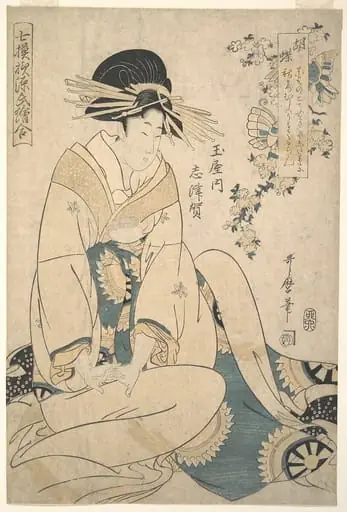 玉屋内 志津賀|A Courtesan
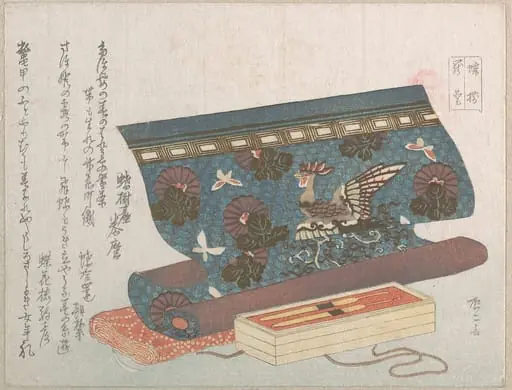 『蝶揃・寵愛』帯と簪|Roll of Cloth for an Obi and Tortoise-shell Hair Ornaments (“Presents for One’s Beloved”), from the Butterfly Series, from Spring Rain Surimono Album (Harusame surimono-jō, vol. 3)
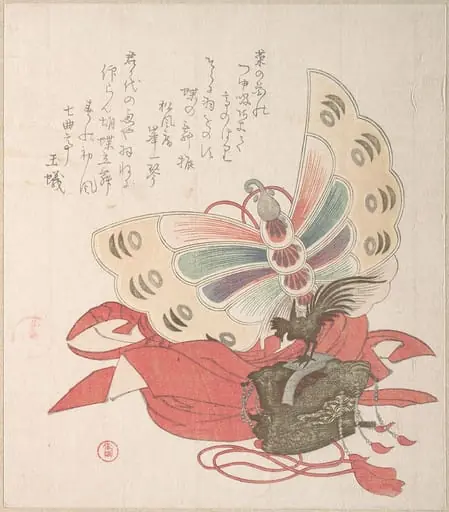 『春雨集』 摺物帖窪俊満画 胡蝶舞の衣装|Spring Rain Collection (Harusame shū), vol. 2: Costume for the Butterfly Dance (Kochō no mai)
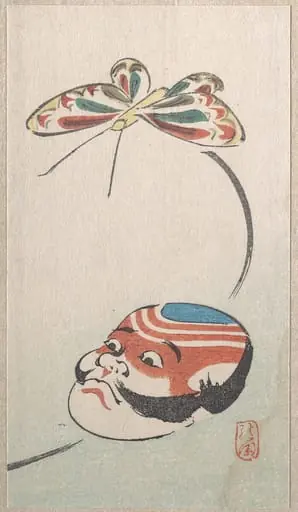 Untitled
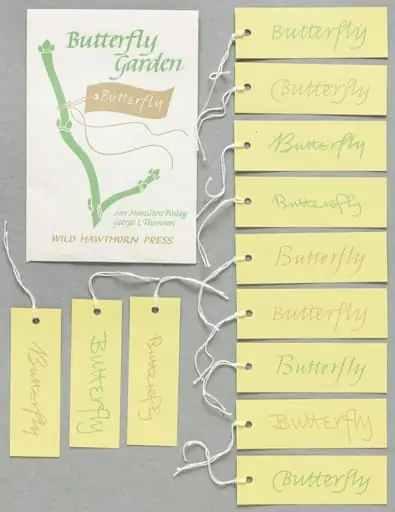 Untitled
Frequently asked questions
What is Butterfli?
Butterflies are winged insects from the lepidopteran superfamily Papilionoidea, characterised by large, often brightly coloured wings that often fold together when at rest, and a conspicuous, fluttering flight.
How many Butterfli works does Artifact World Gallery have?
Artifact World Gallery holds 25 public-domain Butterfli works, all free to view and download.
Who are the key Butterfli artists?
Key Butterfli artists in the collection include Rufus Hathaway, Katsukawa Shunshō and Thomas Badger.
Where can I see Butterfli works?
Butterfli works in the collection are held by Metropolitan Museum of Art and Museum of Modern Art.