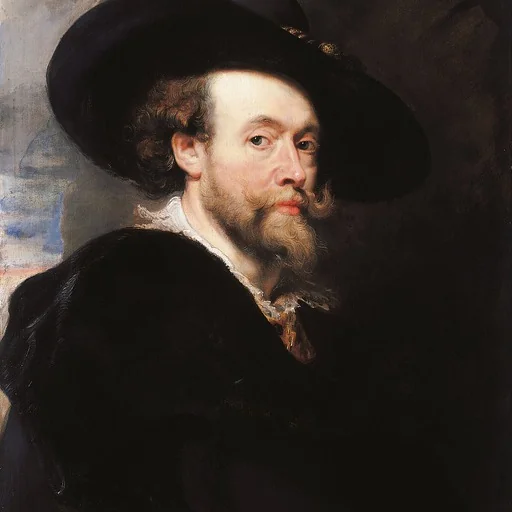
Subject
Michael
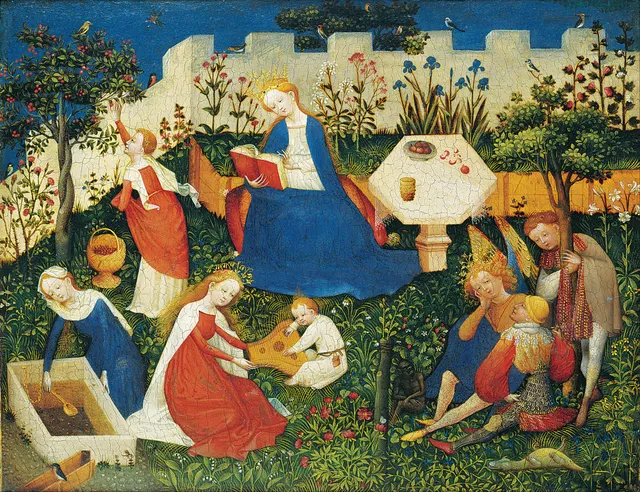
Michael is a subject in art. The gallery holds 44 works in this subject in art, including works by Peter Paul Rubens, Albrecht Dürer and Octave Tassaert.
Michael (Hebrew: מִיכָאֵל; Aramaic: ܡܝܟܐܝܠ, romanized: Mīkhāʼēl) is a common masculine given name usually thought to be from the Hebrew rhetorical question מי כאל (mī kāʼēl), "Who like El?", thus being a theophoric name whose answer is "there is none like El", or "there is none as famous and powerful as God." This question is known in Latin as Quis ut Deus? Paradoxically, the name is also sometimes interpreted as "One who is like God." An alternative spelling of the name is Micheal.
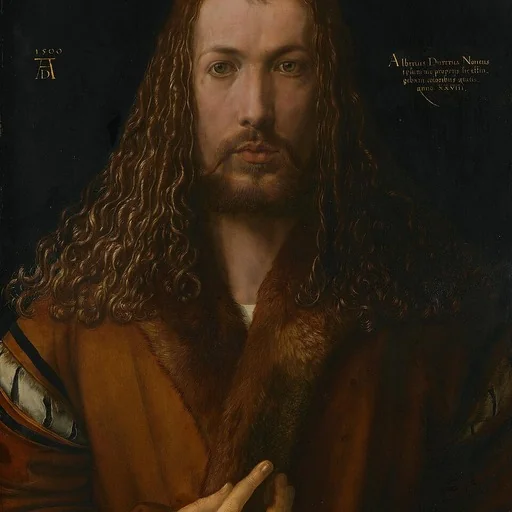
Key artists
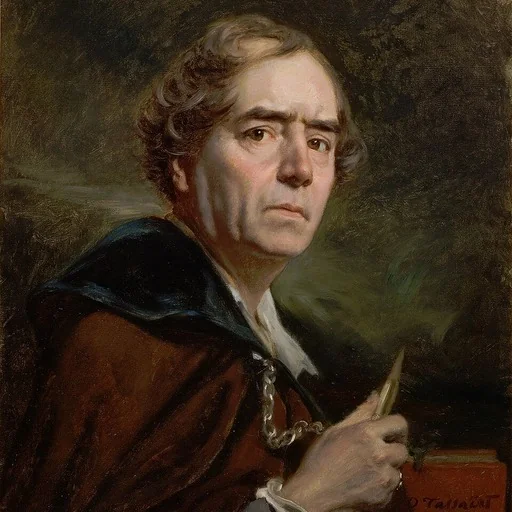
Overview
Michael is a common masculine given name with deep roots in religious tradition and an exceptionally prominent afterlife in Western art. Derived from the Hebrew theophoric question מי כאל (mī kāʾēl), meaning "Who is like God?" or in Latin Quis ut Deus?, the name is inseparable from its most famous bearer: the archangel Michael. In the Hebrew Bible, the name first appears in Numbers 13:13, while the archangel emerges in the Book of Daniel 12:1. Across Judaism, Christianity, and Islam, Michael holds significant status, as an archangel who protects Israel, defeats demonic forces, and brings rain and sustenance by divine decree. This religious stature made Michael one of the most frequently depicted sacred figures in European art, appearing in 49 works in the collection under discussion. The name's popularity as a given name surged dramatically in the twentieth century, becoming the most common male name in the United States from 1954 to 1998, but its artistic significance derives primarily from the archangel's rich iconographic tradition.
Iconography & meaning
The archangel Michael carries a densely layered symbolic vocabulary in visual art. His primary attribute is armor, signifying his role as commander of the heavenly host and protector against evil. The most ubiquitous scene depicts Saint Michael slaying or triumphing over a dragon or demon, drawn from the Book of Revelation's war in heaven, where Michael casts down the rebel angel Satan. This image became the paradigmatic representation of spiritual victory, cosmic order, and the Church's triumph over heresy and sin. Michael also frequently appears with scales, weighing souls at the Last Judgment, or escorting the blessed to paradise. In some contexts he carries a spear, sword, or banner of victory. The Quis ut Deus motto sometimes accompanies his image, reinforcing the theological meaning of his name. His feast day, 29 September, shared with Gabriel and Raphael in the Catholic Church, provided occasion for devotional imagery. In Orthodox traditions, commemorated on 8 November, Michael's role among the "Bodiless Powers" emphasized his liturgical and intercessory functions. The color blue or white often dominates his depiction, signaling celestial purity, while his youthful, athletic form distinguishes him from elder patriarchal saints.
Across movements & periods
The treatment of Michael evolved considerably across artistic periods, though the sources indicate particular concentrations. Medieval art established the foundational iconography, with Romanesque and Gothic artists emphasizing the archangel's hieratic, symbolic presence in manuscript illumination, sculpture, and panel painting. The Renaissance brought increased naturalism to Michael's depiction, transforming the stylized warrior of medieval art into a more anatomically convincing figure while maintaining his supernatural attributes. The name's popularity in Spain from the Renaissance onward, where it became the seventh most common male name, suggests parallel devotional demand. Northern European traditions, represented in this collection by works like Paradiesgärtlein, often placed Michael within meticulously detailed landscapes or architectural settings that grounded his celestial role in observable reality. Baroque art intensified the drama of Michael's combat with demonic forces, exploiting chiaroscuro and dynamic composition. The persistence of Michael across movements testifies to his adaptability: the same figure could embody medieval otherworldliness, Renaissance humanist heroism, or Counter-Reformation spiritual militancy. The sources do not specify particular stylistic treatments for individual works, but the geographic and temporal range implied by titles like The Mass of Saint Gregory and The Conversion of Saint Paul suggests sustained engagement across centuries.
Legacy
The archangel Michael's cultural afterlife extends far beyond the specific works in this collection. As a given name, Michael achieved unprecedented global diffusion in the twentieth century, becoming the most popular male name in the United States for 44 years and dominating naming charts in Germany, Austria, Switzerland, and numerous other countries from the 1950s through the 1970s. This popularity arguably both reflected and reinforced the name's continued spiritual resonance in postwar Western culture. In art historical terms, Michael established a durable template for depicting spiritual combat and divine protection that influenced not only religious art but also secular representations of heroic virtue and moral struggle. The name's variants, Michel, Miguel, Mikael, Mikhail, and dozens of others across languages, attest to its cross-cultural penetration. In contemporary contexts, Michael remains a touchstone for discussions of angelology, the intersection of name and identity, and the persistence of sacred figures in secular visual culture. The 49 works in this collection represent but a fraction of his vast artistic presence, yet they document how a single biblical figure could sustain creative attention across diverse media, periods, and devotional contexts, his image perpetually renegotiated between the demands of theological accuracy and artistic innovation.
Works
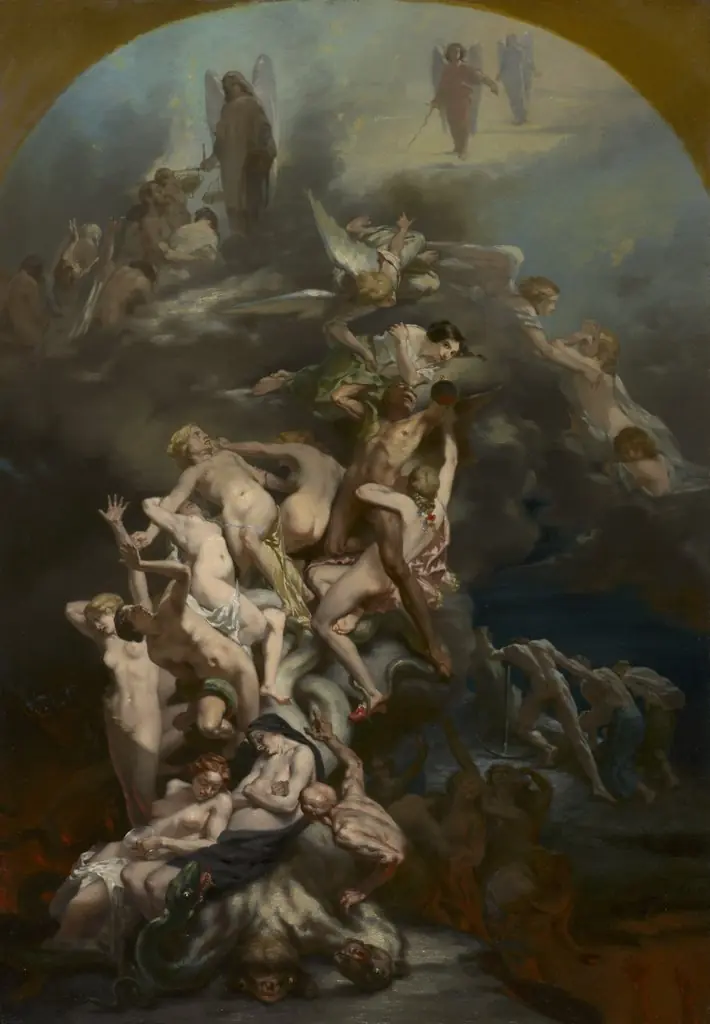 Heaven and Hell
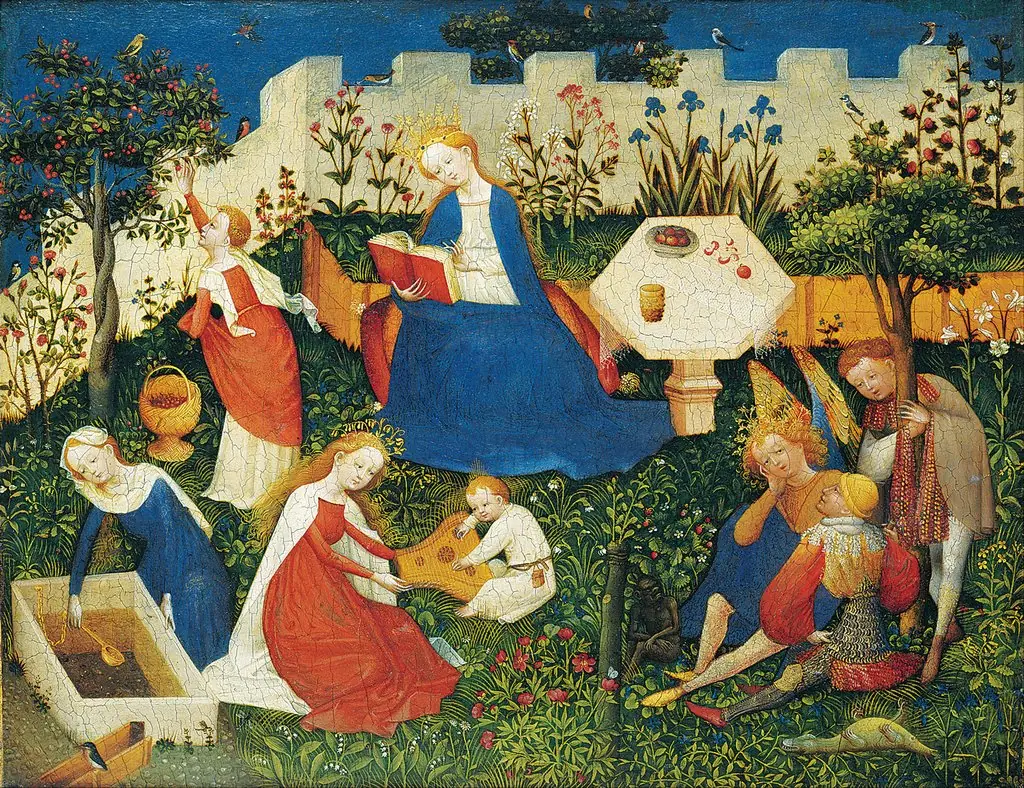 Paradiesgärtlein
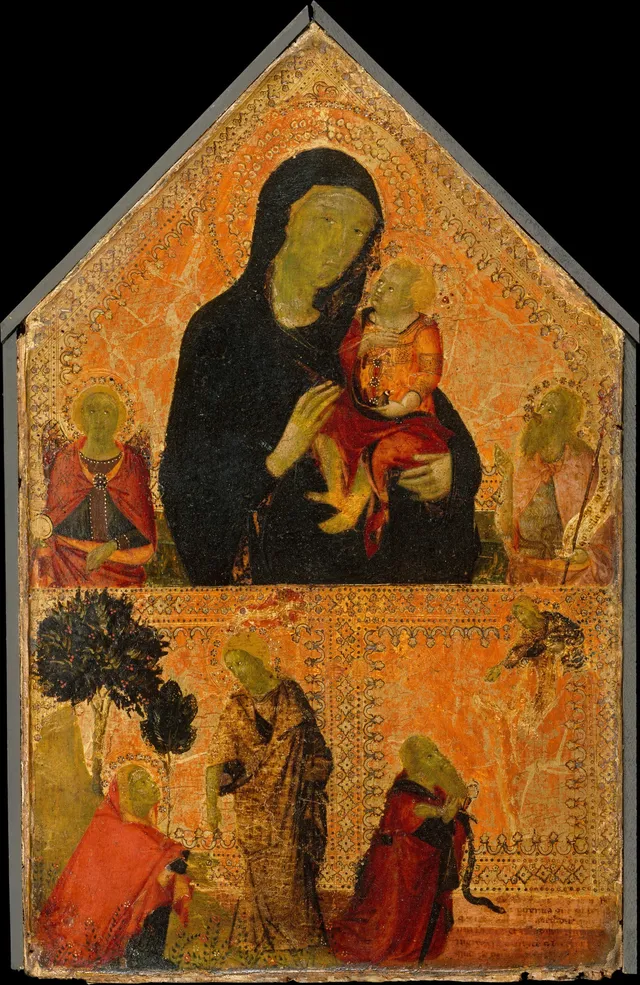
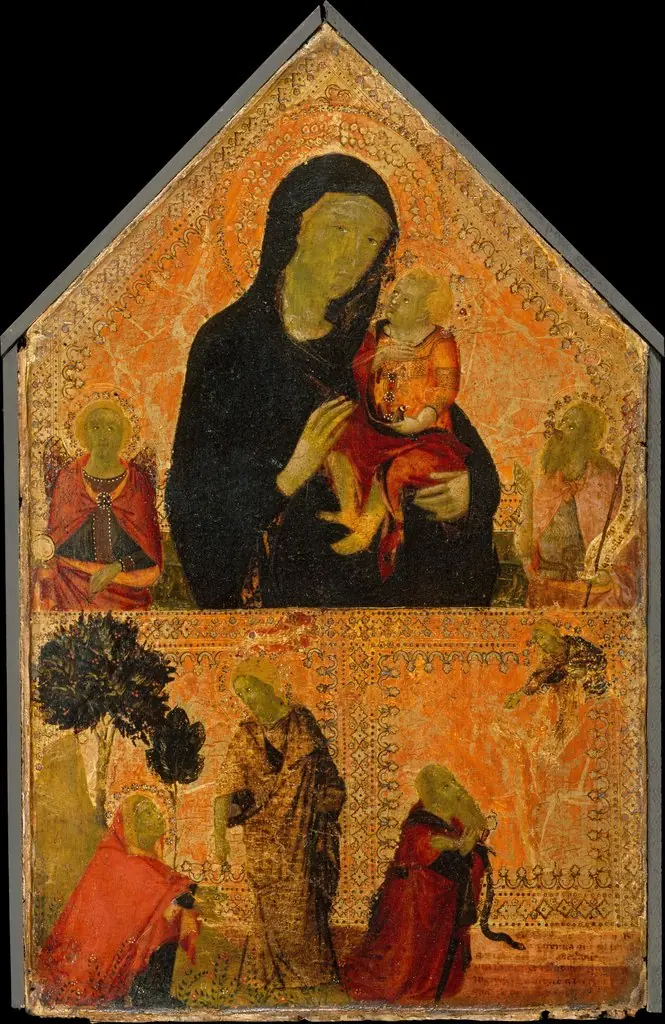 Madonna and Child with Saints Michael and John the Baptist; The Noli Me Tangere; The Conversion of Saint Paul
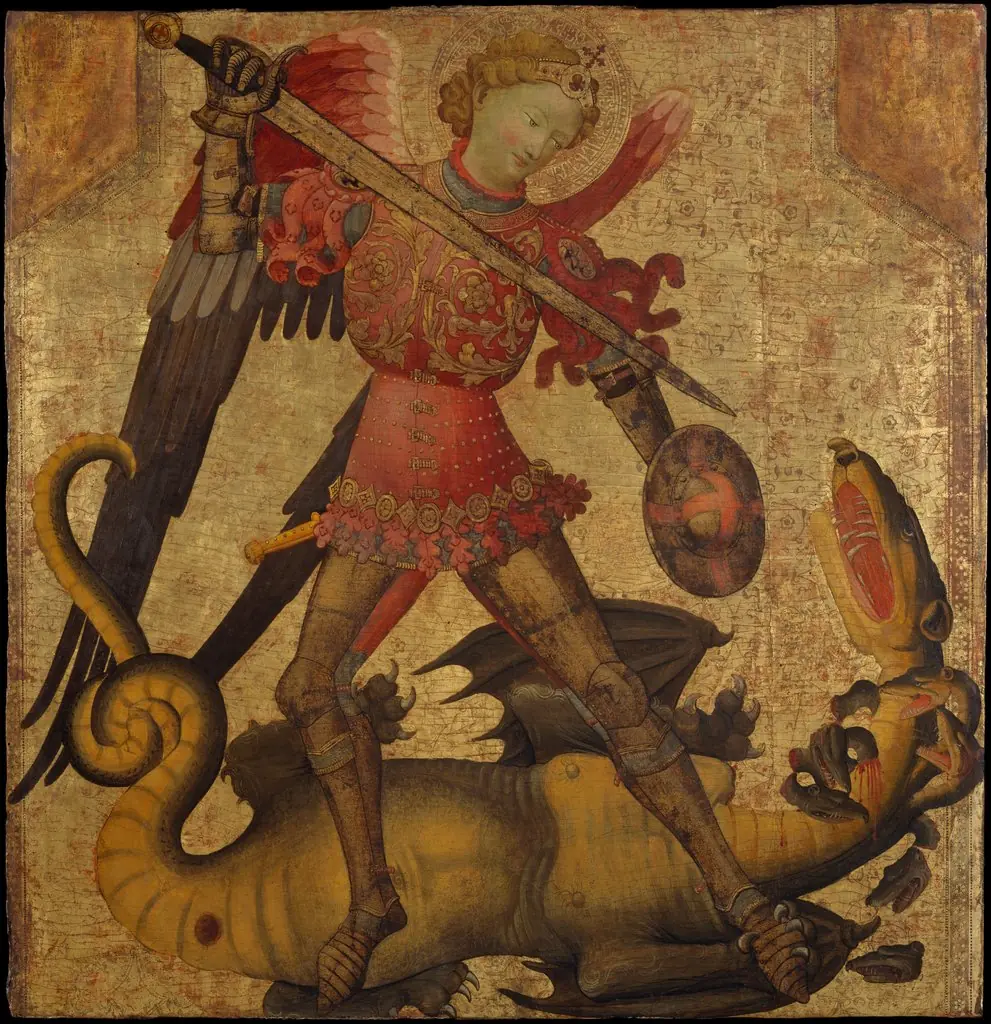 Saint Michael and the Dragon
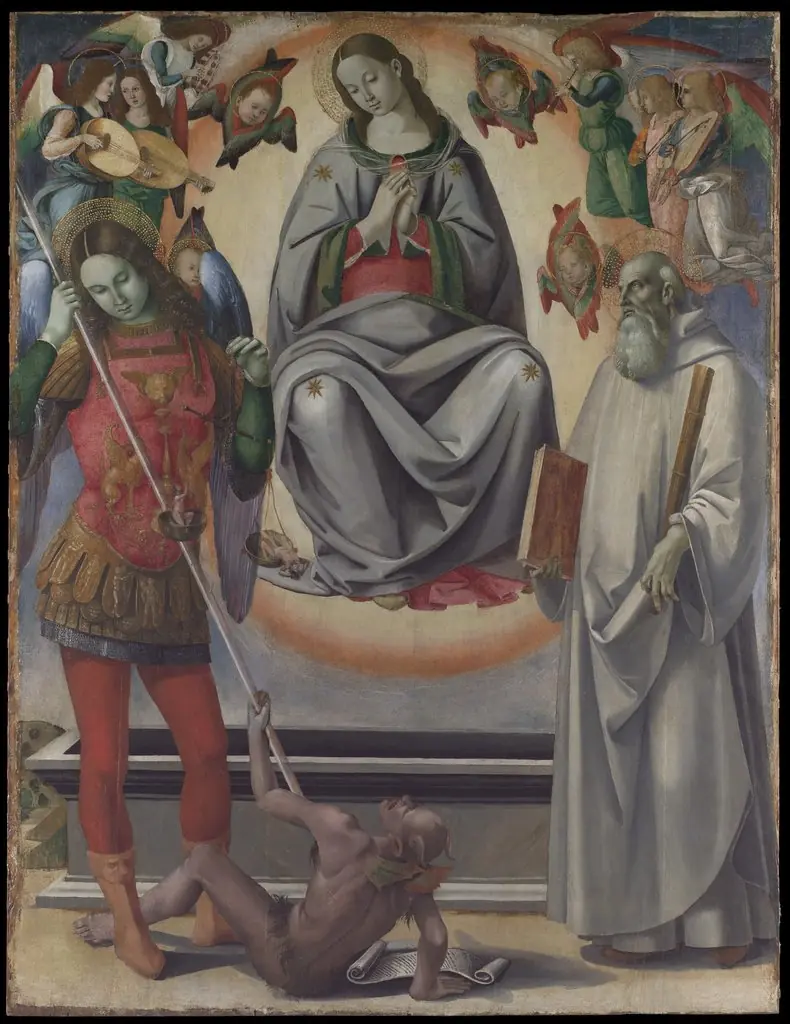 The Assumption of the Virgin with Saints Michael and Benedict
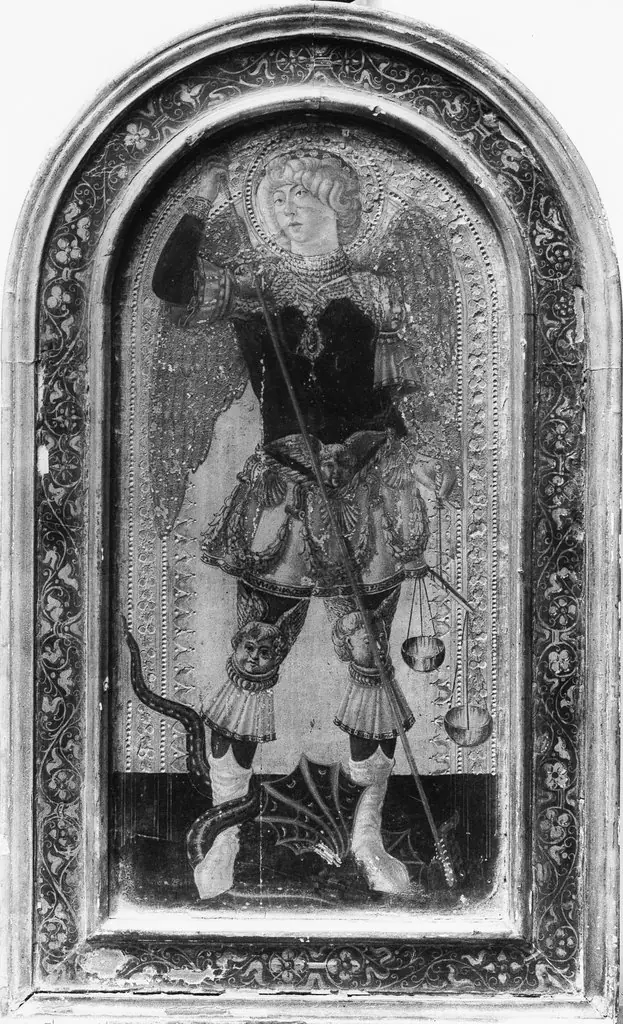 Saint Michael
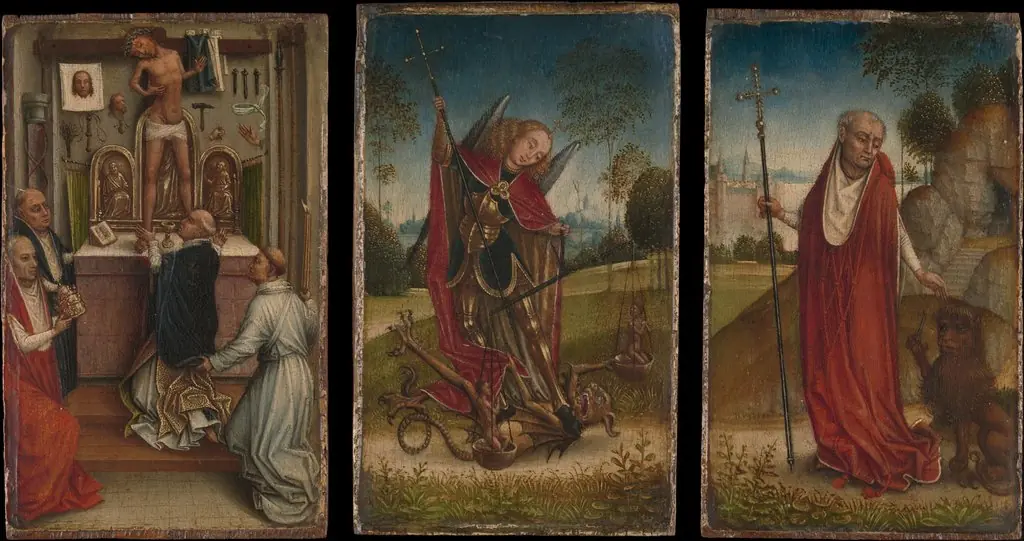 Saint Michael; The Mass of Saint Gregory; Saint Jerome
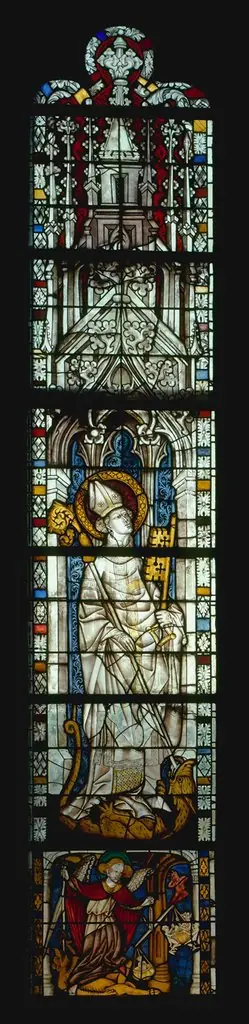 The Virgin Mary and Five Standing Saints above Predella Panels
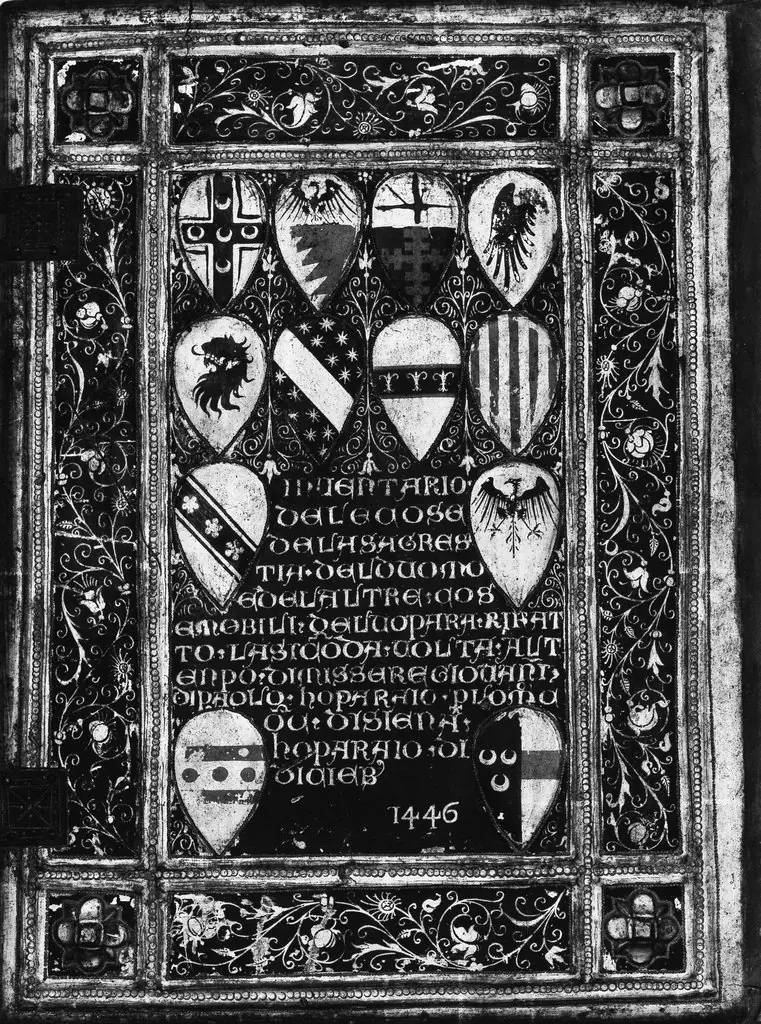 Saint Michael
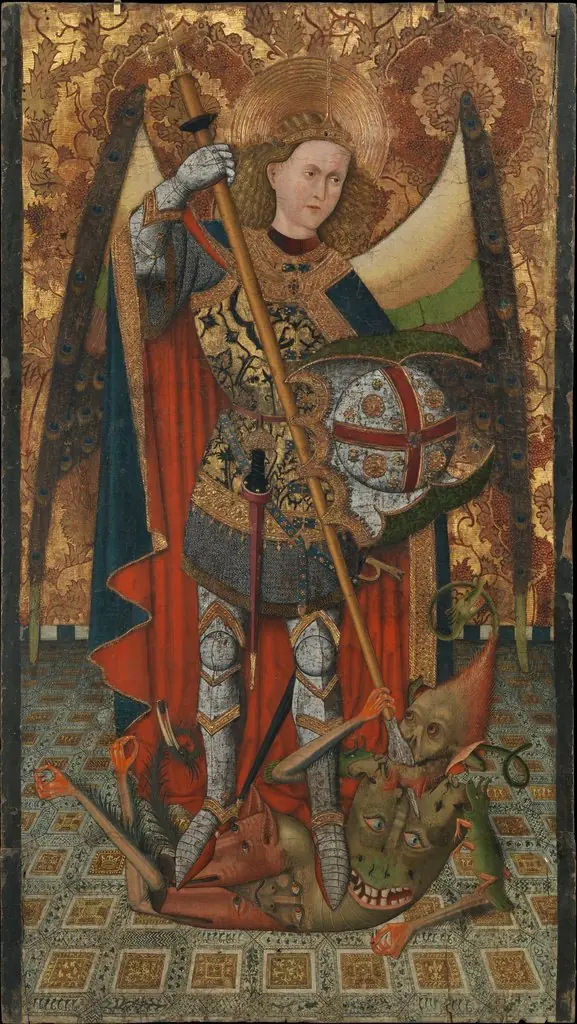 Saint Michael
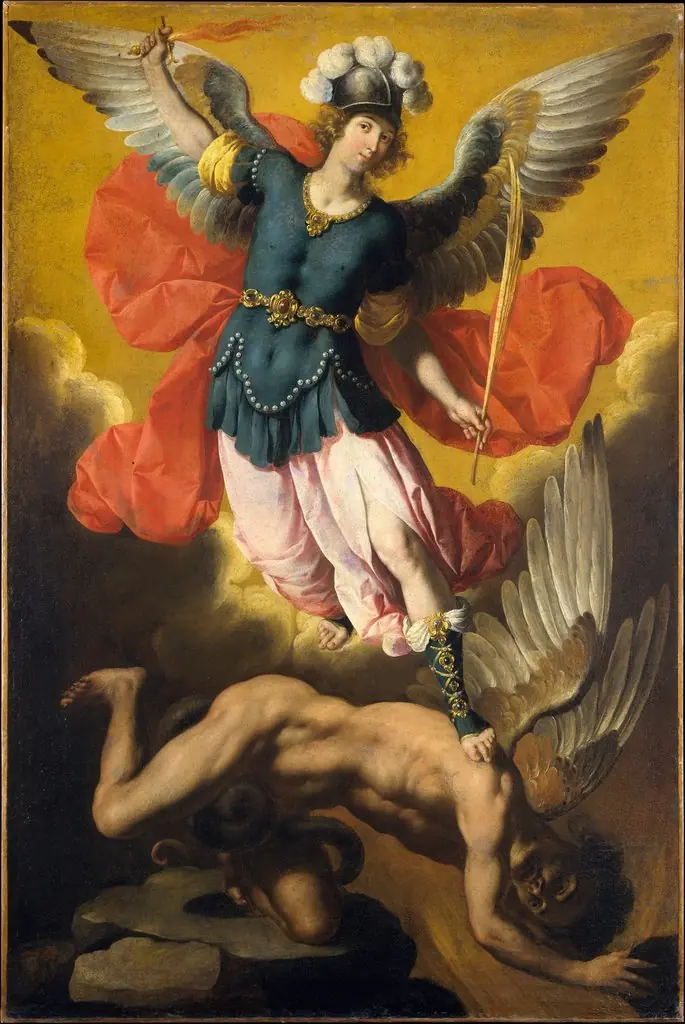 Saint Michael the Archangel
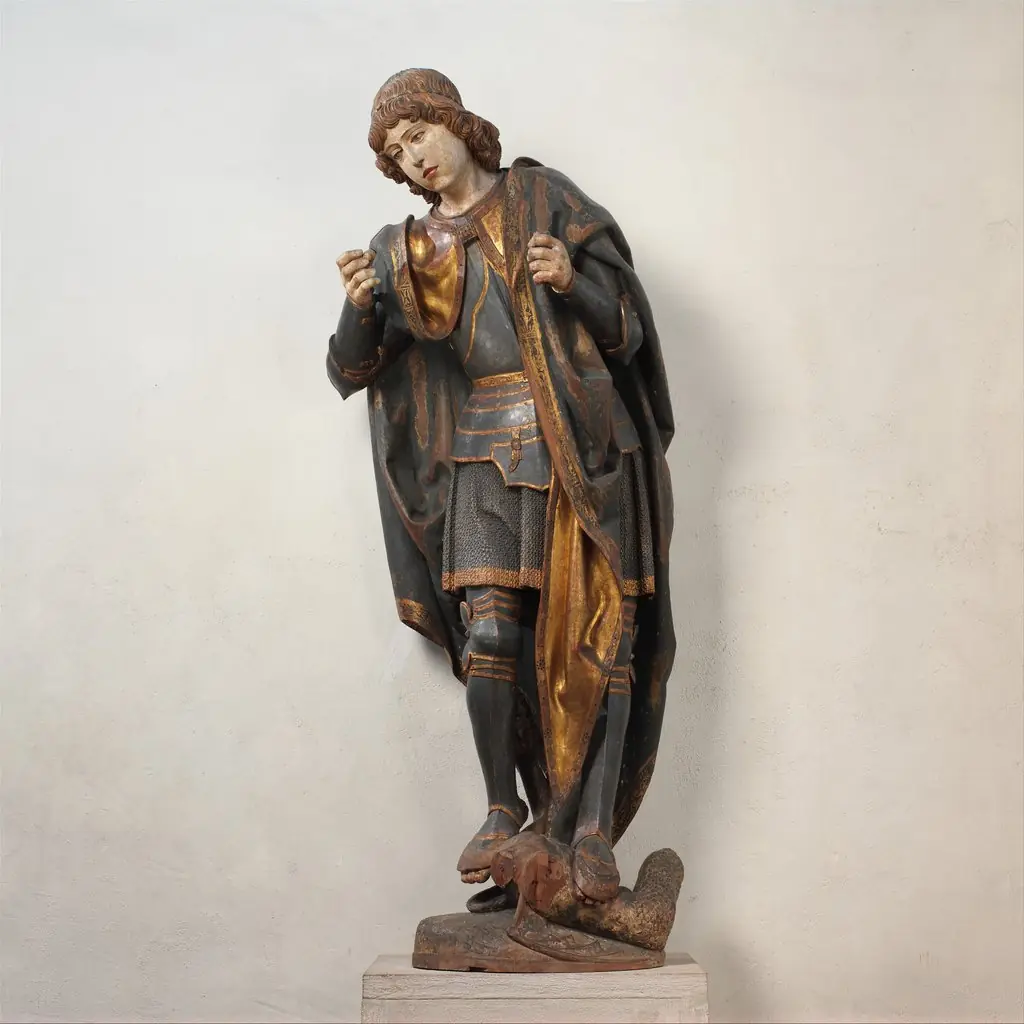 Saint Michael
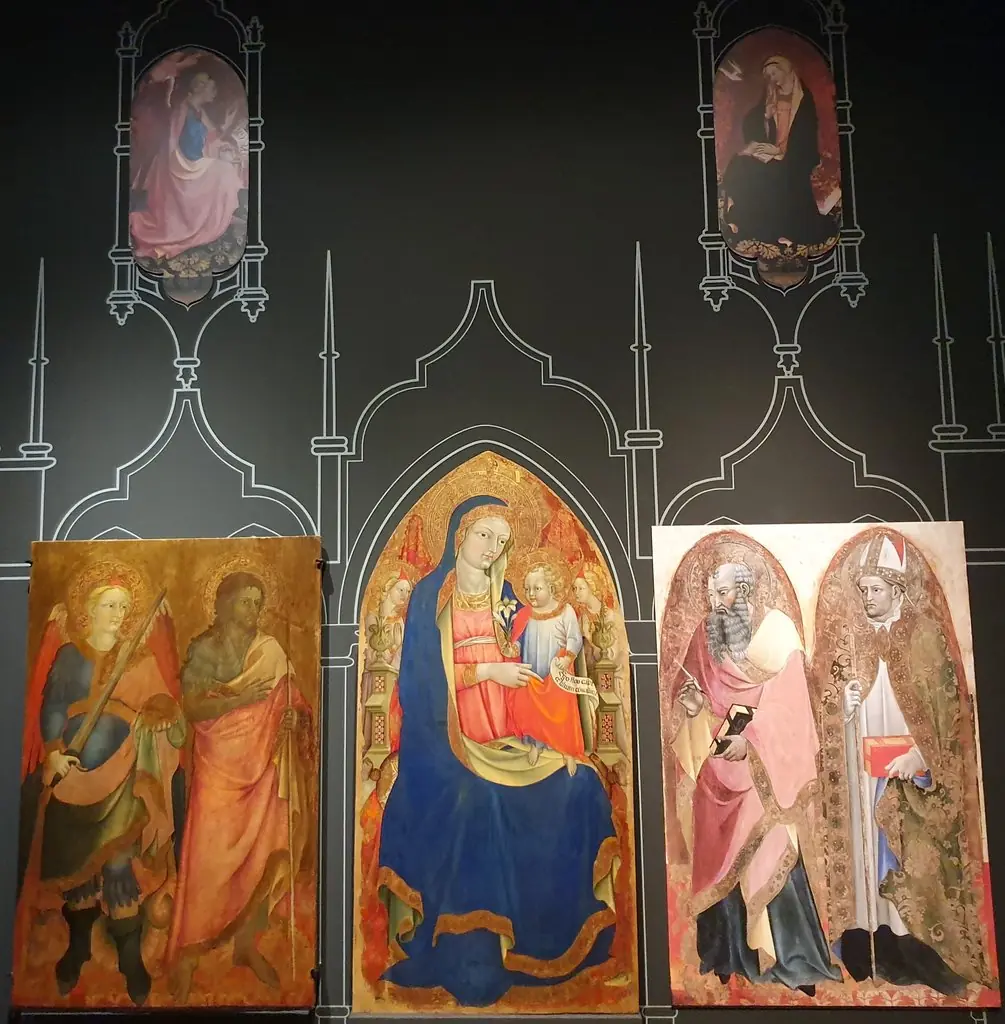 Polyptych of Sant'Agostino, Nicosia
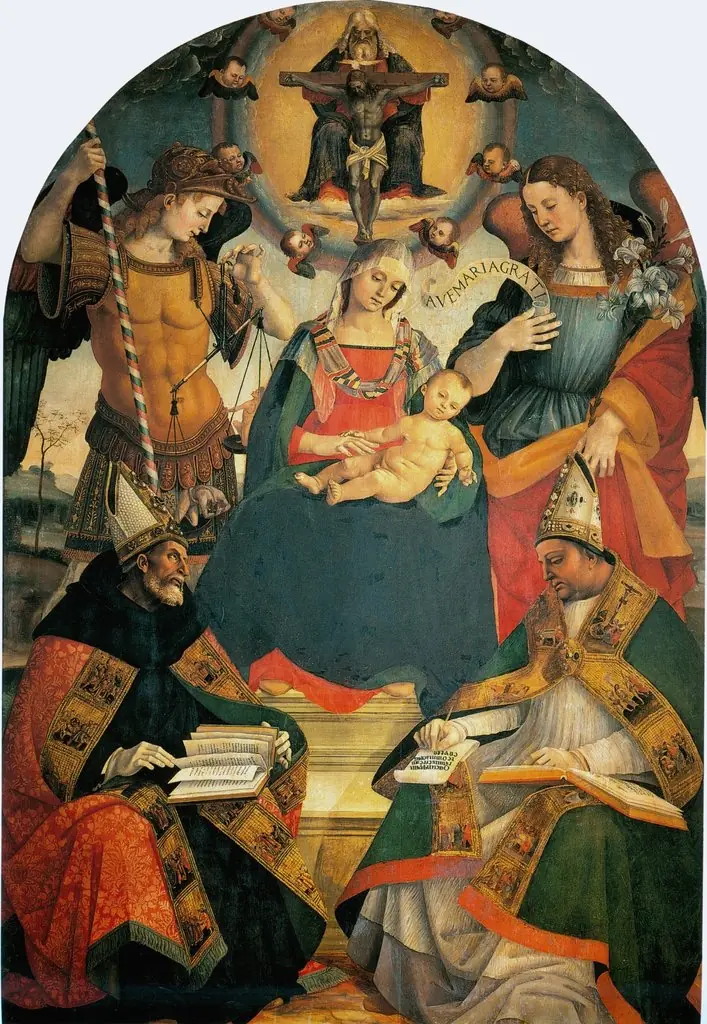 Trinity, the Virgin, and Two Saints
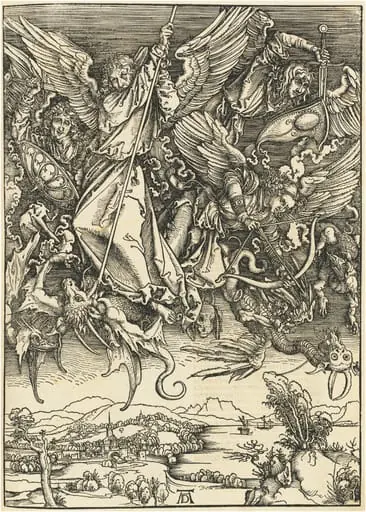 Saint Michael Fighting the Dragon
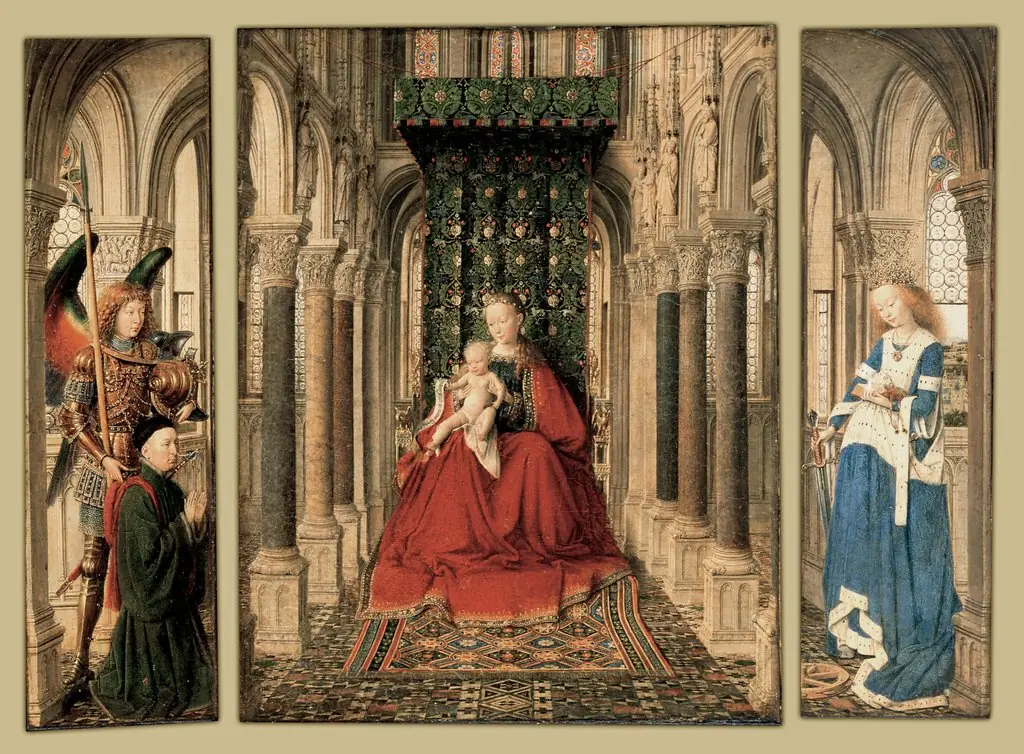 Dresden Triptych
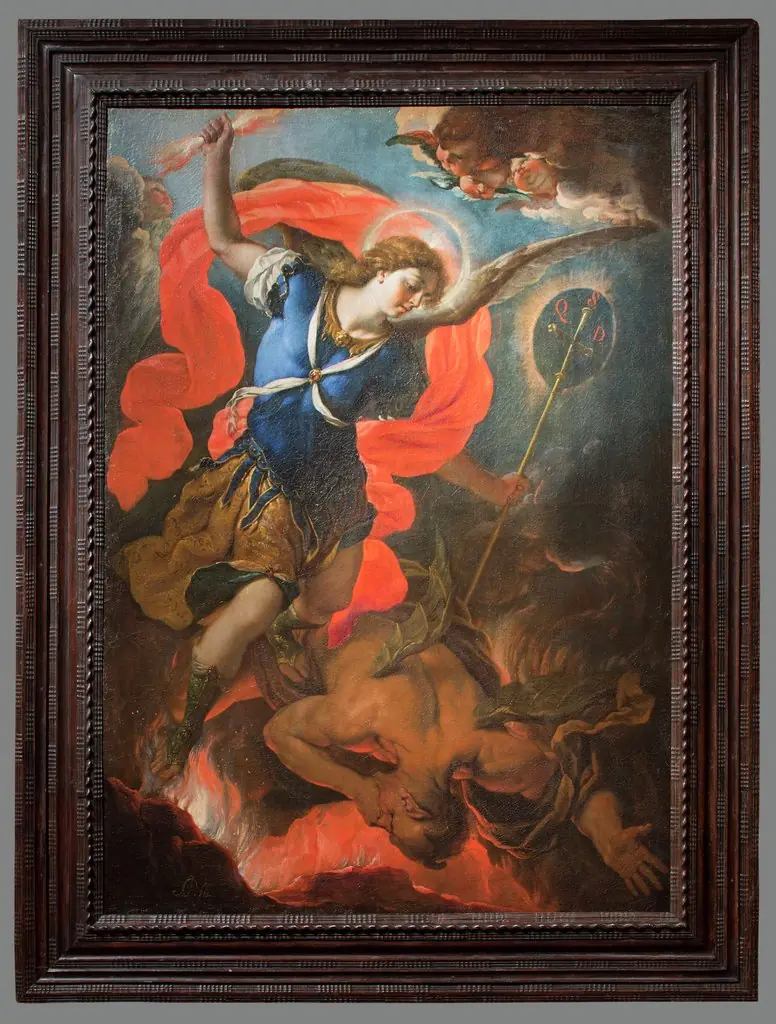 The Archangel Michael Defeating Satan
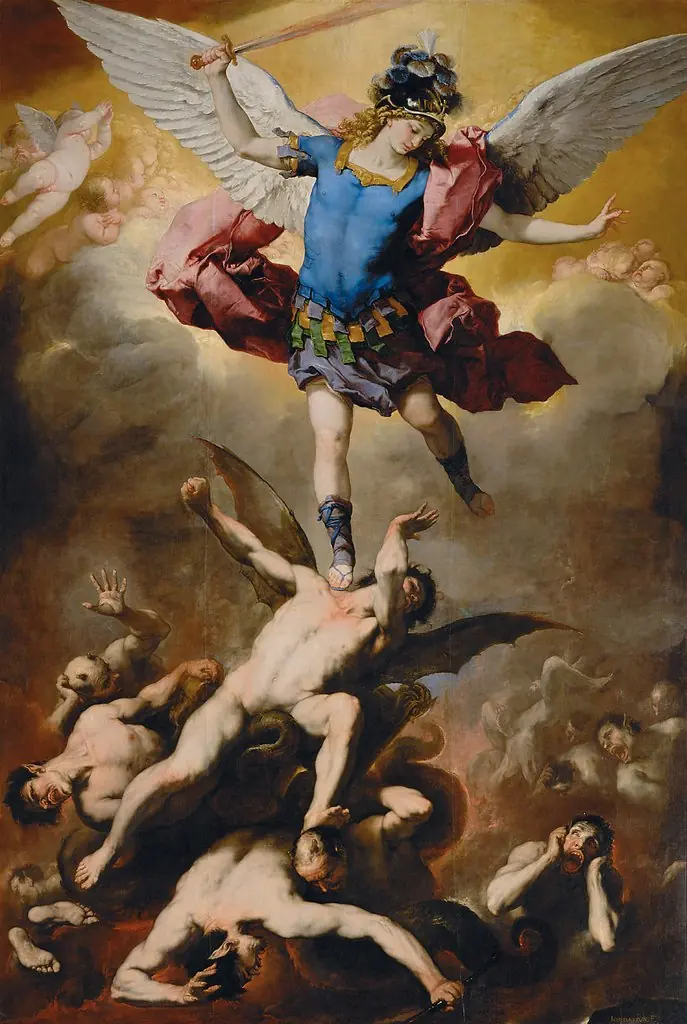 The Fall of the Rebel Angels
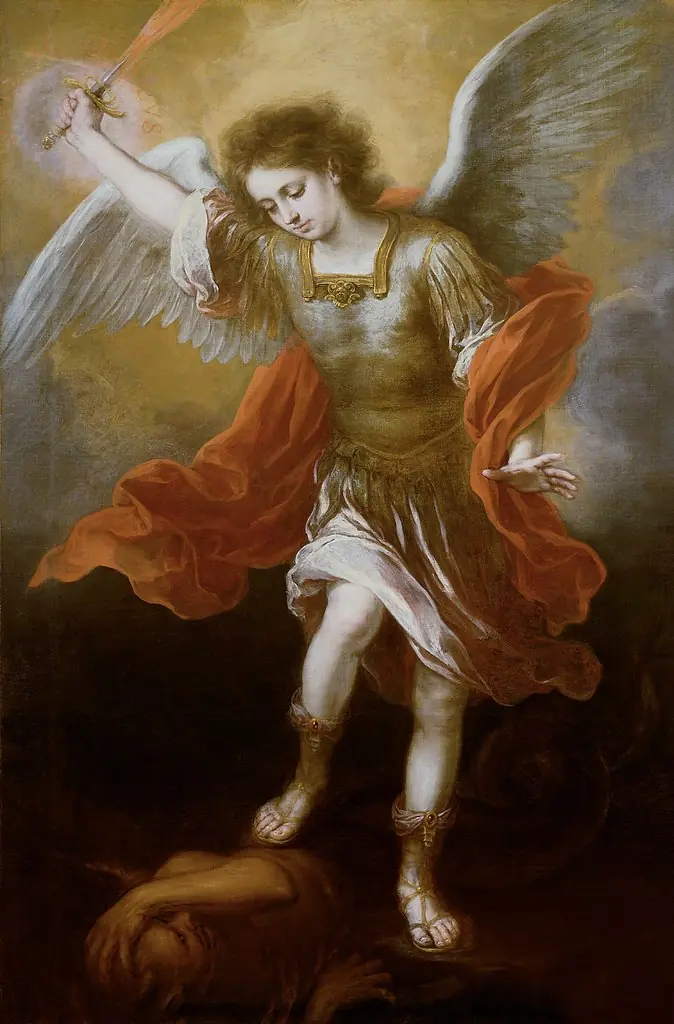 Archangel Michael plunges the devil into the abyss
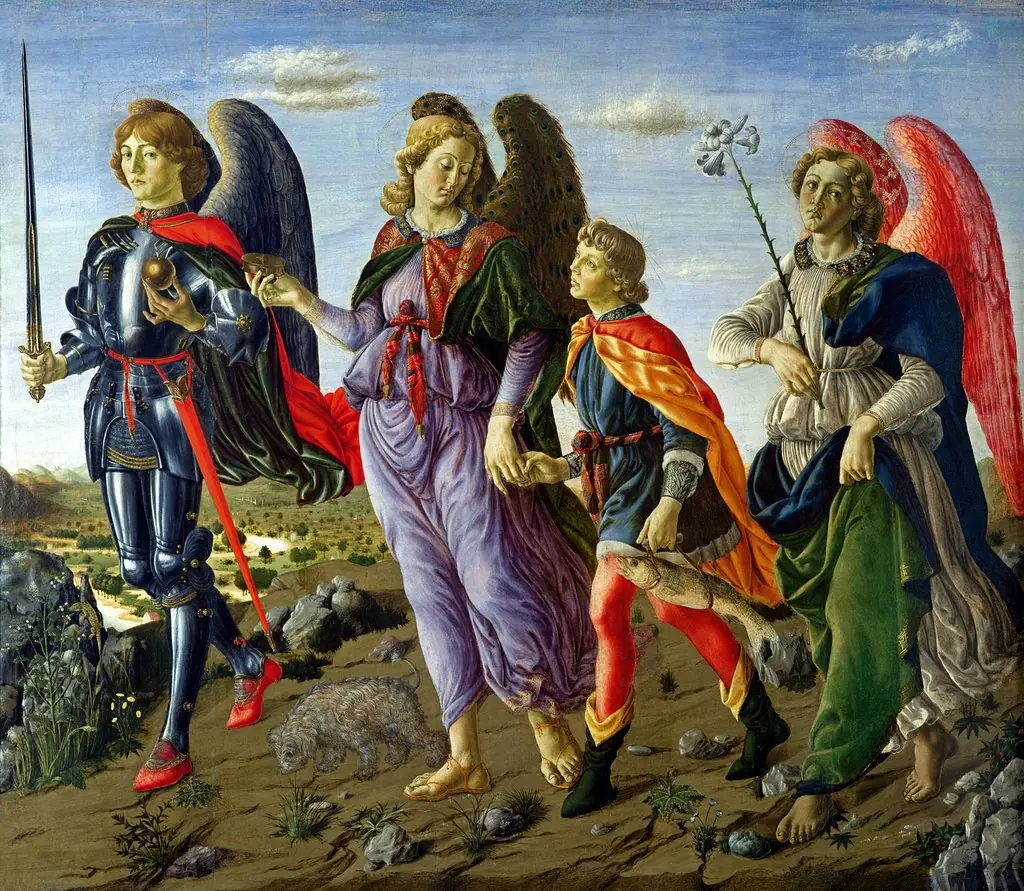 Three Archangels with Tobias
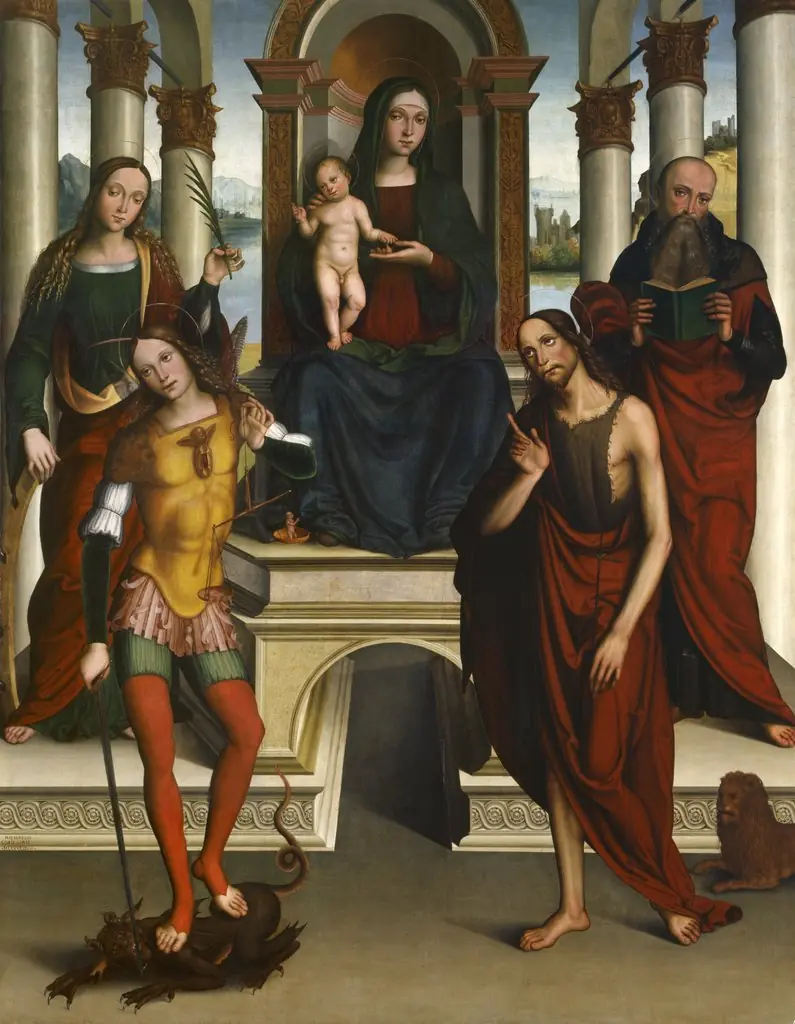 Madonna and Child Enthroned with Saints
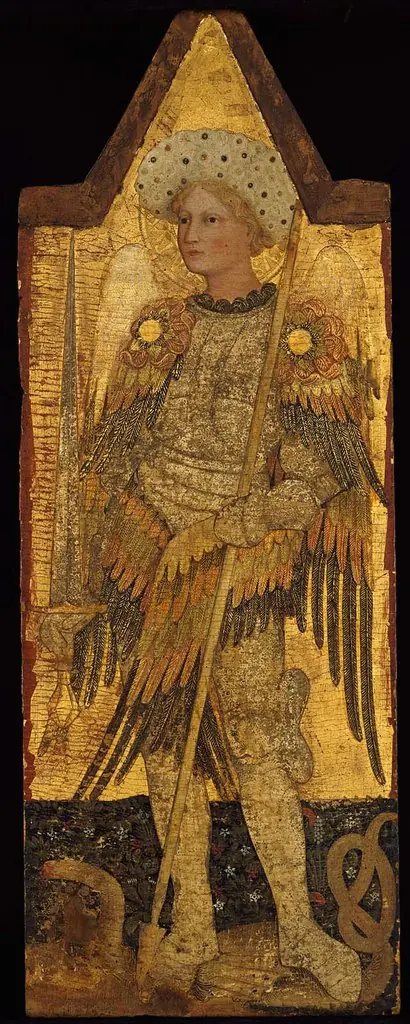 Saint Michael
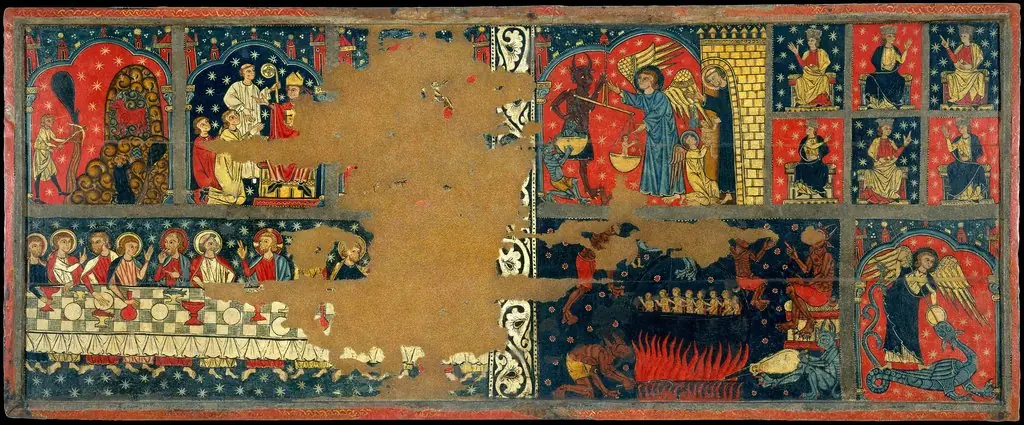 Panel of Saint Michael
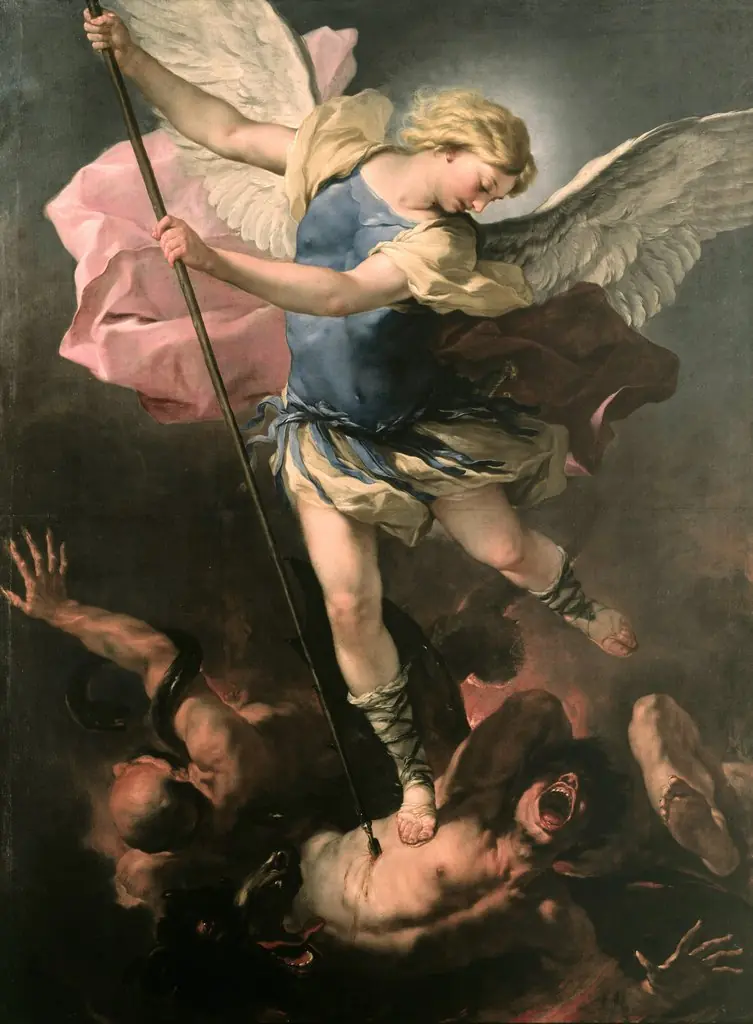 Saint Michael
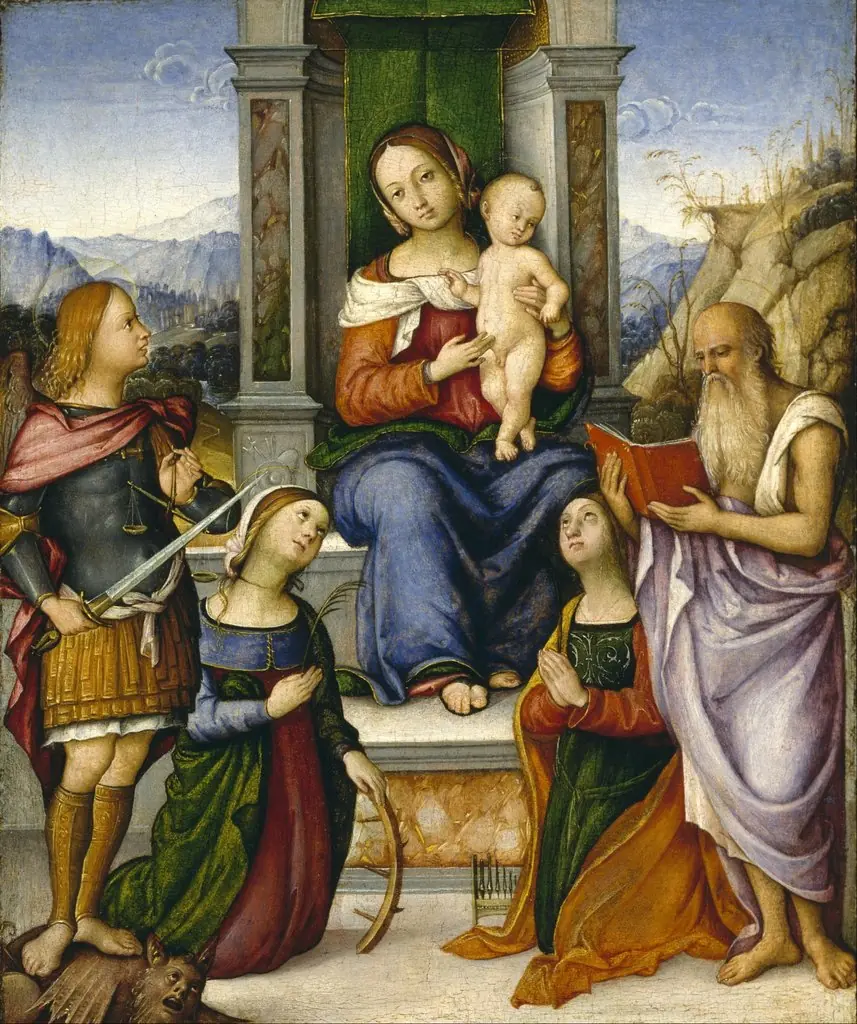 The Virgin and Child Enthroned with Saints Michael, Catherine of Alexandria, Cecilia, and Jerome
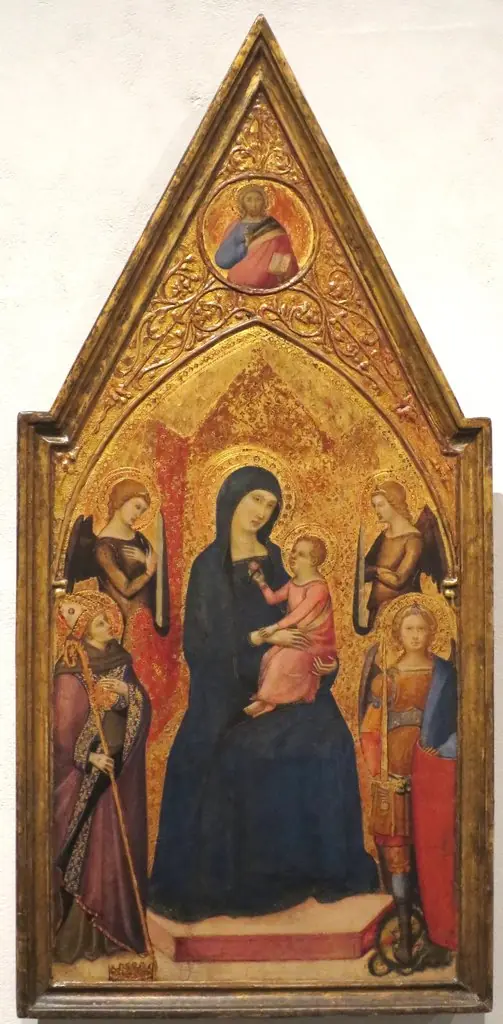 Virgin and Child with Sts. Louis of Toulouse and Michael
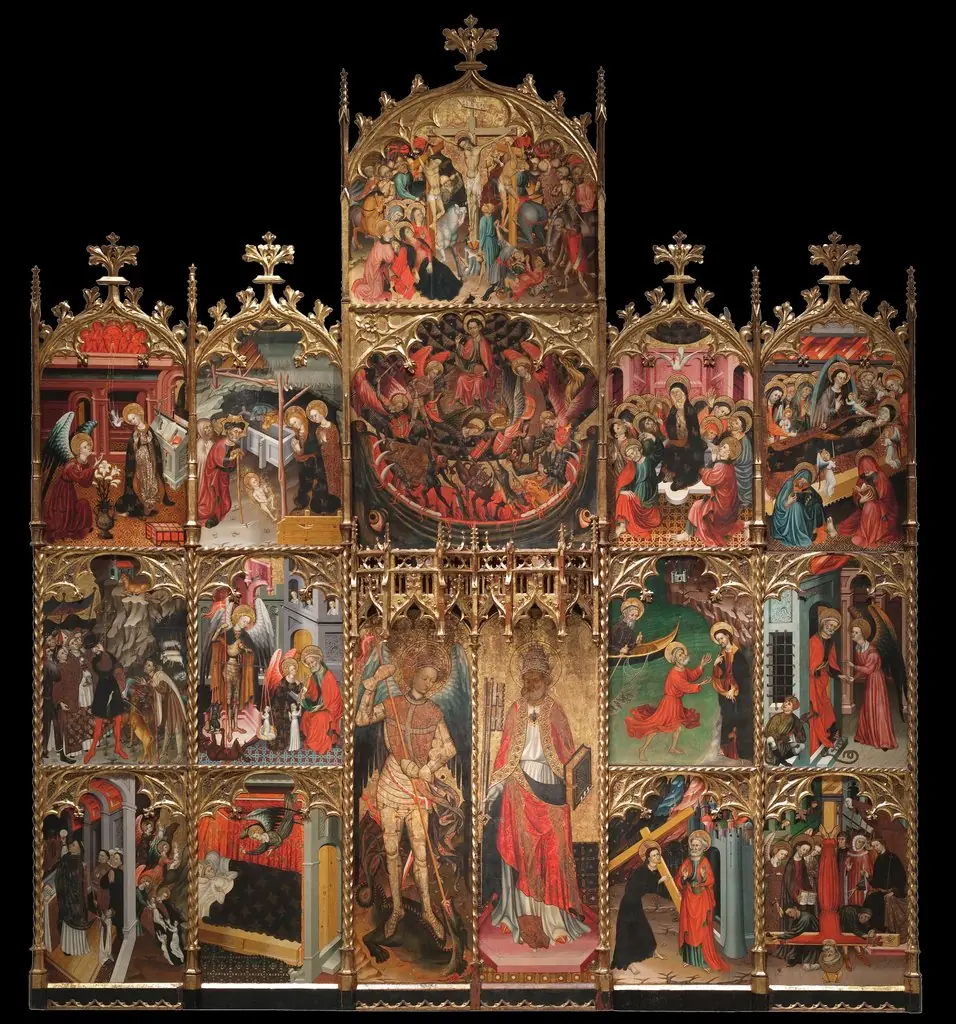 Altarpiece of Saint Michael and Saint Peter
 Saint Lawrence, Saint Michael and the Dragon, the Dormitio Virginis and the Martyrdom of Saint Catherine
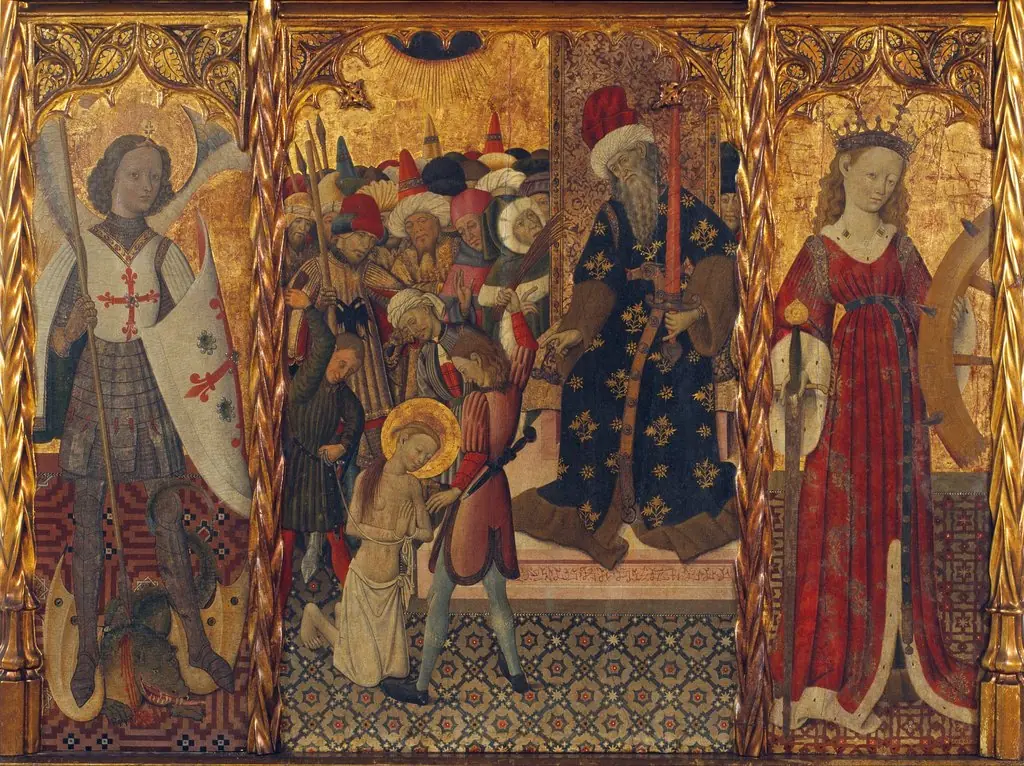 Saint Michael, Martyrdom of Saint Eulalia and Saint Catherine
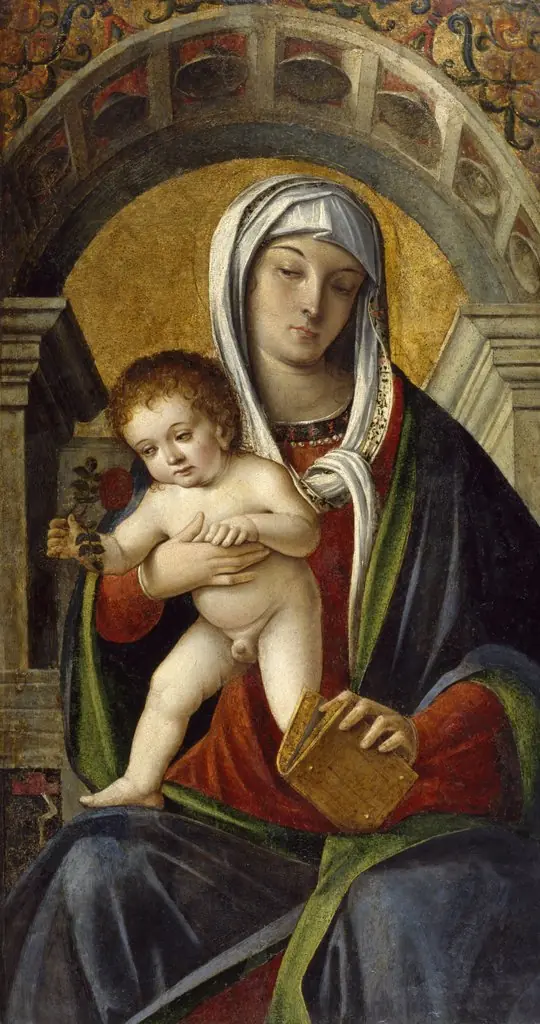 Triptych with Madonna and Child Enthroned Between the Archangel Michael and Saint Peter
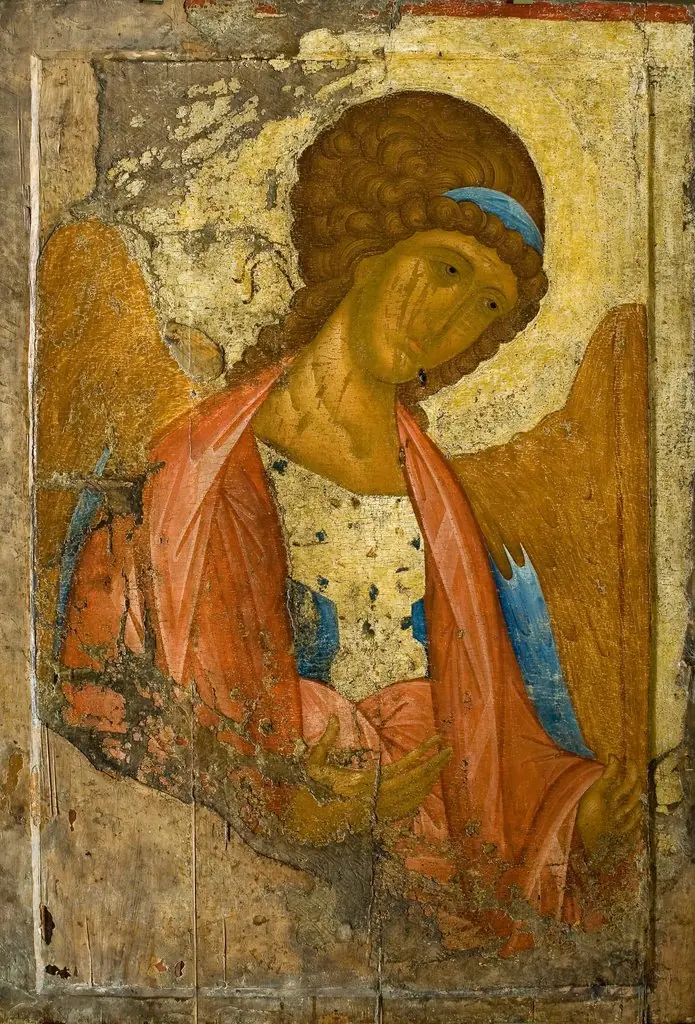 Archangel Michael
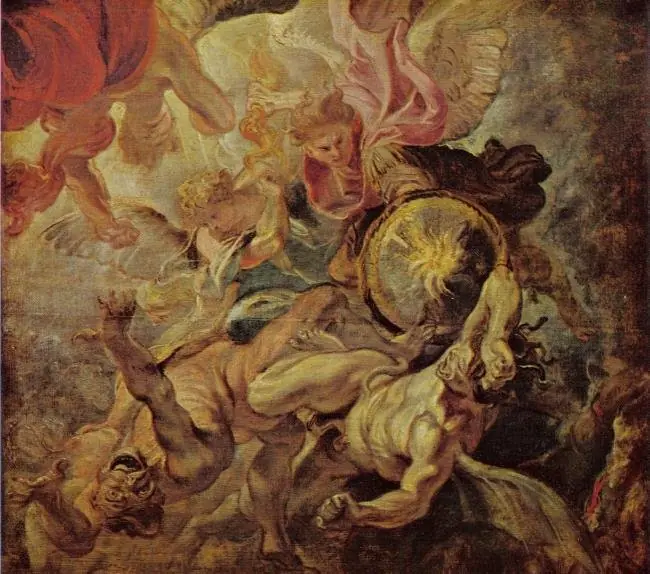 The archangel Michael defeats Satan and the rebellious angels (Revelations 12:7-9), 1620
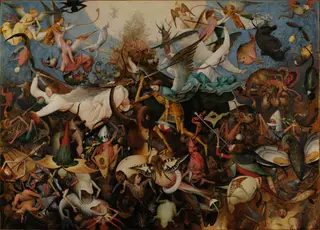 The Fall of the Rebel Angels
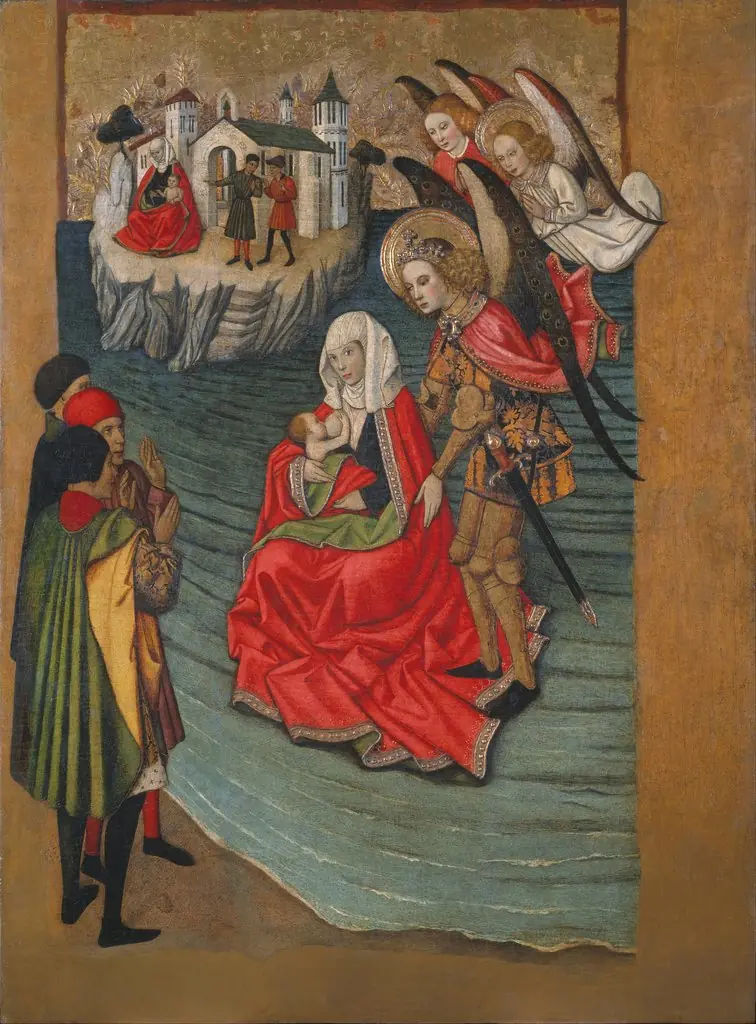 Miracle of Mont Saint-Michel
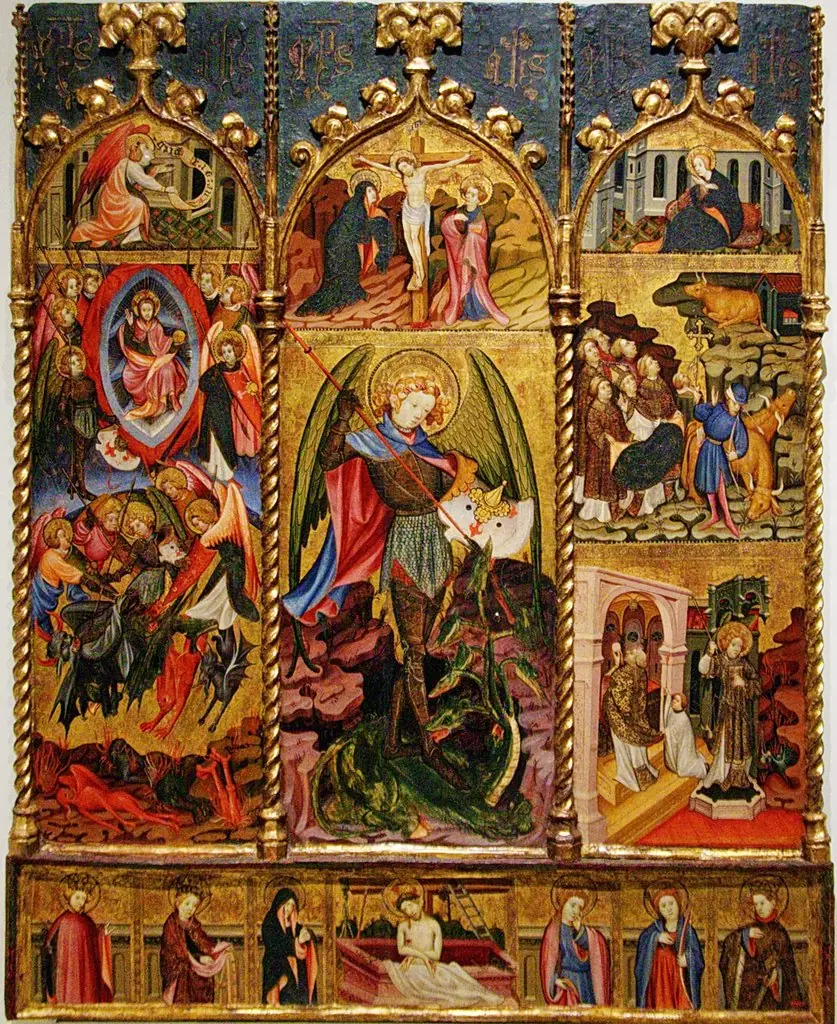 Altarpiece of Saint Michael the Archangel
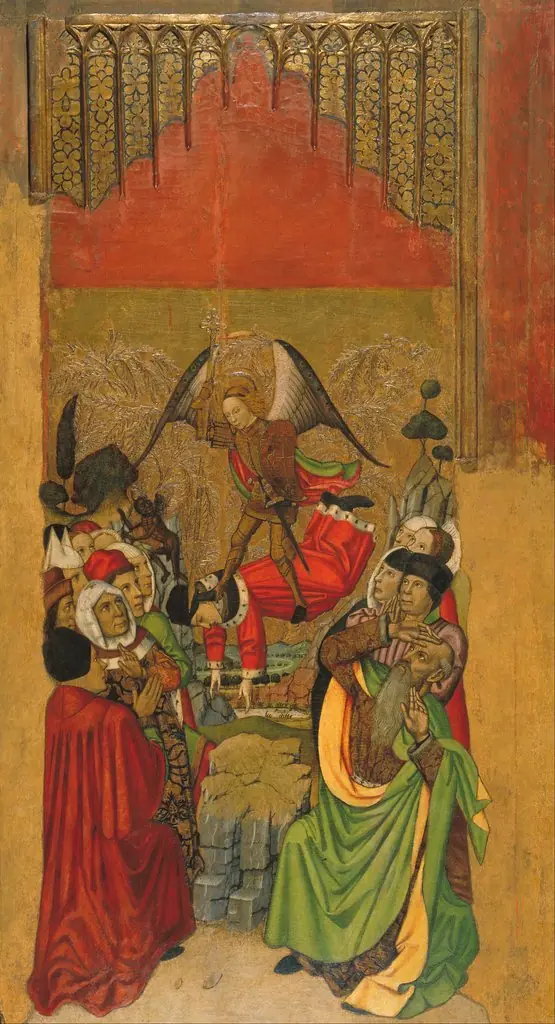 Saint Michael Vanquishes the Antichrist
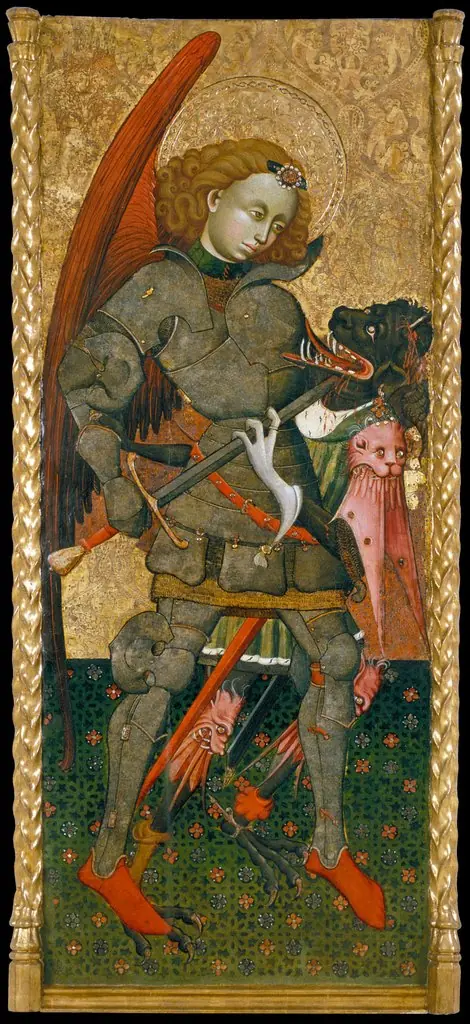 San Miguel Arcángel
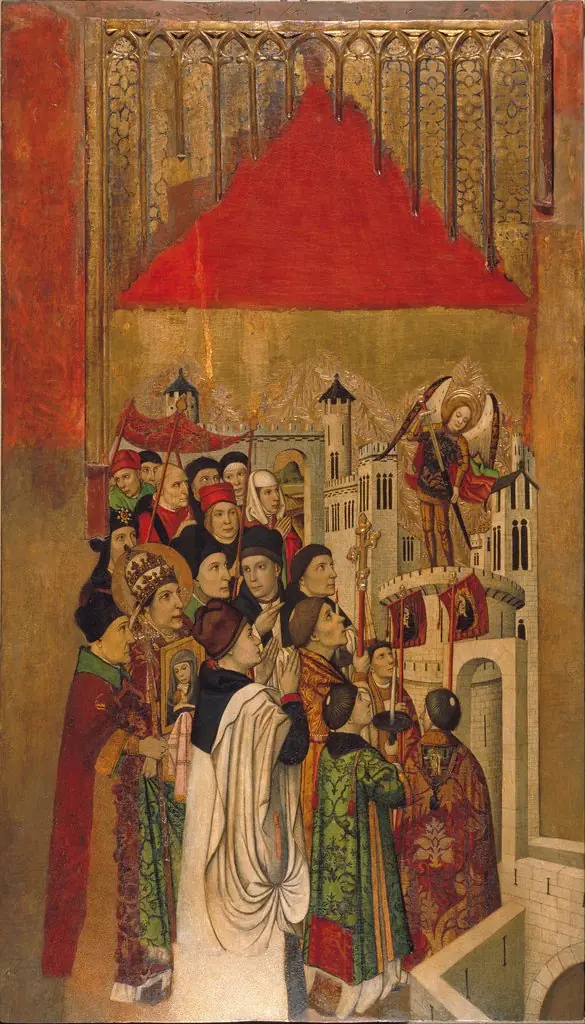 Apparition of Saint Michael at the Castle of Sant'Angelo
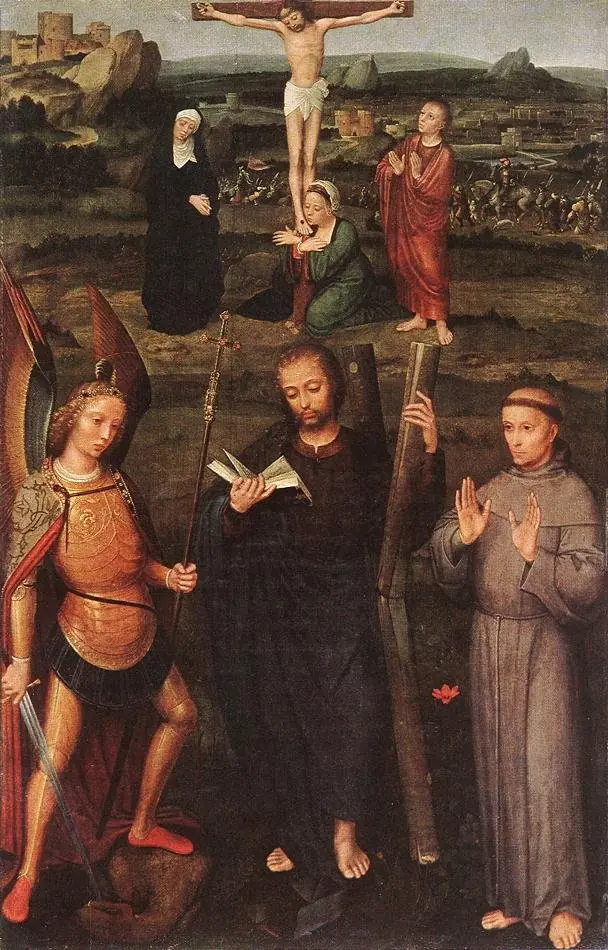 Archangel St Michael, St Andrew and St Francis of Assisi with the Calvary
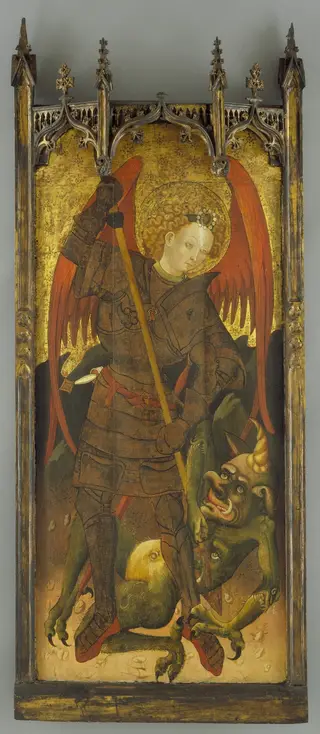 Saint Michael Fighting the Dragon
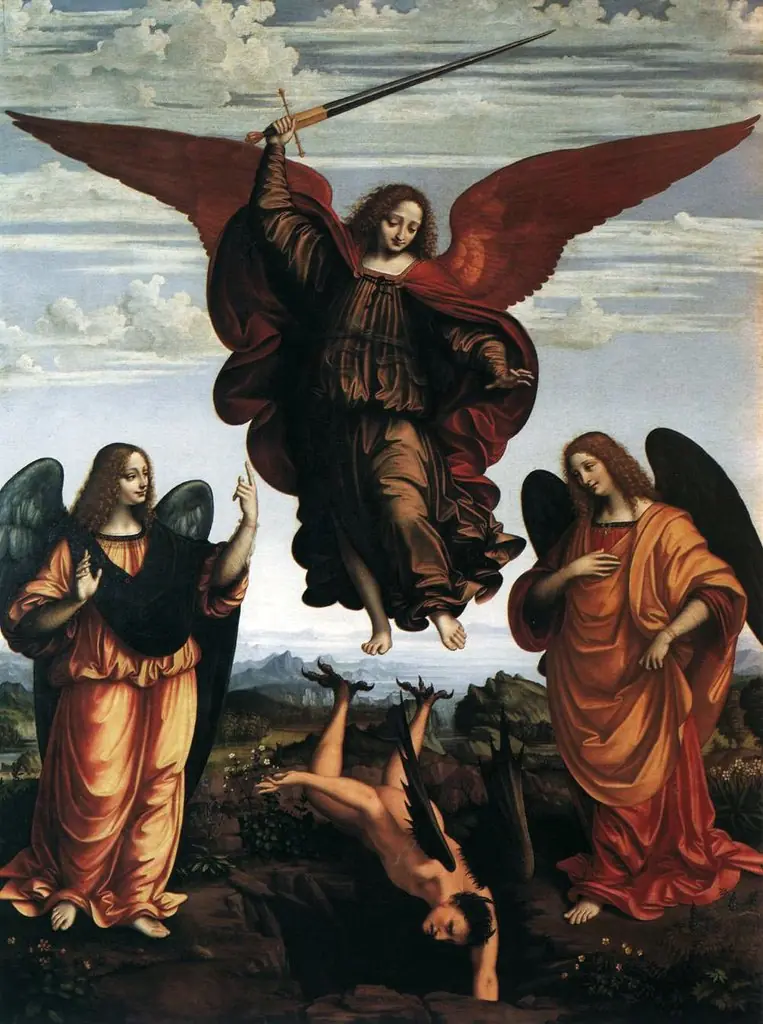 Altarpiece of the three archangels
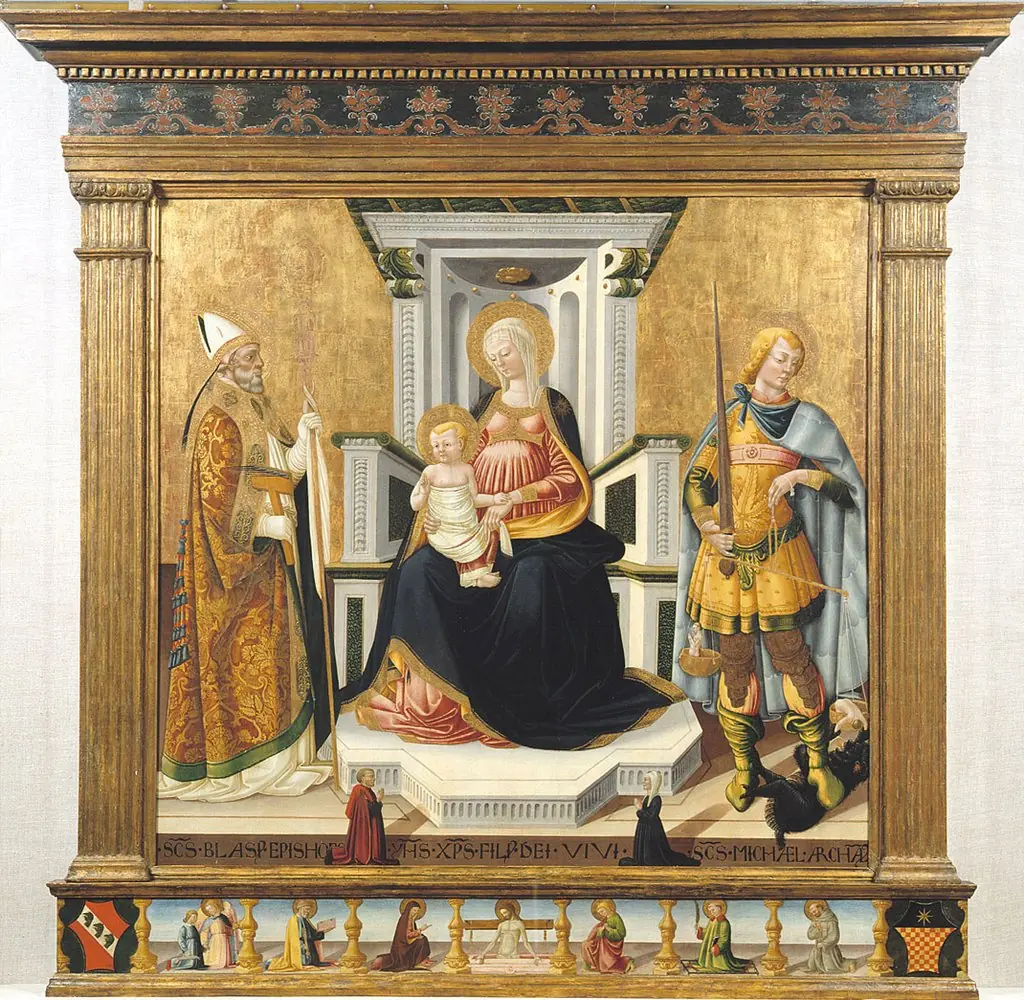 Madonna and Child with Two Saints (Bicci)
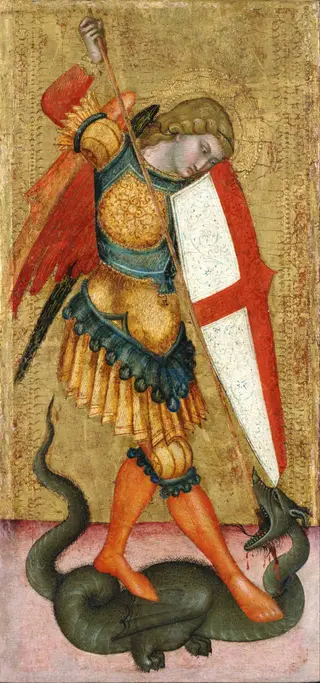 St. Michael and the Dragon
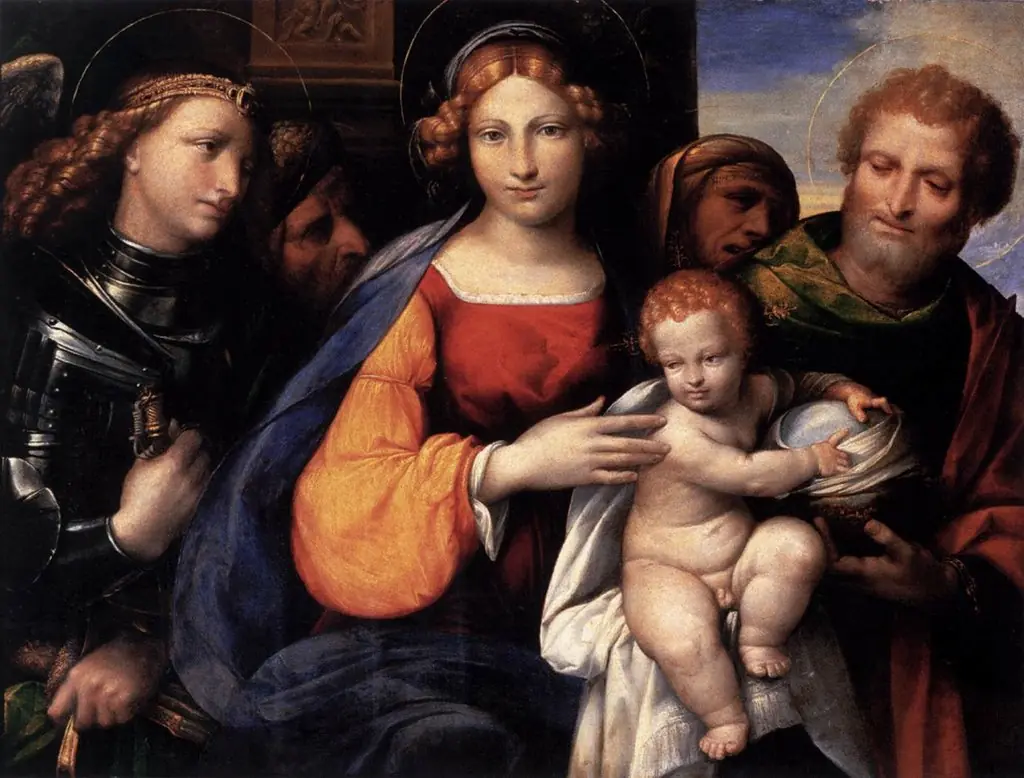 Virgin and Child with Saints
Frequently asked questions
What is Michael?
Michael (Hebrew: מִיכָאֵל; Aramaic: ܡܝܟܐܝܠ, romanized: Mīkhāʼēl) is a common masculine given name usually thought to be from the Hebrew rhetorical question מי כאל (mī kāʼēl), "Who like El?", thus being a theophoric name whose answer is "there is none like El", or "there is none…
How many Michael works does Artifact World Gallery have?
Artifact World Gallery holds 44 public-domain Michael works, all free to view and download.
Who are the key Michael artists?
Key Michael artists in the collection include Peter Paul Rubens, Albrecht Dürer and Octave Tassaert.
Where can I see Michael works?
Michael works in the collection are held by Metropolitan Museum of Art, Museu Nacional d'Art de Catalunya and Kunsthistorisches Museum.