Artwork
The Dying David Admonishes Solomon

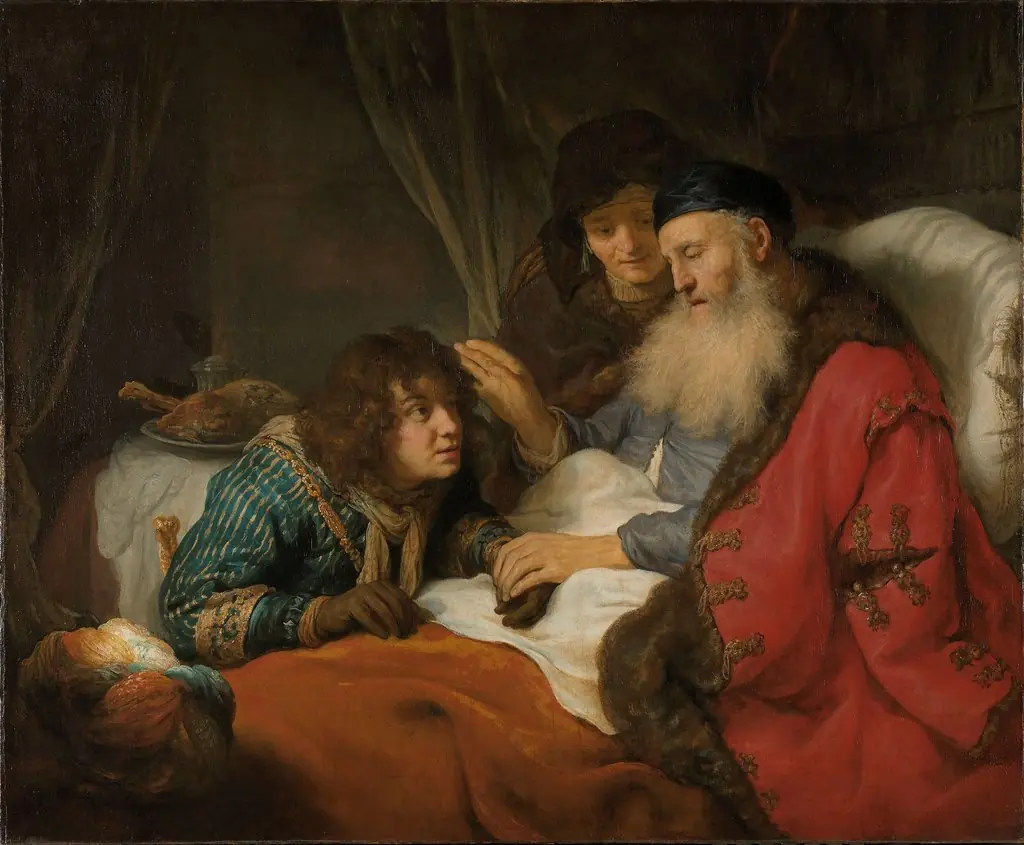
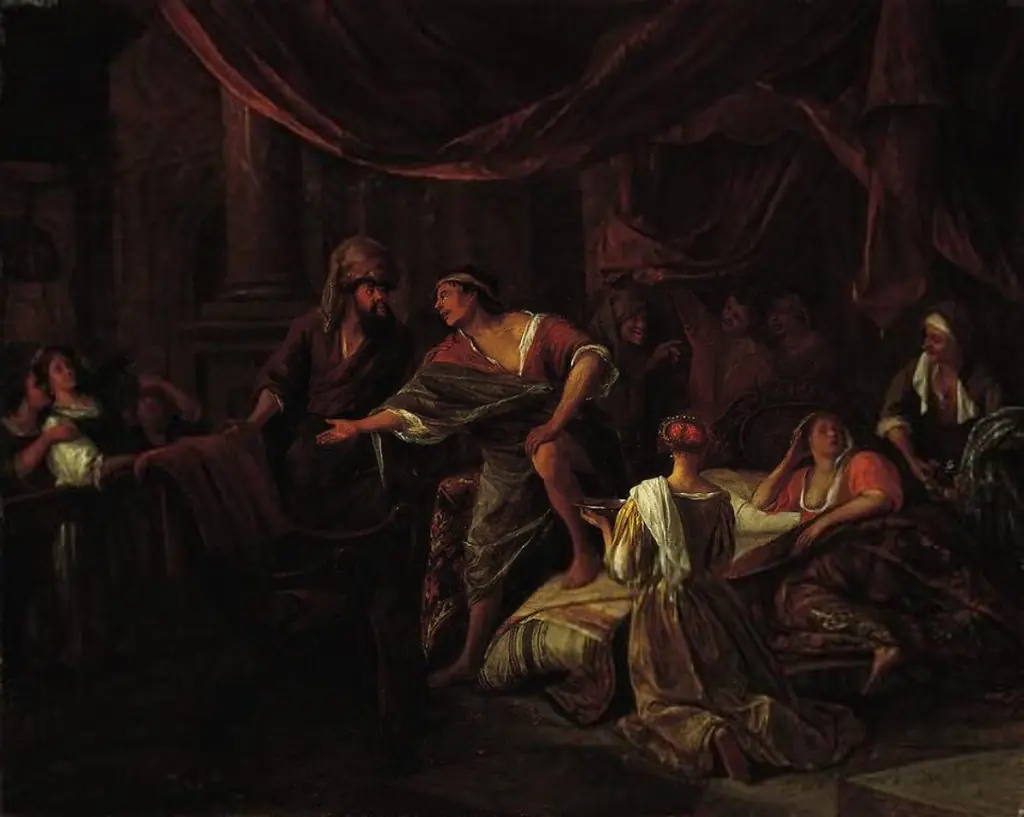
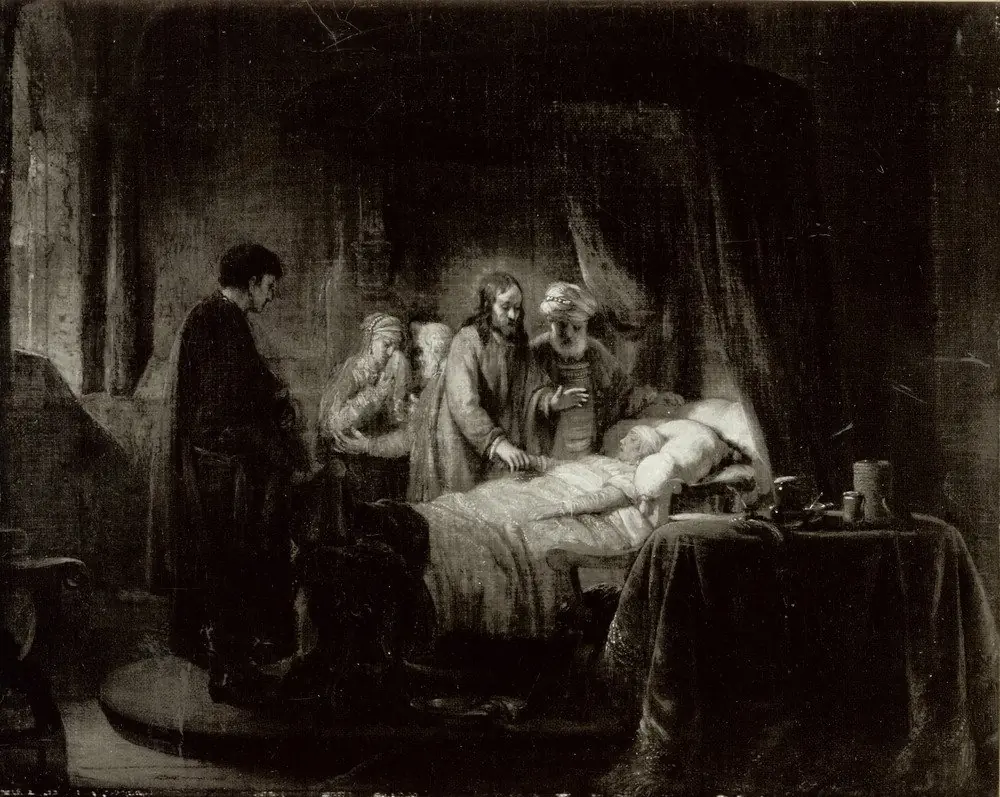
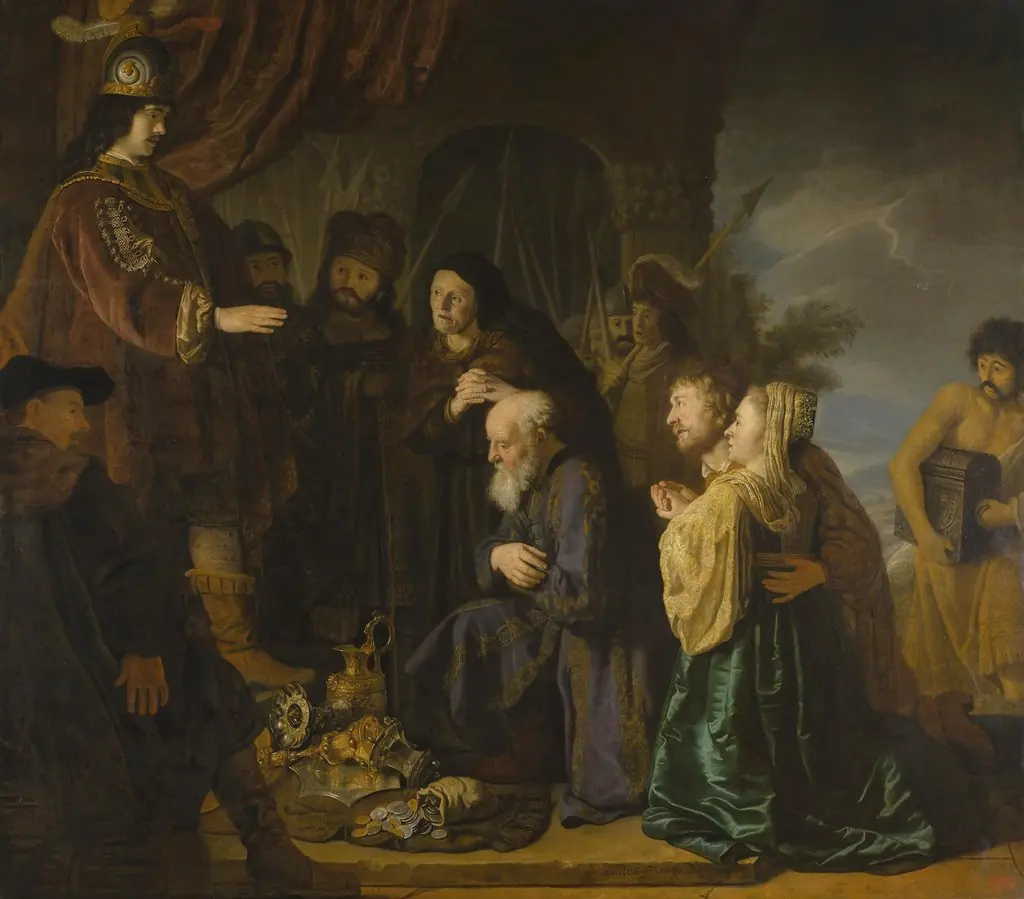
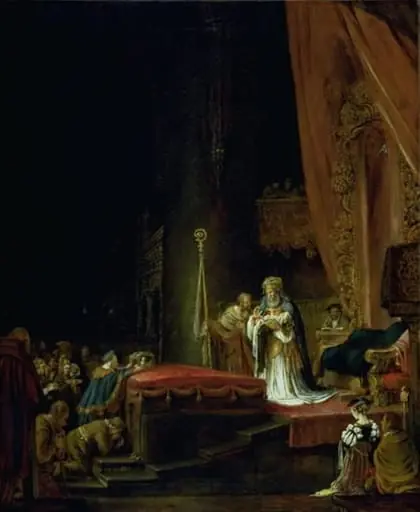
The Dying David Admonishes Solomon is a photography by Unknown. It dates from 1643 and is held in the collection of the Statens Museum for Kunst. Painted around 1643, this work depicts the final moments of King David as he addresses his son Solomon.
About this work
Overview
Painted around 1643, this work depicts the final moments of King David as he addresses his son Solomon. Executed in oil on canvas, the scene is rendered with intense focus on the emotional exchange between the two figures. It resides in the Museum of Ethnography, where it is presented as part of a collection exploring religious narratives in early modern visual culture.
Subject & Meaning
The painting illustrates a biblical moment from 1 Kings, where the aging King David, aware of his impending death, imparts final counsel to Solomon. The gesture of the standing figure, pointing to a scroll, signifies the transmission of divine law and royal responsibility. The crown on David’s brow underscores his legacy, while Solomon’s attentive posture suggests the weight of inherited duty.
Technique & Style
The artist employs chiaroscuro to heighten emotional tension, casting deep shadows across the chamber while illuminating the faces and hands of the two figures. This contrast isolates their interaction from the surrounding darkness, drawing attention to the gravity of the moment. Brushwork is restrained, favoring clarity of form over ornamental detail, reinforcing the scene’s solemnity.
History & Provenance
The painting entered the Museum of Ethnography’s collection in the late 19th century, acquired from a private European collection with documented ties to Counter-Reformation patrons. Its attribution to the artist active in the 1640s is supported by stylistic parallels with regional religious works of the period, though no definitive archival records of its commission survive.
Context
Created during a time when biblical narratives were frequently used to reinforce moral and political authority, the scene reflects broader European interests in dynastic succession and divine sanction. The depiction of David’s vulnerability aligns with post-Tridentine emphasis on human frailty and the sacred duty of rulers, resonating with contemporary theological discourse.
Legacy
Though not widely reproduced, the painting remains a notable example of 17th-century devotional portraiture in Northern Europe. Its restrained drama and psychological depth influenced later regional artists who sought to convey spiritual authority through intimate, liturgical scenes rather than grandiose spectacle.

Artist & collection