Artwork
Hercules
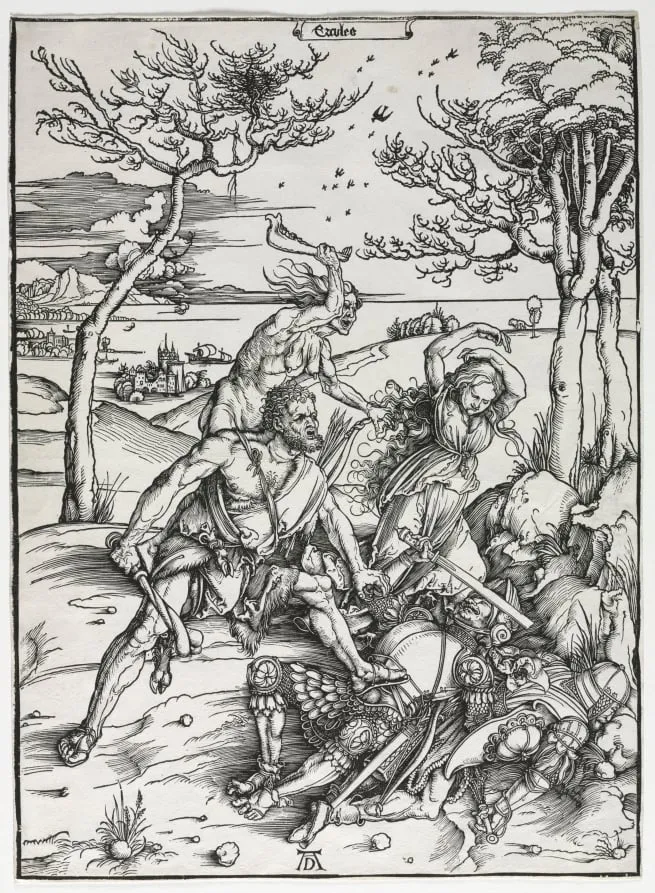
Hercules is a print by the Renaissance artist Albrecht Dürer. It dates from 1496 and is held in the collection of the Cleveland Museum of Art.
- Accession no.
- 1926.107
- Credit line
- Gift of The Print Club of Cleveland
About this work
Overview
This print, titled 'Hercules', depicts a dramatic scene from ancient mythology. The work showcases Albrecht Dürer's interpretation of a pivotal moment in Hercules' life, rendered in a dynamic and emotionally charged composition.
Subject & Meaning
The scene is thought to represent Hercules in a state of fury, having just killed his family and a tyrant, as incited by the goddess Juno. The figures of Hercules, his wife Megara, and a Fury are central to the narrative, which is drawn from an obscure Roman tragedy.
Technique & Style
Dürer employed chiaroscuro, a technique that uses strong contrasts between light and dark, to create a sense of tension and drama. The muscular figure of Hercules and the limp bodies at his feet are rendered in a highly detailed and expressive manner.
Context
The print reflects Dürer's engagement with humanist circles and his interest in classical mythology and literature. The work's narrative is rooted in an ancient Roman play, demonstrating Dürer's willingness to explore lesser-known sources.
Artist & collection
Artist
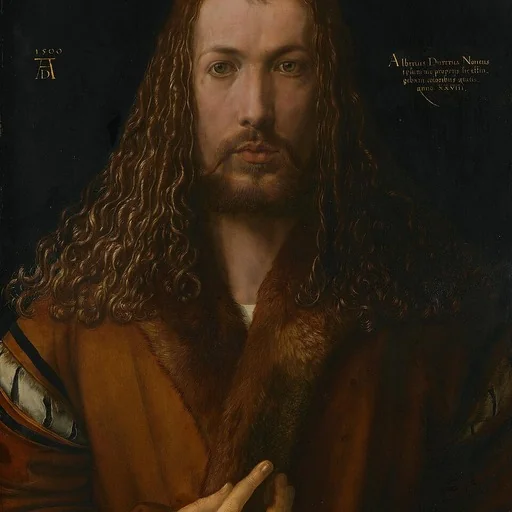
Albrecht Dürer spent his life in Nuremberg, a busy German city where artists traded prints like currency.

![Madonna and Child [obverse], by Albrecht Dürer](https://artifactworldgallery.com/img/albrecht-durer--madonna-and-child-obverse--d7b8ebf05d22ebe5-w320.webp)
![Lot and His Daughters [reverse], by Albrecht Dürer](https://artifactworldgallery.com/img/albrecht-durer--lot-and-his-daughters-reverse--b4ebf9b282faa17a-w320.webp)
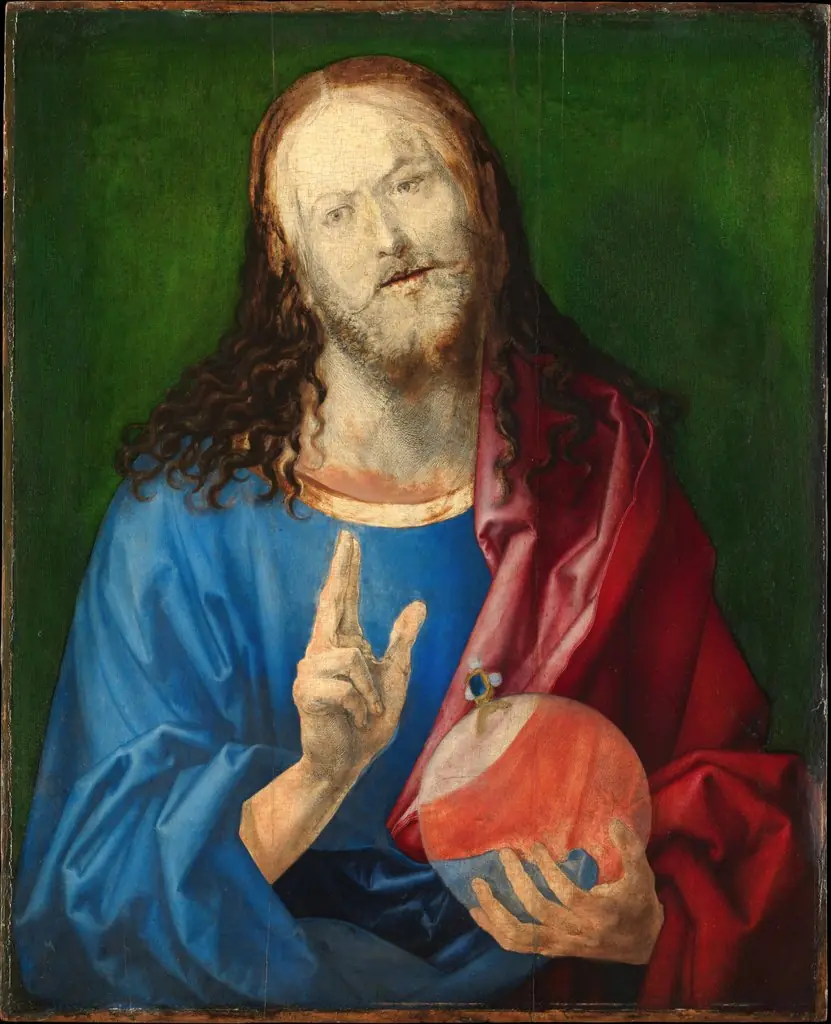
- Hercules Conquering Cacus ("Ercules")
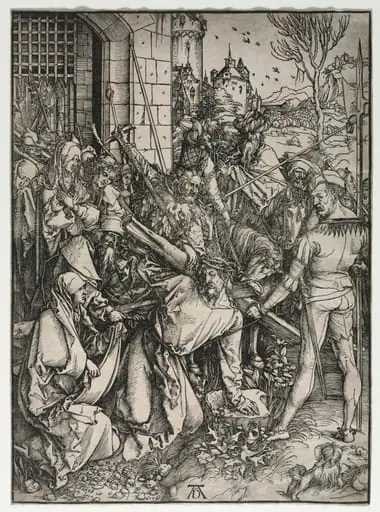 The Great Passion: Christ Bearing the Cross
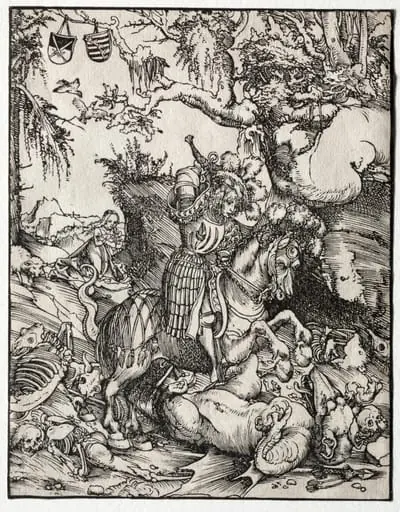 St. George Slaying the Dragon
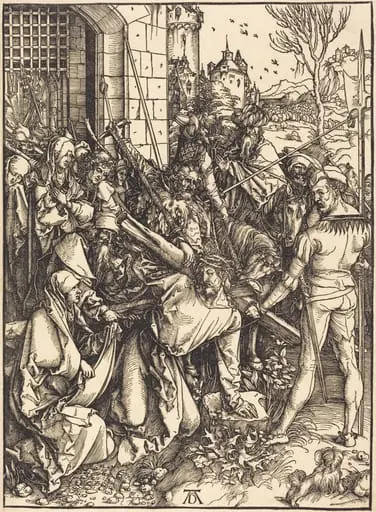 Christ Carrying the Cross
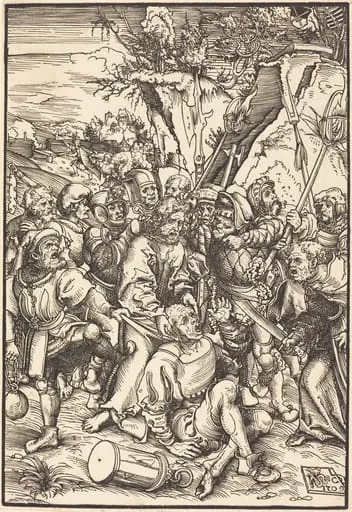 Christ Taken Captive
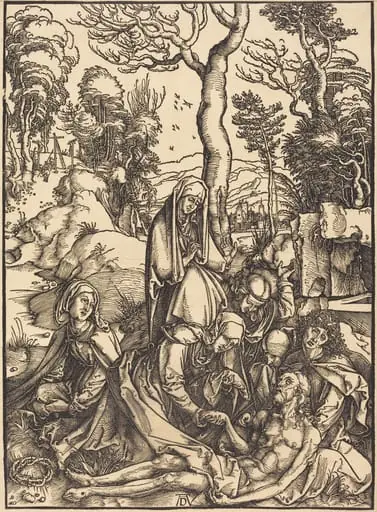 The Lamentation
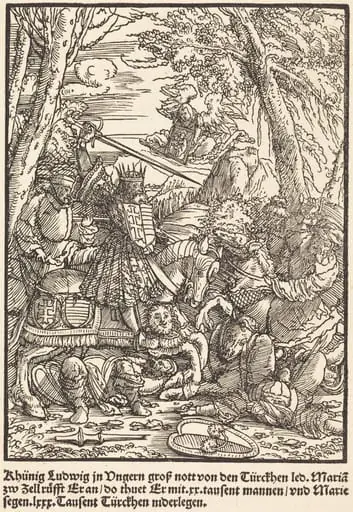 Khunig Ludwig ...
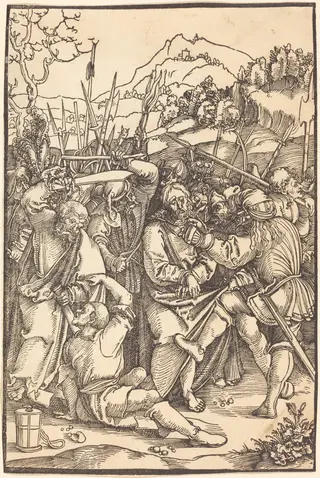 Christ Taken Prisoner
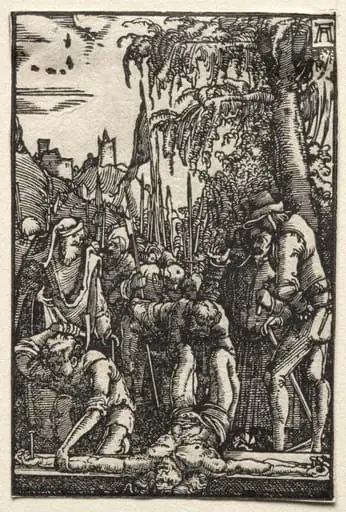 The Fall and Redemption of Man: Christ Nailed to the Cross
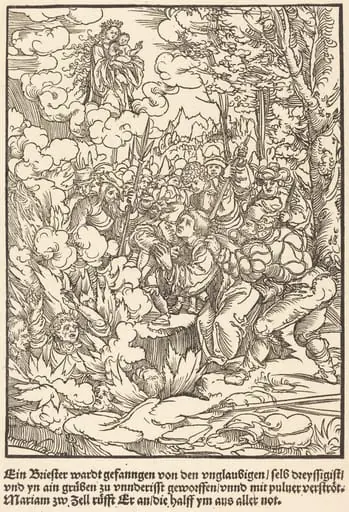 Ein Briester wardt gefanngen ...
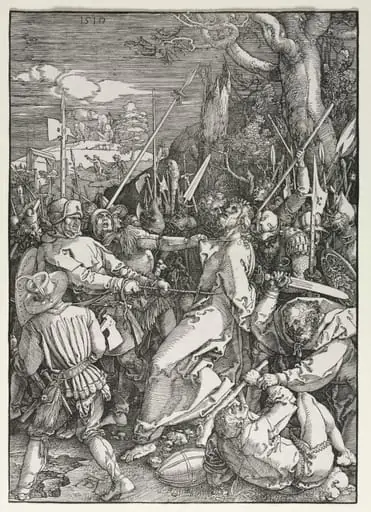 The Large Passion: The Betrayal of Christ
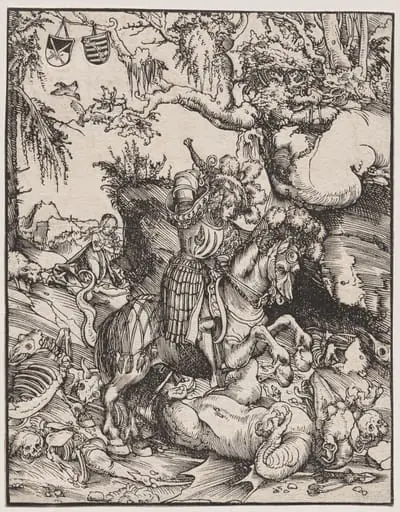 Saint George Slaying the Dragon