Artwork
Allegory of the Treaty of Amity and Commerce between their High Mightinesses, the States General of the United Netherlands, and the United States of America, 1782
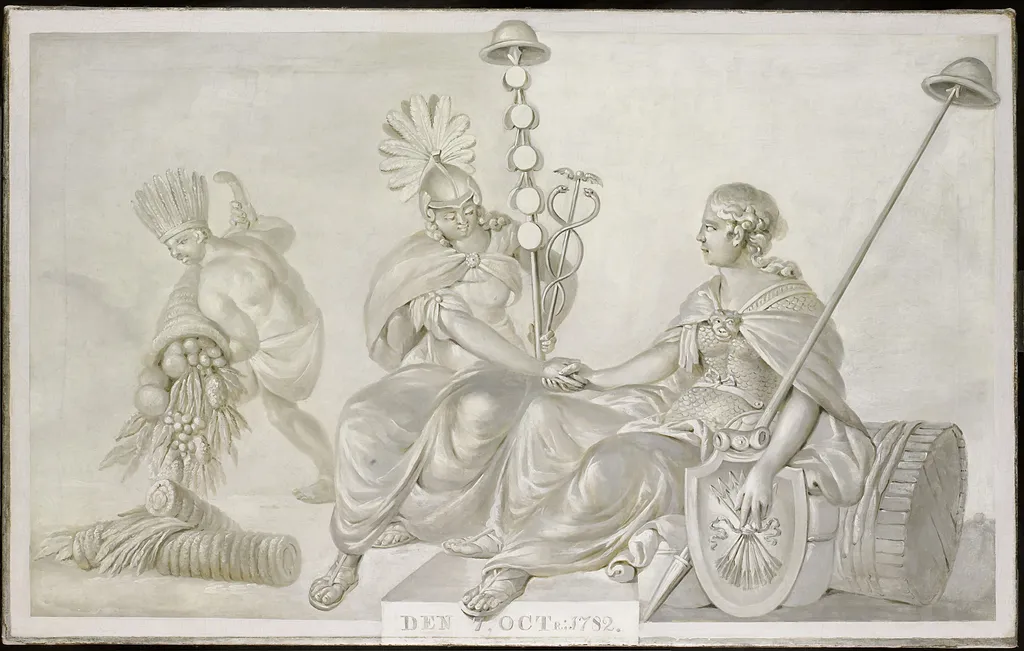
Allegory of the Treaty of Amity and Commerce between their High Mightinesses, the States General of the United Netherlands, and the United States of America, 1782 is an oil painting by the Rococo painting artist Unknown. It dates from 1792 and is held in the collection of the Rijksmuseum.
About this work
The women’s outfits and props suggest they might represent ideas like peace, trade, or harvest.
This painting shows three women in flowing robes. One sits on a throne-like chair holding a tall staff with a snake wrapped around it. Another stands beside her with a spear and a shield. The third woman kneels, holding a bundle of wheat and a cornucopia.
The date "DEN 7 OCTR. 1782" is written in the bottom corner, marking when this was made. The women’s outfits and props suggest they might represent ideas like peace, trade, or harvest.
Look up Rijksmuseum to see more works like this.
Subject & Meaning
The painting allegorizes the 1782 treaty of amity and commerce concluded between the Dutch States General and the newly independent United States, symbolizing the diplomatic bond through allegorical figures and emblems. An American eagle appears alongside Dutch symbols of unity, reinforcing the reciprocal nature of the agreement. The work functions as a visual treaty, embodying mutual recognition and the promise of trade relations between the two nations.
Technique & Style
The artwork is an oil painting executed on canvas, measuring 101.5 cm in height by 160.5 cm in width. It was created in the Netherlands in 1782 and belongs to the allegory genre. The composition reflects a formal allegorical approach, characteristic of diplomatic iconography of the period, with careful handling of spatial arrangement and symbolic detail rendered in oil medium on canvas support.
History & Provenance
Created in 1782 in the Netherlands, this allegorical painting was executed in oil paint on canvas. The inception of the work directly coincides with the historical event it commemorates, the Treaty of Amity and Commerce between the States General of the United Netherlands and the United States of America. The artist responsible for the work remains anonymous.
The painting measures 101.5 cm in height and 160.5 cm in width. It is currently held in the collection of the Rijksmuseum.
Context
The work functions as a visual allegory celebrating diplomatic relations between the Dutch Republic and the new United States, a subject that scholars have linked to the broader neoclassical discourse on international law and republican virtue in the late 18th century. Contemporary commentary praised its allegorical clarity and diplomatic symbolism, while modern scholarship situates the painting within the artist’s development of civic imagery that bridges Dutch mercantile identity and emerging American political narratives. The piece is part of the Rijksmuseum collection, reflecting its recognized significance in the canon of Anglo‑Dutch diplomatic art and its role in illustrating how visual allegory was employed to articulate treaty negotiations and mutual recognition between sovereign entities.
Legacy
The painting's legacy is anchored by its presence in a major national collection, where it is studied as a key example of late 18th-century diplomatic allegory. Its formal qualities and thematic content continue to inform scholarship on transatlantic relations and visual representations of treaty-making, contributing to broader understandings of how political agreements were symbolically rendered in Dutch art of the period.
Overview
The painting 'Allegory of the Treaty of Amity and Commerce between their High Mightinesses, the States General of the United Netherlands, and the United States of America, 1782' is an oil on canvas work depicting three female figures in classical attire. It was created on October 7, 1782.
Artist & collection









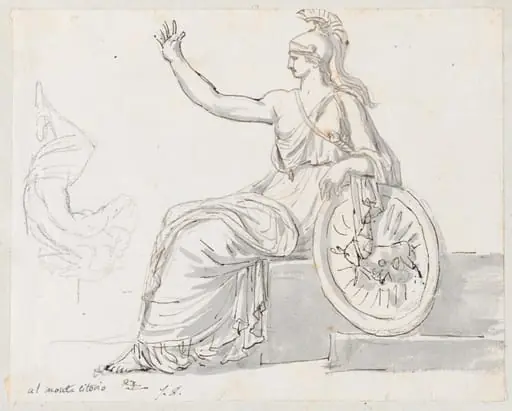 Roma, from the Base of the Antonine Column
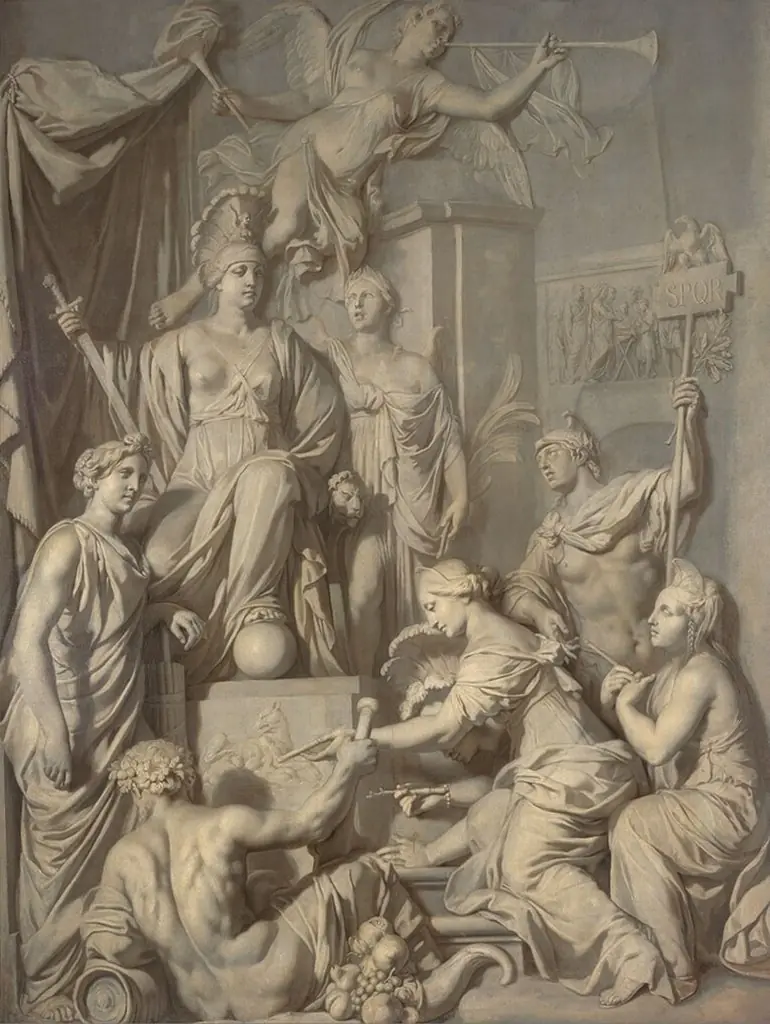 Rome Wearing the Crown
 Virtues Crowning the Bust of Canova
 King Priam Pleading with Achilles for the Corpse of Hector
 Achilles and the Daughters of Lycomedes
 La matrone d'Ephese
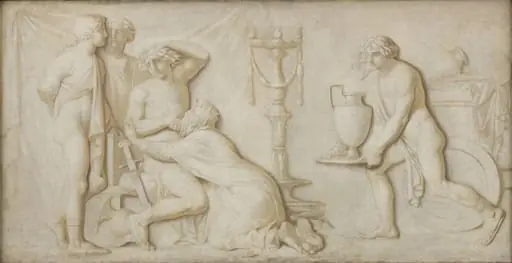 King Priam Pleading with Achilles for the Corpse of Hector
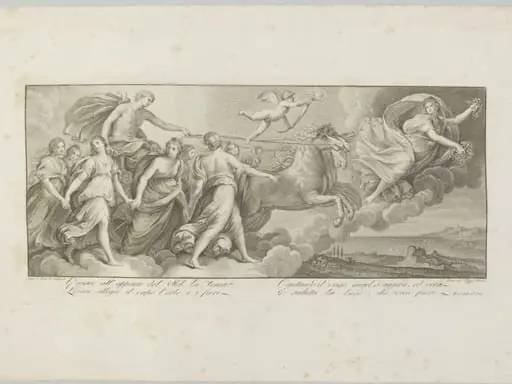 The Chariot of Aurora
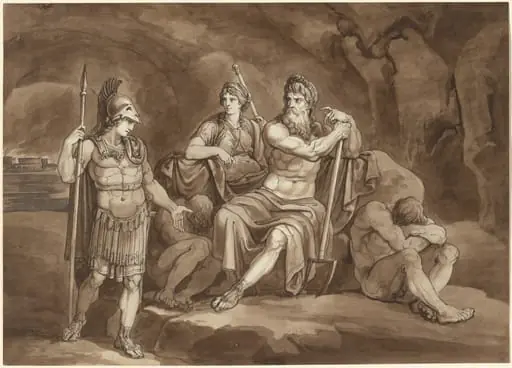 Telemachus Requests Permission from Pluto to Seek His Father in the Underworld