Artwork
Madonna della Loggia
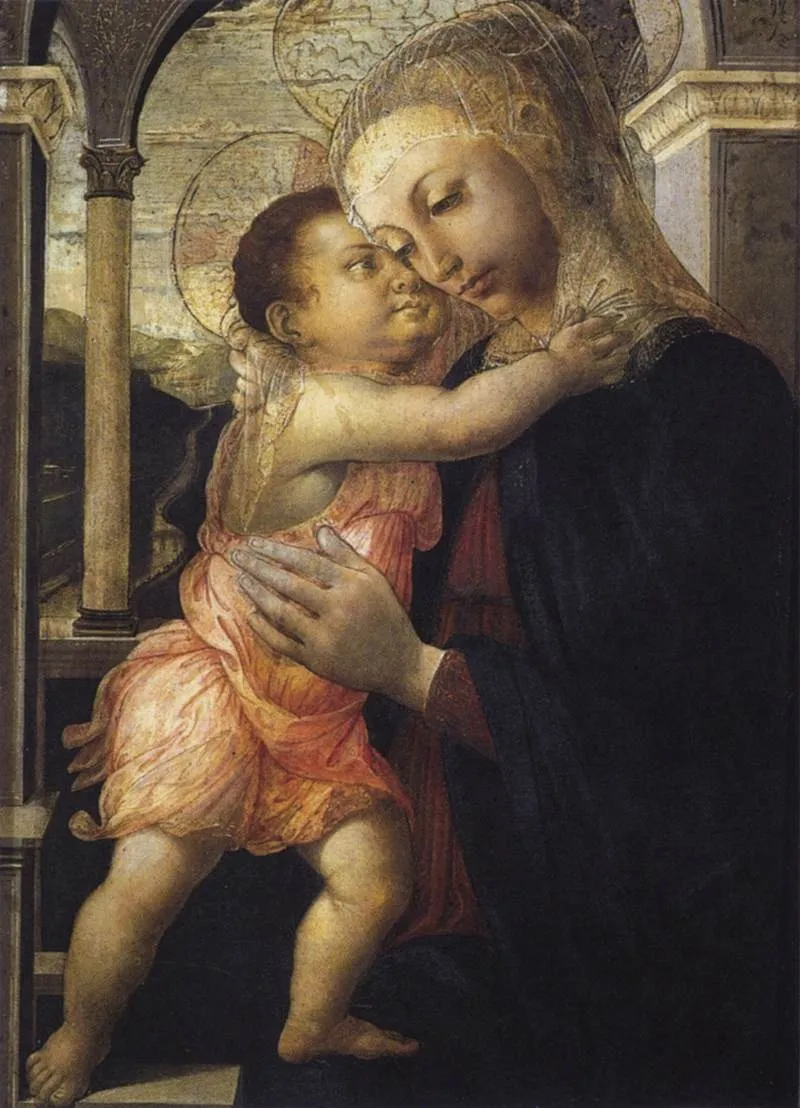
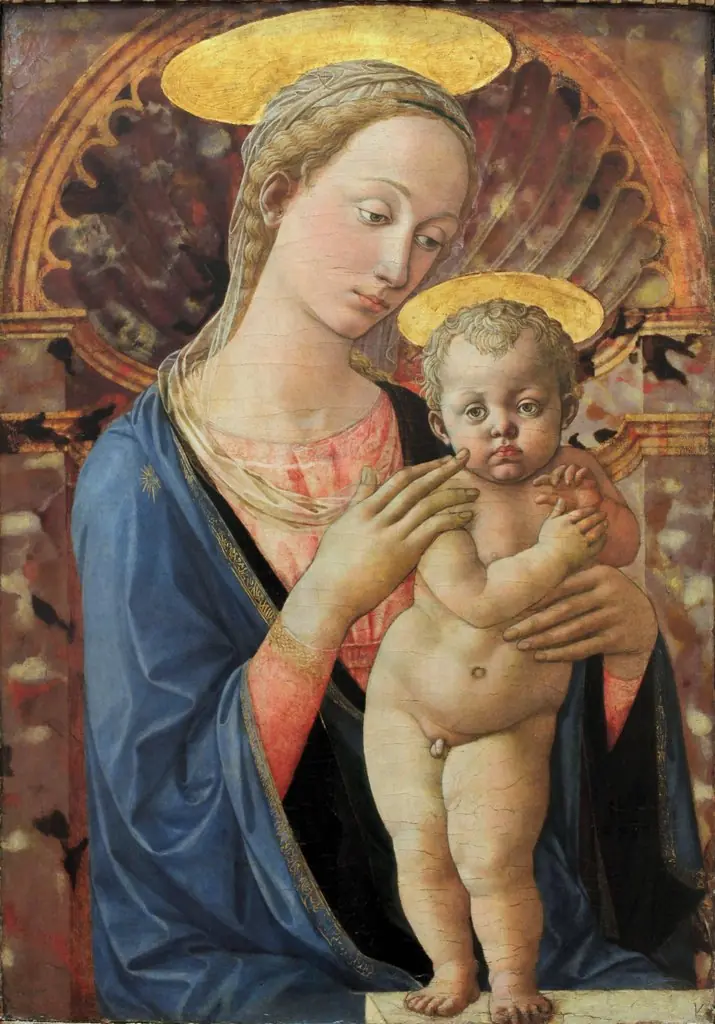
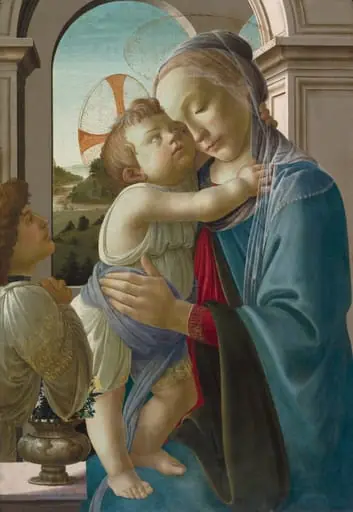
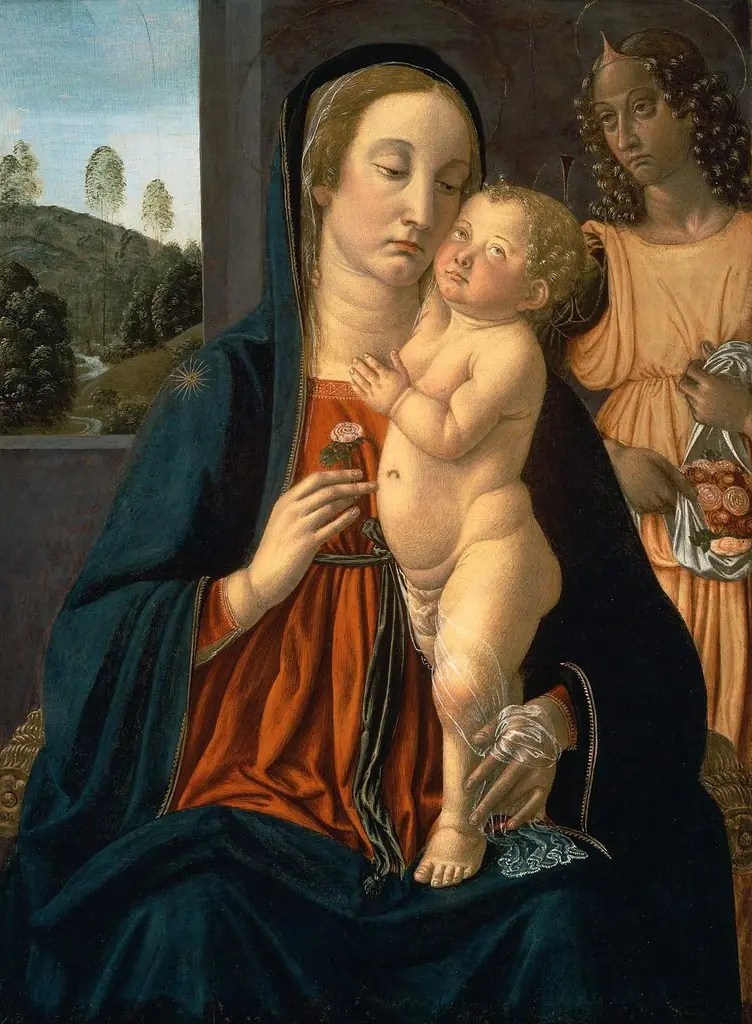
Madonna della Loggia is a tempera painting by the Early Renaissance artist Sandro Botticelli. It dates from 1467 and is held in the collection of the Uffizi Gallery.
About this work
The artist who made this painting is also known for other works, and if you want to learn more, look up Sandro Botticelli.
The painting is called Madonna della Loggia. It was made by Sandro Botticelli in 1467. You can find it at the Uffizi Gallery, which is where it's been for a long time, and it's a tempera on panel work, a technique that was commonly used back then, where tempera is a method of painting that uses egg yolks to bind colors.
The artist who made this painting is also known for other works, and if you want to learn more, look up Sandro Botticelli.
Overview
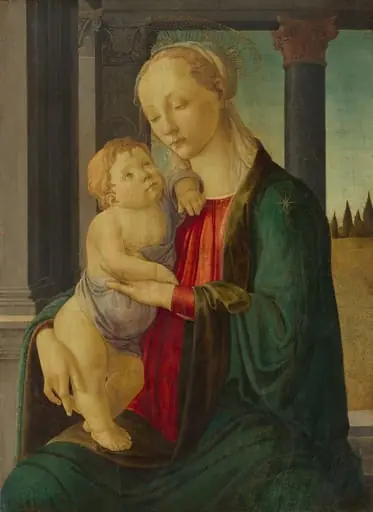
The Madonna della Loggia is a religious painting created by the Italian Early Renaissance artist Sandro Botticelli around 1467. Executed in tempera on a wooden panel, the work measures 72 by 50 centimeters. It depicts the Virgin Mary holding the Christ Child within an architectural loggia and is recognized as one of Botticelli's earliest treatments of this subject. The painting is held in the Uffizi Gallery in Florence, Italy, having entered the museum's collection from the Chamber of Commerce and Arts in 1784.
Subject & Meaning
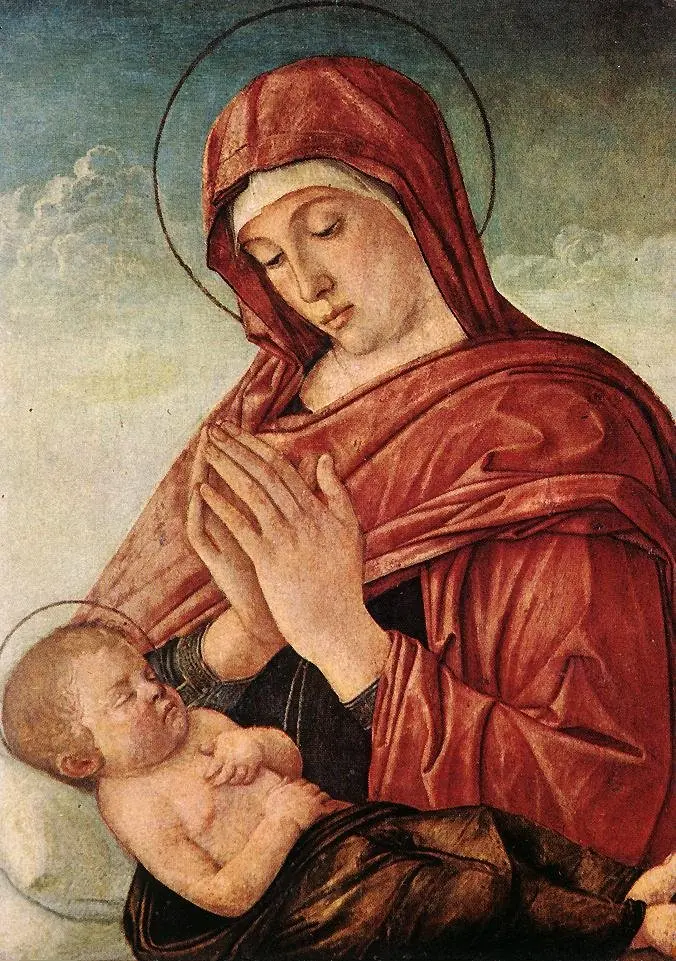
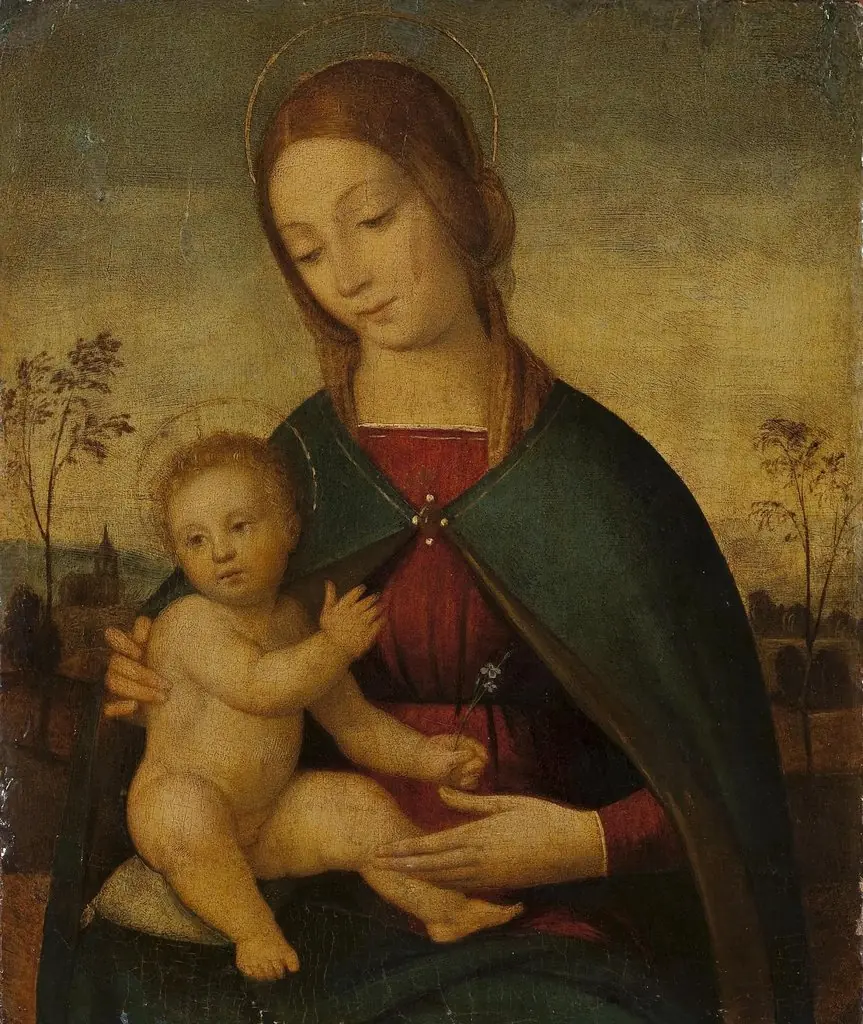
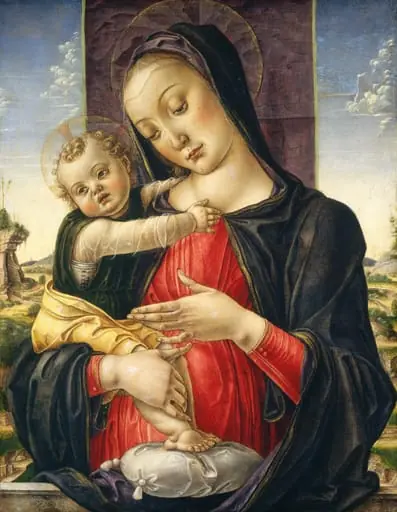
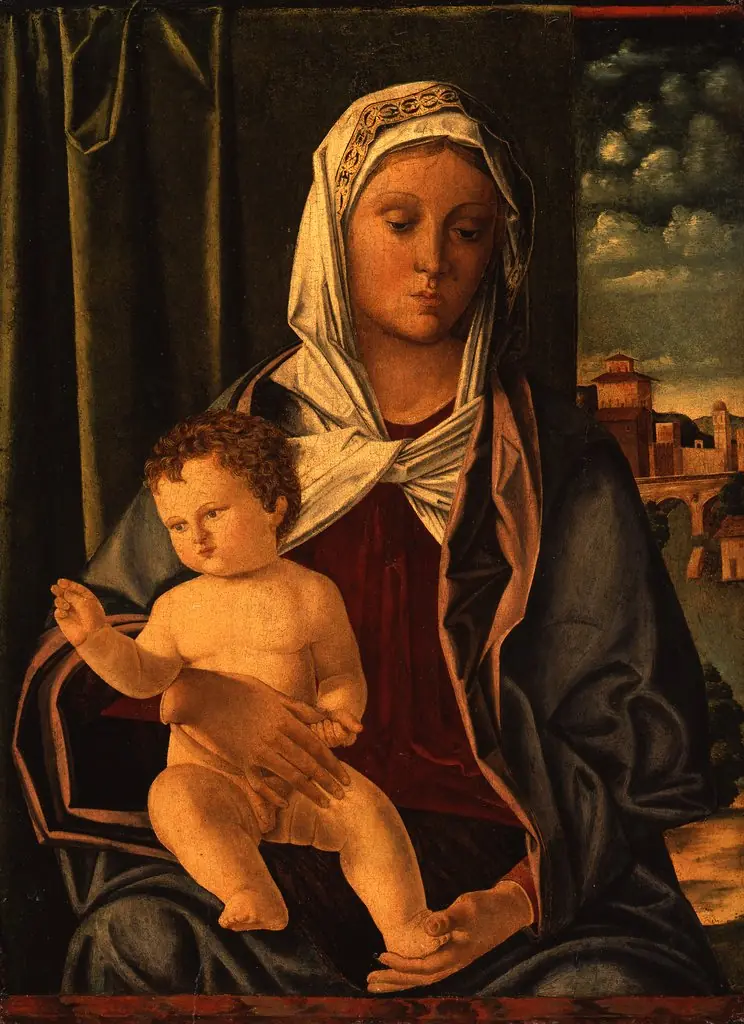
The painting portrays the Virgin Mary tenderly embracing the Christ Child, who stands on her lap and reaches up to touch her cheek and shoulder. Mary is dressed in a dark blue mantle over a red garment, colors that traditionally symbolize her purity and love, while the Christ Child wears a pinkish-orange draped cloth. Both figures feature circular gold halos, with Mary's appearing slightly translucent. The composition employs the Glykophilousa iconography, a Byzantine tradition translating to Sweet Kissing, which emphasizes the affectionate, intimate bond between mother and son. Rather than displaying overt joy, the figures exhibit a serious, pensive demeanor, absorbed in their own beauty, which imparts a melancholic and contemplative tone to the sacred scene.
Technique & Style
Botticelli applied tempera to a wooden panel with smooth, blended brushwork in the flesh tones and more linear handling in the drapery folds. The composition is vertical, with the figures occupying most of the frame, framed by an arched opening and a column with a carved capital that opens onto a muted, hilly landscape. Light falls softly from the left, modeling the rounded forms of the figures. The palette features deep blacks and browns, warm pinks and oranges, and tarnished gold, with a vivid color contrast and a bronze tonality derived from the example of Antonio del Pollaiuolo. The surface bears fine craquelure throughout, with abrasion visible in the halos and background, and the painting has suffered from numerous retouches that altered its original appearance.
History & Provenance
Created around 1467, the painting was likely intended for private religious devotion, possibly housed within a tabernacle frame, a format that emerged in Italy during the fifteenth century. The work was given to the Uffizi Gallery in 1784 by the Chamber of Commerce and Arts. Over the centuries, the painting's condition deteriorated significantly, leading to doubts about its authenticity. However, a conservation treatment in 2004 revealed the artist's signature, confirming the attribution and uncovering previously obscured details. In 2019, the painting traveled to Russia for the V Eastern Economic Forum in Vladivostok, where it was displayed at the local university and the Primorye State Art Gallery. It subsequently moved to the Hermitage in St. Petersburg for the VIII International Forum of Culture as part of a masterpieces exhibition series.
Context
The Madonna della Loggia stands at the intersection of several major influences in the young Botticelli's career. The composition and the vibrant, linear drapery show the influence of Donatello as filtered through Botticelli's master, Filippo Lippi, specifically recalling Lippi's Madonna with Child created around 1460 for the Palazzo Medici Riccardi. However, the forms here appear softer and more complex than in Lippi's work. Following his time with Lippi, Botticelli worked under Andrea del Verrocchio in the late 1460s, and the physiognomy of the Christ Child has been identified by scholar Ronald Lightbown as the first example of resemblance to Verrocchio's style, though Botticelli soon abandoned this in favor of a more personal manner. The painting is also viewed as an early experiment in framing the Madonna and Child within classical architecture, a motif he would revisit in subsequent works like the Madonna and Child of 1470.
Legacy
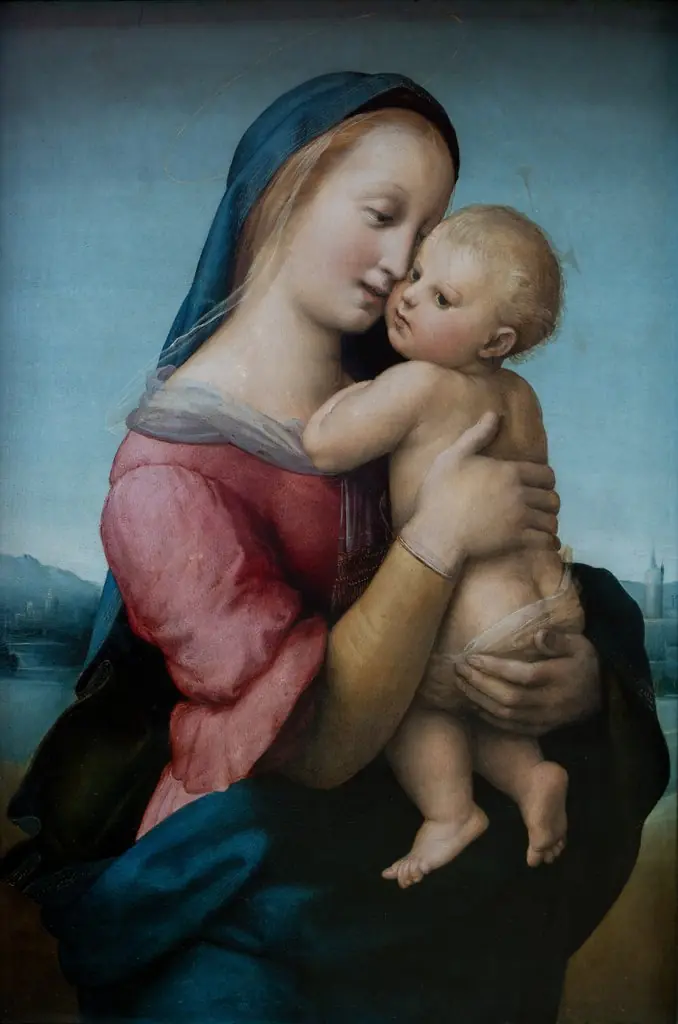
The critical reception of the Madonna della Loggia has been complex due to its compromised condition, which led early scholars to propose alternative attributions. Adolfo Venturi initially classified it as a work of Botticelli's school, and Van Maerle assigned it to an anonymous master referred to by Bernard Berenson as the Amico di Sandro, later identified as the young Filippino Lippi. Eventually, scholars including Gamba, Berenson, Bettini, and Salvini firmly attributed it to Botticelli's youth, a view cemented by the 2004 restoration. The work established a model for Botticelli's numerous subsequent Madonnas, characterized by a serious, intellectual relationship between mother and child rather than the playful affection seen in later depictions by artists like Raphael. The architectural framing of the loggia also became a recurring and distinct feature in his oeuvre.
Artist & collection
Artist
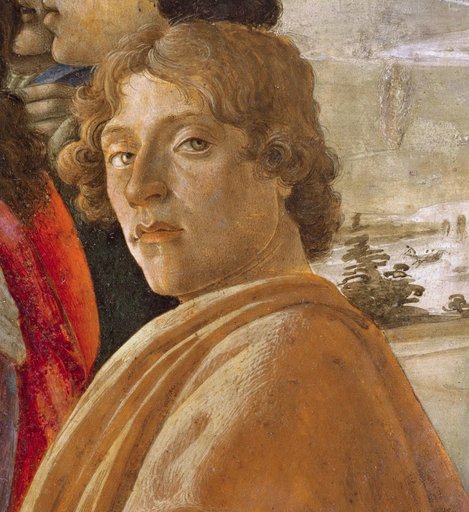
Alessandro di Mariano di Vanni Filipepi, better known as Sandro Botticelli or simply Botticelli, was an Italian painter of the Early Renaissance.