Artwork
Self-Portrait in Profile
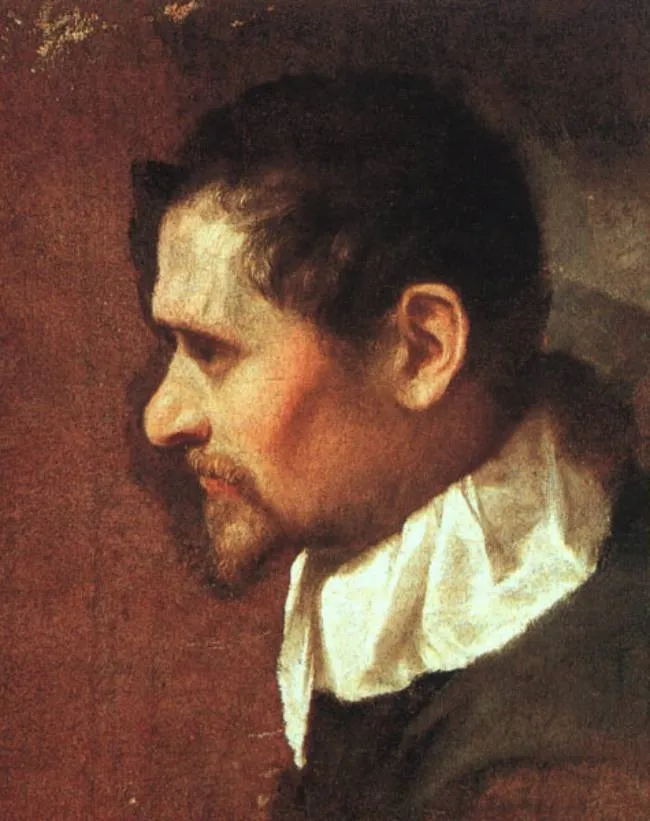
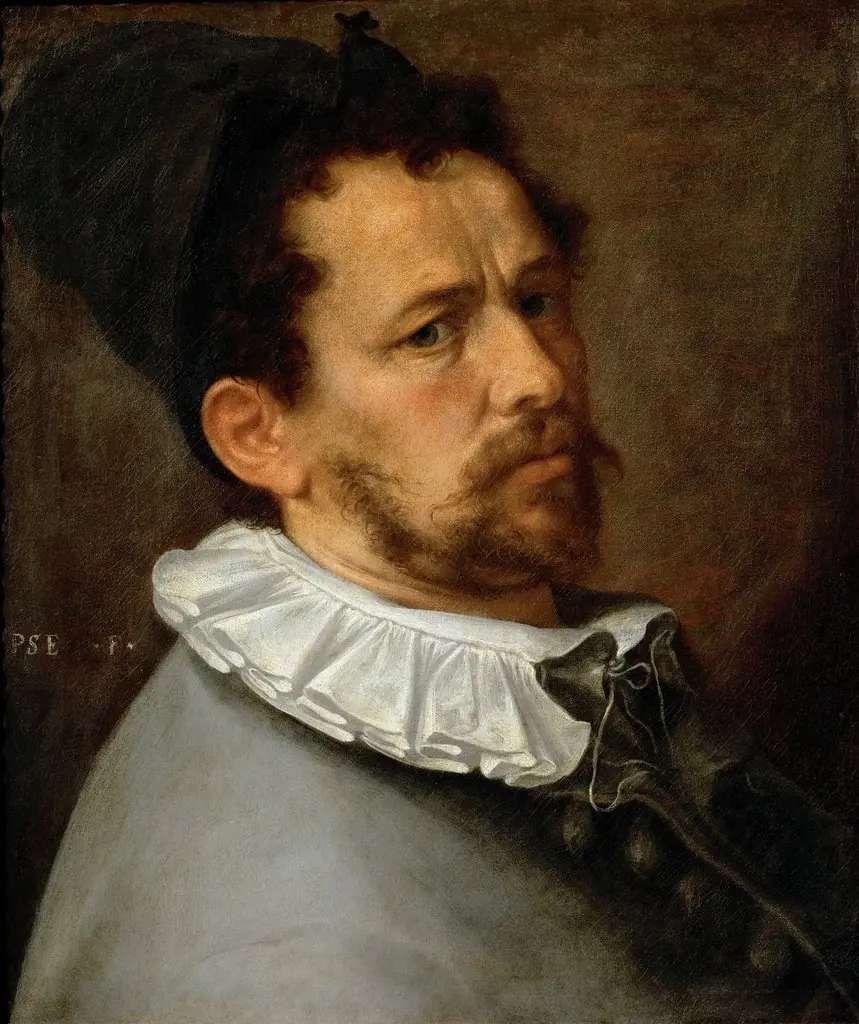
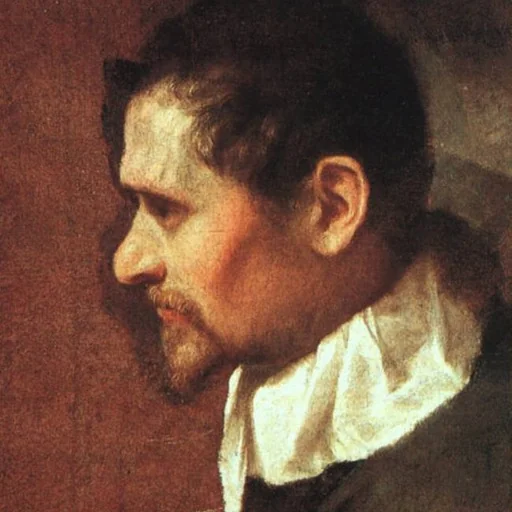
Self-Portrait in Profile is an oil painting by the Early Baroque Italian artist Annibale Carracci. It dates from 1596 and is held in the collection of the Uffizi Gallery.
About this work
Overview
Painted around the 1590s, this oil on canvas work presents a half-length portrait of Annibale Carracci facing left in profile.
Painted around the 1590s, this oil on canvas work presents a half-length portrait of Annibale Carracci facing left in profile. The composition focuses tightly on the artist’s upper body, set against a muted, deep reddish-brown background. His attire includes a white lace collar and a dark outer garment, emphasizing modest formality. The painting is one of two self-portraits by Carracci held in the Uffizi’s collection of artist likenesses.
Subject & Meaning
The portrait captures Carracci at a moment of quiet introspection. His downward gaze and furrowed brow suggest contemplation rather than display, distancing the image from theatrical self-promotion. The restrained pose and lack of symbolic props reinforce an emphasis on personal presence over status. It reflects a Renaissance tradition of the artist as thoughtful observer, not merely a craftsman.
Technique & Style
Carracci employs subtle gradations of tone to model the face and hands, creating a lifelike volume without overt chiaroscuro. The texture of the lace collar is rendered with fine brushwork, contrasting with the broader, flatter application in the jacket and background. The palette is limited but effective, relying on earth tones and the white collar to anchor the composition’s visual weight.
History & Provenance
The painting entered the Medici collection in the 17th century through Leopoldo de' Medici, a noted art patron. By 1686, it was displayed in the Uffizi alongside another portrait once attributed to Carracci, now understood to be a different hand. Its inclusion in the gallery’s self-portrait sequence underscores its early recognition as a significant artist’s likeness, preserved through centuries of institutional curation.
Context
In late 16th-century Italy, self-portraiture was gaining traction among artists seeking to assert intellectual identity. Carracci’s work aligns with this trend, avoiding grandeur in favor of psychological presence. Unlike contemporaries who depicted themselves in allegorical roles, he chose direct, unadorned representation, reflecting his role in shaping Bolognese naturalism.
Legacy
The portrait remains a key reference for understanding Carracci’s self-perception and artistic ethos. Its inclusion in the Uffizi’s historic collection of artist portraits situates him within a lineage of self-representation that influenced later generations. Though not widely reproduced, its quiet authority continues to inform scholarly study of early modern artist identity.
Artist & collection
Artist
Annibale Carracci ( kə-RAH-chee, UK also kə-RATCH-ee, Italian:; November 3, 1560 – July 15, 1609) was an Italian painter and instructor, active in Bologna and later in Rome.