Artwork
Lamentation of Christ
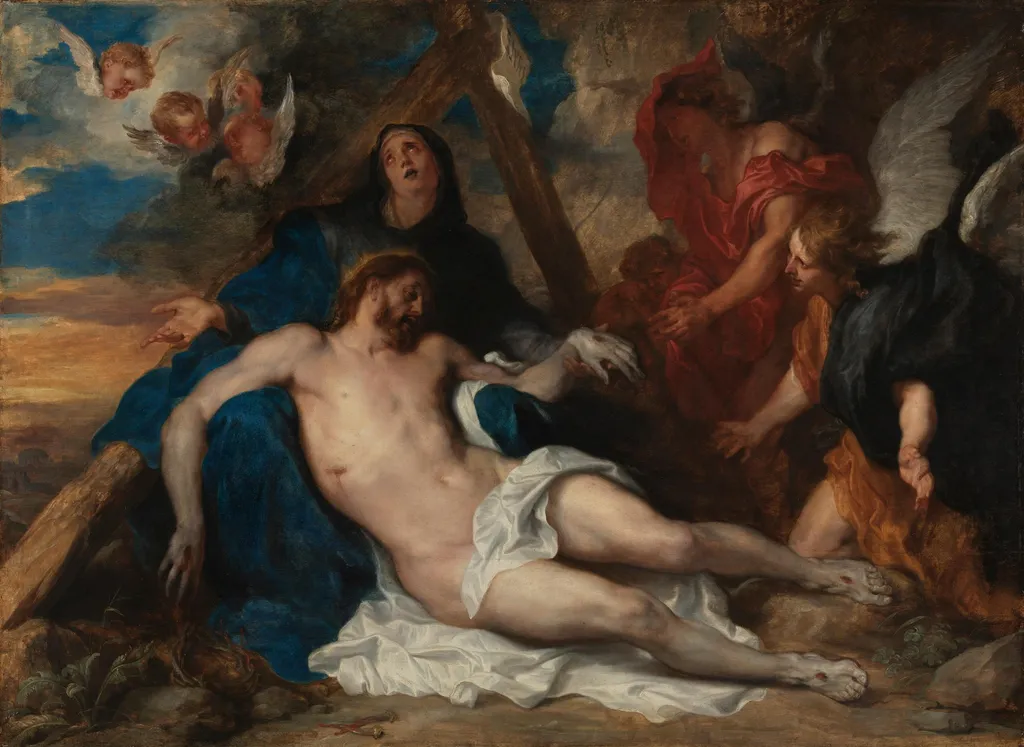
Lamentation of Christ is an oil painting by the Flemish Baroque painting artist Anthony van Dyck. It dates from 1628 and is held in the collection of the Bavarian State Painting Collections.
About this work
Flemish artist Van Dyck painted this same subject several times, so he clearly liked the theme.
Van Dyck’s Lamentation of Christ shows Christ’s body lowered after the Crucifixion. The scene is painted in oil, on a canvas you can see today at the Alte Pinakothek in Munich. Flemish artist Van Dyck painted this same subject several times, so he clearly liked the theme.
This version dates around 1628-1630, right in the middle of his career. You’ll find other versions of the same scene in Antwerp and Vienna if you look.
Check out the Alte Pinakothek next.
Subject & Meaning
The work portrays the biblical moment of Christ's body being mourned after the crucifixion, a theme drawn from the Gospel of John. Central figures include the dead Christ, the Virgin Mary, and Saint John, arranged to emphasize grief and devotion. The composition reflects Counter-Reformation emphasis on emotional piety, using naturalistic detail and chiaroscuro to heighten spiritual intensity.
Iconographically, the painting aligns with devotional practices that encouraged meditation on Christ's suffering, serving both as an altar piece and a visual sermon.
The depiction draws on traditional iconography of the Lamentation, where Mary cradles her son's head while other mourners gesture in sorrow, symbolizing both human anguish and divine sacrifice. This subject was frequently revisited by van Dyck, who rendered it with heightened realism and psychological depth, reflecting his mastery of Flemish realism within a sacred narrative.
Technique & Style
The work is executed in oil paint on an oakwood panel, a material and support documented in the painting’s technical description. The composition depicts the moment of Christ’s lamentation, with the Virgin Mary positioned prominently among the mourners, rendered through Van Dyck’s characteristic naturalistic modeling and restrained chiaroscuro that emphasizes emotional gravity. The handling of brushwork and the subtle gradations of tone reflect the artist’s mature approach to religious narrative painting in the early Baroque period.
The painting measures 108.7 cm in height and 149.3 cm in width, as recorded in the museum’s catalog.
Formal elements include a tightly arranged group of figures around the central corpse of Christ, a compositional stability balanced by expressive gestures and varied drapery that underscore the solemnity of the scene.
History & Provenance
The Lamentation of Christ was painted by Anthony van Dyck in 1628. It was commissioned by Johann Wilhelm von der Pfalz and entered the Bavarian State Painting Collections, now housed in the Alte Pinakothek in Munich. The work depicts the Virgin Mary mourning over the dead Christ, rendered in oil on oak panel.
The painting has remained in the Alte Pinakothek since its acquisition, forming part of the Johann Wilhelm von der Pfalz collection.
The painting is held by the Alte Pinakothek in Munich, where it forms part of the Bavarian State Painting Collections. According to the collection record, the work entered the institution through the Johann Wilhelm von der Pfalz collection. The sources do not provide a specific inventory or accession number for the painting.
No exhibition history is documented in the available sources, and no loans, displays, or temporary exhibitions are recorded beyond its current placement at the Alte Pinakothek.
Context
Anthony van Dyck painted the Lamentation of Christ between 1628 and 1630, a work reflecting his mastery of religious imagery within the Baroque tradition. The painting, executed in oil on oakwood, measures 108.7 cm by 149.3 cm and depicts the mournful scene of Christ’s burial, featuring the central figures of Jesus Christ and the Virgin Mary. Van Dyck revisited this subject in other compositions, including versions housed in the Royal Museum of Fine Arts Antwerp and the Kunsthistorisches Museum in Vienna, underscoring the motif’s significance within his oeuvre and its resonance in 17th‑century European art.
The painting is part of the Johann Wilhelm von der Pfalz collection at the Alte Pinakothek in Munich, forming a key example of the artist’s contribution to religious art and Baroque painting.
Overview
Anthony van Dyck’s Lamentation of Christ is an oil on canvas executed circa 1628–1630. The work is presently housed in Munich’s Alte Pinakothek. It depicts the moment after the crucifixion when Christ’s body is being lowered, a subject the Flemish painter returned to repeatedly throughout his career.
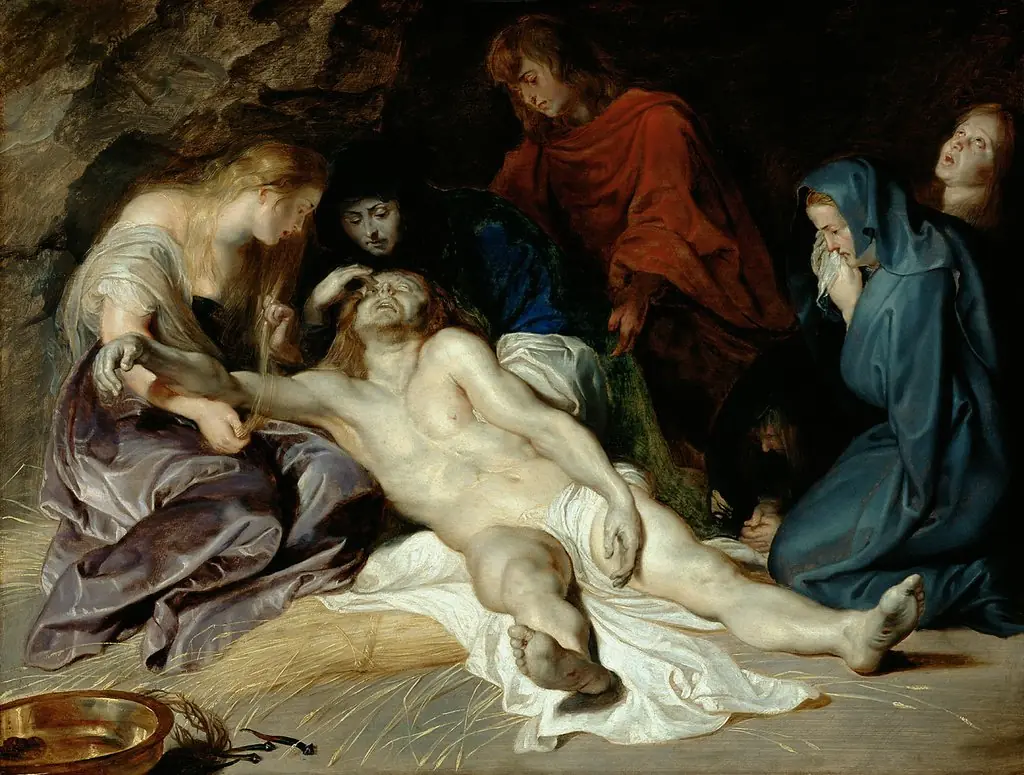
Own this work as a print
Artist & collection
Artist
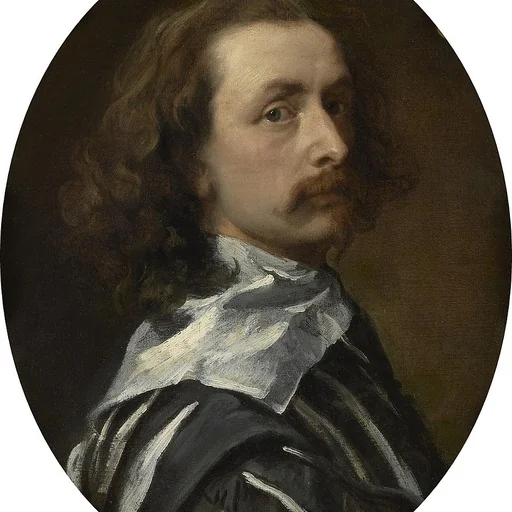
Sir Anthony van Dyck (; Dutch: Antoon van Dijck; 22 March 1599 – 9 December 1641) was a Flemish Baroque artist, who became the leading court painter in England after success in the Spanish Netherlands and Italy.



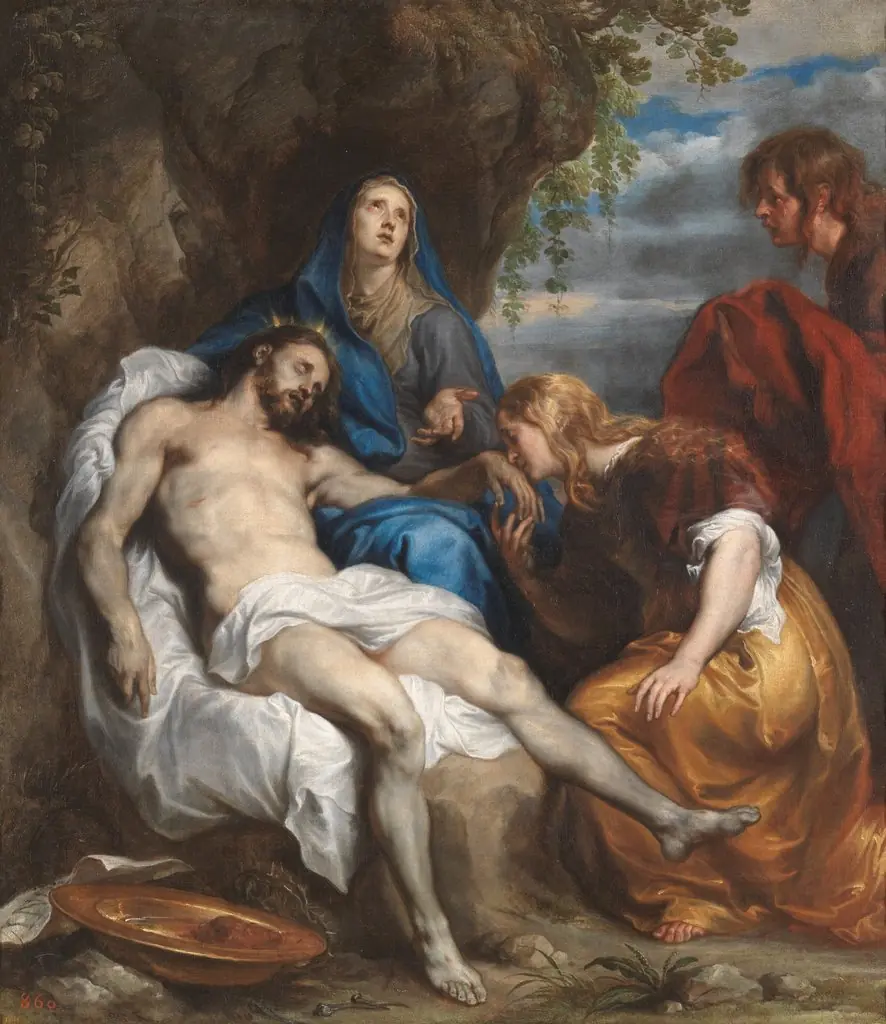 The Pietà
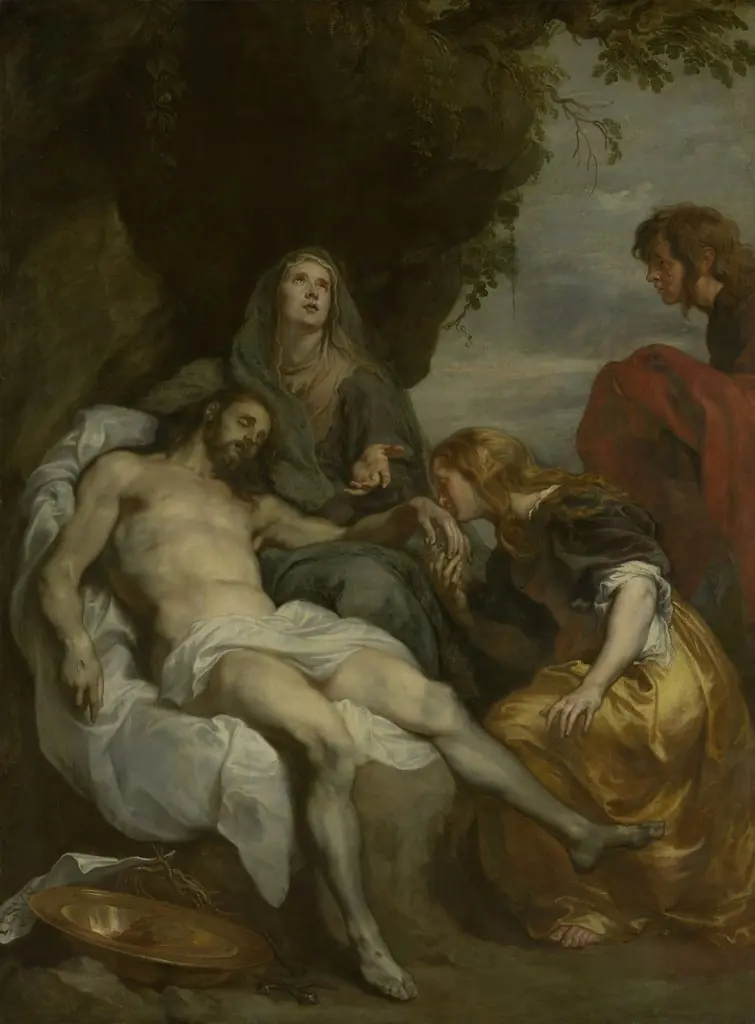 The Lamentation over the Dead Christ
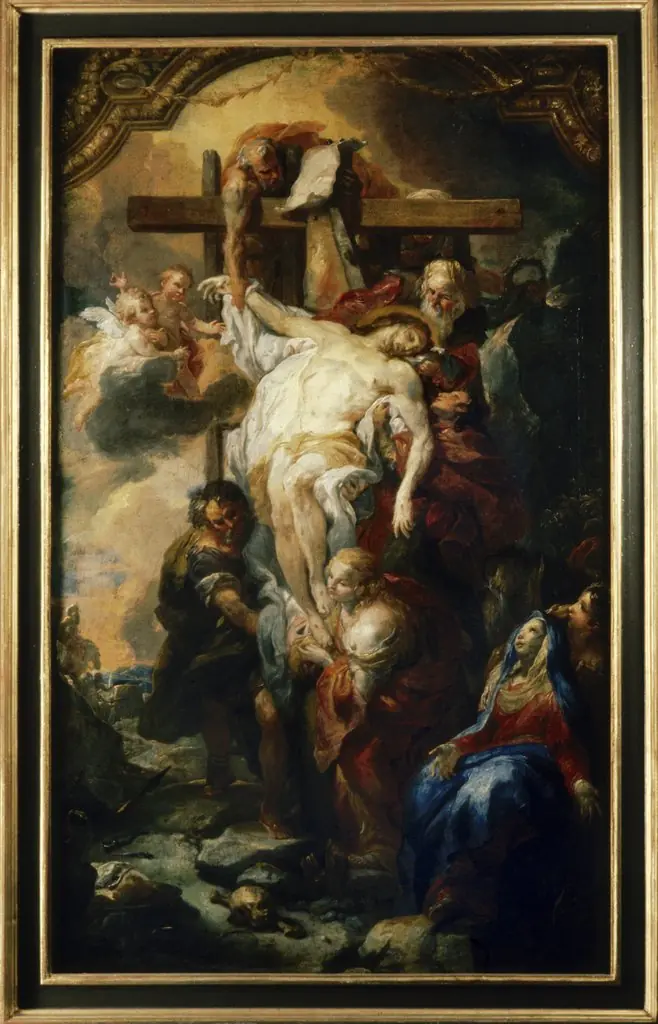 The Deposition from the Cross
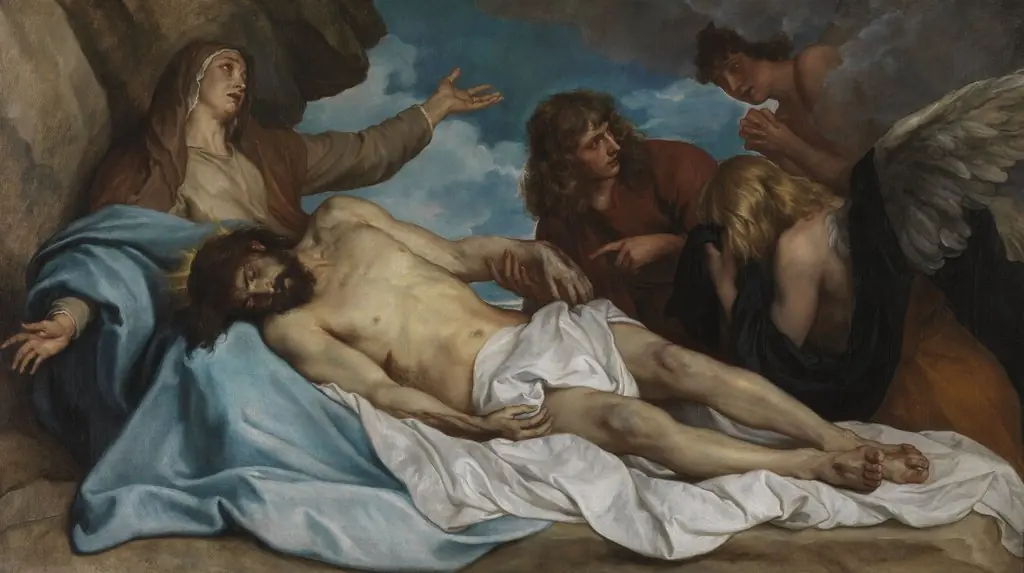 The lamentation over the dead Christ
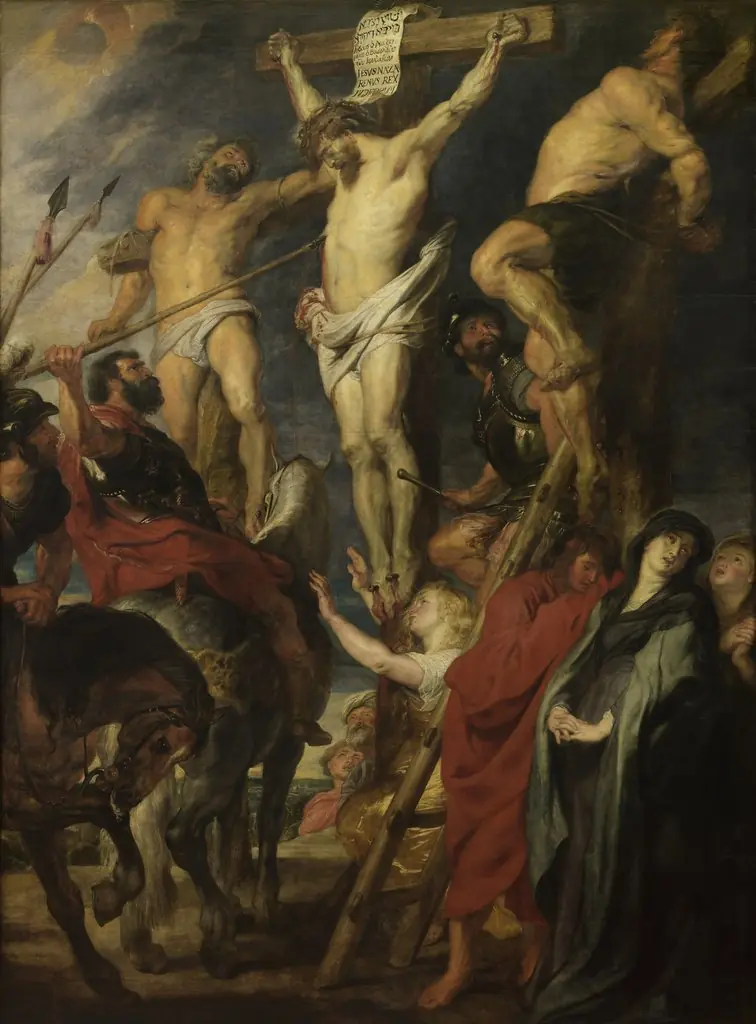 Christ on the Cross between the two criminals
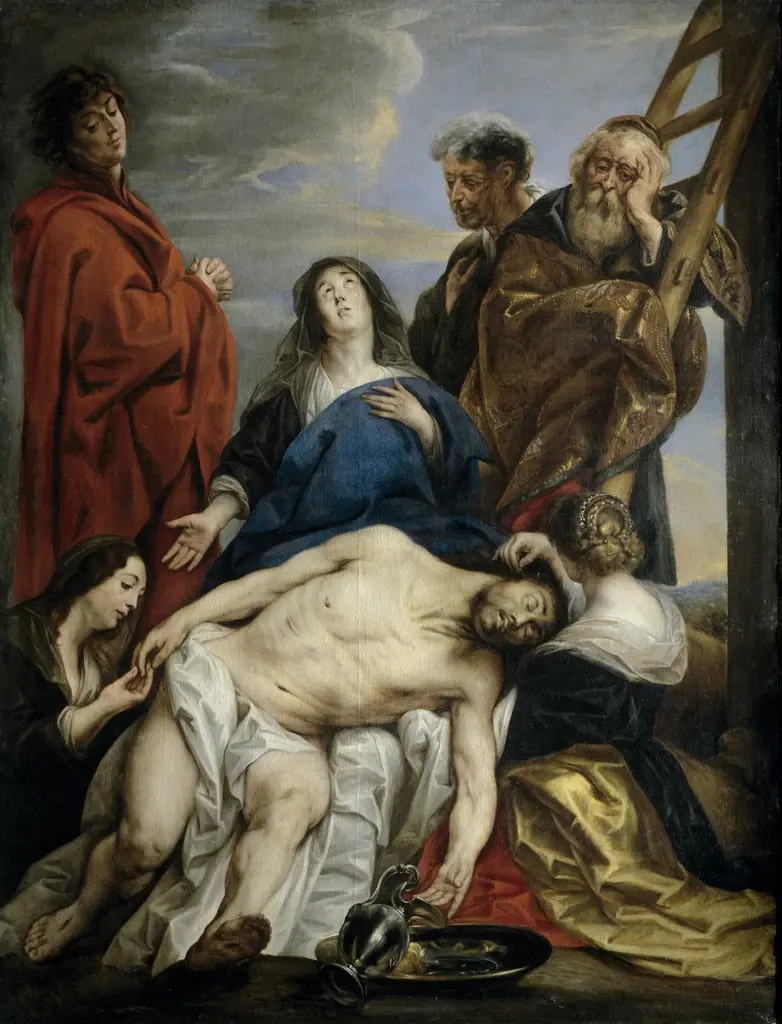 Pietà
Pietà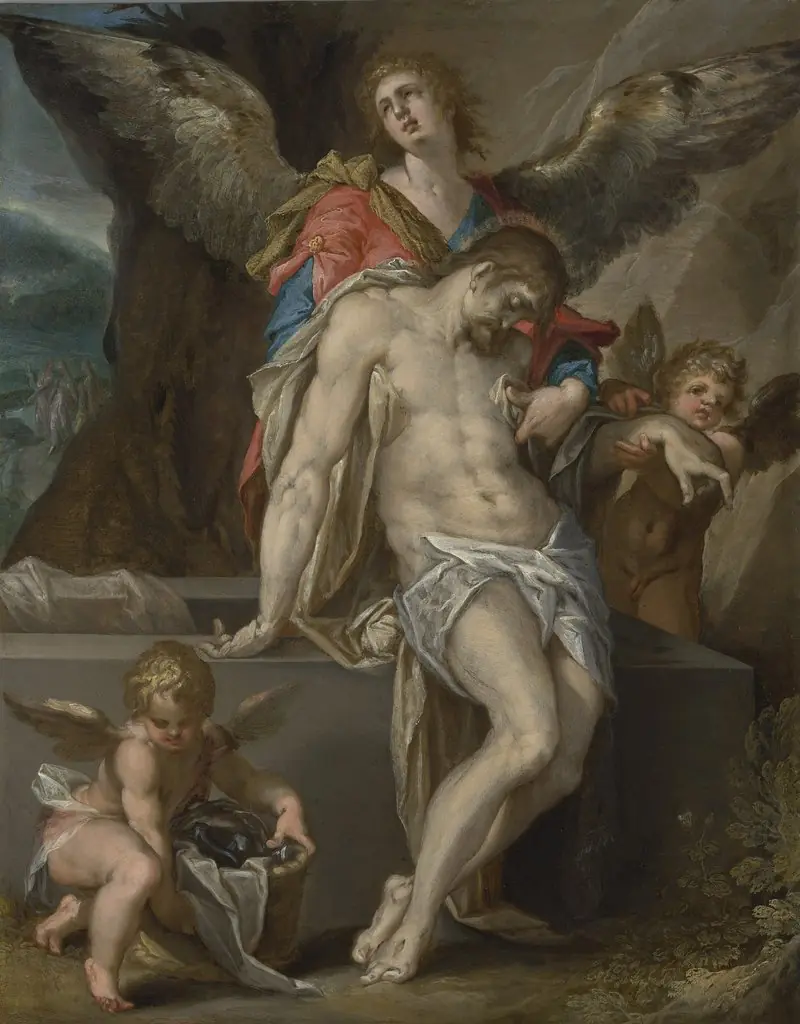 Engelen dragen het lichaam van Christus (Engelenpietà)
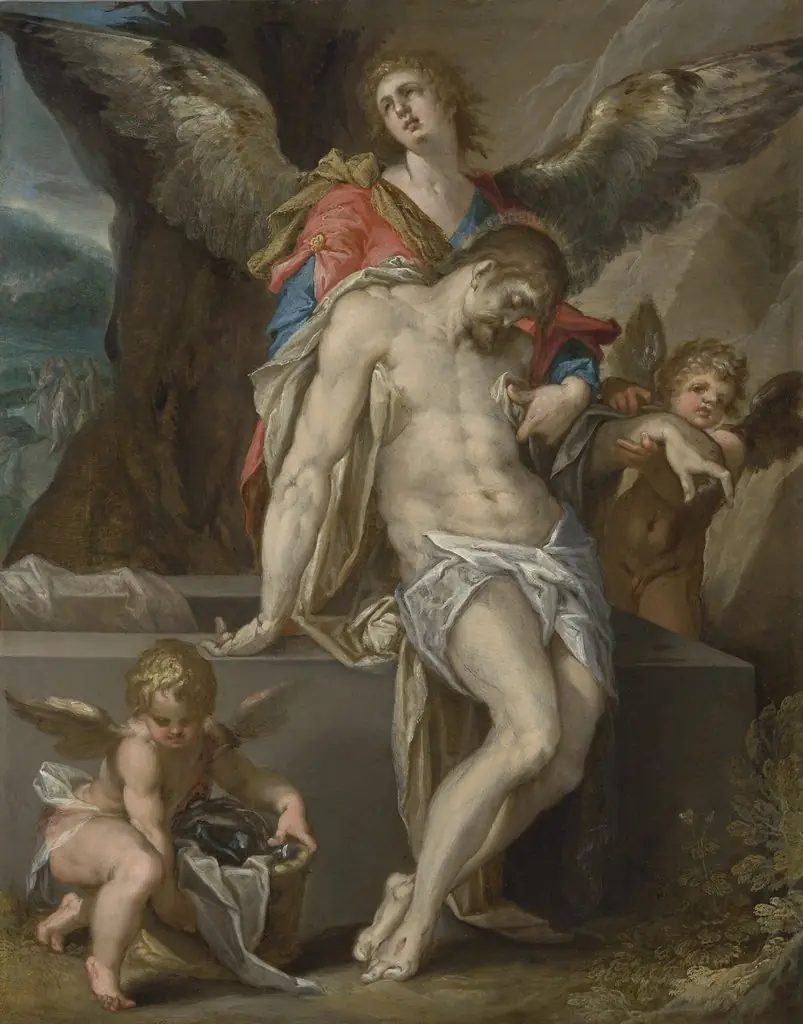 The Body of Christ Supported by Angels
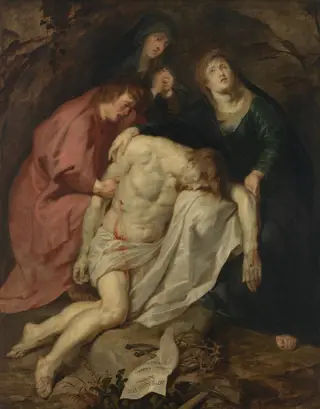 Deposition
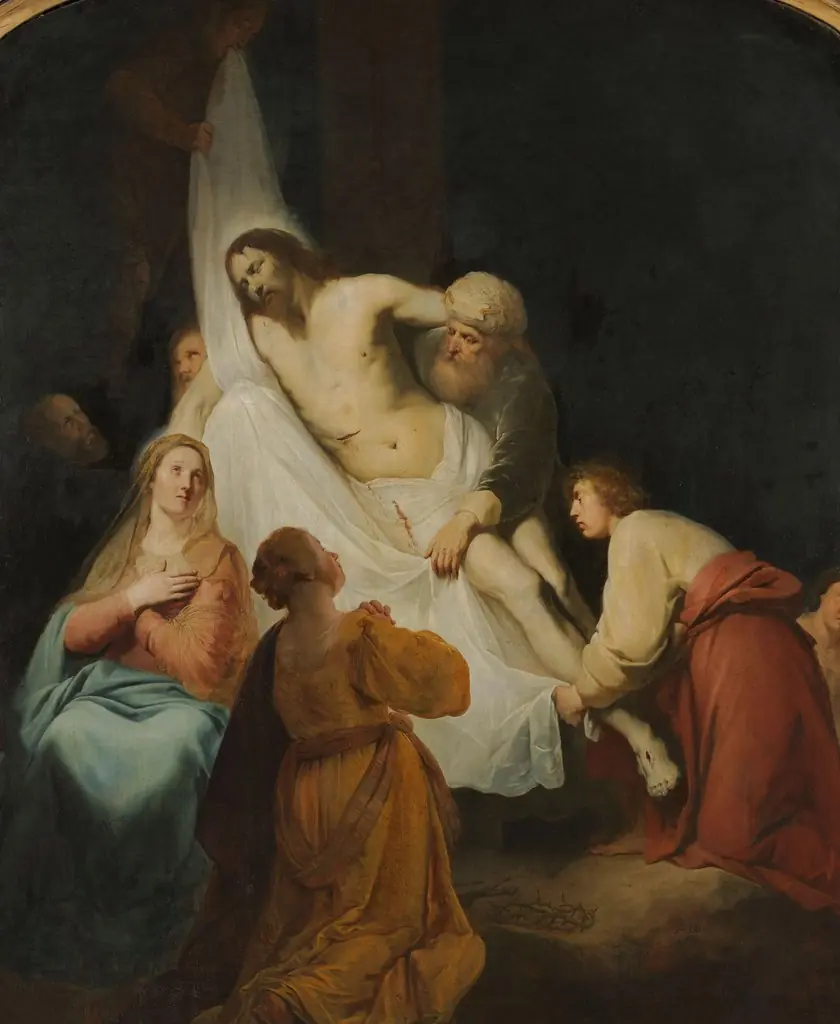 The descent from the cross
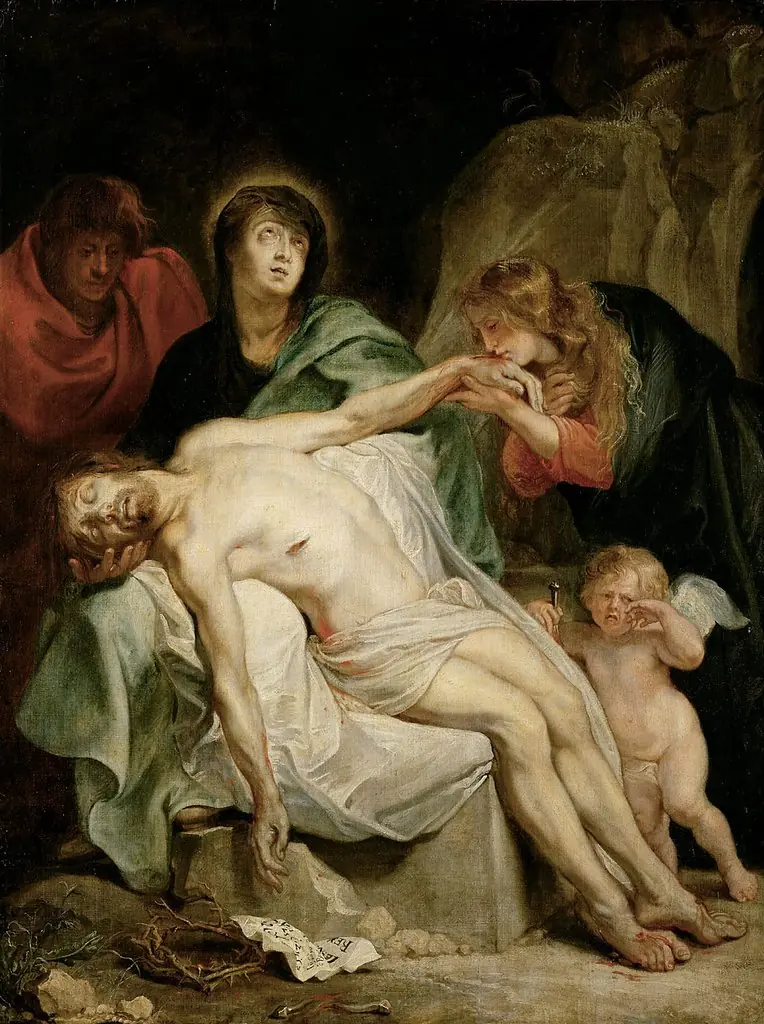 Deposition
- Lamentation of Christ