Artwork
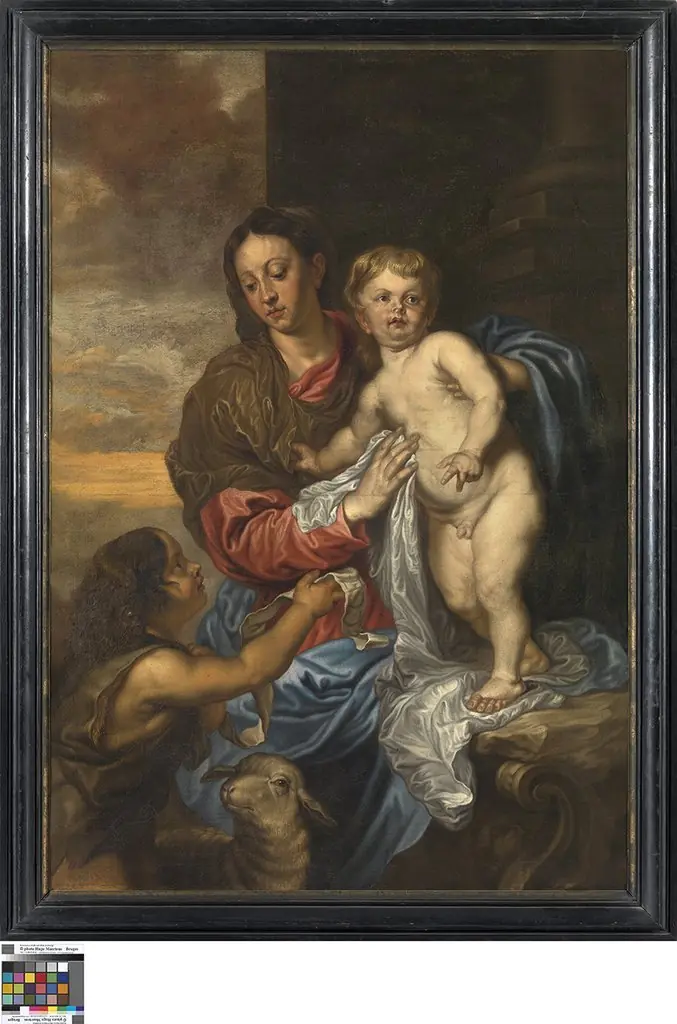
Madonna and Child with Child St John
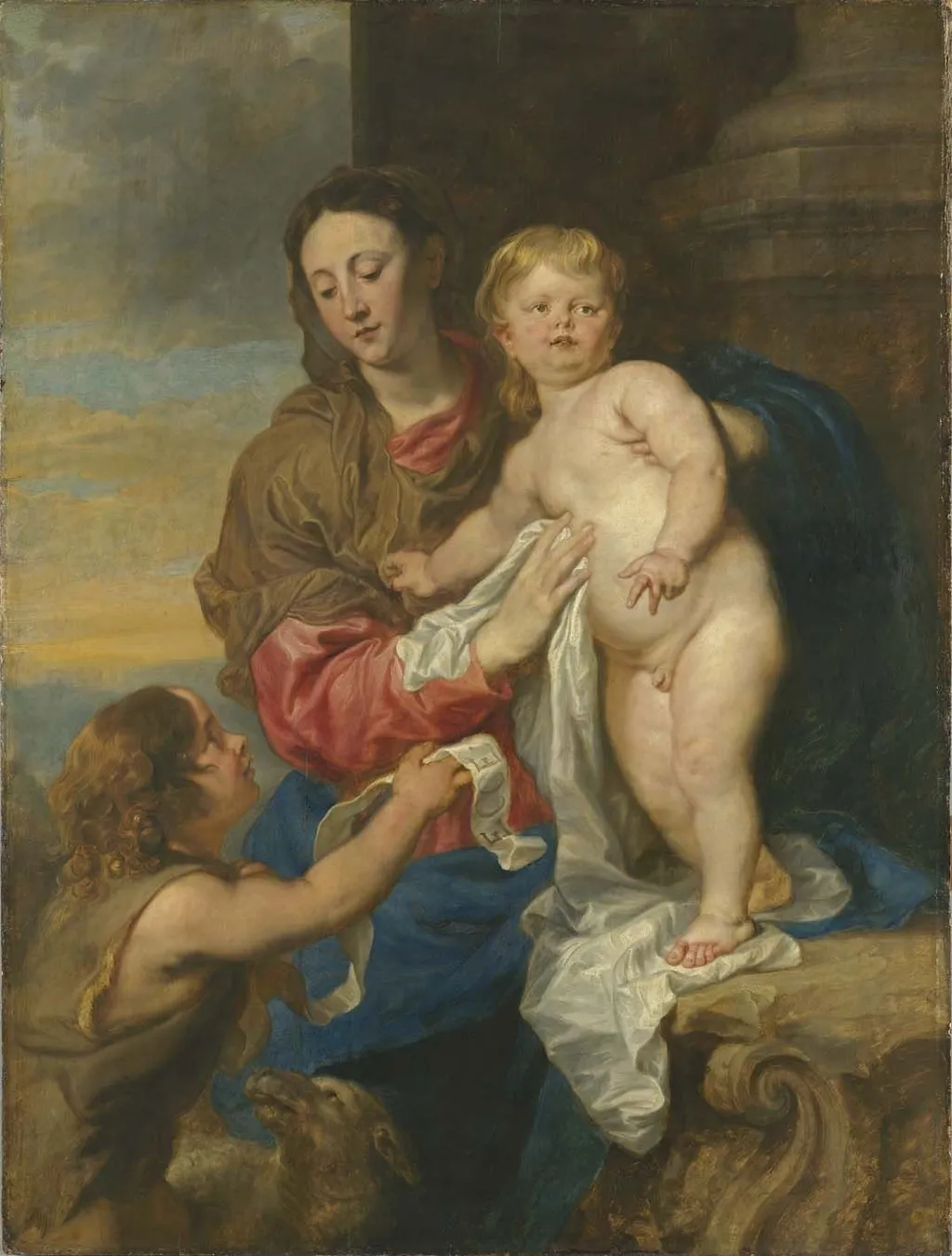
Madonna and Child with Child St John is an oil painting by the Flemish Baroque painting artist Anthony van Dyck. It dates from 1630 and is held in the collection of the Bavarian State Painting Collections.
About this work
Subject & Meaning
The composition centers on the Madonna and Child, a primary subject in Christian religious art, while incorporating the Child Saint John as a secondary figure.
Created in 1630, this oil painting on panel depicts a sacred grouping of the Virgin Mary with the Christ Child and the young Saint John the Baptist. The composition centers on the Madonna and Child, a primary subject in Christian religious art, while incorporating the Child Saint John as a secondary figure. This specific iconography serves to visually unite Jesus with his cousin and precursor, John, often foreshadowing John's future role in baptizing Christ or acknowledging his divinity.
By presenting these three figures together, the work emphasizes the holy family's extended connections and the theological narrative of salvation history through the interaction of the children.
Technique & Style
Executed in 1630, this religious work by Anthony van Dyck is an oil painting created on a wooden panel. The composition features the Madonna and Child alongside the Child Saint John, rendered with the characteristic handling of the Baroque period. The image measures 150.9 cm in height and 114.5 cm in width.
While the specific surface condition or detailed brushwork techniques are not explicitly described in the available records, the work's material construction and substantial scale define its physical presence within the Bavarian State Painting Collections.
History & Provenance
Created in 1630, this oil painting on panel by Anthony van Dyck depicts the Madonna and Child alongside the Child Saint John. The work was historically part of the collection assembled by Johann Wilhelm von der Pfalz. It is currently held within the Bavarian State Painting Collections and is on display at the Alte Pinakothek, where its inventory number is 2665.
The work has been shown in the 1950 exhibition "Alte Pinakothek: 2000 Jahre Malerei" and in the 2018 exhibition "Van Dyck and the Art of the 17th Century".
Context
Anthony van Dyck painted Madonna and Child with Child St John in 1630, a period when he was active in Antwerp and increasingly influenced by the Venetian colorism of Titian. The work belongs to his mature religious output, which often combined Flemish naturalism with a refined, courtly elegance. Van Dyck's treatment of the Madonna and Child with the young John the Baptist reflects the Counter-Reformation emphasis on intimate, devotional imagery, while his fluid brushwork and luminous palette anticipate the Baroque sensibilities that would define his later career as a court painter in England.
Within art history, this painting is considered a representative example of van Dyck's religious compositions, demonstrating his ability to blend emotional tenderness with compositional sophistication. It is held in the Alte Pinakothek as part of the Bavarian State Painting Collections.
Legacy
The painting belongs to Van Dyck's mature religious output and exemplifies his treatment of intimate, devotional subjects, in which the Holy Family and the young John the Baptist are presented with tenderness and compositional refinement. Its long presence in the collection of Johann Wilhelm von der Pfalz and subsequently in the Alte Pinakothek has secured its standing as a representative example of his Counter-Reformation devotional painting.
Overview
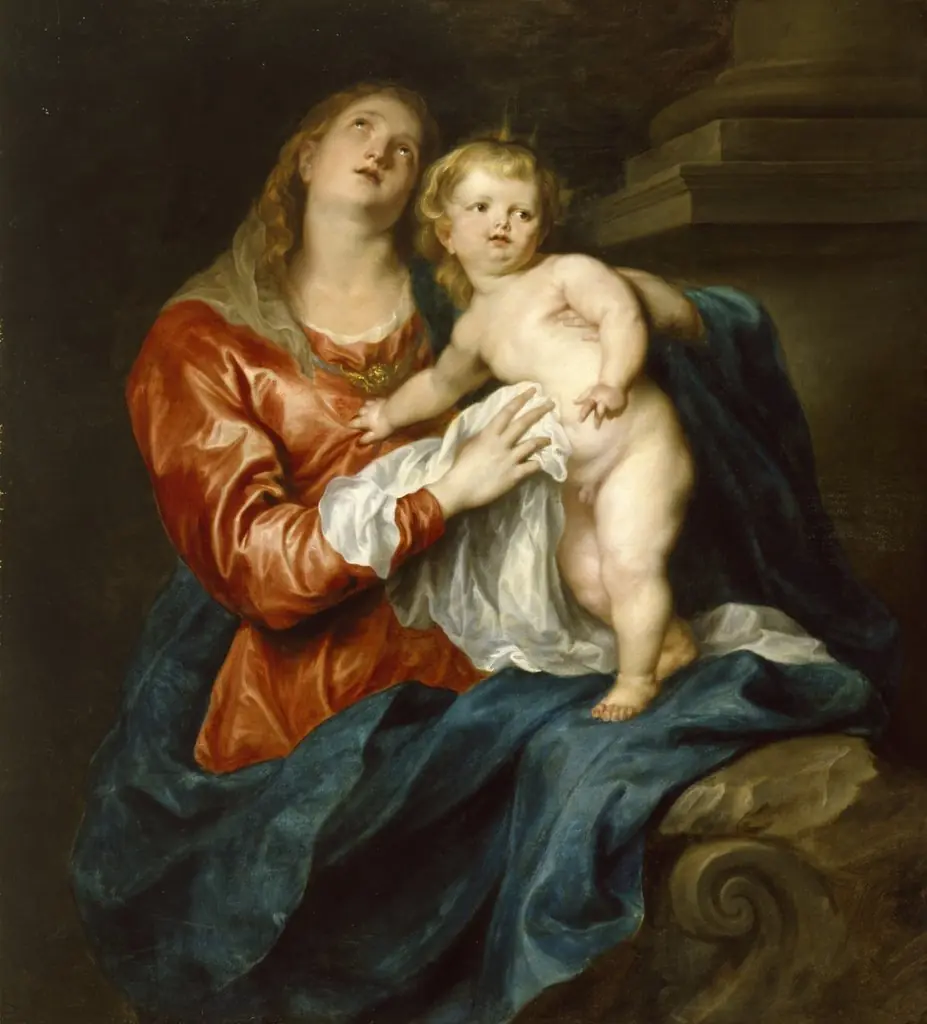
Anthony van Dyck’s oil painting Madonna and Child with Child St John dates from 1630. The work presents the Virgin Mary cradling the infant Christ, while a youthful John the Baptist kneels nearby. Rendered in a dark interior with a subtle illumination behind the figures, the composition exemplifies the intimate devotional images popular in the early seventeenth‑century Flemish tradition.
Artist & collection
Artist
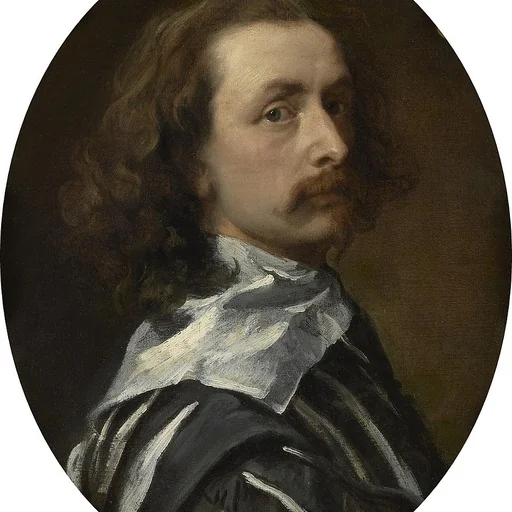
Sir Anthony van Dyck (; Dutch: Antoon van Dijck; 22 March 1599 – 9 December 1641) was a Flemish Baroque artist, who became the leading court painter in England after success in the Spanish Netherlands and Italy.

- Madonna and Child
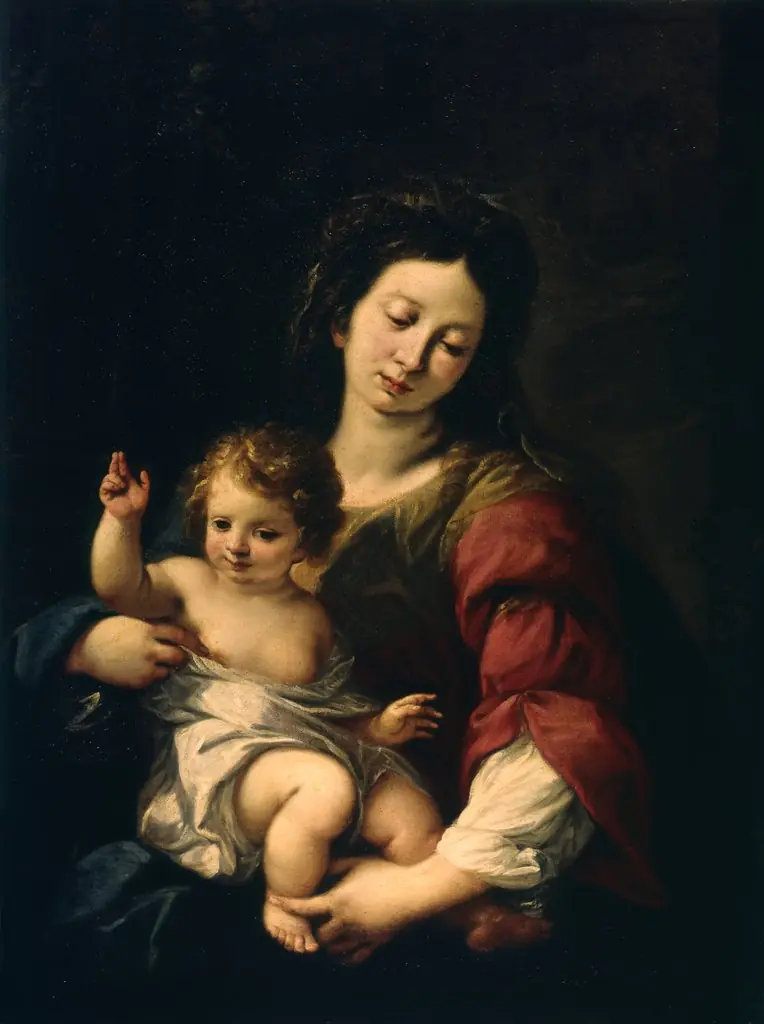 Madonna and Child
 Madonna en de kleine Johannes de Doper
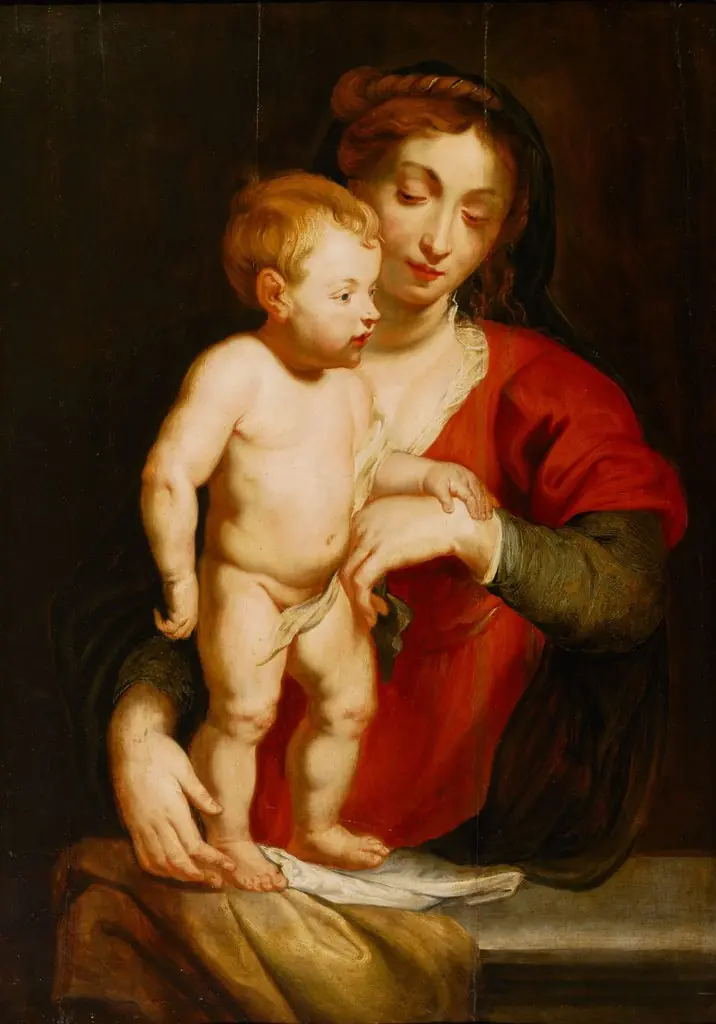 Madonna and Child
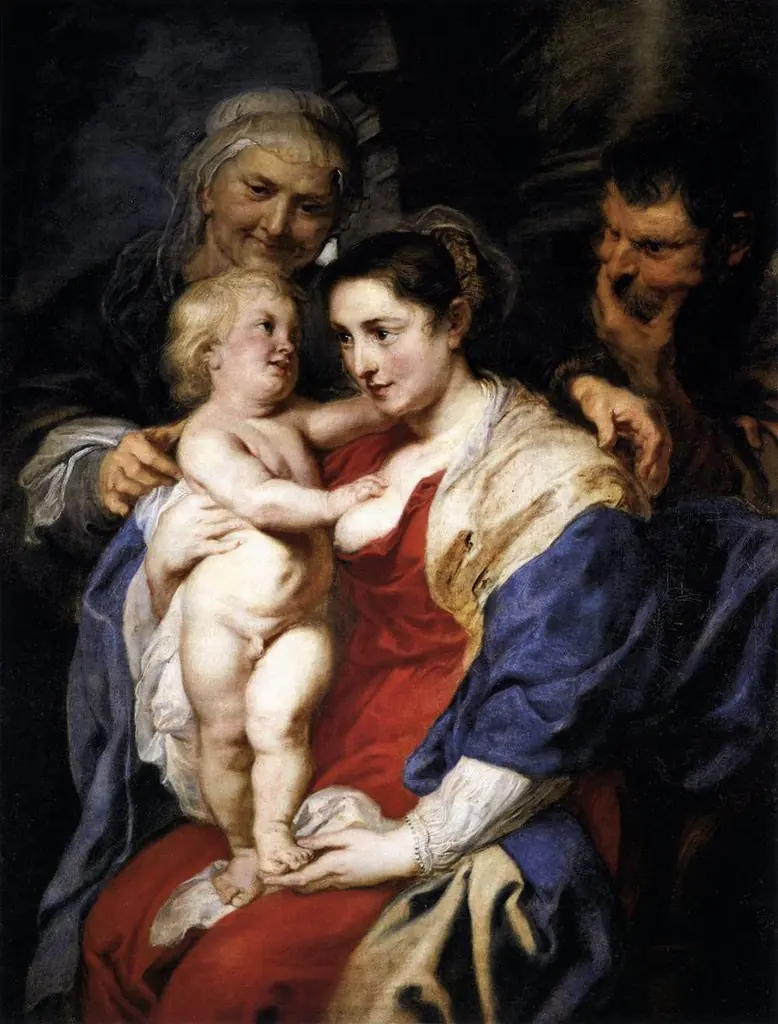 The Holy Family with Saint Anne
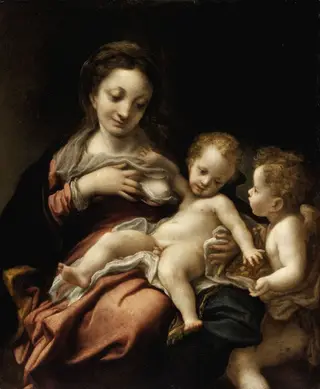 Virgin and Child with an Angel (Madonna del Latte)
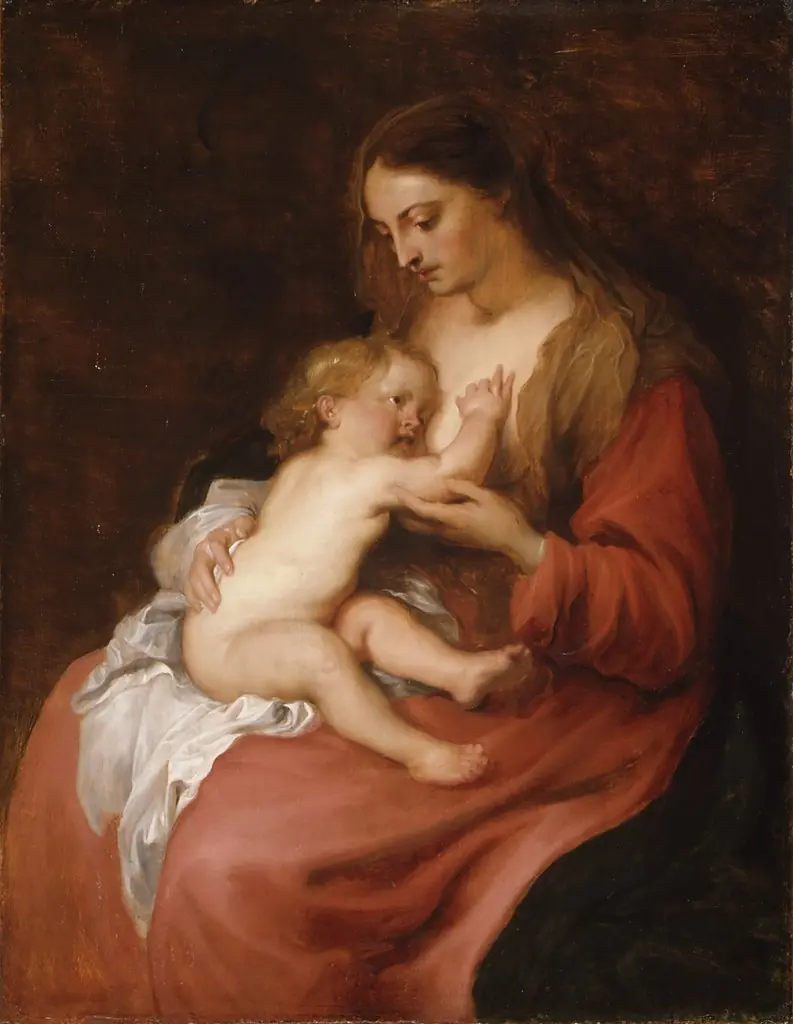 Virgin and Child
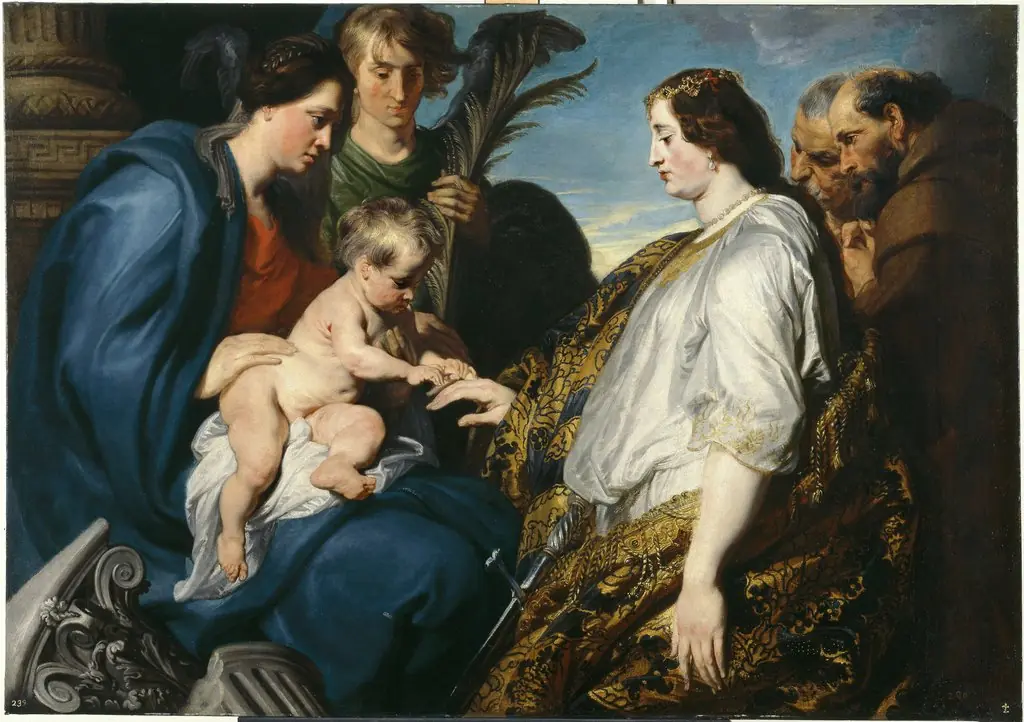 The Mystic Marriage of Saint Catherine
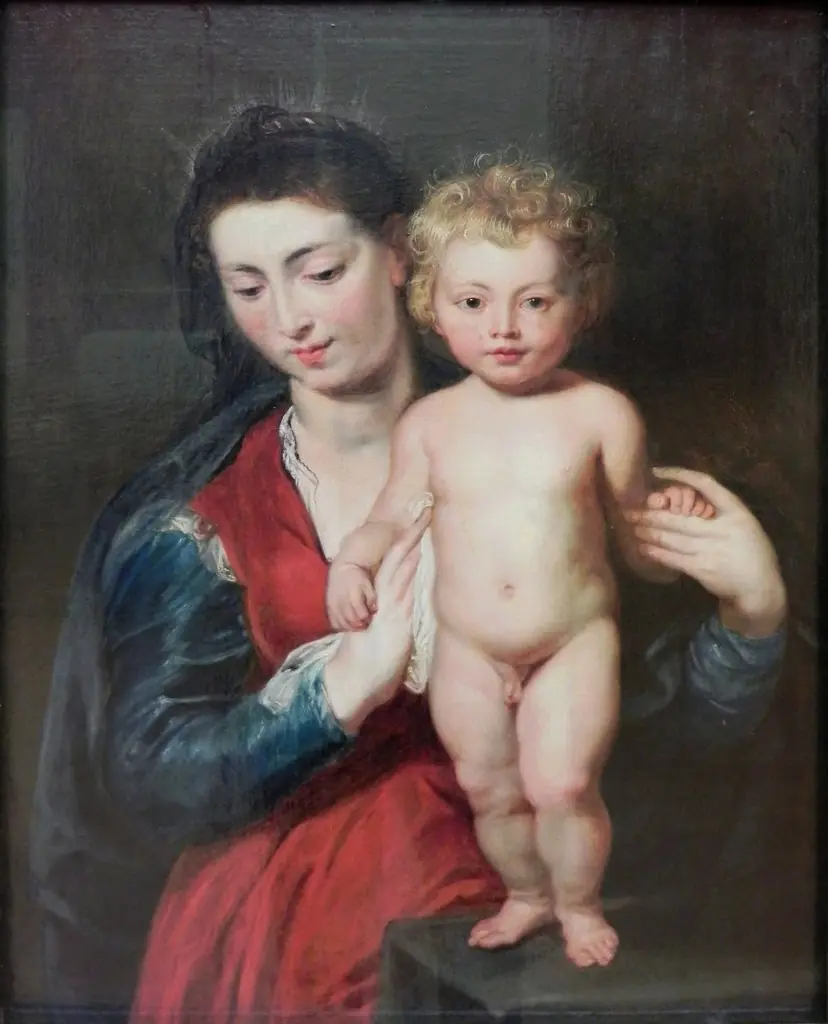 Virgin and child
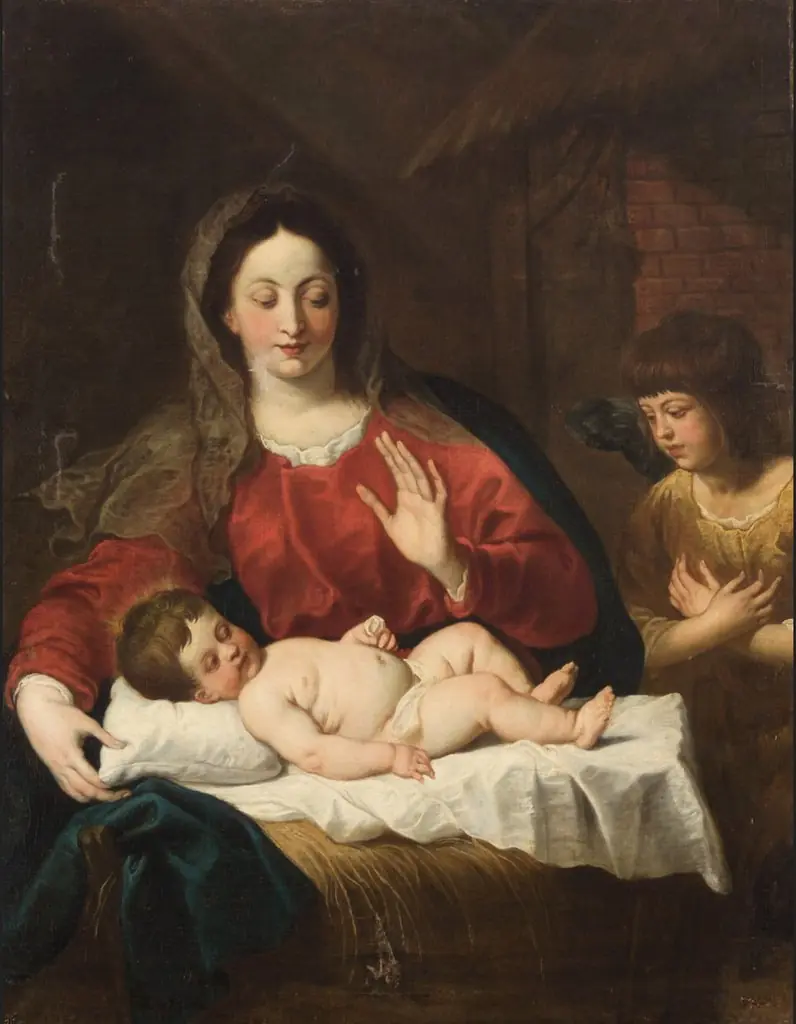 Maria mit Kind und Engel
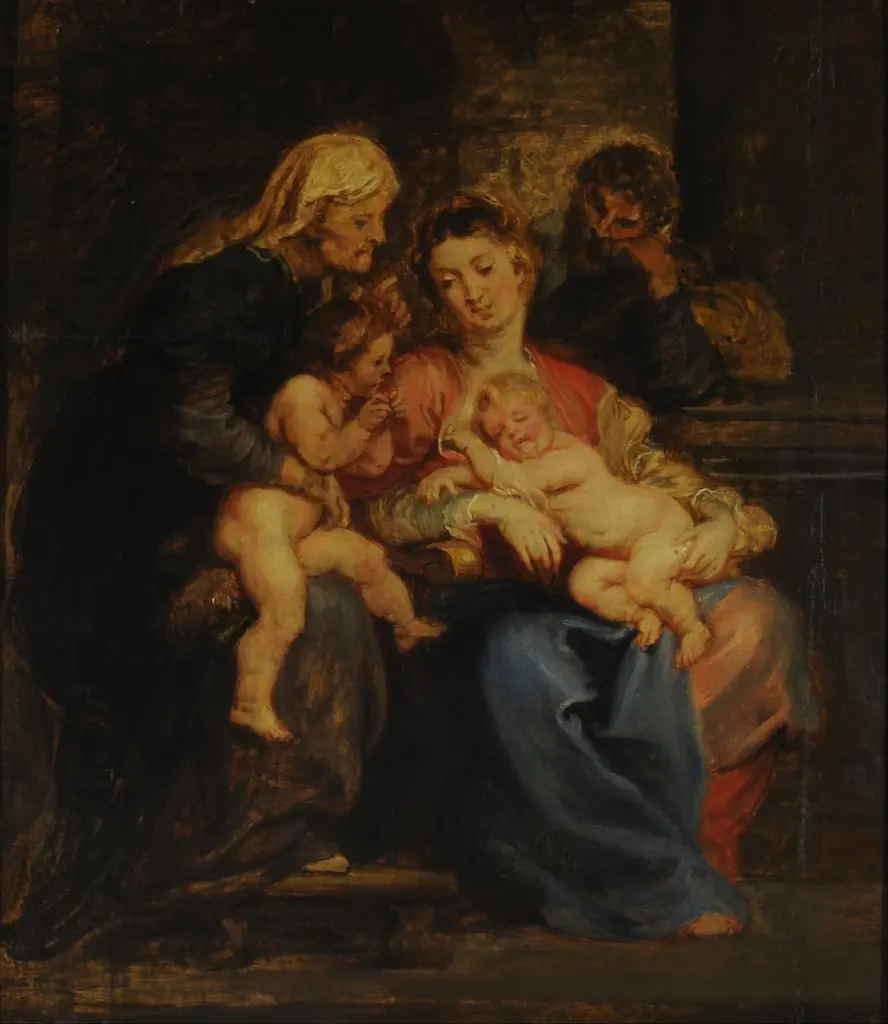 Holy Family with Saint Little John and Elizabetg
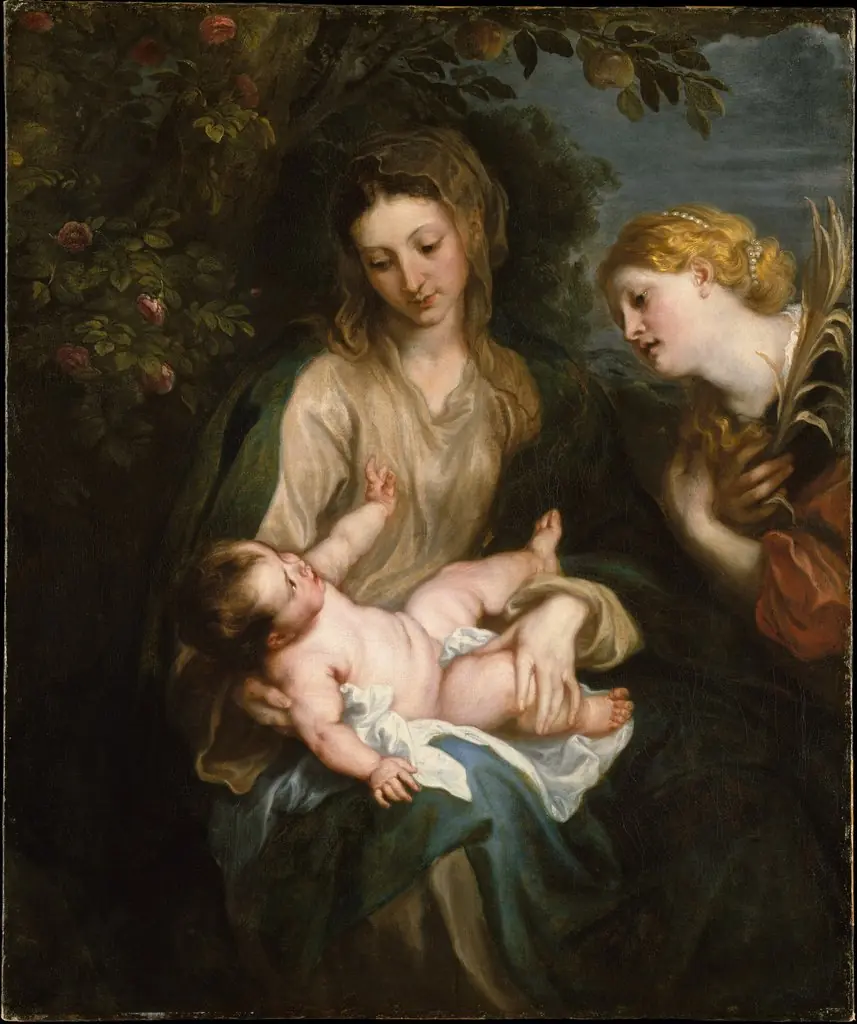 Virgin and Child with Saint Catherine of Alexandria