Artwork
Madonna of Saint George
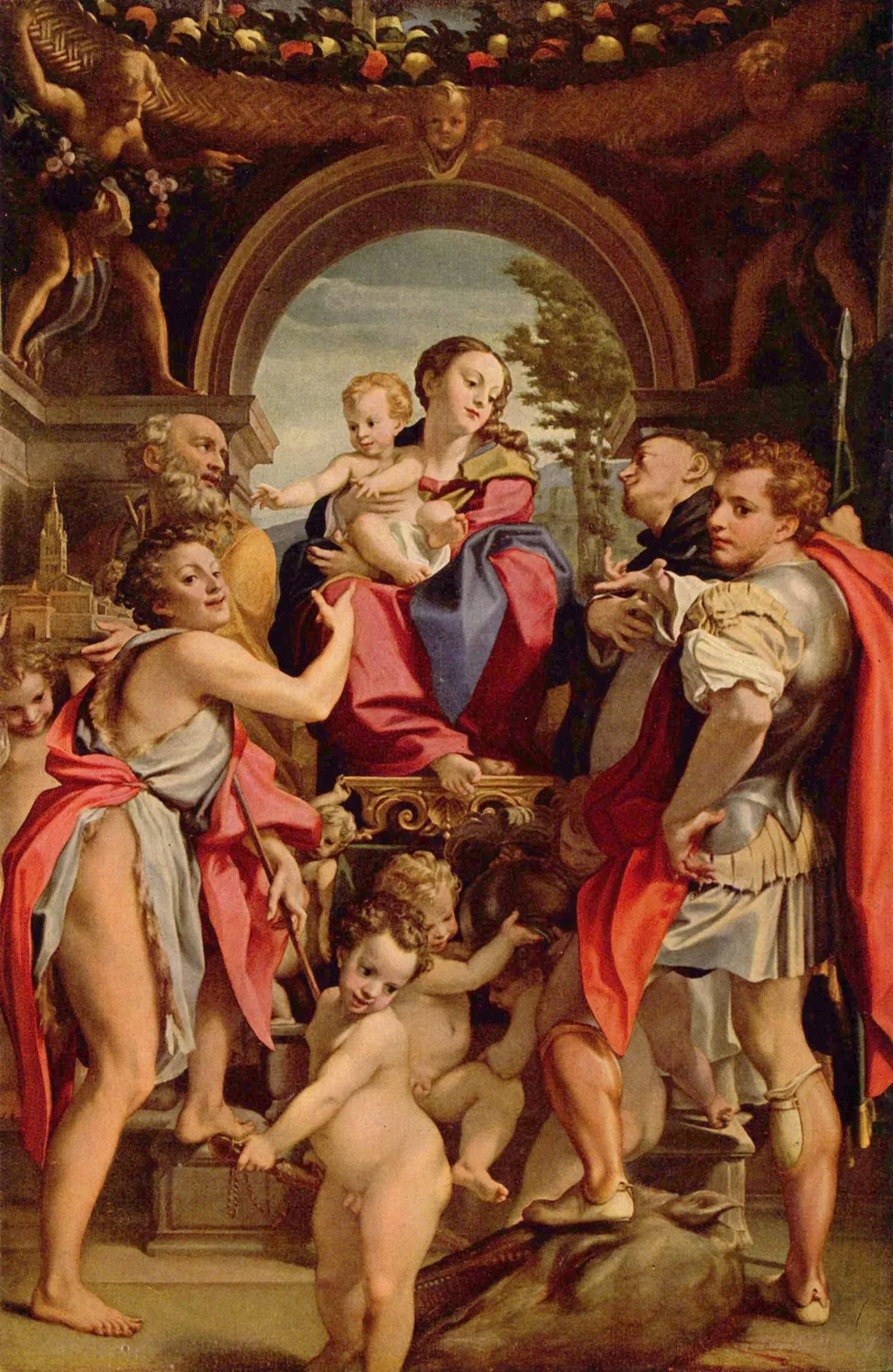
Madonna of Saint George is an oil painting by the Early Baroque Italian artist Antonio da Correggio. It dates from 1529 and is held in the collection of the Staatliche Kunstsammlungen Dresden.
About this work
Subject & Meaning
Saint George stands in classical armor with his foot on the dragon’s severed head, his weapons held by putti, signaling triumph over evil.
The painting depicts a Sacra Conversazione centered on the Virgin and Child enthroned, flanked by four saints. The Child reaches toward a small model of Modena held by Saint Geminianus, patron of the city, while cherubs attend the scene. Saint George stands in classical armor with his foot on the dragon’s severed head, his weapons held by putti, signaling triumph over evil. Saint Peter Martyr, patron of the commissioning confraternity, wears the Dominican habit and turns his gaze upward, concealing his martyrdom’s violent iconography (a sword in his head and dagger in his breast). John the Baptist appears youthful, distinguished by his cross staff and camel-skin cloak. The composition is framed by a floral-arched pavilion recalling Mantegna’s *Madonna della Vittoria*, underscoring Correggio’s late fusion of serene monumentality with sophisticated spatial and emotional rhetoric. Correggio’s treatment elevates the traditional theme into a harmonious yet dynamic tableau, where gestures and gazes guide the viewer’s eye across opposing focal points. The work’s meaning blends civic pride, Modena’s model and its saint, with theological victory over sin, embodied in Saint George’s iconography and the subdued martyrdom of Peter Martyr.
Technique & Style
The Madonna of Saint George is executed in oil on panel, measuring 285 × 190 cm. Correggio’s handling emphasizes a luminous palette and refined material effects, from the polished reflections on Saint George’s armor and gilt sword-hilt to the tactile rendering of the goat-skin worn by John the Baptist and the plush weave of the Virgin’s blue mantle. The composition is structured as a sacra conversazione beneath a vegetal-domed pavilion, evoking Mantegna’s Madonna della Vittoria while transforming its perspectival logic into a sweeping, almost convex spatial expansion that elevates the central Virgin and Child. Gestures and gazes are choreographed to guide the viewer’s eye across multiple focal points, with the Madonna and Christ Child directing attention in divergent directions to articulate a dynamic, multi-angled viewing experience.
History & Provenance
The *Madonna of Saint George* was commissioned for the high altar of the oratory of the Confraternity of San Pietro Martire in Modena and completed by Antonio da Correggio around 1530, likely the artist’s last religious work.
In 1649, Francesco I d’Este acquired the painting for his Modena gallery, compensating the confraternity with a copy by Guercino and a princely gift. After entering the d’Este collection, it was praised by contemporaries such as Padre Ottonelli and Francesco Scannelli. In 1746, Francesco III d’Este sold it, along with over one hundred works, to Frederick Augustus II, transferring it to the Gemäldegalerie Alte Meister in Dresden, where it remains.
The *Madonna of Saint George* is held in the Gemäldegalerie Alte Meister, part of the Staatliche Kunstsammlungen Dresden in Germany. The work entered the collection in 1746 when Elector Frederick Augustus II purchased it from Francesco III d'Este as part of a larger acquisition of over one hundred paintings from the ducal gallery in Modena. Prior to this transfer, the altarpiece was acquired in 1649 by Francesco I d'Este, who replaced the original in its Modena oratory with a copy by Guercino. While the painting has been a fixture of the Dresden collection since the mid-18th century, the provided sources do not list specific exhibition dates or temporary loan histories for the work.
Context
The Madonna of Saint George was painted by Antonio da Correggio around 1530 for the high altar of the oratory of the confraternity of San Pietro Martire in Modena, making it likely his final religious work, completed alongside his last contributions to the ceiling of Parma Cathedral. The painting entered the collection of Francesco I d'Este in 1649, who replaced it with a copy by Guercino, and was later sold by Francesco III d'Este in 1746 to Frederick Augustus II, entering the Dresden collection. Its iconography includes the Madonna and Child at the center, Saint George with the dragon's head under his foot, Saint Peter Martyr holding a model of the city, Saint George, and Saint John the Baptist, rendered in a style that bridges High Renaissance and Mannerist approaches through dramatic perspective and emotional restraint. The work exemplifies Correggio's mastery of gesture and spatial complexity, blending sacred narrative with refined detail in materials such as the Virgin's blue mantle and the dragon's gory head.
Legacy
The Madonna of Saint George has shaped later artistic practice through its innovative compositional strategies and its role as a reference point for subsequent artists. Rubens studied the painting in a red‑chalk sketch and praised its spatial daring, while 16th‑century copies by Girolamo Conti and Bartolomeo Passerotti demonstrate its immediate impact on contemporary painters. The work’s transition from altarpiece for the confraternity of San Pietro Martire to a centerpiece of the Dresden Gemäldegalerie illustrates its changing reputation, moving from a local devotional image to a canonical example of late‑Renaissance sacra conversazione that influenced the development of Mannerist visual rhetoric. Its complex iconography, especially the treatment of Saint George and the youthful Saint John the Baptist, has been cited in art‑historical literature as a key case study for understanding the shift toward heightened expression and spatial experimentation in the 1520s‑1530s.
Own this work as a print
Artist & collection

Artist
Antonio Allegri da Correggio, usually known as just Correggio, was an Italian Renaissance painter who was the foremost painter of the Parma school of the High Renaissance, who was responsible for some of the most…

- Enthroned Madonna with Child and Saints
 The Mystic Marriage of St. Catherine
 Madonna of the people
 Holy Family at the fire
 The Holy Family
 The Virgin and the Souls of Purgatory
 Madonna with the Child and the Holy Ones
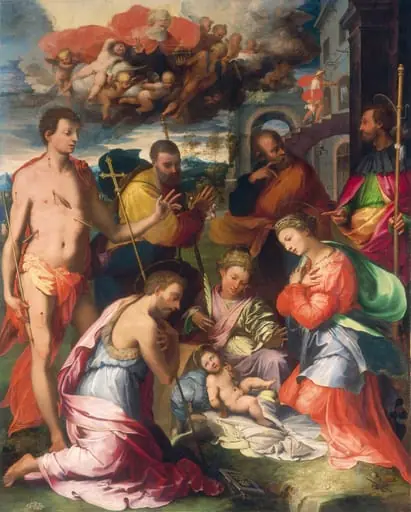 The Nativity
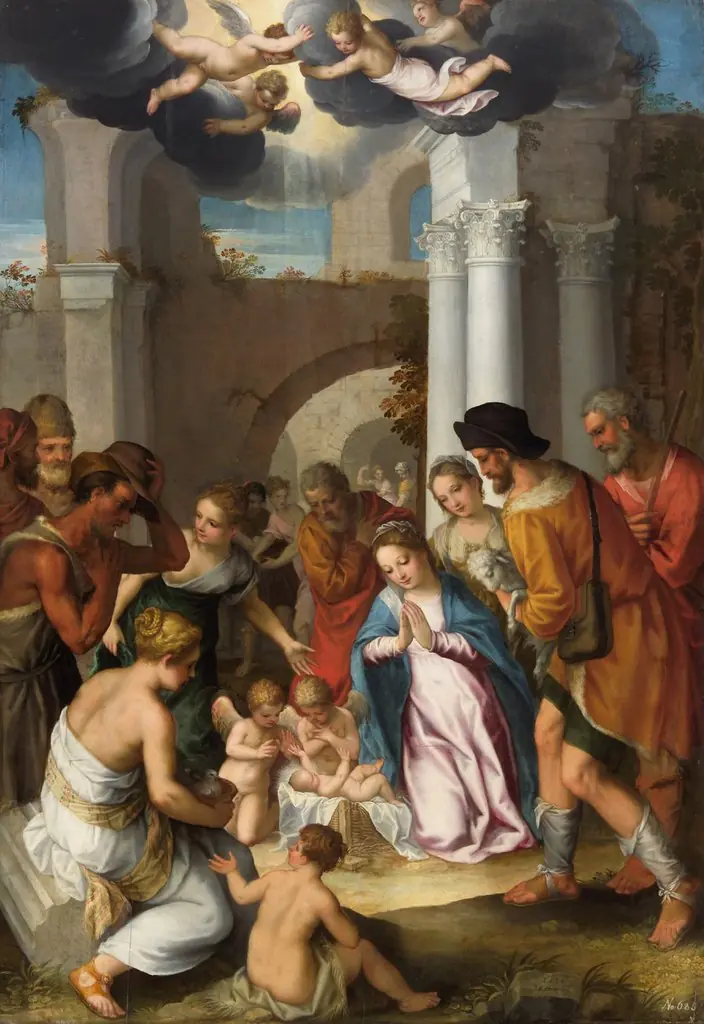 Anbetung der Hirten
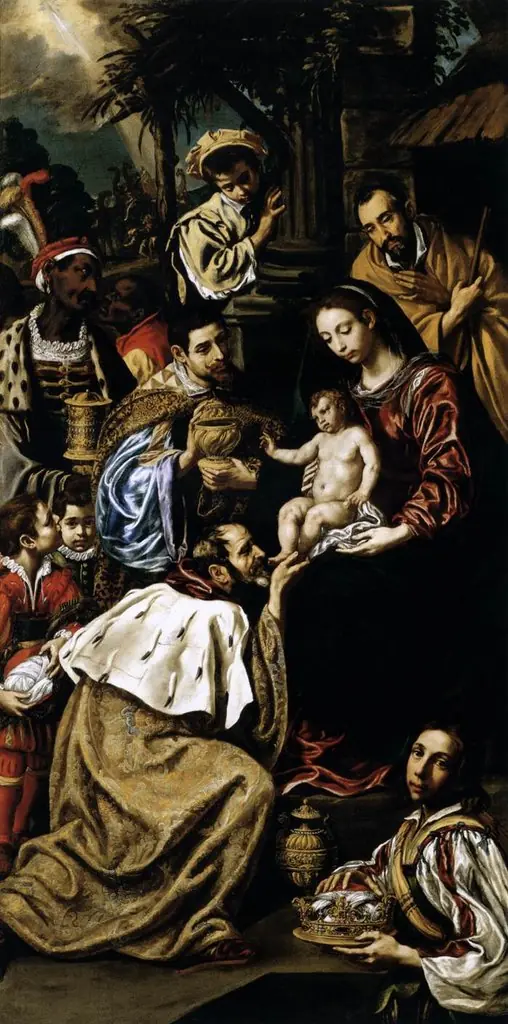 The Adoration of the Magi
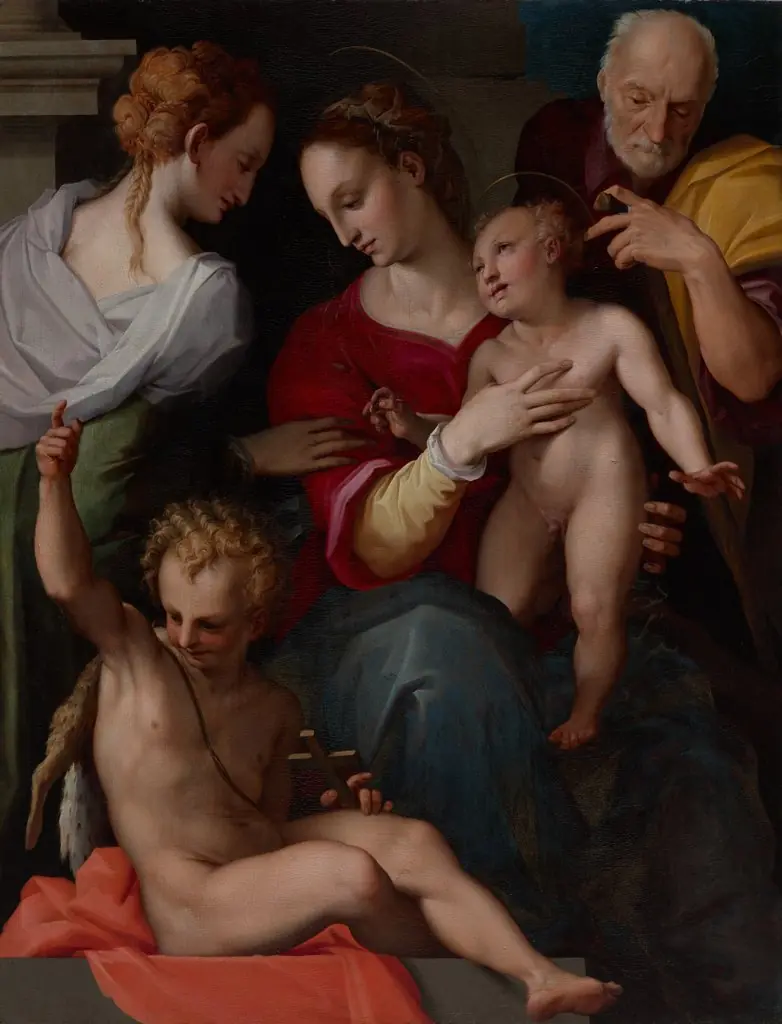 Holy Family with the Mystic Marriage of Saint Catherine
 The Holy Family with the Infant Saint John the Baptist in a Landscape