Artwork
Saint Sebastian
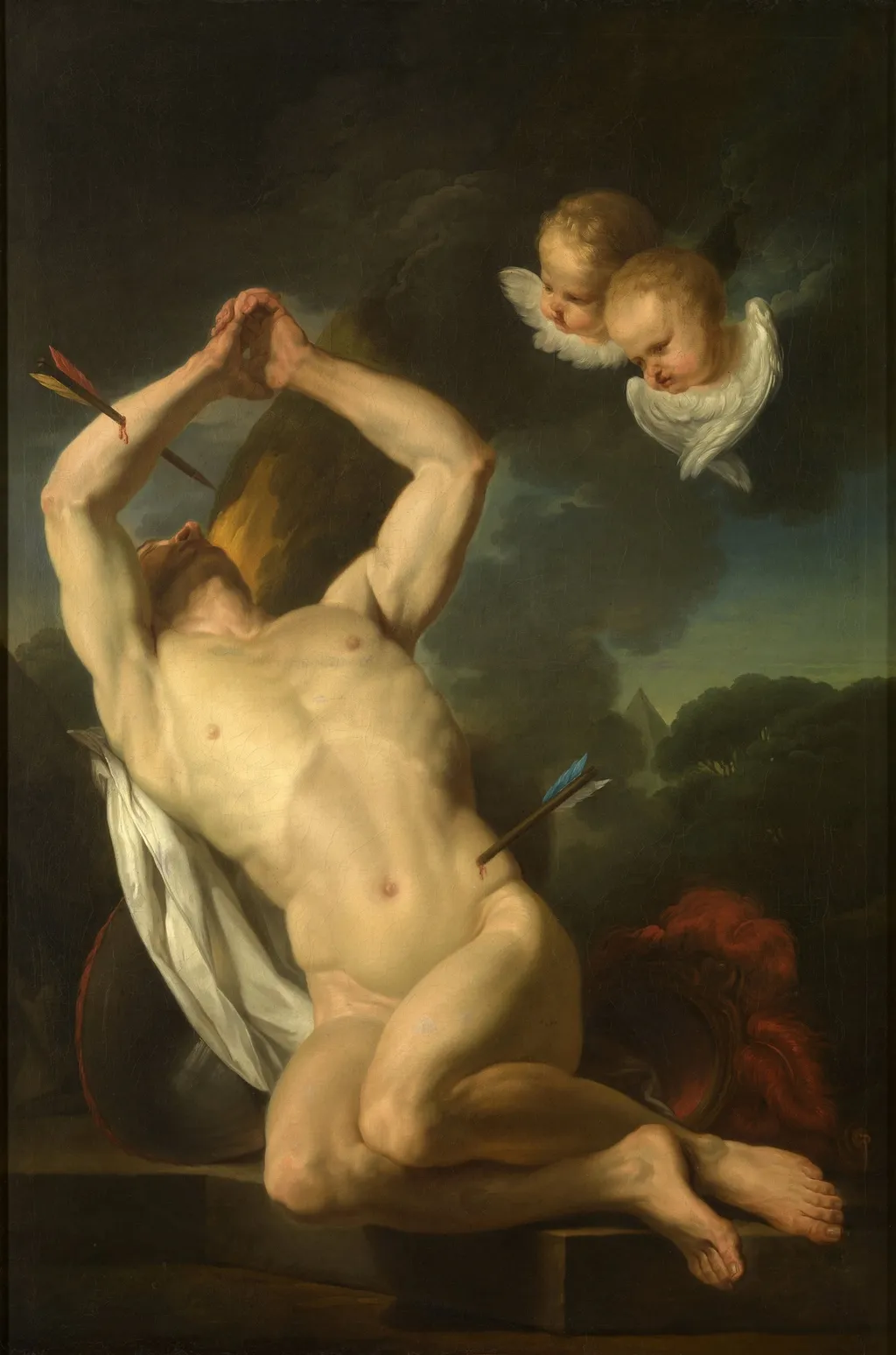
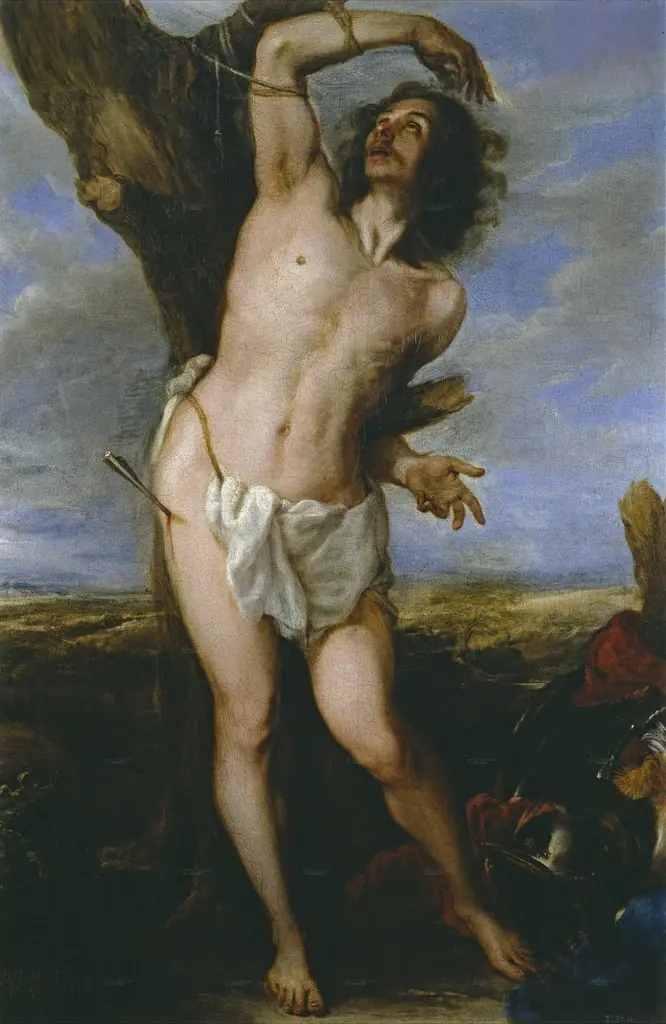
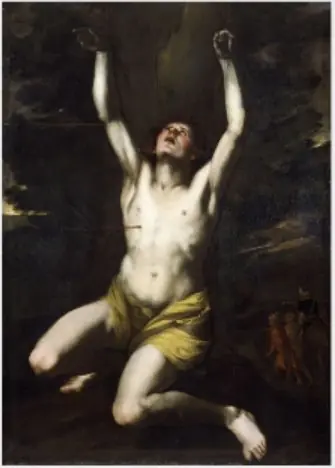
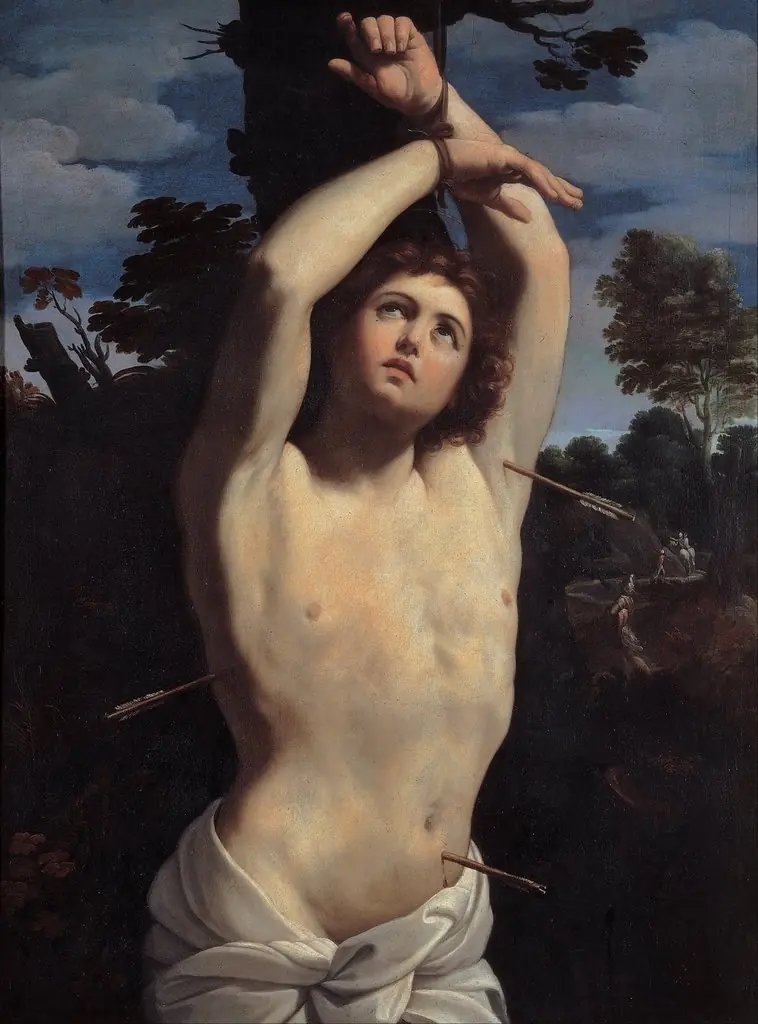
Saint Sebastian is an oil painting by the Rococo painting artist Augustin van den Berghe. It dates from 1790 and is held in the collection of the Groeningemuseum.
About this work
Overview
Saint Sebastian is an oil on canvas painting by the Flemish artist Augustin van den Berghe, dated circa 1777 and measuring 192 by 129 centimeters.
Saint Sebastian is an oil on canvas painting by the Flemish artist Augustin van den Berghe, dated circa 1777 and measuring 192 by 129 centimeters. The work is held in the collection of the Groeningemuseum in Bruges under inventory number 0000.GRO0131.I. Though long attributed to van den Berghe's teacher Joseph-Benoît Suvée, the painting was reidentified as a copy by van den Berghe, produced during his studies under Suvée in Paris. The canvas exemplifies the academic neoclassical training of the late eighteenth century, bridging Flemish and French artistic traditions.
Subject & Meaning
The painting depicts the martyrdom of Saint Sebastian, the Christian saint bound and pierced by arrows. The muscular nude male figure occupies the center, his hands tied above his head, torso arched backward, and head thrown upward toward the sky. Two arrows pierce his body: one through his right side and another in his left upper arm, with visible blood at each wound. He wears a yellow cloth draped over his head and a white cloth across his lower back. Two winged infant heads, or cherubim, with white feathers float in the upper right, gazing downward upon the suffering saint. The iconography follows the traditional representation of Sebastian's martyrdom, emphasizing both physical suffering and spiritual transcendence through the upward gaze and heavenly observers. The crumpled red fabric beside the dark stone ledge and the stormy background with distant landscape and small structure add dramatic context to the scene.
Technique & Style
The painting is executed in oil on canvas with a smooth and blended brushwork, particularly in the skin, where fine craquelure is visible throughout the surface. Strong directional light from the left creates highlights on the body, producing dramatic chiaroscuro against the deep browns and grays of the background. The handling becomes more textured in the fabrics and background elements. The palette centers on warm flesh tones contrasted with the dark stormy sky and landscape. The figure's anatomical precision and idealized musculature reflect the academic exercises imposed on students of the Académie de France in Rome, where pupils were required to produce studies from a nude posing model. This technical approach aligns with neoclassical emphasis on anatomical accuracy and classical proportion, though one source also characterizes the work with Baroque dramatic lighting and emotional intensity.
History & Provenance
The painting's creation history is intertwined with that of its source composition by Joseph-Benoît Suvée. Suvée painted his original Saint Sebastian during his stay in Rome and sent it to Paris in 1777 for jury evaluation at the academy. The following year, Suvée exhibited the canvas again at the Paris Salon, together with his Naked Warrior; both works received favorable criticism for their tonal finesse and careful detail. For a long time, the Groeningemuseum canvas was thought to be Suvée's original. The art historian Denis Coekelberghs discovered Suvée's actual original in a castle at Famenne, though that painting was subsequently lost due to theft. Augustin van den Berghe likely copied the work during his apprenticeship under Suvée in Paris. The painting entered the collection of the Groeningemuseum in Bruges, where it remains today.
Context
Augustin van den Berghe was born in Bruges in 1756 and received his early training at the Bruges Academy under Jan Antoon Garemijn, where he excelled in figure drawing and won first prize in 1774 for his study after the Capitoline Antinous. Around 1780, he relocated to Paris to study under Joseph-Benoît Suvée at the Académie Royale de Peinture et de Sculpture, where he won second prize in 1781. The Saint Sebastian copy represents a typical exercise from this period of French academic training, when students copied their masters' compositions to demonstrate technical proficiency. The confusion between van den Berghe's copy and Suvée's original reflects the close relationship between master and pupil, as well as the institutional practice of sending envois from Rome to Paris for academic review. The work occupies a significant place in understanding how Flemish artists absorbed and transmitted French neoclassical ideals during the late eighteenth century.
Legacy
The reattribution of this Saint Sebastian from Joseph-Benoît Suvée to Augustin van den Berghe illustrates the ongoing scholarly work of distinguishing masterworks from student copies in eighteenth-century academic practice. The discovery and subsequent loss of Suvée's original by Denis Coekelberghs underscores the fragility of art historical evidence. Today, the painting serves as a documented example of van den Berghe's early career and his engagement with neoclassical history painting before his later work as a professor of drawing in Beauvais. The canvas has also entered commercial circulation through reproductions marketed as Renaissance-inspired and classical religious decor, reflecting the broader cultural afterlife of academic religious imagery in contemporary interior design.
Own this work as a print
Artist & collection