Artwork
British Manufactory; A Sketch
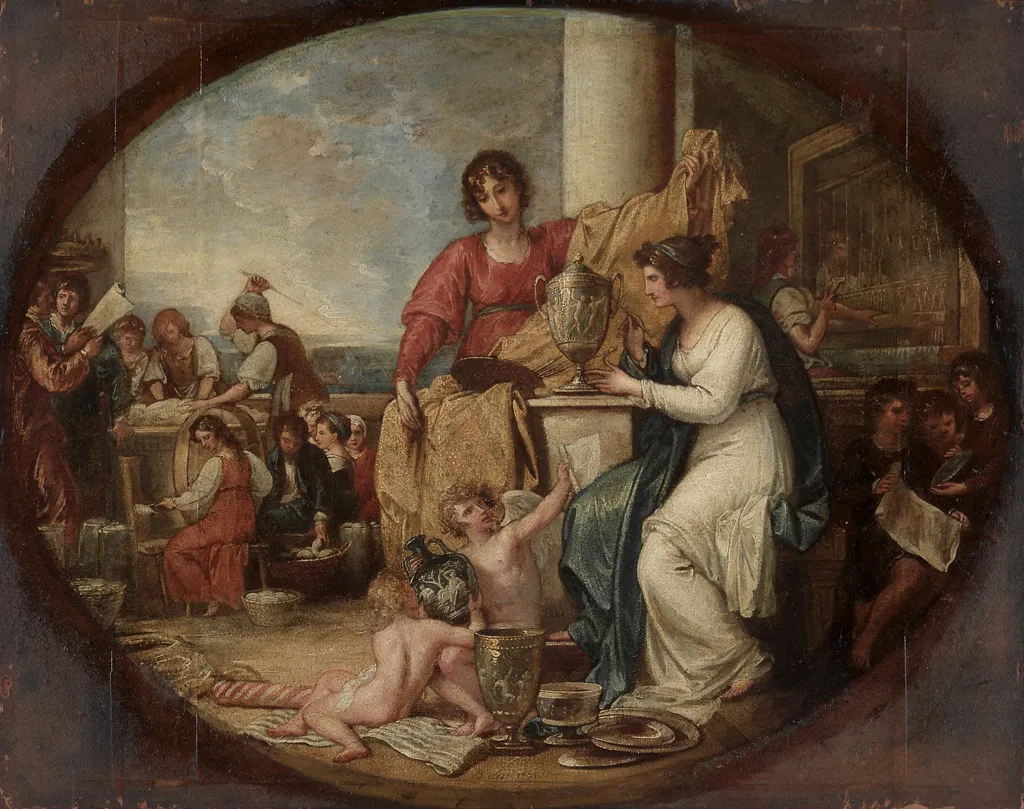
British Manufactory; A Sketch is an unspecified painting by the British Romanticist artist Benjamin West. It dates from 1796 and is held in the collection of the Cleveland Museum of Art.
About this work
History & Provenance
The canvas was acquired directly by the museum shortly after its creation, establishing a clear ownership chain from the artist to the institution.
Benjamin West created "British Manufactory; A Sketch" in 1791 while working in the United States. The painting entered the collection of the Cleveland Museum of Art, where it remains on view. Its dimensions are 51.0 cm by 65.0 cm. The work was catalogued in the museum’s records as accession number 1919.1018.
The canvas was acquired directly by the museum shortly after its creation, establishing a clear ownership chain from the artist to the institution. No subsequent sales or transfers are documented in the provenance record.
The sketch reflects West’s engagement with industrial themes during his American period, aligning with his broader body of work that blends historical narrative with contemporary technological subjects.
The painting is held by the Cleveland Museum of Art, where it carries the accession number 1919.1018. Acquired in 1919, the work entered the museum’s collection that same year. No exhibition history beyond its permanent display at the Cleveland Museum of Art has been documented in the accessible sources.
Overview
British Manufactory; A Sketch, executed in 1796 by Benjamin West, belongs to the late‑eighteenth‑century British Romantic tradition. The oil work is part of the Cleveland Museum of Art’s holdings. West, an American émigré who built his career in England, was appointed historical painter to the royal household and later presided over the Royal Academy.
Subject & Meaning
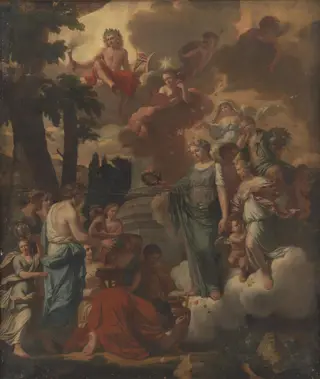
The composition centers on two women amid a bustling interior. A figure in a red dress grips a large metal pitcher, appearing to direct activity, while a kneeling woman in white attends to a child. Around them, workers bake, read, and transport baskets, suggesting a narrative of organized labor within a manufactory setting rather than a fleeting snapshot.
Technique & Style
West employs a balanced arrangement of figures, using chiaroscuro to model forms against a dimly lit, vaulted ceiling. The palette contrasts the vivid red garment with muted whites and earth tones, drawing the eye to the central interaction. Loose brushwork in background elements, such as the distant window and ships, softens the scene while maintaining overall clarity.
Context
The work emerges at a time when Britain’s industrial expansion was reshaping social structures. West, known primarily for grand historical canvases, turns his attention to the everyday operations of a factory, aligning with Romanticism’s fascination with both the heroic and the ordinary aspects of modern life.
Own this work as a print
Artist & collection

Artist
Benjamin West (October 10, 1738 – March 11, 1820) was an American-born British painter who specialised in history painting, creating such works as The Death of Nelson, The Death of General Wolfe, the Treaty of Paris,…

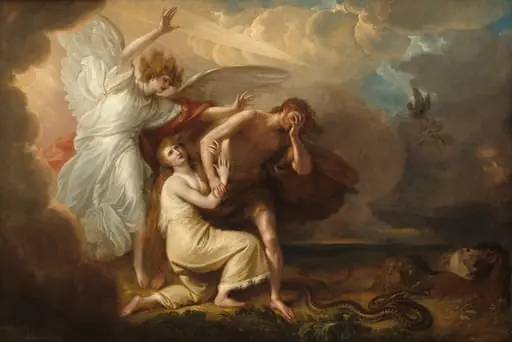 The Expulsion of Adam and Eve from Paradise
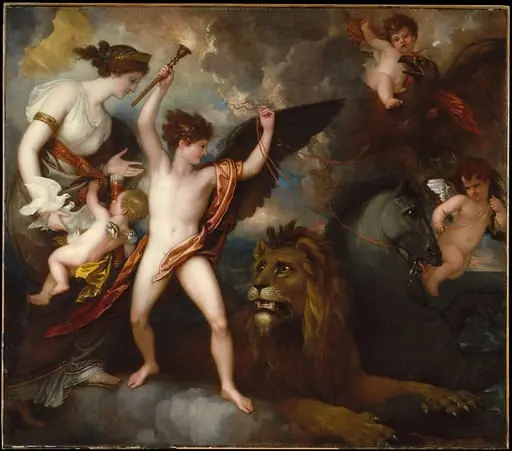 Omnia Vincit Amor, or The Power of Love in the Three Elements
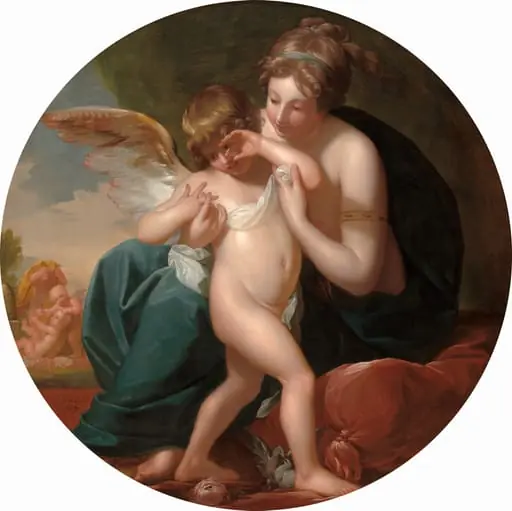 Cupid, Stung by a Bee, Is Cherished by his Mother
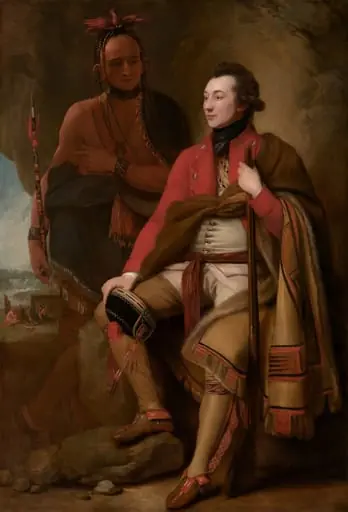 Colonel Guy Johnson and Karonghyontye (Captain David Hill)
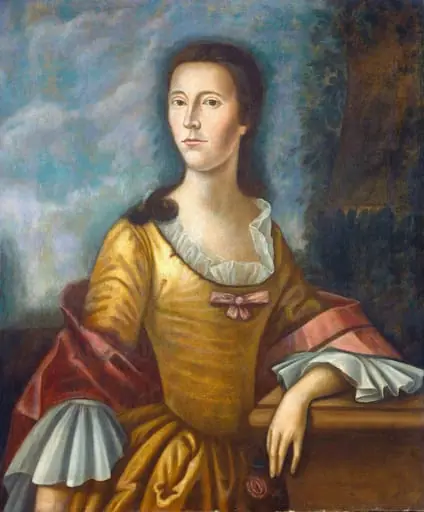 Mary Bethel Boude (Mrs. Samuel Boude)
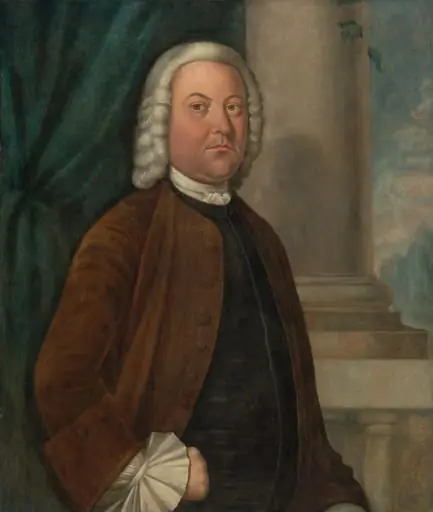 Dr. Samuel Boude
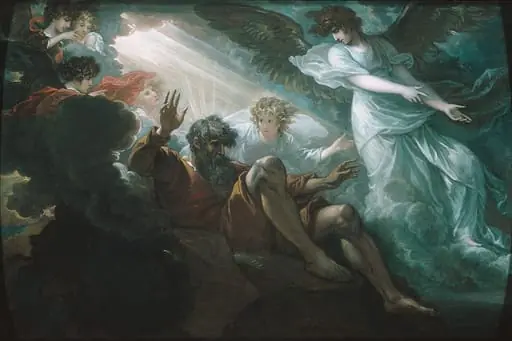 Moses Shown the Promised Land
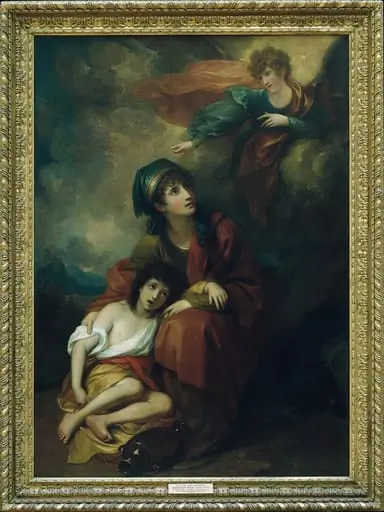 Hagar and Ishmael
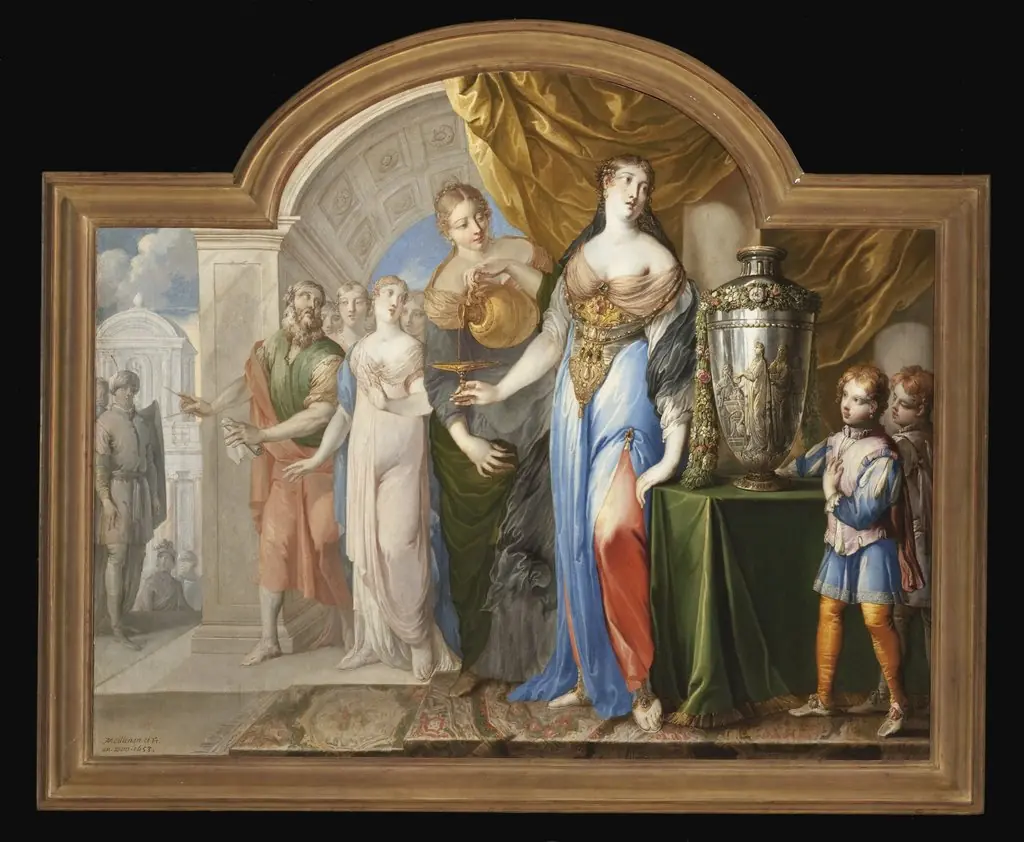 Sophonisbe Drinking Poison
 Finding of Erichthonius
 Apotheosis of the Dutch East India Company (Allegory of the Amsterdam Chamber of Commerce of the VOC)
 Achilles discovered Among the Daughters of Lycomedes
 Bacchus and Ariadne on the Island of Naxos
 Diana and her Nymphs
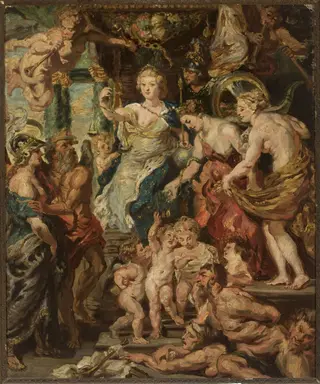 Apotheosis of Maria Medici
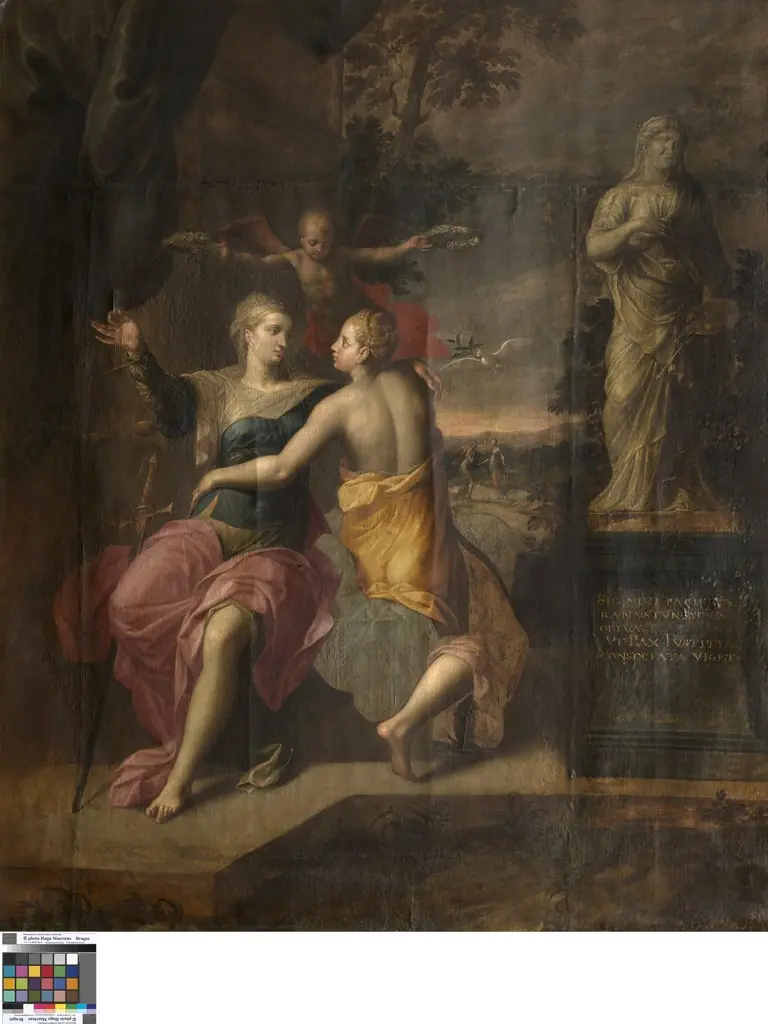 Justitia and Pax
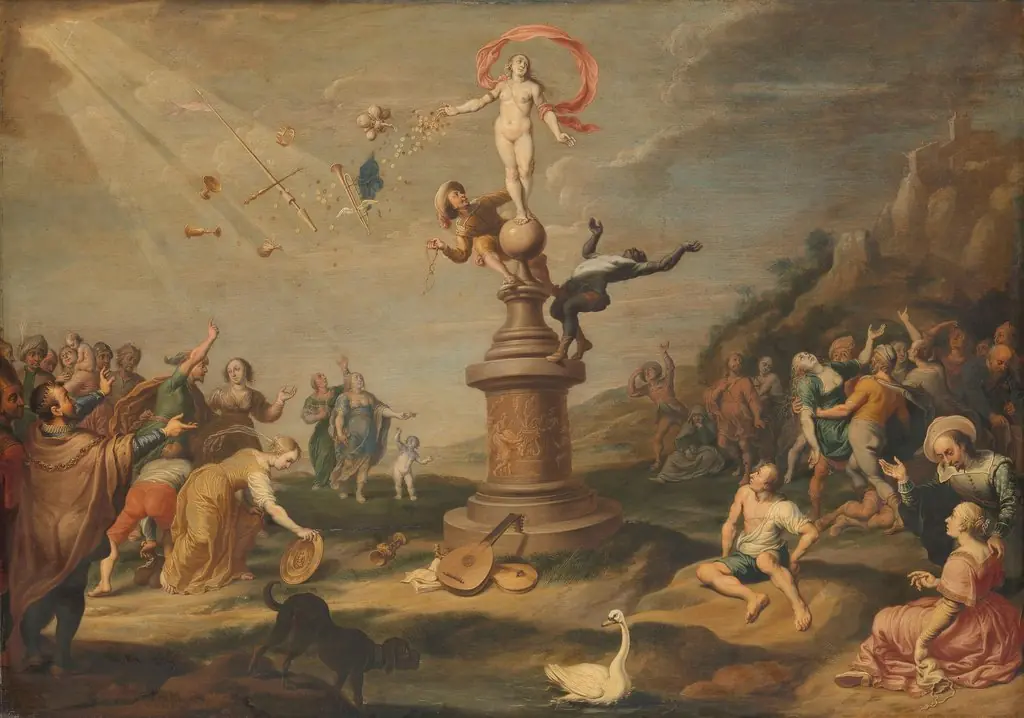 The Goddess Fortuna Bestowing her Gifts
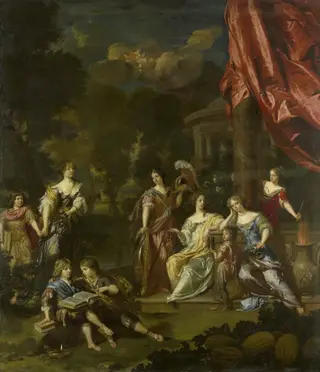 Untitled
 A Sacrifice to Apollo
- British Manufactory; A Sketch