Artwork
Antony Valabrègue
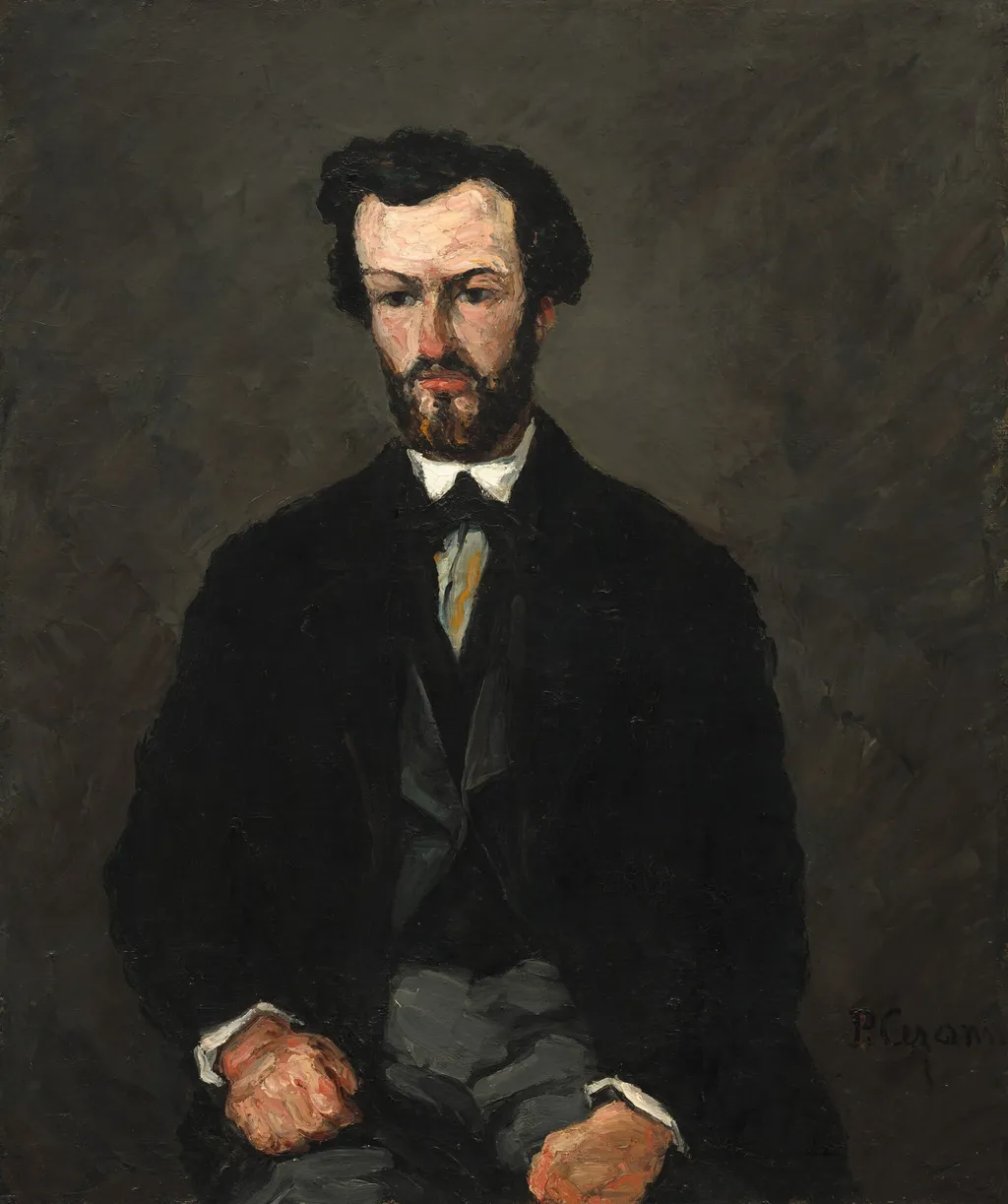
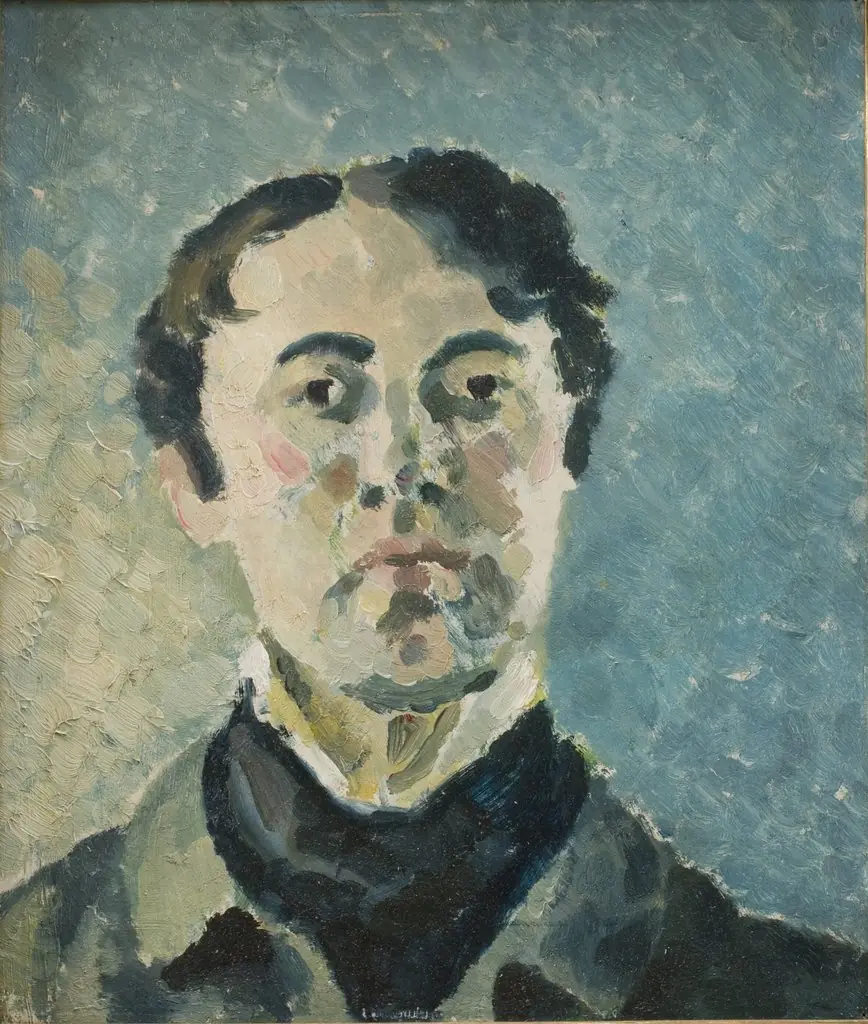
Antony Valabrègue is an oil painting by the Impressionist artist Paul Cézanne. It dates from 1866 and is held in the collection of the National Gallery of Art.
- Inscription
- Inscribed:lower right: P.Cezanne
About this work
Paul Cezanne painted his friend Antony Valabregue in 1866, seated and facing forward in plain clothes with a calm expression. The handling is direct and unfussy, a straightforward likeness of someone the painter knew well.
Subject & Meaning
Catalogued as a portrait genre work, its sole subject is Valabrègue himself, with the sitter serving as the focal point of the composition.
The painting is a portrait of Antony Valabrègue, executed by Paul Cézanne in 1866 in oil on canvas. Catalogued as a portrait genre work, its sole subject is Valabrègue himself, with the sitter serving as the focal point of the composition. Beyond this straightforward identification, the available sources do not elaborate on specific iconographic motifs, symbolic attributes, or allegorical content within the image, nor do they discuss what the work is intended to represent or mean.
The documented record treats the canvas strictly as a likeness of its named sitter rather than as a piece carrying identifiable emblematic or narrative symbolism.
History & Provenance
Paul Cézanne executed this oil portrait of Antony Valabrègue in 1866. The work entered the Parisian art market through dealer Ambroise Vollard, who sold it to Breysse in March 1901 before reacquiring it in 1904. In 1911, Vollard facilitated the sale via Bernheim-Jeune to collector Auguste Pellerin.
Upon Auguste's death, the painting passed to his son, Jean-Victor Pellerin, remaining in the family collection until at least 1946. By 1947, the piece was held by Wildenstein & Co., which lent it for exhibition. The gallery subsequently sold the work to Paul Mellon in 1966. Mellon donated the portrait to the National Gallery of Art in Washington, D.C., in 1970.
The painting entered the collection of Ambroise Vollard in Paris before being sold on 26 March 1901 to Breysse, returning to Vollard in 1904, and passing in 1911 through Bernheim-Jeune to Auguste Pellerin in Paris. It remained with the Pellerin family, inherited by Jean-Victor Pellerin, until at least 1946. It subsequently surfaced in a private collection in Zürich and was handled by Wildenstein & Co. in London, New York, and Paris by 1947, when it was lent to an exhibition.
Paul Mellon of Upperville, Virginia, acquired it in 1966 and gave it to the National Gallery of Art in Washington, D.C., in 1970, where it remains today. The work's documented exhibition history includes the 1947 Wildenstein loan and the touring show Paris 1863 – 1874: Revolution in der Kunst.
Overview
Antony Valabrègue is an oil-on-canvas portrait painted by Paul Cézanne in 1866. The work depicts the artist's close friend and fellow student from Aix-en-Provence, seated in a wooden chair and facing directly forward. Valabrègue is dressed in dark, modest attire, with his hands resting calmly in his lap, conveying a sense of stillness and introspection.
Executed during Cézanne's early, dark period often referred to as his 'Romantic' or 'Baroque' phase, the painting reflects the heavy chiaroscuro and thick impasto characteristic of the artist's work before his later Impressionist shift. The composition is tightly framed, focusing entirely on the sitter's somber expression and the psychological weight of his presence. This portrait stands as a significant example of Cézanne's dedication to capturing the character of his inner circle during the 1860s, a time when he frequently painted friends and family members to explore form and emotional depth.
The work remains a key document of the artist's development prior to his mature style, highlighting his early commitment to serious, unidealized representation.
Technique & Style
Executed in oil on canvas, Antony Valabrègue exemplifies Cézanne's early stylistic tendencies. The artist employs a straightforward application of paint to render the figure, focusing on the sitter's posture and gaze. The composition is direct, placing Valabrègue centrally and emphasizing his steady, forward-looking presence.
This approach foreshadows Cézanne's later explorations into form and structure, even in this relatively early and unadorned work.
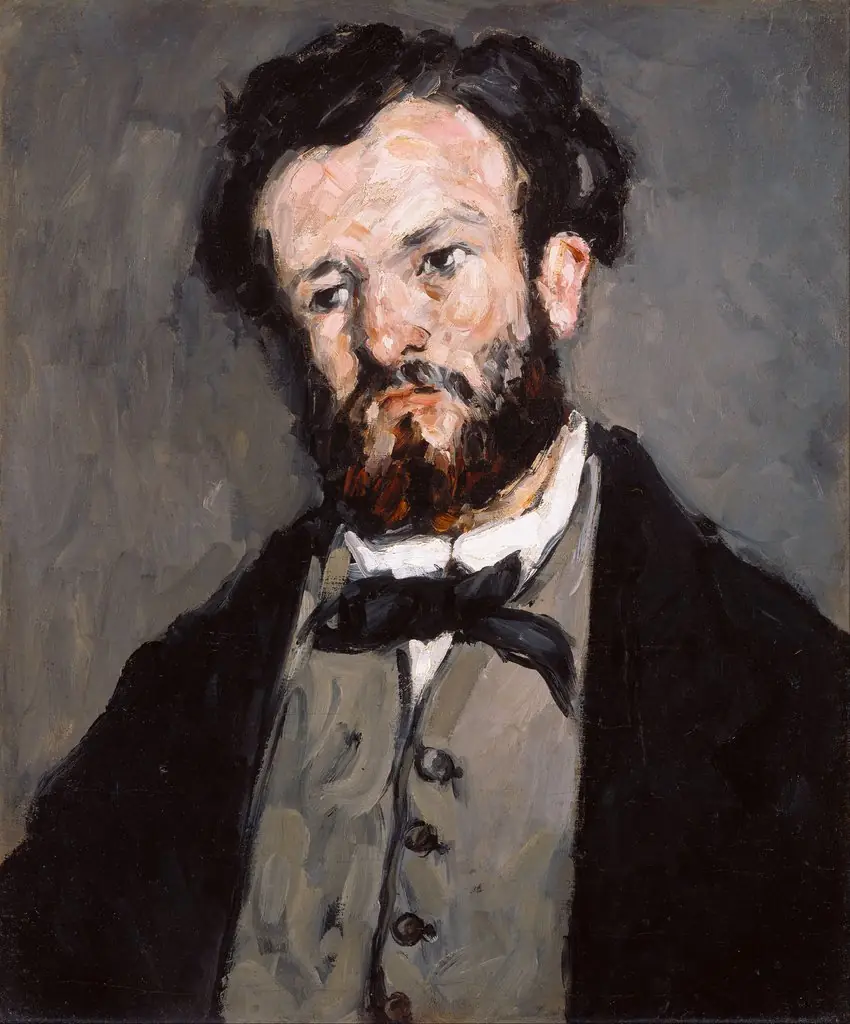
Own this work as a print
Artist & collection

Artist
Paul Cézanne ( say-ZAN, UK also siz-AN, US also say-ZAHN; French: ; Occitan: Pau Cesana; 19 January 1839 – 22 October 1906) was a French Post-Impressionist painter whose work introduced new modes of representation,…

 Harlequin
 The Card Players
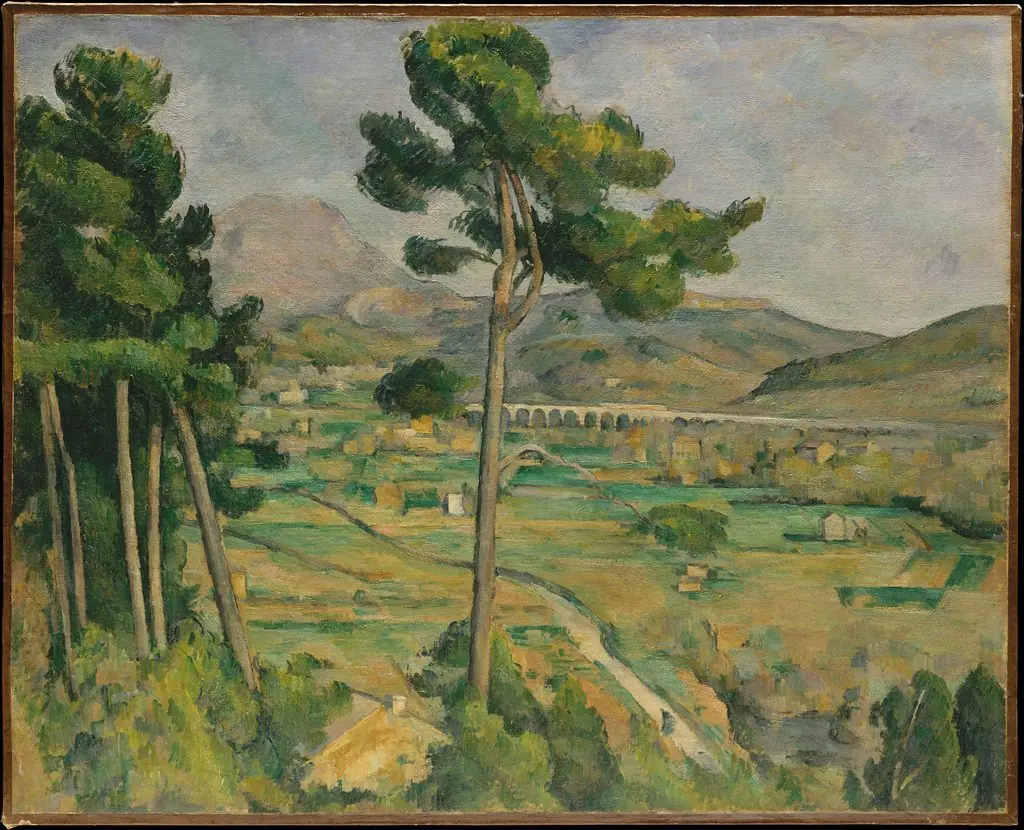 Mont Sainte-Victoire and the Viaduct of the Arc River Valley
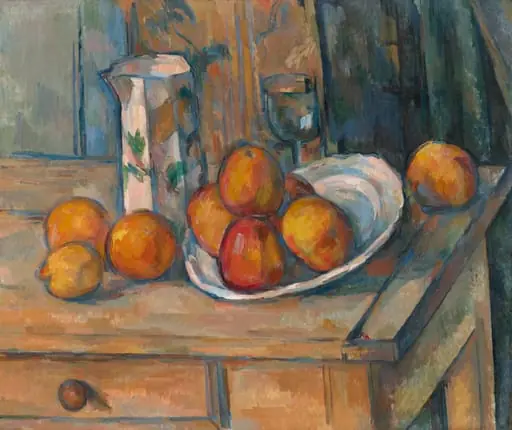 Still Life with Milk Jug and Fruit
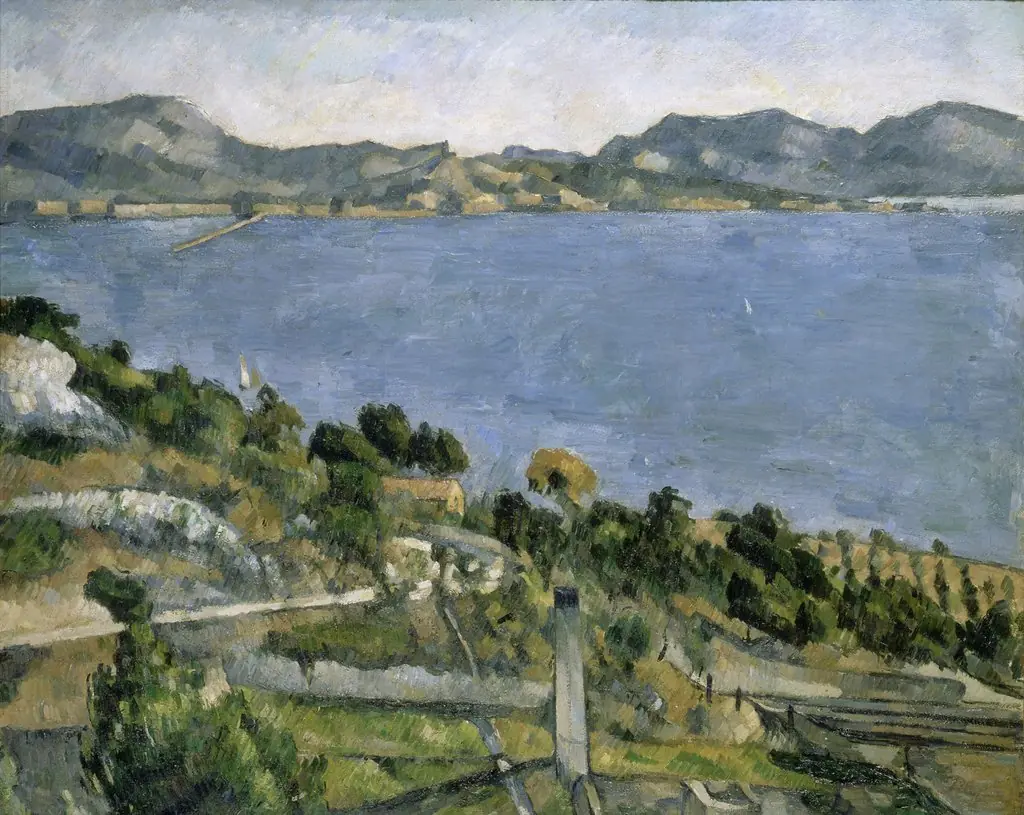 Le Golfe de Marseille vu de l'Estaque (The Gulf of Marseille Seen from L'Estaque)
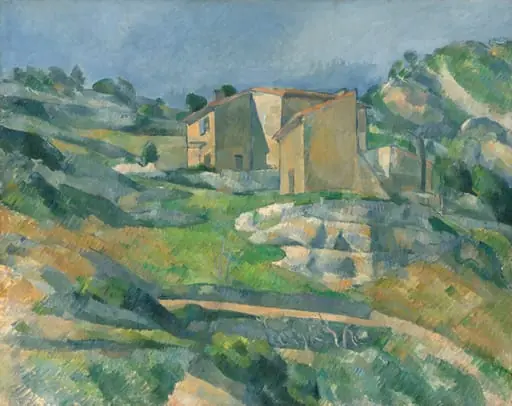 Houses in Provence: The Riaux Valley near L'Estaque
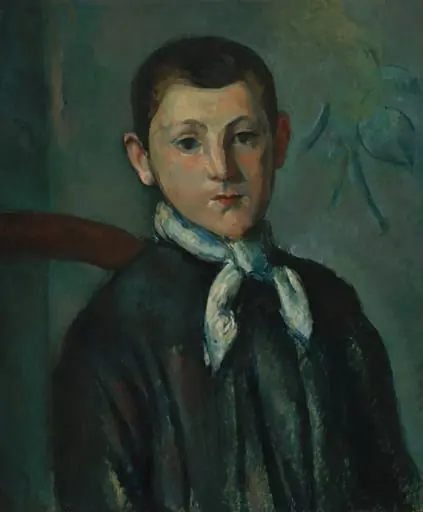 Louis Guillaume
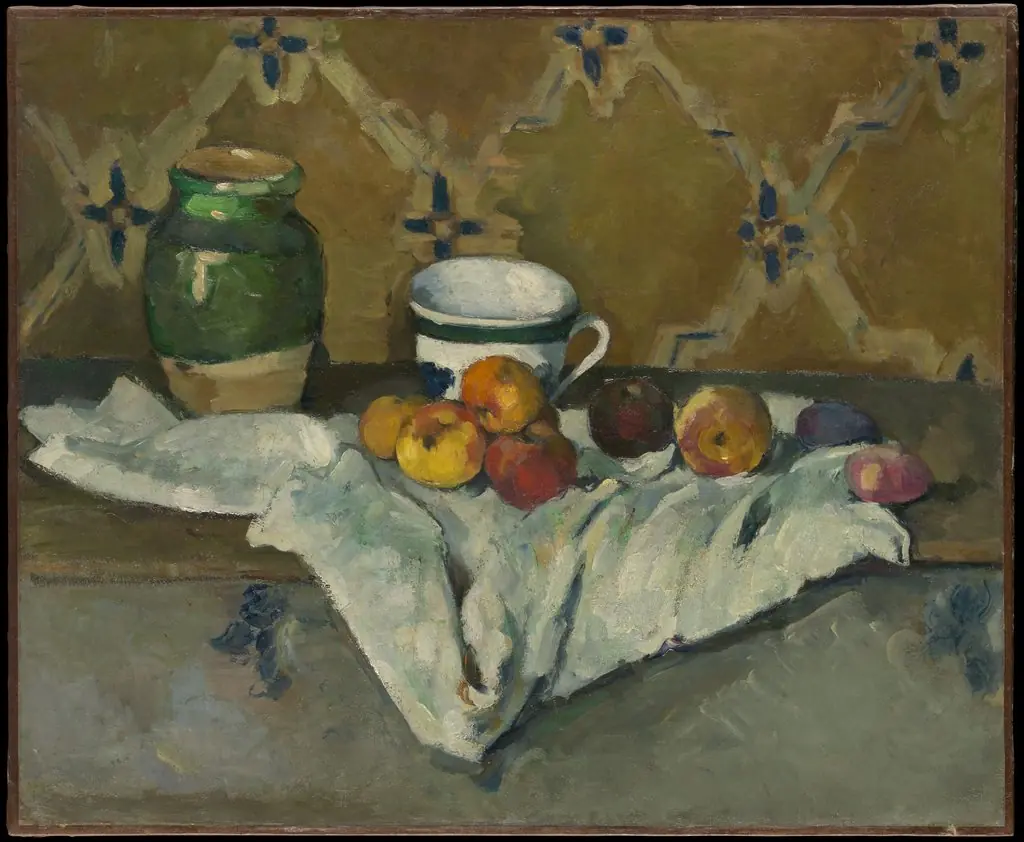 Still Life with Jar, Cup, and Apples
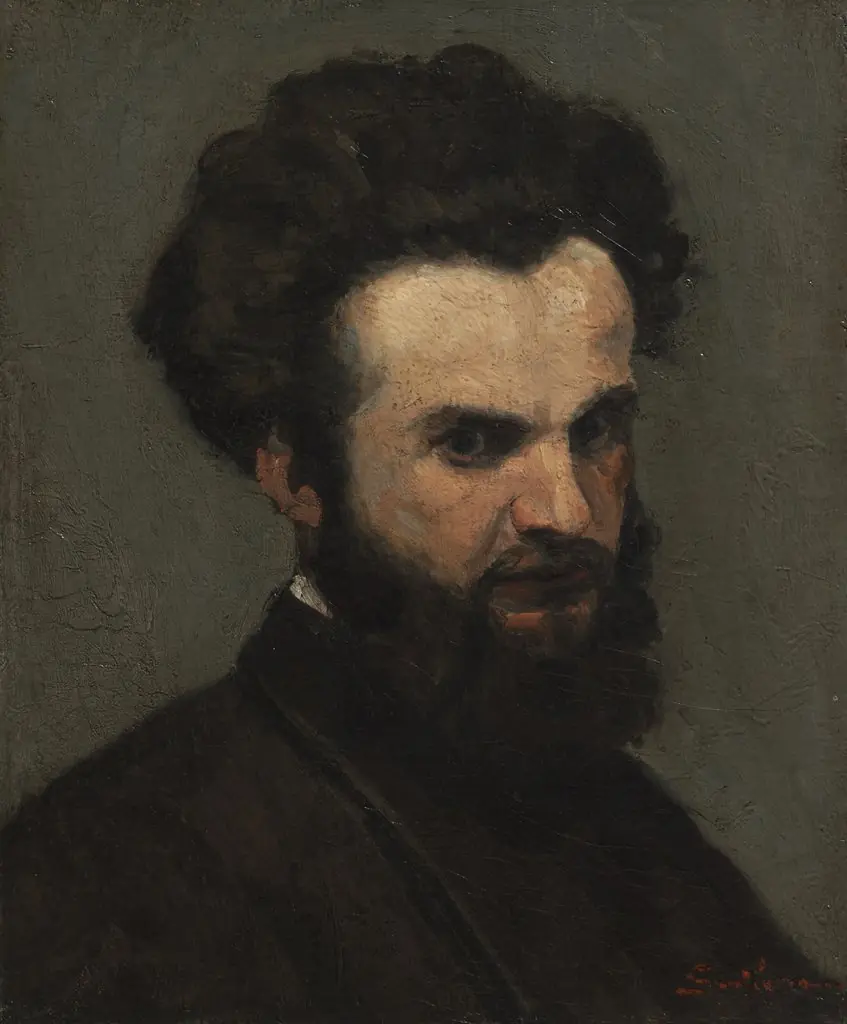 Self-Portrait
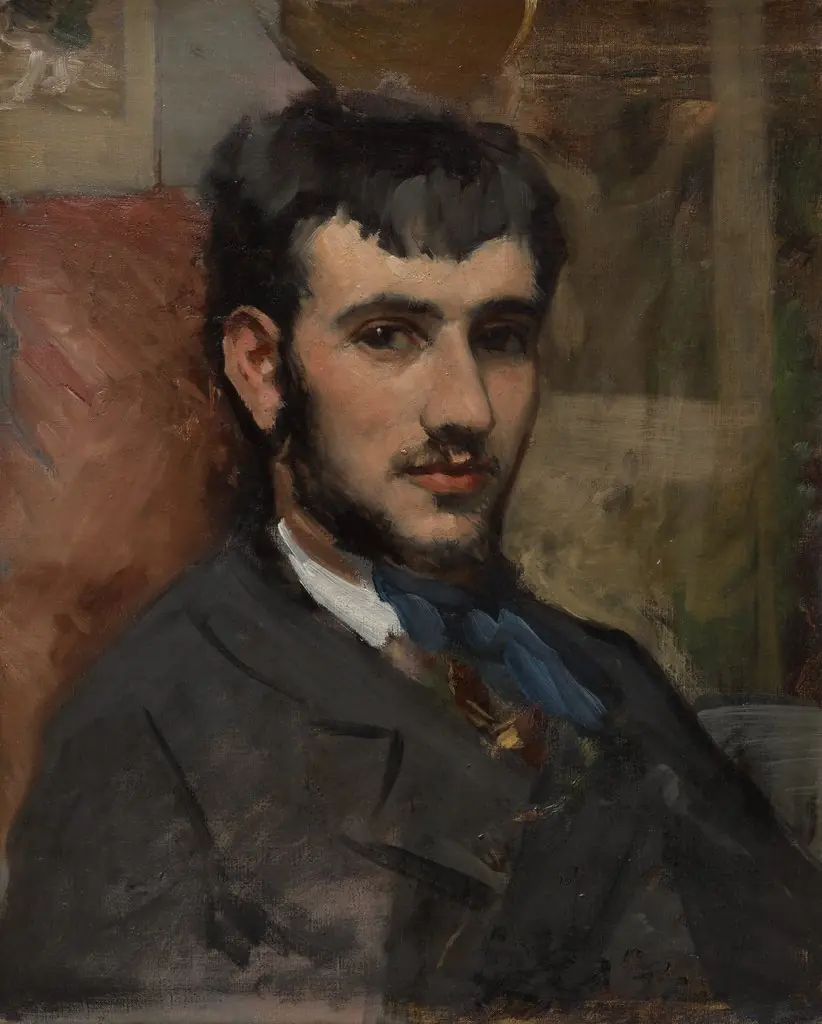 Portrait of Renoir
 Portret van de beeldhouwer Pier Pander (1864-1919)
 The Gardener Vallier
 Self-Portrait, Aged 21
 Portrait of Artur Gruszecki, sketch
 Hippolyte Lavoignat
 Portrait of Monsieur Rouland
 Male Portrait – two-sided painting
 Portrait of Béni Ferenczy
 Self-Portrait
- Portrait of Anthony Valabrègue