Artwork
Man with Pipe
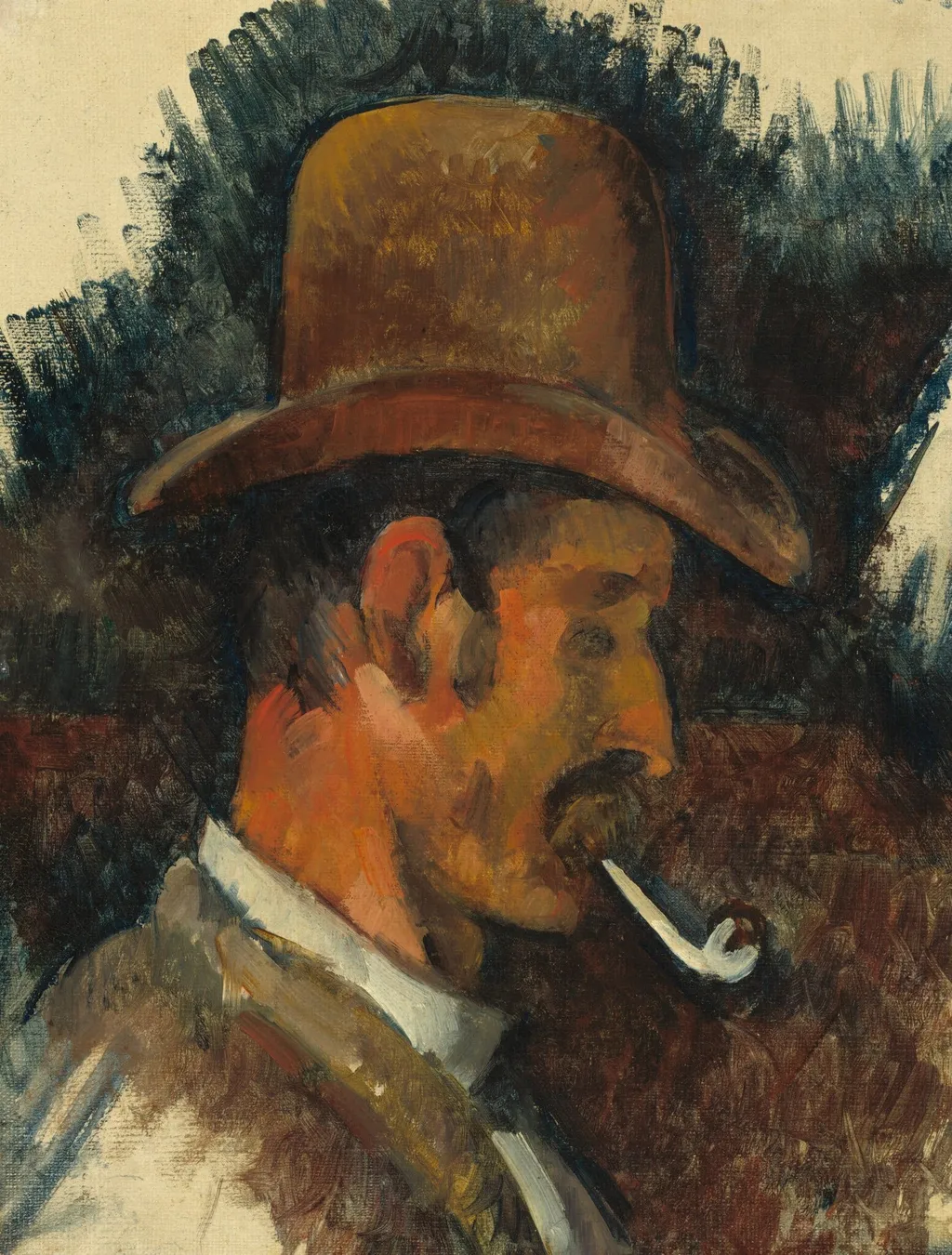
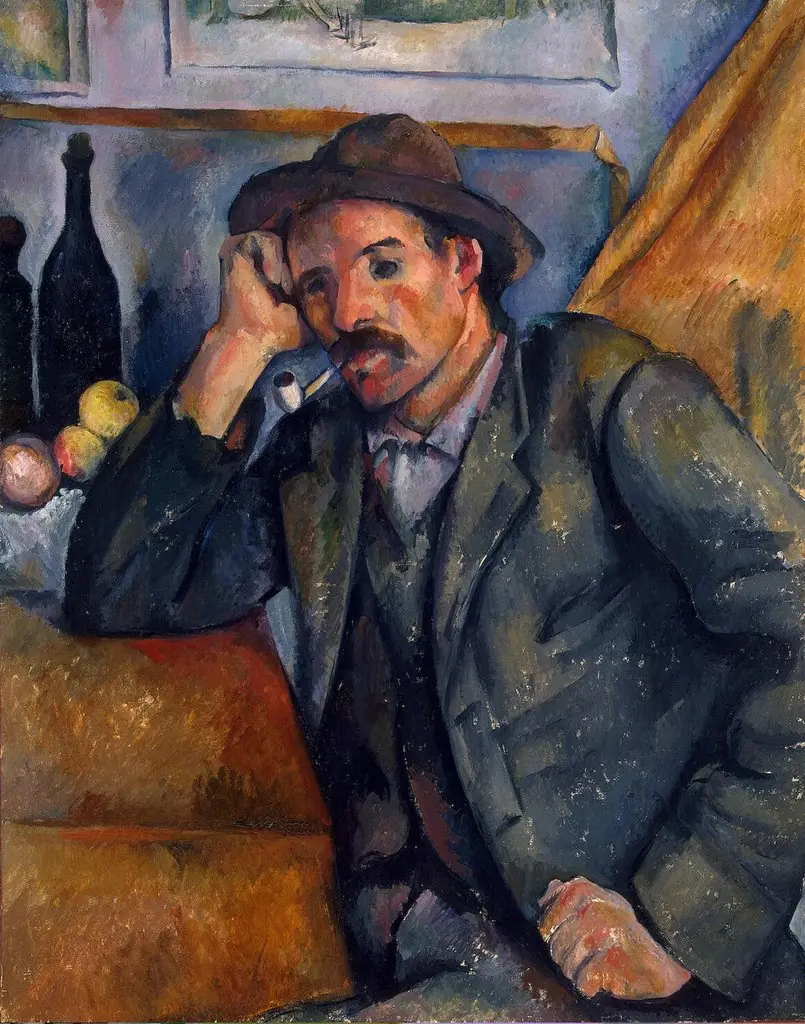
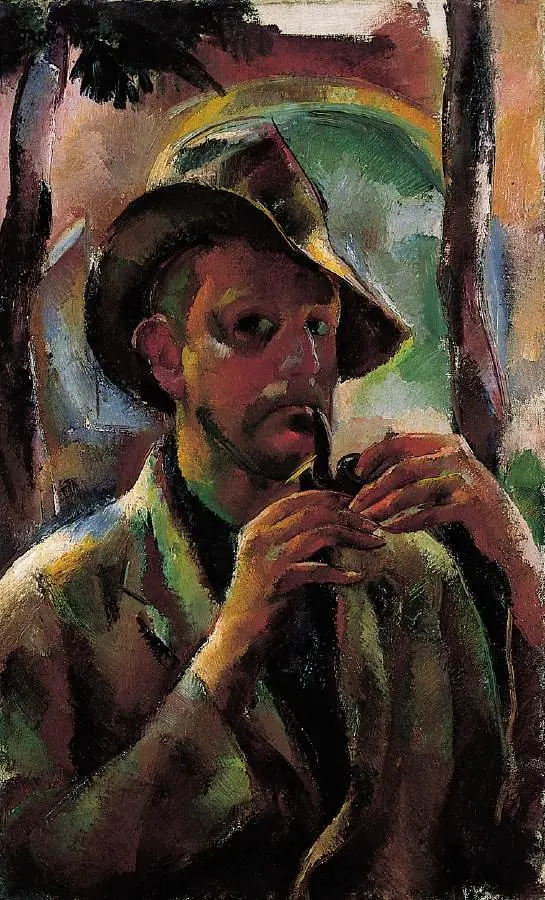
Man with Pipe is an oil painting by the Impressionist artist Paul Cézanne. It dates from 1894 and is held in the collection of the National Gallery of Art.
About this work
Technique & Style
The work is executed in oil paint on a plain-weave canvas support measuring 26.
The work is executed in oil paint on a plain-weave canvas support measuring 26.1 cm in height and 20.2 cm in width.
Handling is characterized by Cézanne’s distinctive constructive brushwork, with discrete, hatched strokes that model the sitter’s features and pipe bowl through modulated tonal shifts rather than linear definition. The palette remains subdued, anchored by earthy greens, ochres, and a muted blue, while the background is treated as a chromatic field that recedes through cooler hues. The composition’s spatial structure is flattened yet tightly organized, aligning the figure’s gaze and the pipe’s vertical axis to stabilize the pictorial field.
History & Provenance
Paul Cézanne created the oil-on-canvas portrait Man with Pipe in 1892. The work was first acquired in 1899 from the artist by the Paris dealer Ambroise Vollard, who recorded the transaction in stockbook number 3780. Vollard sold the painting to painter Georges Florentin Linaret in 1901 but repurchased it in 1904.
Subsequent ownership likely included Paul Guillaume and the dealer Laroche, before passing to Paul Rosenberg and Co. The collection of Gertrude Stein in Paris also held the piece. In June 1930, Marie N. Harriman and W. Averell Harriman acquired the painting through the Marie Harriman Gallery in New York.
It remained with the W. Averell Harriman Foundation until being gifted to the National Gallery of Art in Washington, D.C., in 1972.
Context
Man with Pipe, painted in 1892, represents Cezanne’s late portraiture in which he rendered subjects with simplified geometric forms and a focus on structural volume. The oil on canvas measures 26.1 × 20.2 cm and was classified as a portrait within his oeuvre. After its initial sale to Ambroise Vollard in 1899, the work passed through several private owners, including Gertrude Stein, before being acquired by the National Gallery of Art in 1972. Its presence in the Harriman Gallery collection underscores scholarly recognition of Cezanne’s influence on modern portraiture.
Overview
Paul Cézanne's 1894 oil on canvas, Man with Pipe, presents a portrait study. The painting depicts a solitary male figure, distinguished by his prominent hat and a pipe held in his mouth. This work exemplifies Cézanne's distinctive approach to portraiture, where the subject's presence is conveyed through a robust application of paint rather than smooth, idealized forms. It reflects his ongoing exploration of form and structure within the human figure.
Subject & Meaning
The sitter, a man adorned with a substantial brown hat and a white scarf, is captured in a moment of quiet contemplation, a pipe held to his lips. Cézanne frequently depicted local figures and laborers from his native Provence, often returning to the same models. This particular portrayal emphasizes the man's presence through his posture and the directness of his gaze, even as the artist prioritizes the structural elements of the composition over detailed facial rendering.
Own this work as a print
Artist & collection

Artist
Paul Cézanne ( say-ZAN, UK also siz-AN, US also say-ZAHN; French: ; Occitan: Pau Cesana; 19 January 1839 – 22 October 1906) was a French Post-Impressionist painter whose work introduced new modes of representation,…

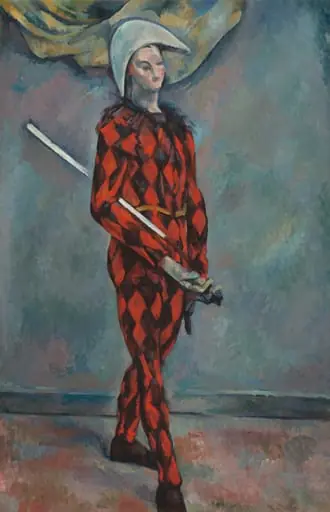 Harlequin
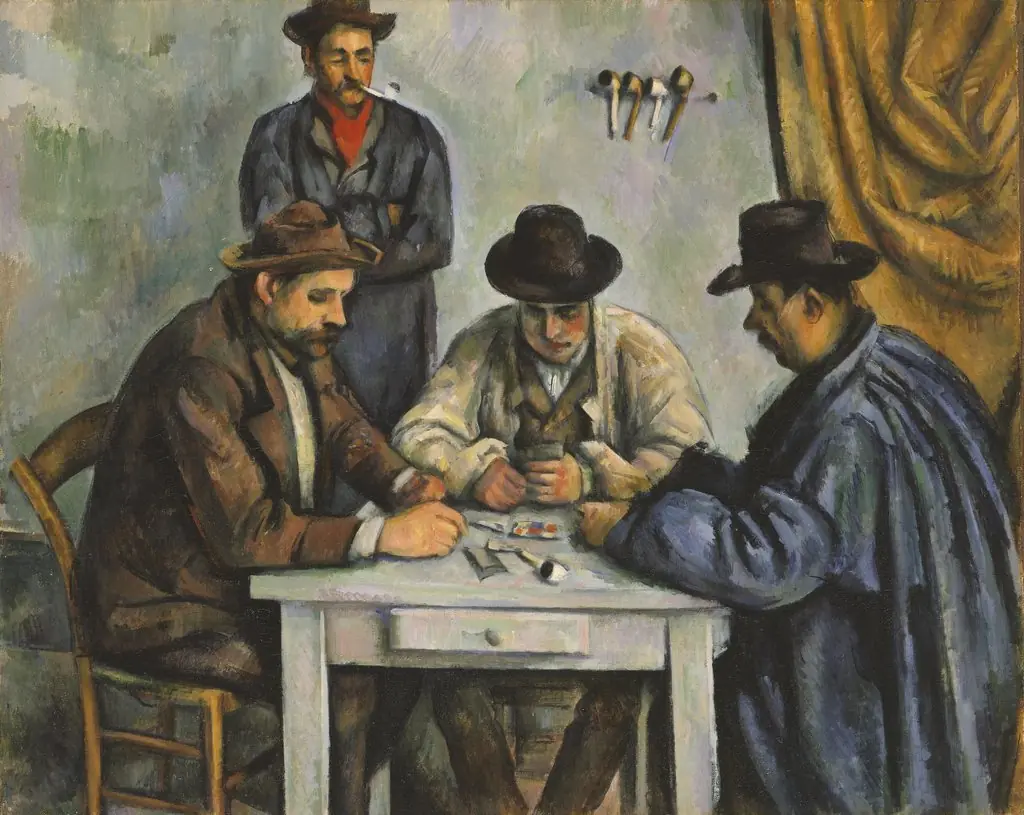 The Card Players
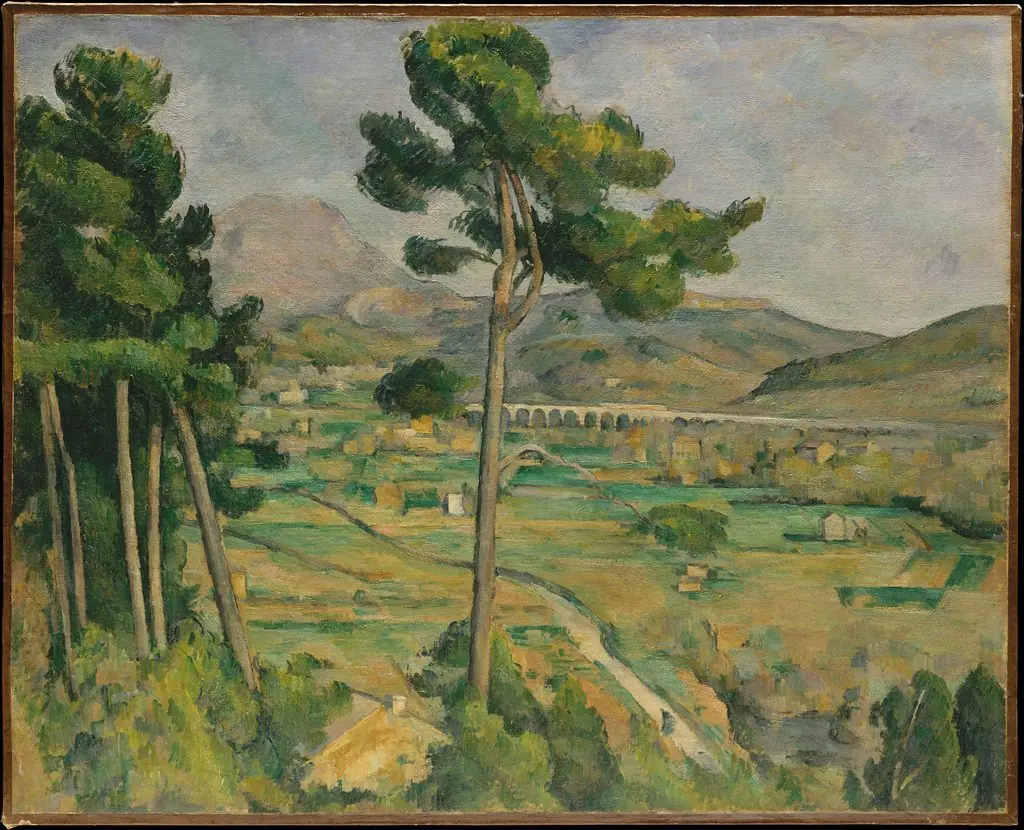 Mont Sainte-Victoire and the Viaduct of the Arc River Valley
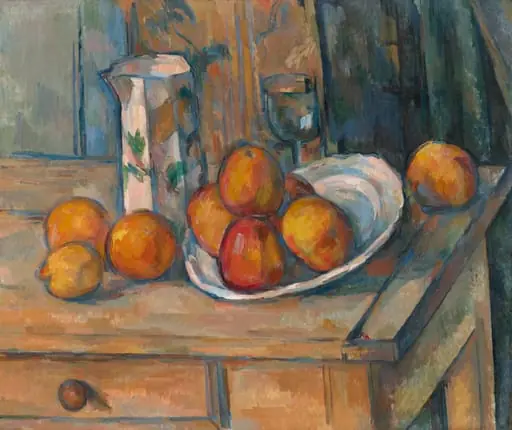 Still Life with Milk Jug and Fruit
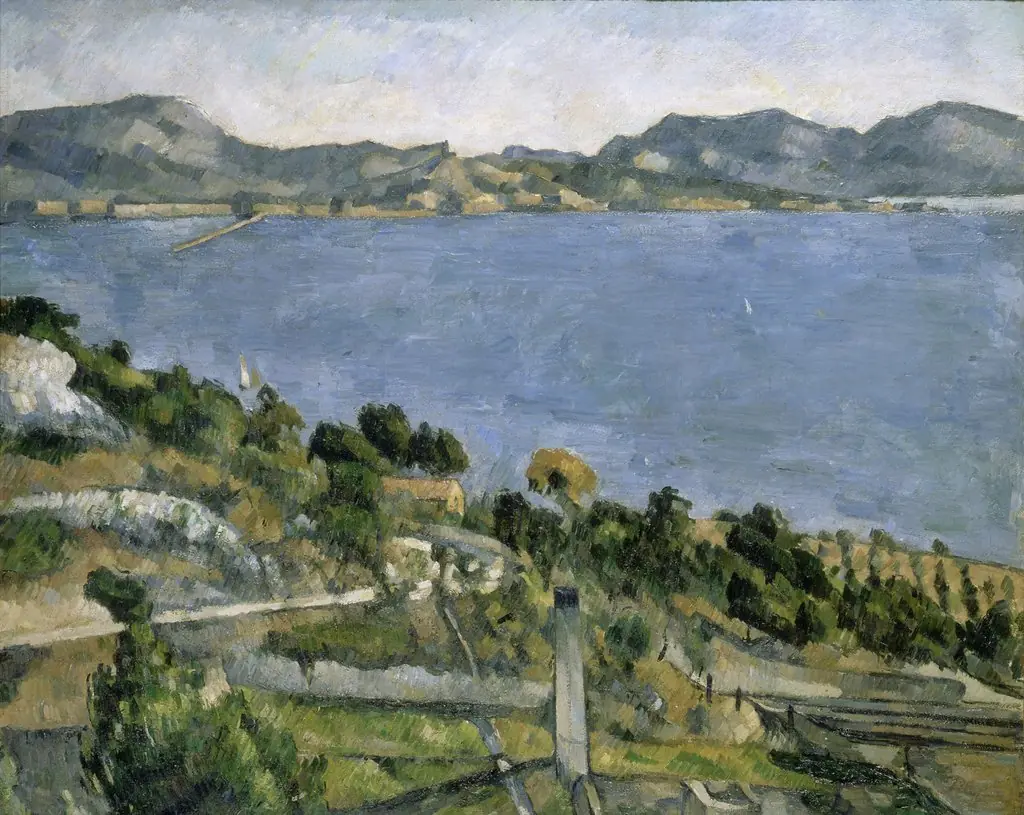 Le Golfe de Marseille vu de l'Estaque (The Gulf of Marseille Seen from L'Estaque)
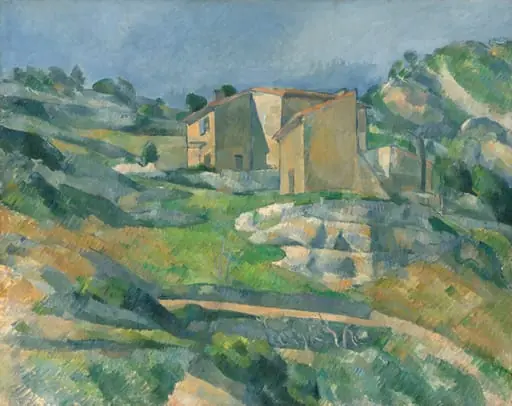 Houses in Provence: The Riaux Valley near L'Estaque
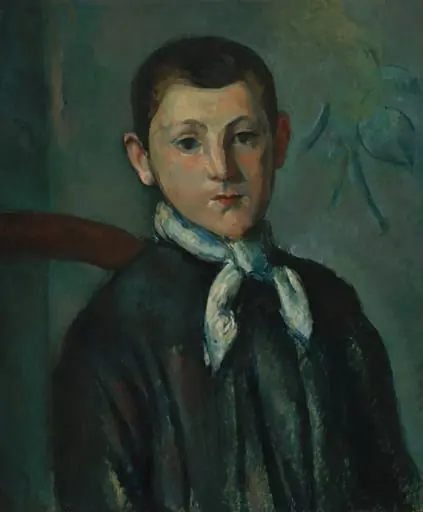 Louis Guillaume
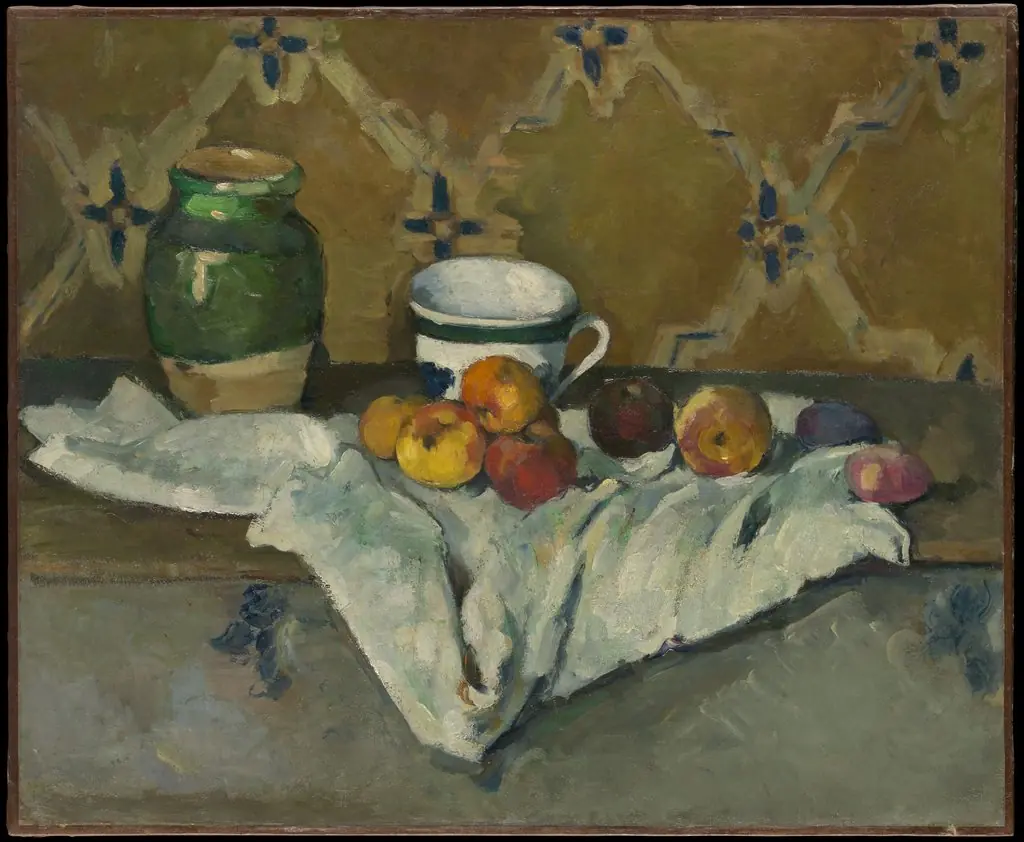 Still Life with Jar, Cup, and Apples