Artwork
Flower Beds at Vétheuil
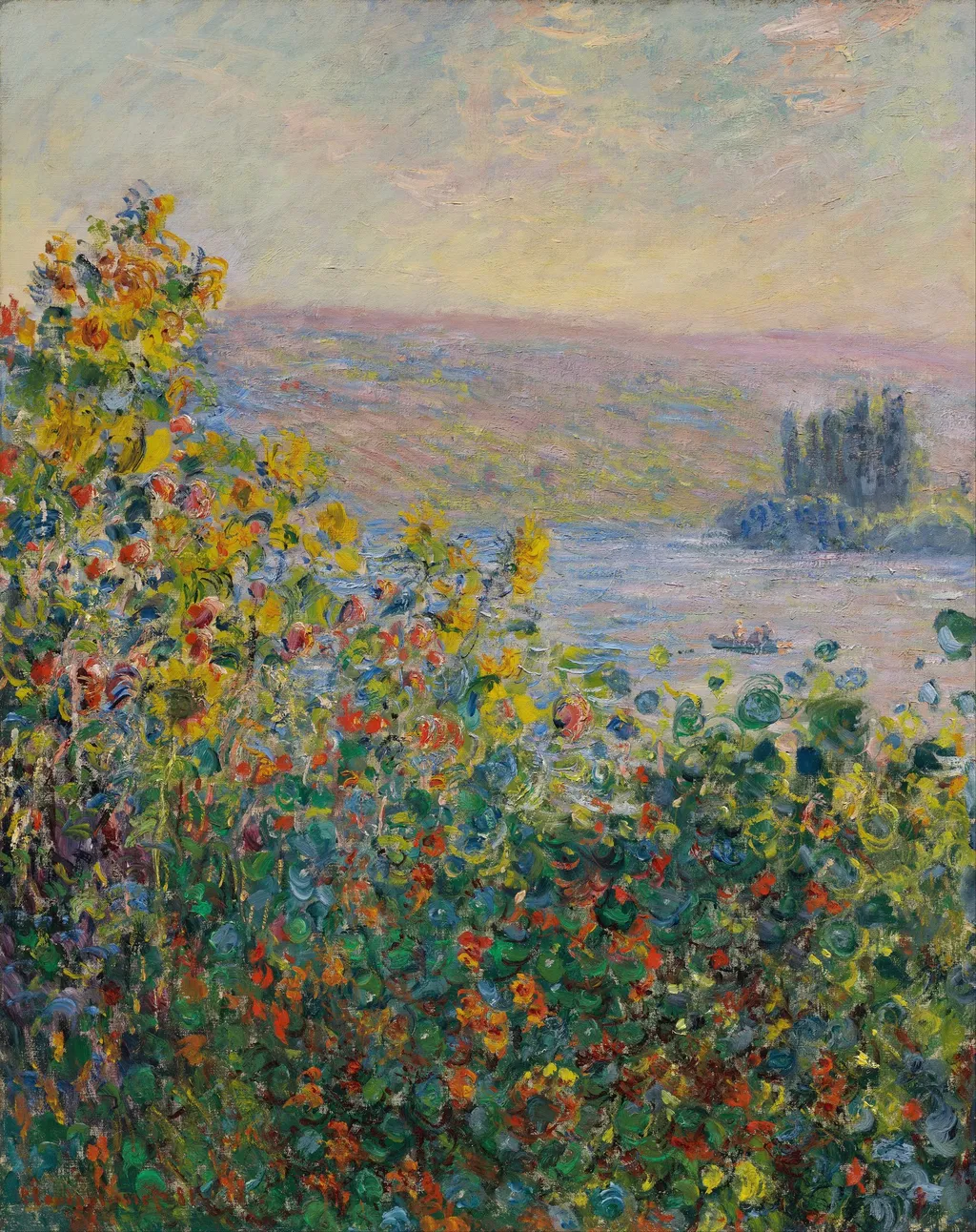
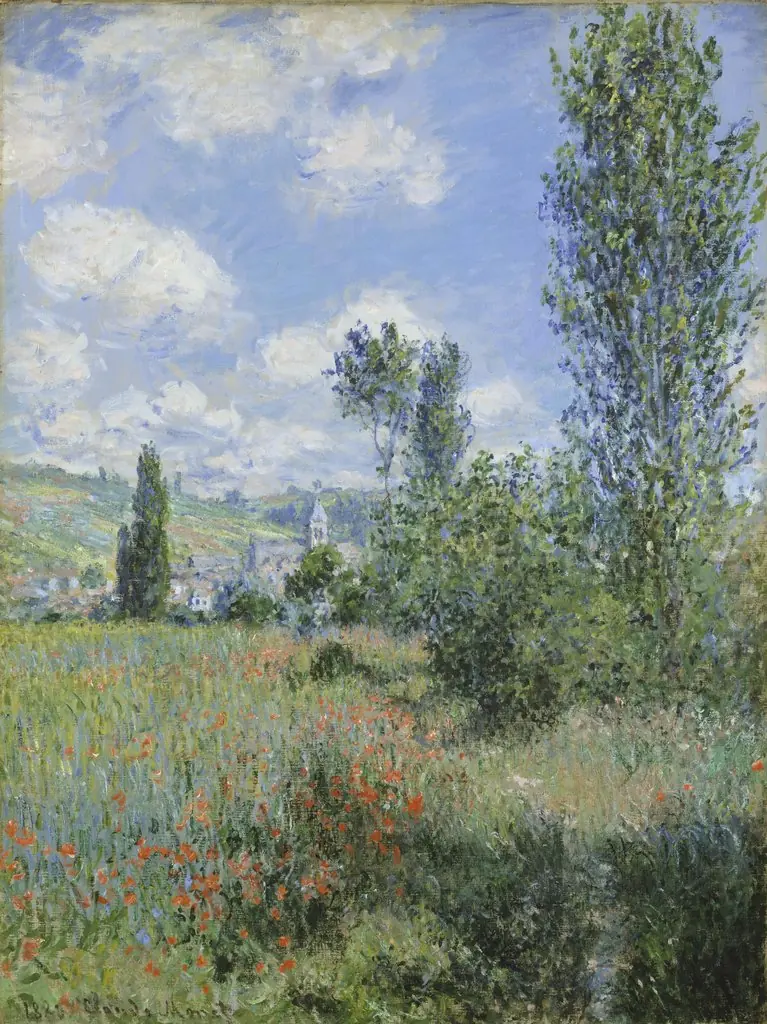
Flower Beds at Vétheuil is an oil painting by the Impressionist artist Claude Monet. It dates from 1891 and is held in the collection of the Museum of Fine Arts Boston.
About this work
Overview
It stands as a significant example of Monet's dedication to painting en plein air and his evolving interest in the decorative potential of the garden landscape.
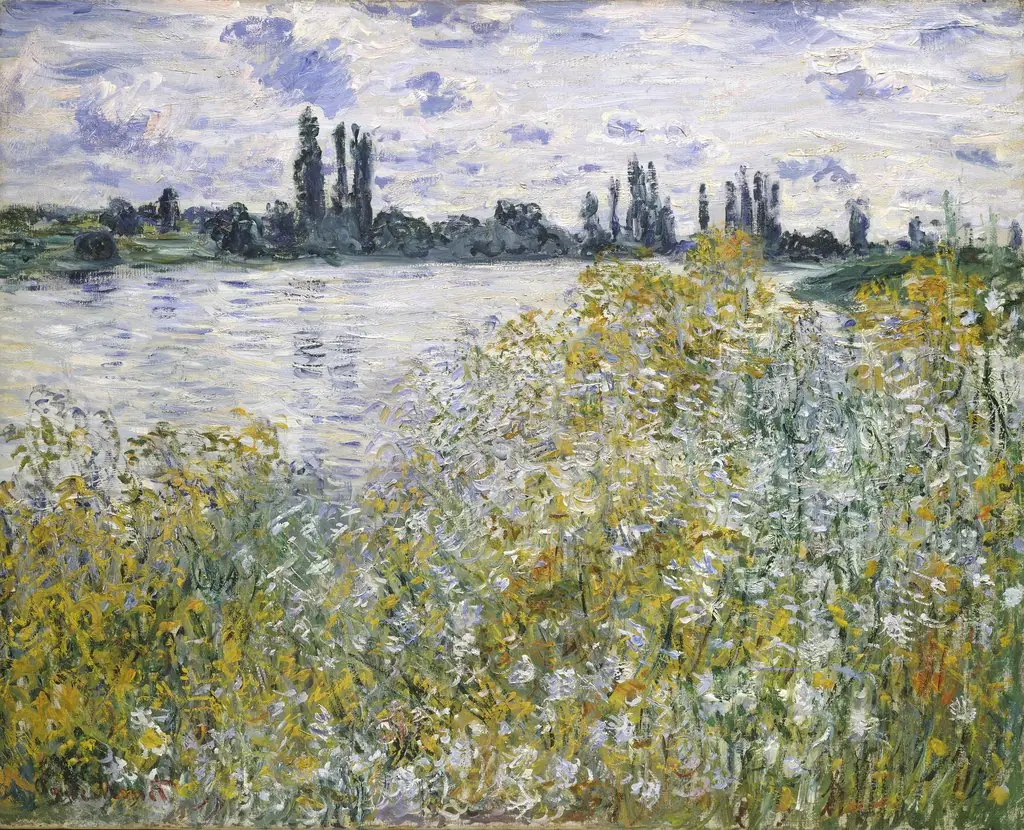
Flower Beds at Vétheuil, painted by Claude Monet in 1891, depicts a vibrant section of the artist's garden in Vétheuil, France. The composition focuses on a dense arrangement of blooming flowers, rendered with the characteristic Impressionist technique of broken color and visible brushstrokes. Dominating the foreground is a lush green bush accented with red blossoms, surrounded by a tapestry of red, yellow, and pink flora that fills the canvas.
In the background, the Seine River flows calmly, bordered by trees on the opposite bank, establishing a sense of depth while maintaining the painting's primary focus on the immediate floral display. Created during Monet's second residence in Vétheuil, this work exemplifies his mature exploration of garden subjects, a theme that would eventually culminate in his famous Water Lilies series. The painting captures the fleeting effects of light and atmosphere on a bright day, prioritizing the sensory experience of color and texture over precise botanical detail.
It stands as a significant example of Monet's dedication to painting en plein air and his evolving interest in the decorative potential of the garden landscape.
Subject & Meaning
The painting captures a cultivated garden near the village of Vétheuil, emphasizing the seasonal burst of blossoms and the tranquil atmosphere of an ordinary summer day. By focusing on the interplay of flower colors and the gentle flow of the nearby river, Monet conveys a sense of harmony between cultivated nature and the surrounding landscape.
Technique & Style
Monet employs his characteristic broken‑color approach, applying numerous small brushstrokes that allow hues to mingle optically. This method softens edges, giving the blossoms and foliage a hazy, almost atmospheric quality. The overall effect is one of immediacy, as the viewer perceives the scene through light and color rather than precise detail.
History & Provenance
Created during Monet’s later period, the canvas was acquired by the Museum of Fine Arts, Boston, where it remains on display. Its provenance traces back to the artist’s own studio, reflecting the continued interest of institutions in preserving Monet’s explorations of garden subjects.
Own this work as a print
Artist & collection
Artist
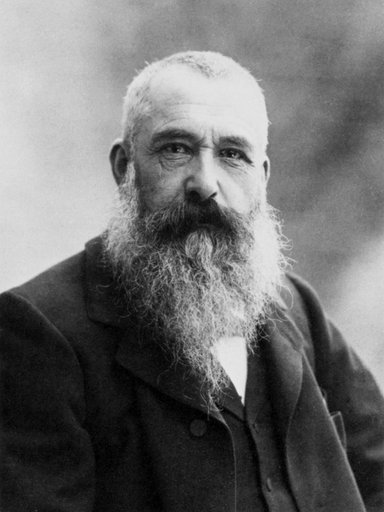
Oscar-Claude Monet was a French painter and founder of Impressionism who is seen as a key precursor to modernism, especially in his attempts to paint nature as he perceived it.