Artwork
The Red Kerchief
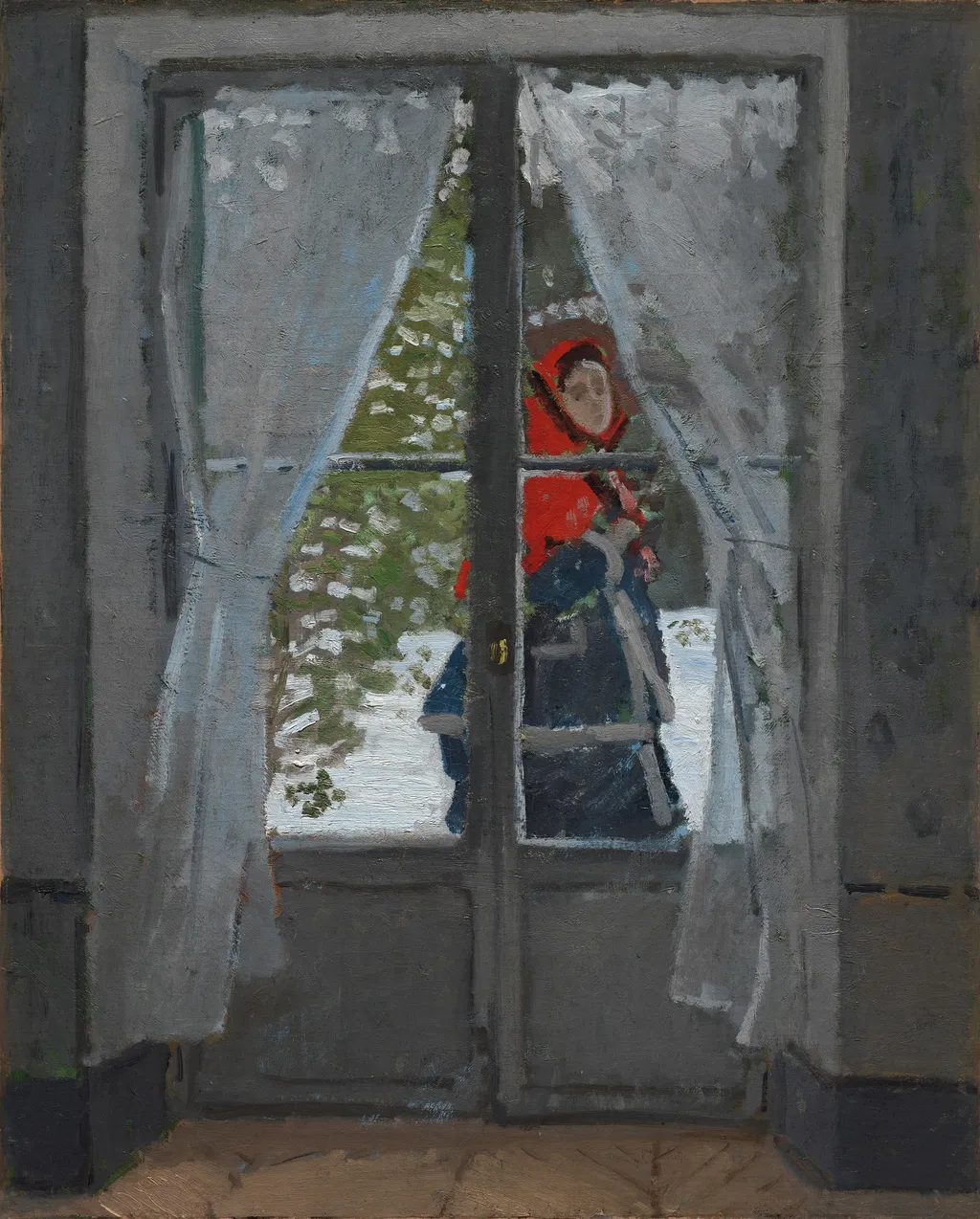
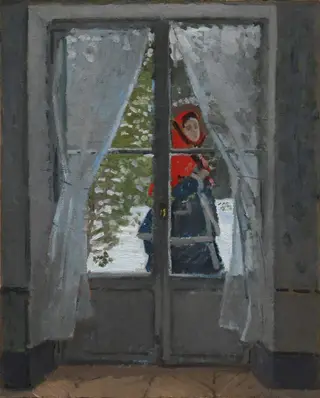
The Red Kerchief is an oil painting by the Impressionist artist Claude Monet. It dates from 1868 and is held in the collection of the Cleveland Museum of Art.
About this work
Subject & Meaning
The bright garment stands out against the muted winter landscape, drawing attention to her figure and the fleeting effects of light on the snowy setting.
The work depicts Camille Monet, the artist’s first wife, seen from inside a glass-paneled door as she steps through snow wearing a vivid red cape. The bright garment stands out against the muted winter landscape, drawing attention to her figure and the fleeting effects of light on the snowy setting. Painted during the late 1860s at Monet’s home in Argenteuil, the scene captures an intimate moment of domestic life while also reflecting the Impressionist interest in capturing transient atmospheric conditions.
The red cape functions as both a visual focal point and a symbolic accent, evoking themes of warmth, domesticity, and the presence of the sitter within a cold, transient moment. Its prominence underscores Monet’s exploration of color and light as compositional and emotional devices in portraiture.
Technique & Style
The Red Kerchief is an oil-on-canvas portrait executed by Claude Monet between roughly 1868 and 1873. The work belongs to the Impressionist movement, depicting Camille Doncieux, Monet's first wife, seen through a double glazed door as she passes outside in the snow wearing a vivid red cape. It is recorded as Monet's only known snowscape that features Camille as the subject.
The painting measures 99.0 cm in height by 79.8 cm in width. It was produced in Argenteuil, France, where Monet lived at the time and where the relative quiet of his domestic setting allowed him to work on the canvas over an extended period. The composition pairs the bright red of the kerchief against the muted whites and greys of the snowy exterior, a contrast characteristic of his Impressionist handling of light and atmosphere.
History & Provenance
The Red Kerchief was painted in 1868 in France shortly after Monet settled in Argenteuil, created as an oil‑on‑canvas portrait of his wife Camille wearing a red head covering; the work is documented as a single‑figure snowscape. Monet produced the piece while the family lived in relative seclusion, making it his only known snowy scene that includes Camille. After its execution the painting passed through the stock of Edward Molyneux, then to the Carstairs Gallery, and was acquired by Leonard C. Hanna Jr., who bequeathed it to the Cleveland Museum of Art in 1958.
The museum has held the work continuously since that gift, tracing its provenance from French origin to American ownership.
The work is held by the Cleveland Museum of Art, Cleveland, Ohio, accessioned as 1958.39 following its bequest by Leonard C. Hanna Jr. in 1958.
It has not been recorded as traveling in special exhibitions in the sources consulted here.
Context
The Red Kerchief occupies a transitional moment in Monet’s oeuvre, aligning with his Argenteuil period (1868–1873) when he balanced domestic subject matter with plein-air experimentation. The work is Monet’s only known snowscape featuring his first wife, Camille, and it consolidates his shift from figure-based scenes to atmospheric, light-inflected landscapes that would define Impressionism. Critics note the painting’s quiet intimacy, achieved through the figure’s oblique placement behind glass, which mediates the scene’s emotional charge and foreshadows later modernist strategies of framing and distance.
Acquired by the Cleveland Museum of Art in 1958 through Leonard C. Hanna’s bequest, the work entered American public collections during a period when Impressionist holdings were expanding, reinforcing its place within the canon of French modernism.
Legacy
The Red Kerchief (1868), an oil portrait of Camille Monet, is recognized as Monet’s only documented snowscape and a representative work of his early Impressionist portraiture. Its presence in the Cleveland Museum of Art since the 1958 bequest of Leonard C. Hanna Jr. has made the work accessible for study and exhibition. The painting’s depiction of the artist’s wife in a red headscarf illustrates intimate domestic subjects that complement Monet’s broader landscape investigations, informing scholarship on his technique and familial motifs.
Overview
Claude Monet's oil painting, The Red Kerchief, dates from approximately 1868–1873. This work captures the artist's first wife, Camille, positioned within a doorway, gazing outward. The scene is set against a snowy backdrop, a characteristic element of this particular period in Monet's oeuvre. The painting exemplifies the artist's developing approach to light and atmosphere during his early Impressionist phase.
Own this work as a print
Artist & collection
Artist
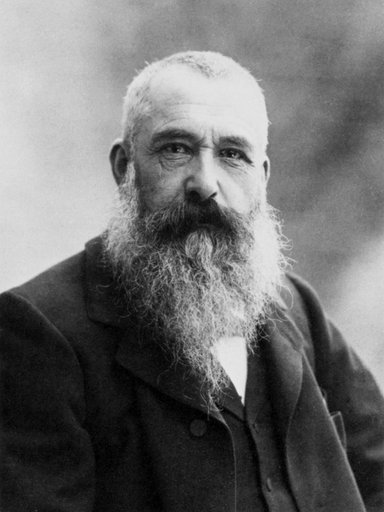
Oscar-Claude Monet was a French painter and founder of Impressionism who is seen as a key precursor to modernism, especially in his attempts to paint nature as he perceived it.