Artwork
Baron Graham
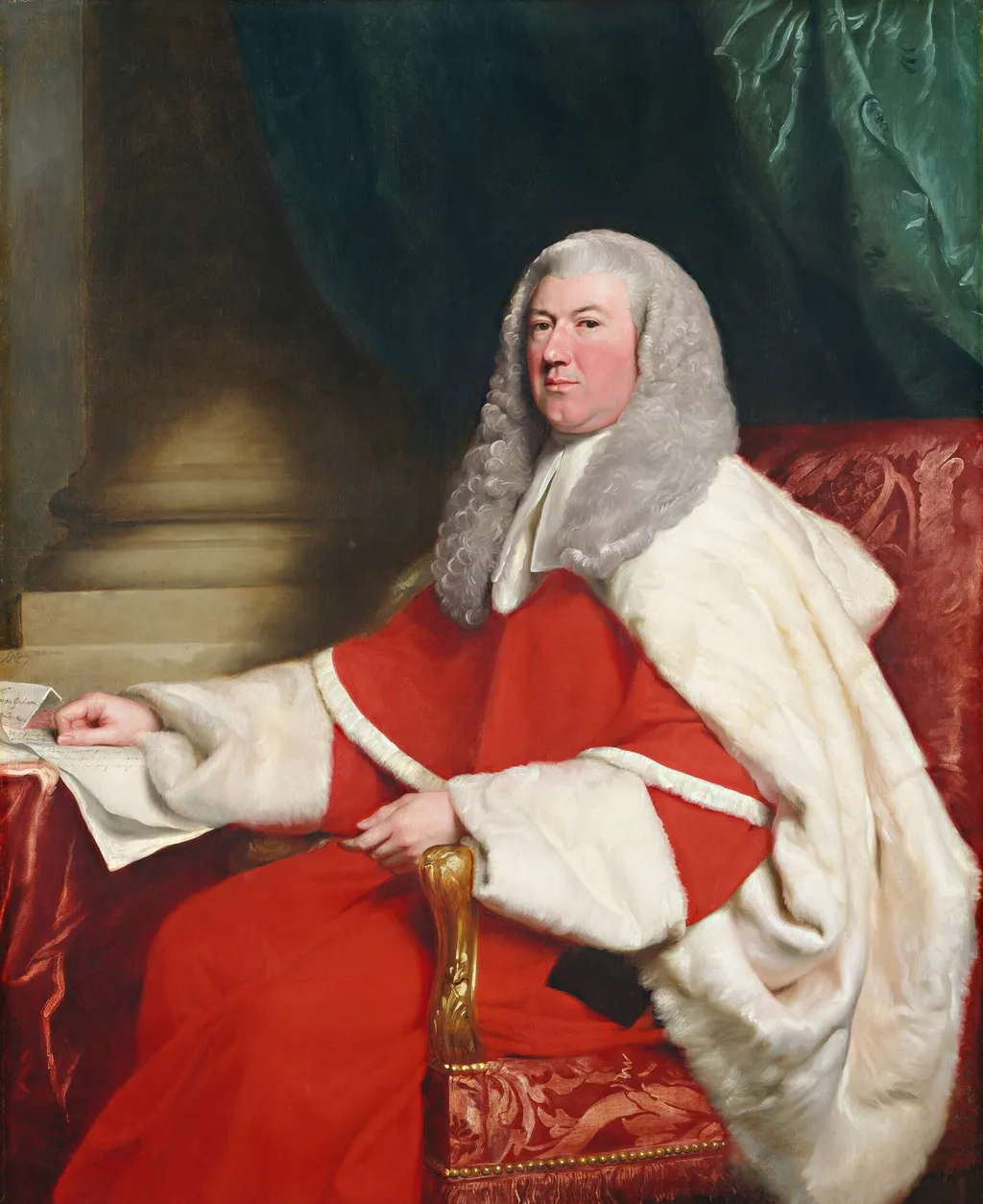
Baron Graham is an oil painting by the American Impressionist artist John Singleton Copley. It dates from 1804 and is held in the collection of the National Gallery of Art.
- Inscription
- Inscribed:center left, on base of column: JSCopley. R.A. pinx
About this work
Technique & Style
The painting's handling reveals careful layering of oil paint, contributing to a rich tonal range and subtle modeling of light across the subject's face.
The work is an oil painting on canvas, measuring 144.8 cm by 118.8 cm, depicting Robert Graham. Its surface exhibits the smooth finish typical of early American portraiture, with fine brushwork defining facial features and clothing. The composition emphasizes formal pose and dignified expression, reflecting neoclassical conventions in portraiture of the period.
The painting's handling reveals careful layering of oil paint, contributing to a rich tonal range and subtle modeling of light across the subject's face. The stylistic qualities align with John Singleton Copley's mature portrait style, characterized by precise detail and psychological depth, while maintaining the sitter's aristocratic presence through controlled brushwork and restrained color palette.
History & Provenance
John Singleton Copley painted this portrait of Robert Graham in 1804. Upon Graham's death, the work was bequeathed to Sir George Henry Smyth, 6th baronet, at Berechurch Hall in Essex. Smyth subsequently left the painting to his grandson and heir, Thomas George Graham White.
Following White's death, the portrait was sold at Christie, Manson and Woods in London on March 23, 1878, where it was purchased by an individual identified as Graves, likely the dealer Henry Graves.
The painting then entered the American branch of the family through Martha Babcock Greene Amory, the artist's granddaughter, in Boston. Ownership passed to her husband, Charles Amory, then to their daughter Susan Greene Amory Dexter, and later to her son Gordon Dexter. After Gordon's death, his widow, Isabella Hunnewell Dexter, retained the work until she gifted it to the National Gallery of Art in 1942.
The painting Baron Graham by John Singleton Copley is held in the collection of the National Gallery of Art in Washington, D.C. The work was accessioned by the museum in 1942 as a gift from Isabella Hunnewell Dexter, the widow of Gordon Dexter. Prior to entering the public collection, the portrait passed through several private owners, including the sitter's descendants and the Amory family in Boston. Its provenance traces back to the sitter, Robert Graham, before moving to Sir George Henry Smyth and later Thomas George Graham White, whose estate sale at Christie, Manson and Woods in London in 1878 saw the work purchased by a dealer identified as "Graves."
Context
John Singleton Copley painted Baron Graham in 1804, a full-length portrait depicting Robert Graham (1744-1836), a prominent English landowner and politician. The work remained in the Graham family for three generations before being sold at Christie, Manson & Woods in London on 23 March 1878 (sale catalogue, no. 25) to the dealer Henry Graves (1806-1892). It entered the collection of Martha Babcock Greene Amory of Boston, a direct descendant of Graham, and remained in her family until its donation to the National Gallery of Art in Washington, D.C., in 1942.
The painting is now housed in the National Gallery of Art's collection, where it is recognized as an important example of early American portraiture within the broader context of transatlantic artistic exchange and the evolution of British portraiture in the late 18th and early 19th centuries.
Scholarly attention to the work has focused on its stylistic synthesis of American and British portrait traditions, with art historians noting its technical mastery and historical significance as a record of elite British society through the lens of an American-born artist who achieved prominence in London. The painting’s provenance reflects complex patterns of inheritance and cross-Atlantic cultural exchange, particularly the transmission of British aristocratic connections to American descendants.
Overview
John Singleton Copley’s 1804 oil on canvas presents Robert Graham, a figure dressed in a vivid red robe and powdered white wig, seated in a darkened interior. The composition centers on Graham holding a document, his posture and attire suggesting a position of authority.
Subject & Meaning
Graham’s attire, red robe, gold staff, and elaborate wig, evokes the ceremonial dress of a judicial or civic official, indicating his role within the legal or governmental sphere. The held paper may reference his duties or a specific appointment, underscoring his public function.
Own this work as a print
Artist & collection

Artist
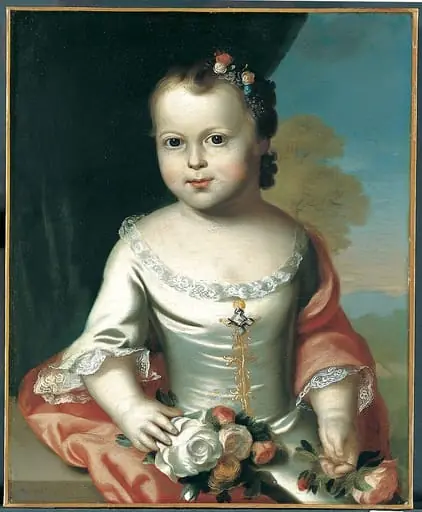
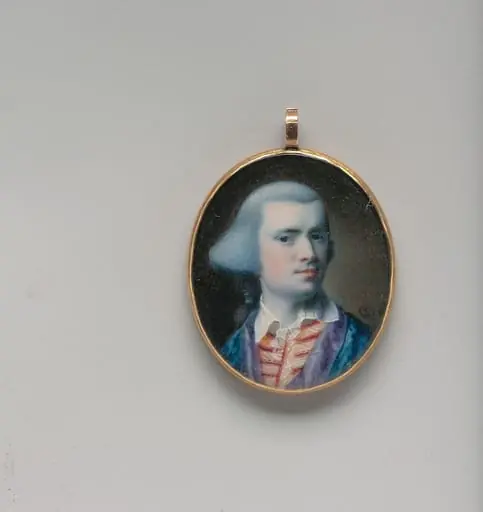
John Singleton Copley (July 3, 1738 – September 9, 1815) was an American-born British painter active in both the Thirteen Colonies and England.

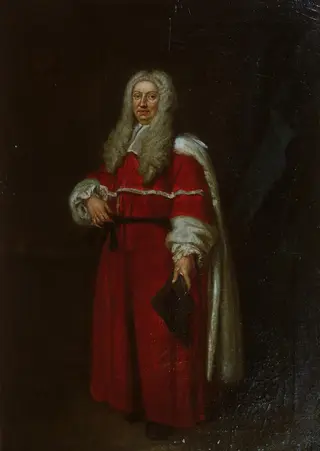
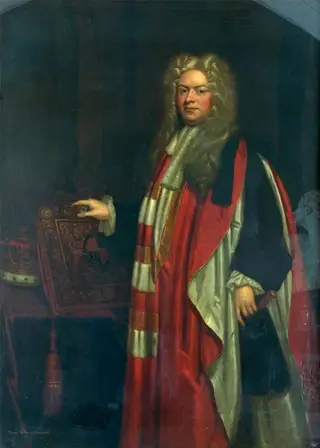 Sir Thomas Parker (1666–1732)
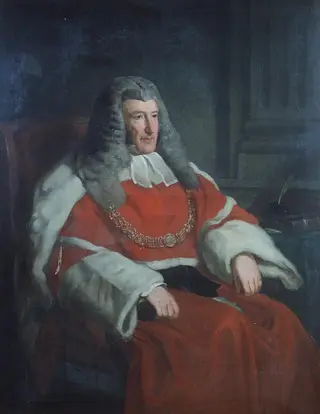 Judge Campbell, Chief Justice of England
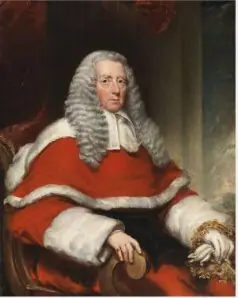 Portrait of Chief Justice Charles Kendal Bushe (1767-1843), in his Robes
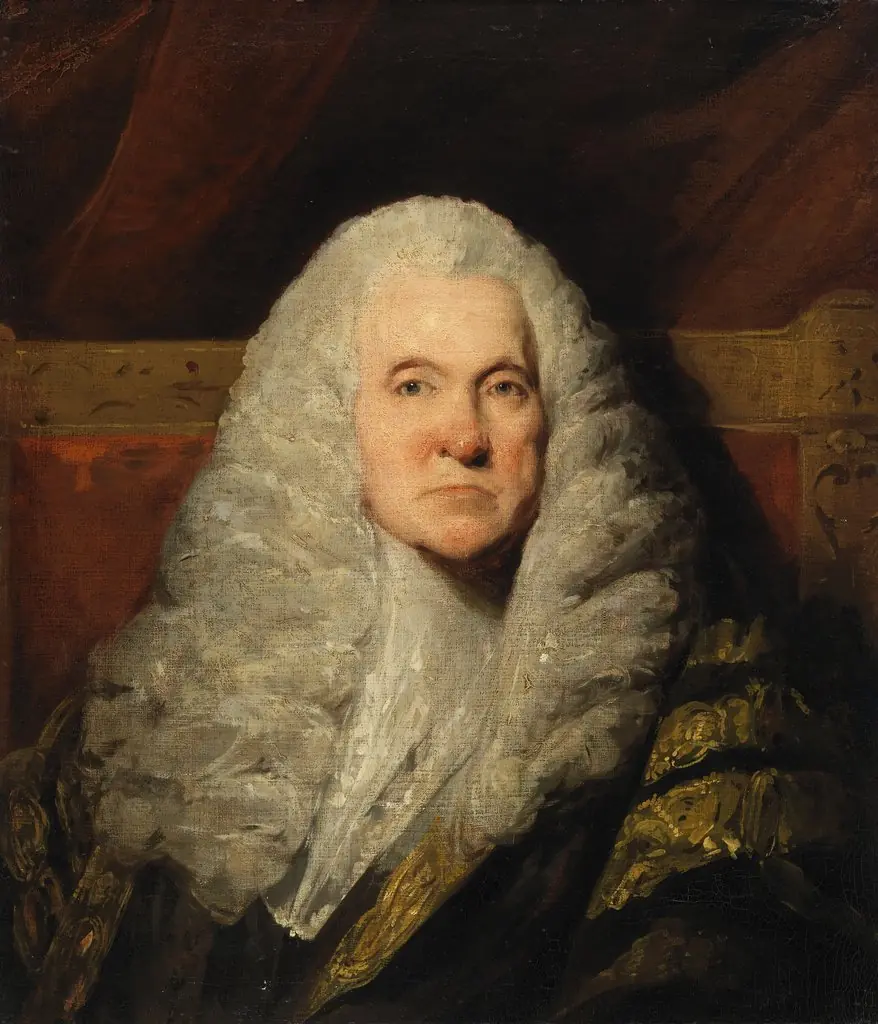 Portrait of James Hewitt, First Viscount Lifford, Lord Chancellor of Ireland (1767-1787)
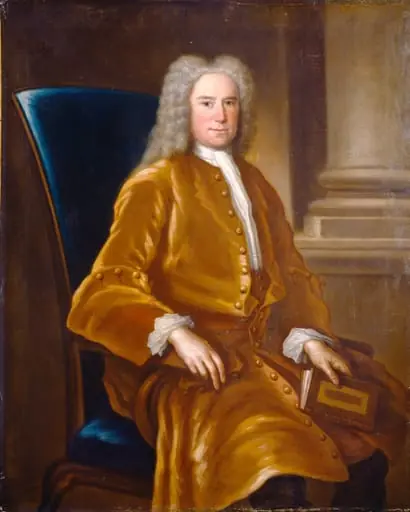 Portrait of a Gentleman
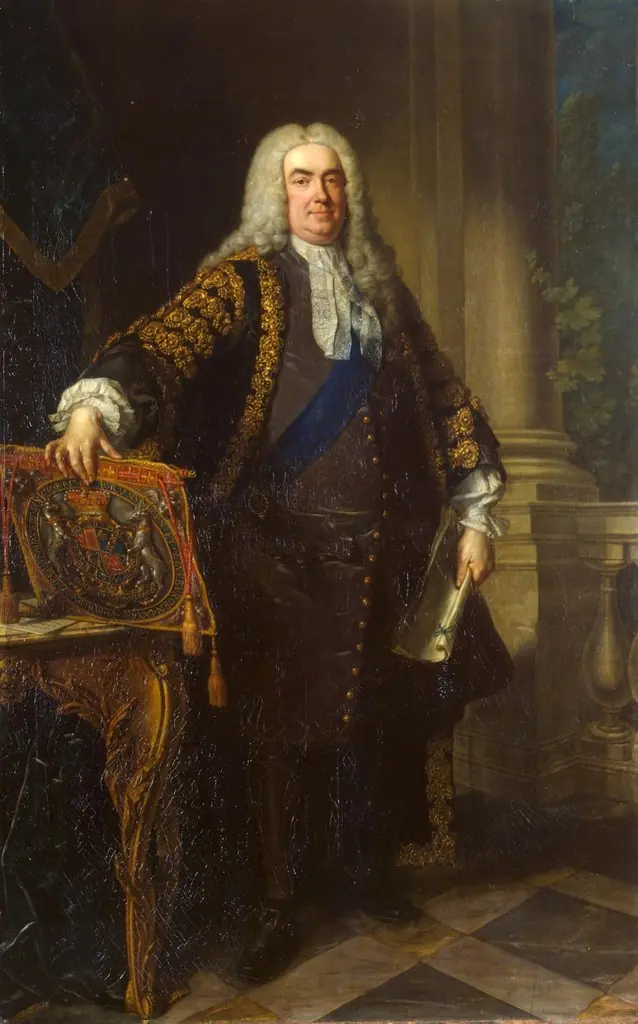 Portrait of Sir Robert Walpole
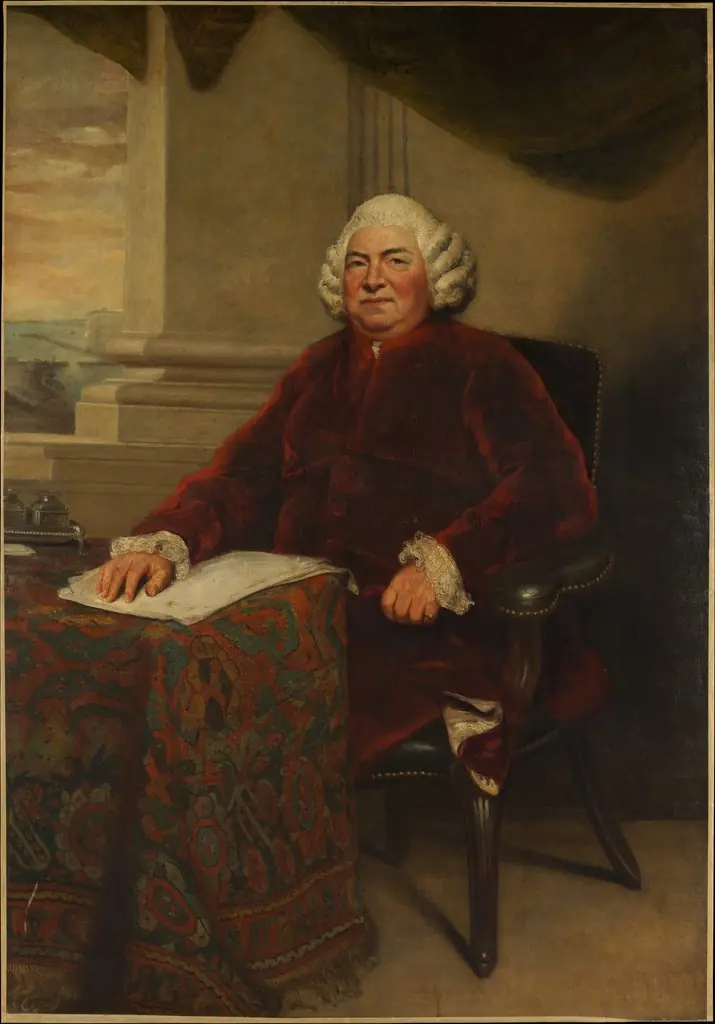 John Barker (1707–1787)
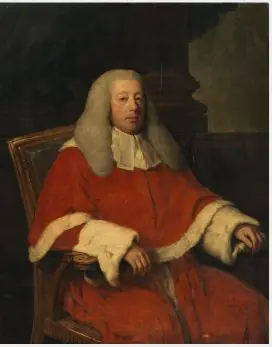 Sir Michael Smith, 1st Bt (1740-1808)
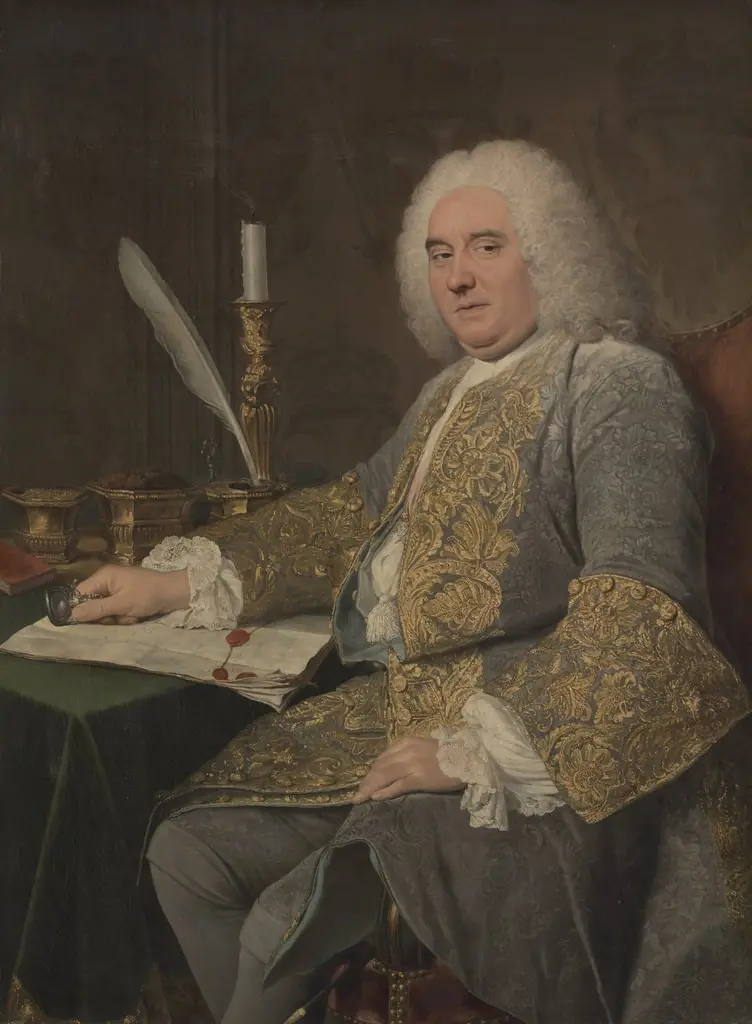 Portrait of Jean-Gabriel du Theil at the Signing of the Treaty of Vienna