Artwork
La Grotte de la Loue
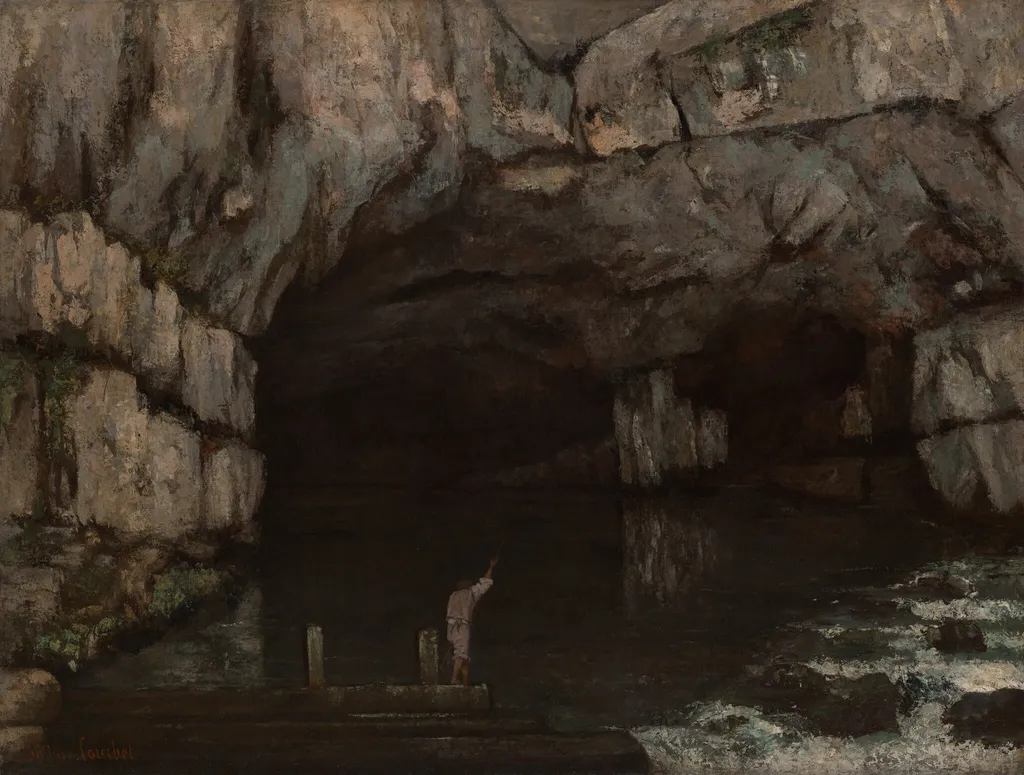
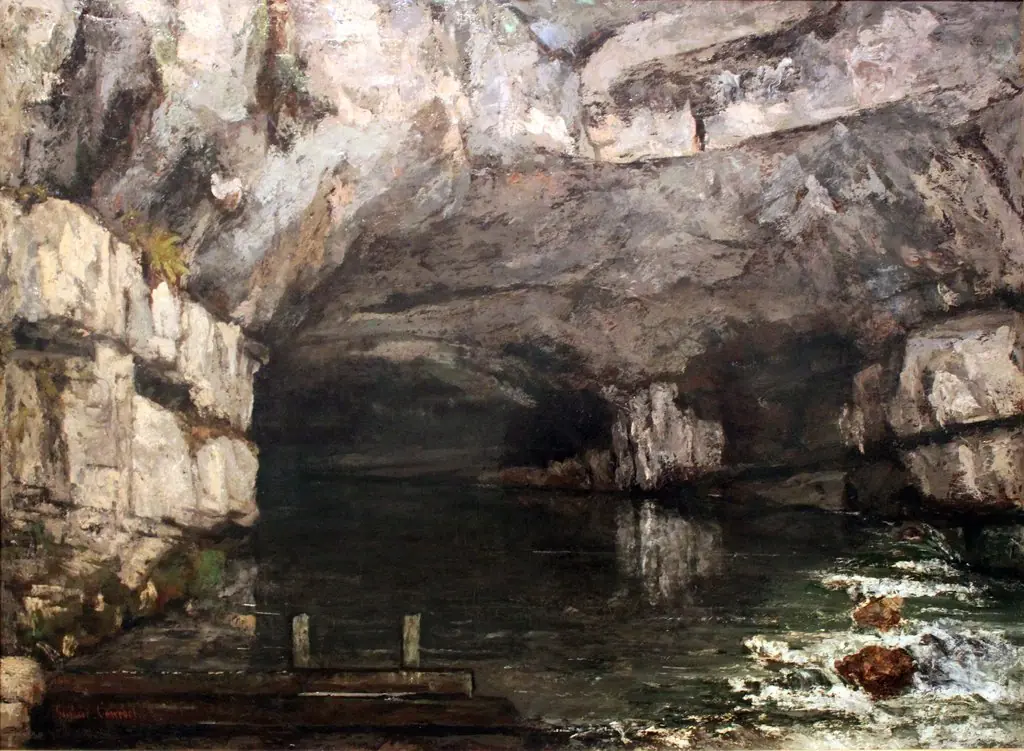
La Grotte de la Loue is an oil painting by the Impressionist artist Gustave Courbet. It dates from 1864 and is held in the collection of the National Gallery of Art.
- Inscription
- Inscribed:lower left: Gustave Courbet
About this work
Technique & Style
The work is an oil painting on canvas, the support customary for easel pictures of the 1860s, which enables the artist to build up layered brushwork and subtle tonal transitions across the rocky gorge. As a landscape, it exemplifies Courbet's realist emphasis on naturalistic rendering of terrain, using a palette that modulates earth tones to suggest depth and atmosphere. The canvas format allows a horizontal composition that follows the contours of the limestone cliffs, while the handling of light and shadow underscores the physical presence of the environment.
History & Provenance
In December 1956 Higgins sold it to Germain Seligmann of Jacques Seligmann & Company, through the intermediary firm Gersel Corp.
La Grotte de la Loue, an 1864 oil on canvas by Gustave Courbet, depicts a limestone gorge in the French countryside. Courbet sold it in February 1872 to the dealer Paul Durand-Ruel in Paris. The painting later appeared in an 1883 Paris auction, where it was acquired by the collector Stephen Higgins.
In December 1956 Higgins sold it to Germain Seligmann of Jacques Seligmann & Company, through the intermediary firm Gersel Corp., and the following year it was purchased by Brigadier General Charles Lionel Lindemann. Lindemann gave the canvas to the National Gallery of Art in Washington, D.C., in 1957, where it remains. The available sources do not record specific exhibition dates or venues.
Context
La Grotte de la Loue, an 1864 oil-on-canvas landscape by Gustave Courbet, entered the Durand-Ruel gallery in 1872 and was reproduced as an engraving by Charles Courtry in the 1878 Galerie Durand-Ruel print series, indicating contemporary interest. The painting was later discussed in Georges Riat's 1906 monograph Gustave Courbet, peintre, reflecting early scholarly attention. Its subsequent acquisition by the National Gallery of Art underscores its enduring place within Courbet's realist landscape oeuvre and its reception in American collections.
Overview
Gustave Courbet's 1864 oil painting, La Grotte de la Loue, exemplifies his commitment to Realism. This work depicts a specific natural site, the grotto of the Loue River, a subject chosen for its tangible reality rather than idealized or romanticized themes. As a leading figure in 19th-century French art, Courbet challenged prevailing academic traditions by focusing on unembellished scenes observed directly from life.
Subject & Meaning
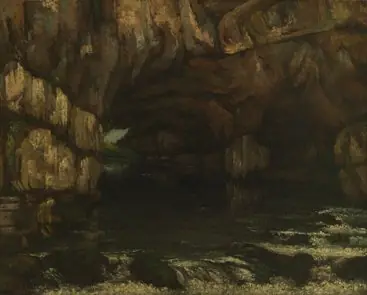
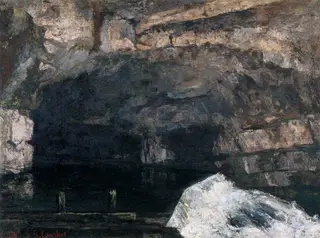
The painting presents a deep, shadowy cave, dominated by a vast rocky opening. A lone figure, dressed in simple attire, stands on a small wooden platform situated in the water, gazing upwards into the cavern's depths. This depiction of a specific, unadorned natural environment, rather than a narrative or allegorical scene, reflects Courbet's dedication to portraying the observable world without embellishment, a core tenet of his Realist practice.
Legacy
Courbet's innovative approach to art, characterized by his rejection of academic conventions and his insistence on depicting observable reality, significantly impacted subsequent artistic developments. His commitment to direct observation and unidealized subjects laid foundational groundwork for later movements. The principles he championed, particularly his focus on tangible experience, resonated with artists who would go on to shape Impressionism and even Cubism.
Own this work as a print
Artist & collection
Artist
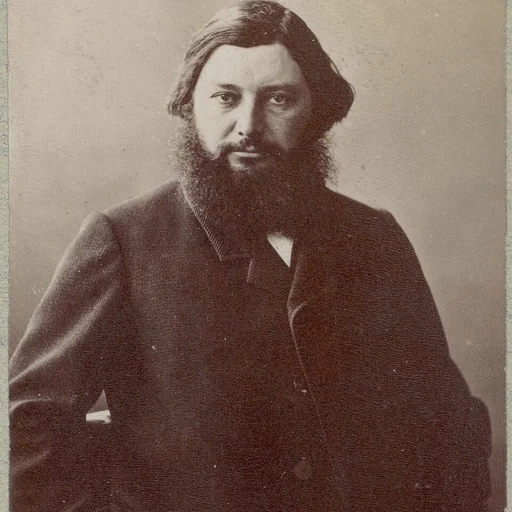
Jean Désiré Gustave Courbet (UK: KOOR-bay; US: koor-BAY; French:; 10 June 1819 – 31 December 1877) was a French painter who led the Realism movement in 19th-century French painting.

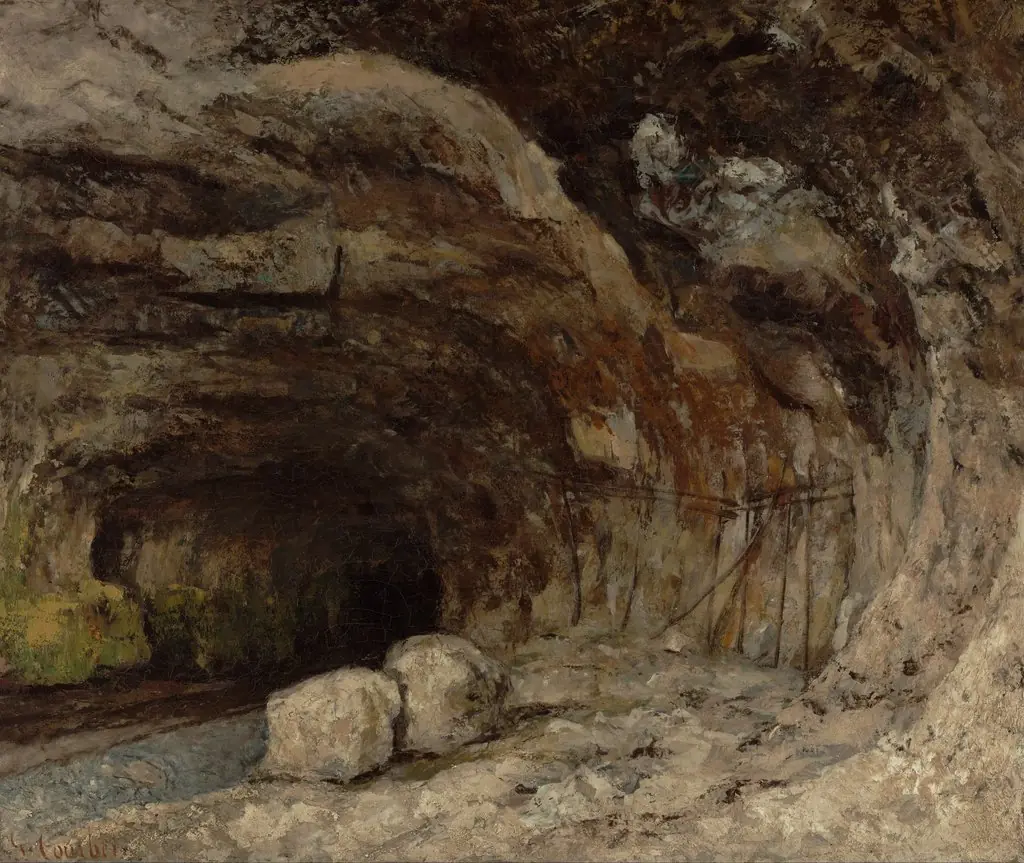 Grotto of Sarrazine near Nans-sous-Sainte-Anne
 The sources of the Loue
 The Source of the Loue
 The Source of the Loue
 Rocas
Rocas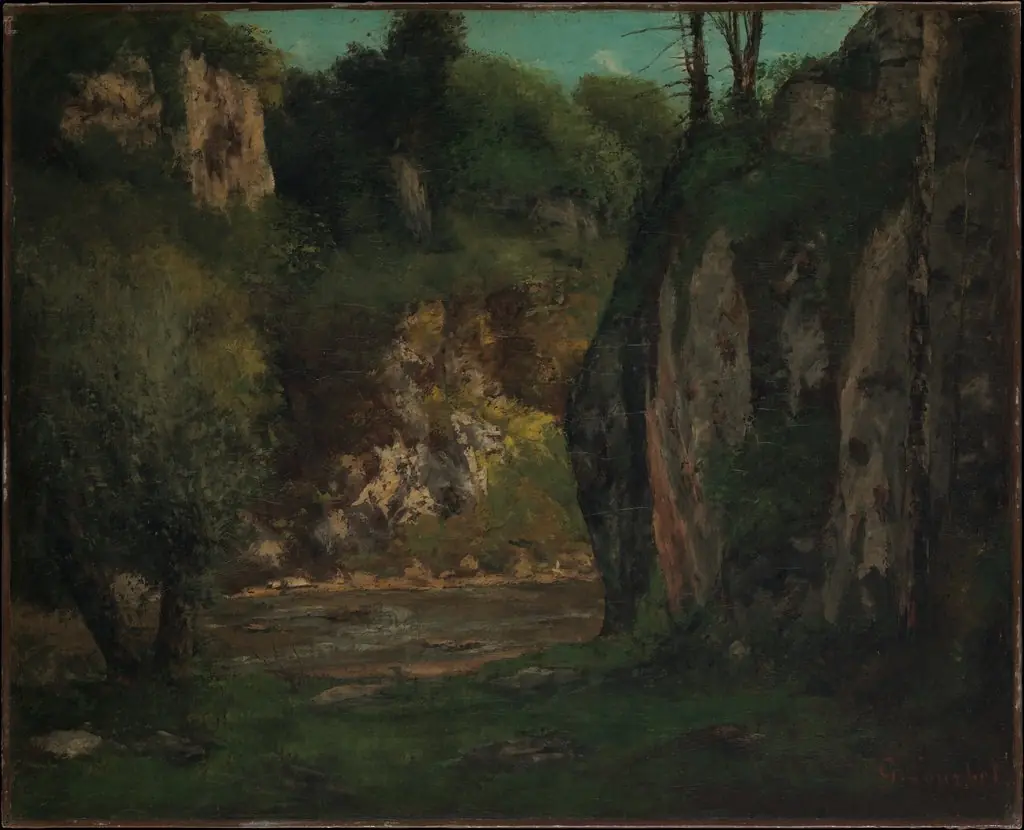 The Hidden Brook
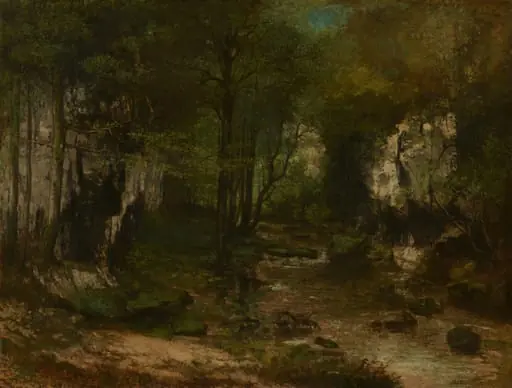 The Stream (Le Ruisseau du Puits-Noir; vallée de la Loue)
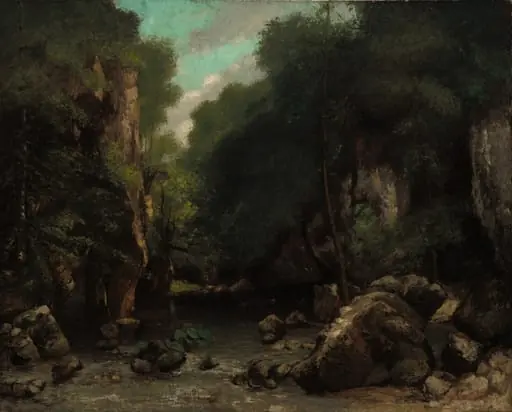 The Valley of Les Puits-Noir
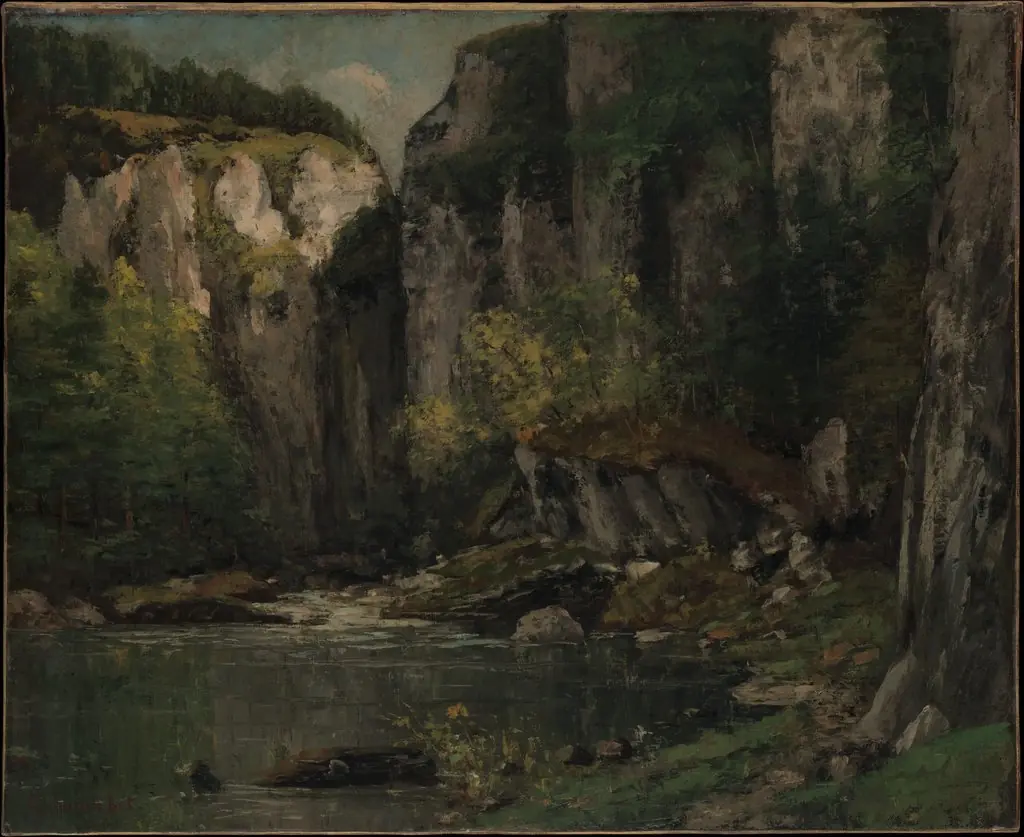 River and Rocks
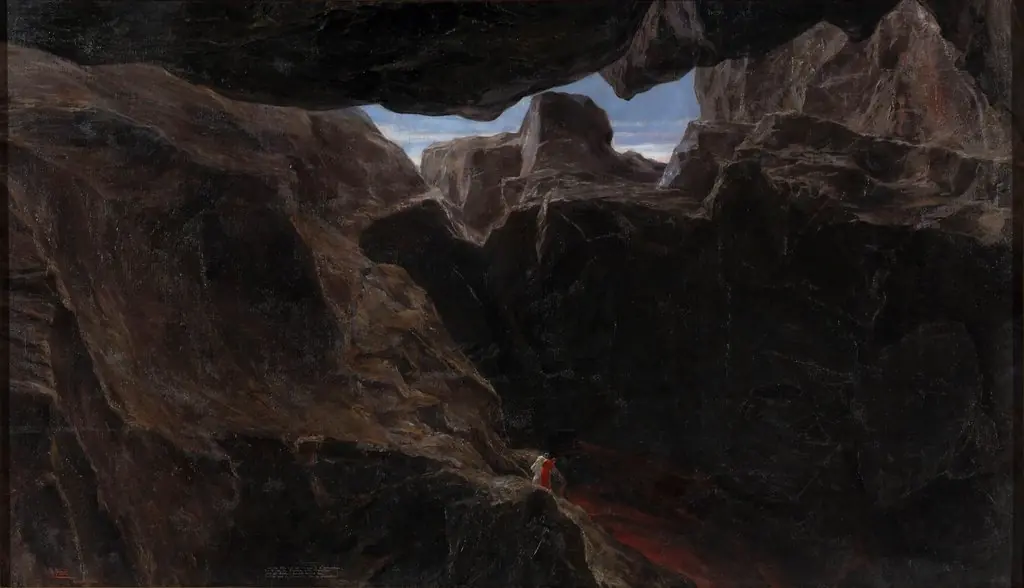 Dante and Virgil Descending into Hell
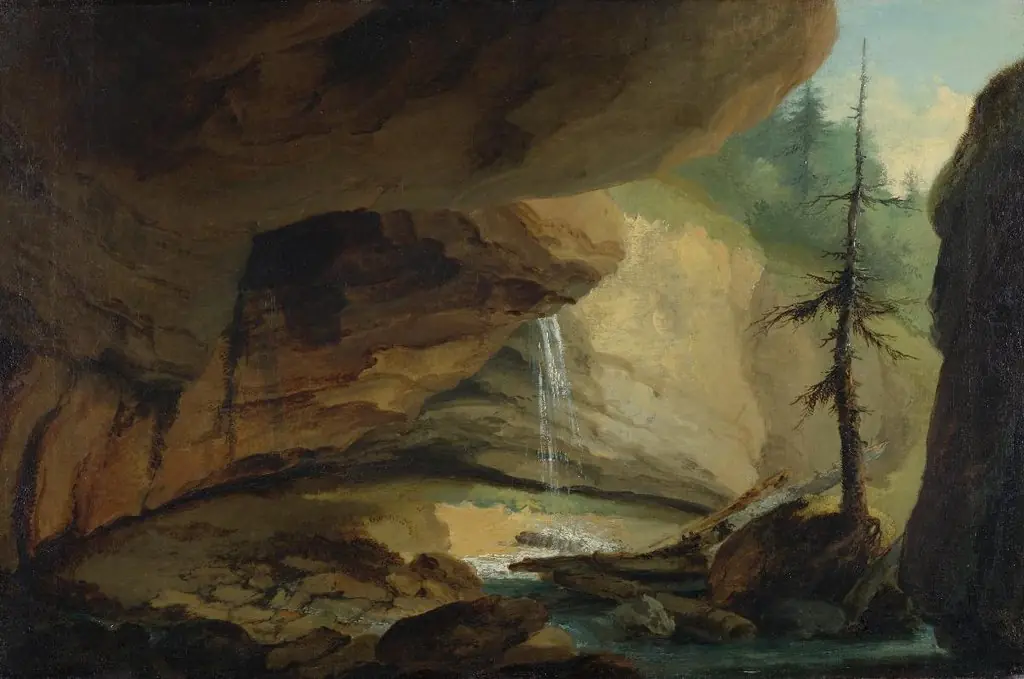 Felshöhle mit Wasserfall
- The Grotto of the Loue