Artwork
The Black Rocks at Trouville
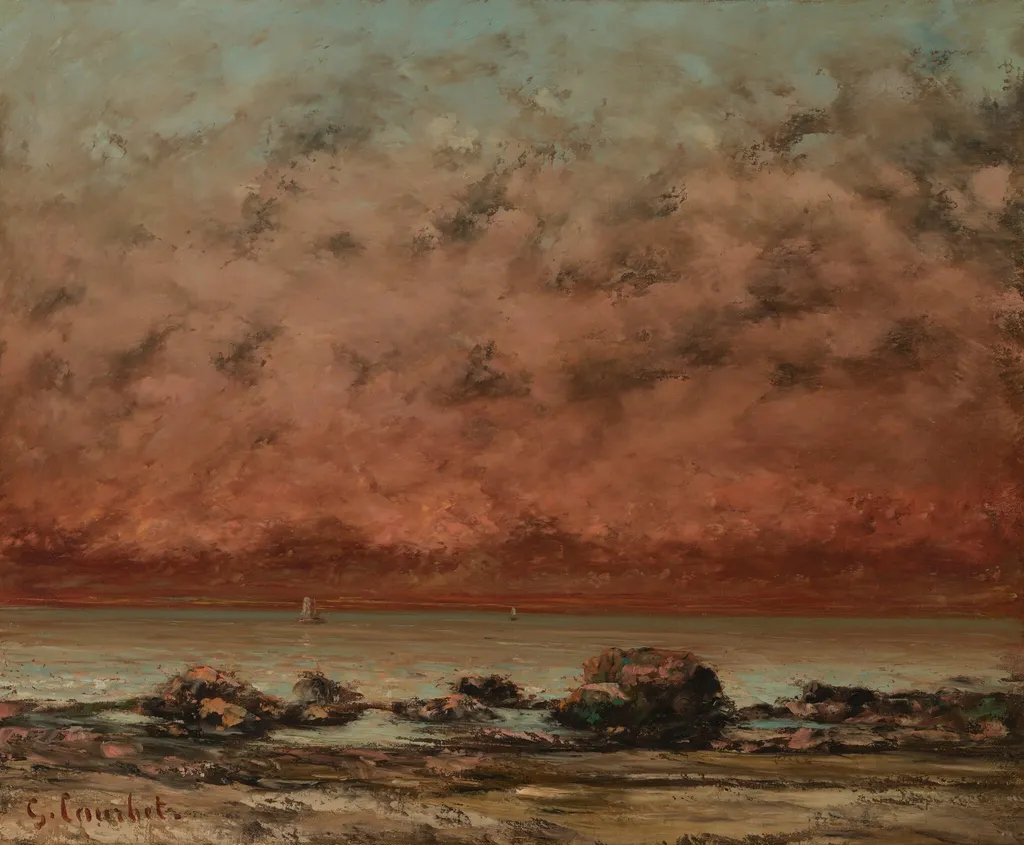
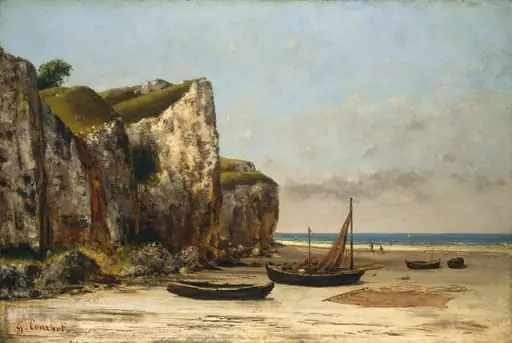
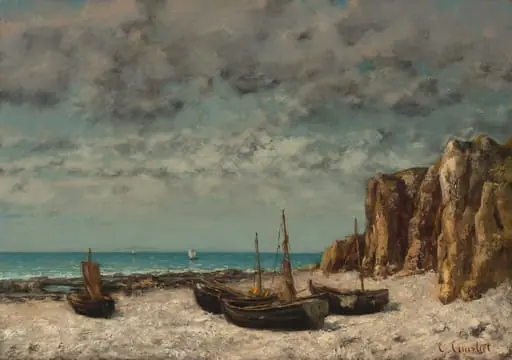
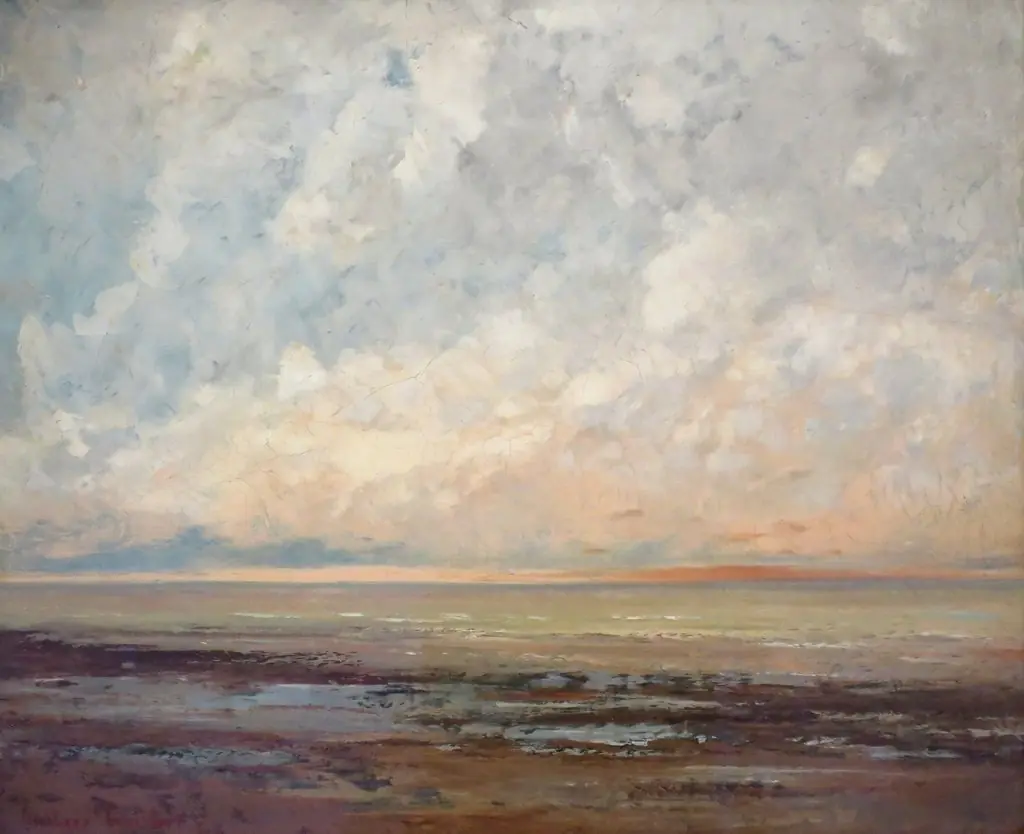
The Black Rocks at Trouville is an oil painting by the Impressionist artist Gustave Courbet. It dates from 1866 and is held in the collection of the National Gallery of Art.
- Inscription
- Inscribed:lower left: G. Courbet
About this work
Technique & Style
The work is modest in scale, measuring 50 by 61 centimeters, consistent with the intimate cabinet-painting format Courbet often adopted for seascape studies.
The Black Rocks at Trouville is an oil painting executed on canvas, a standard support for Gustave Courbet's mid-1860s coastal scenes. The work is modest in scale, measuring 50 by 61 centimeters, consistent with the intimate cabinet-painting format Courbet often adopted for seascape studies.
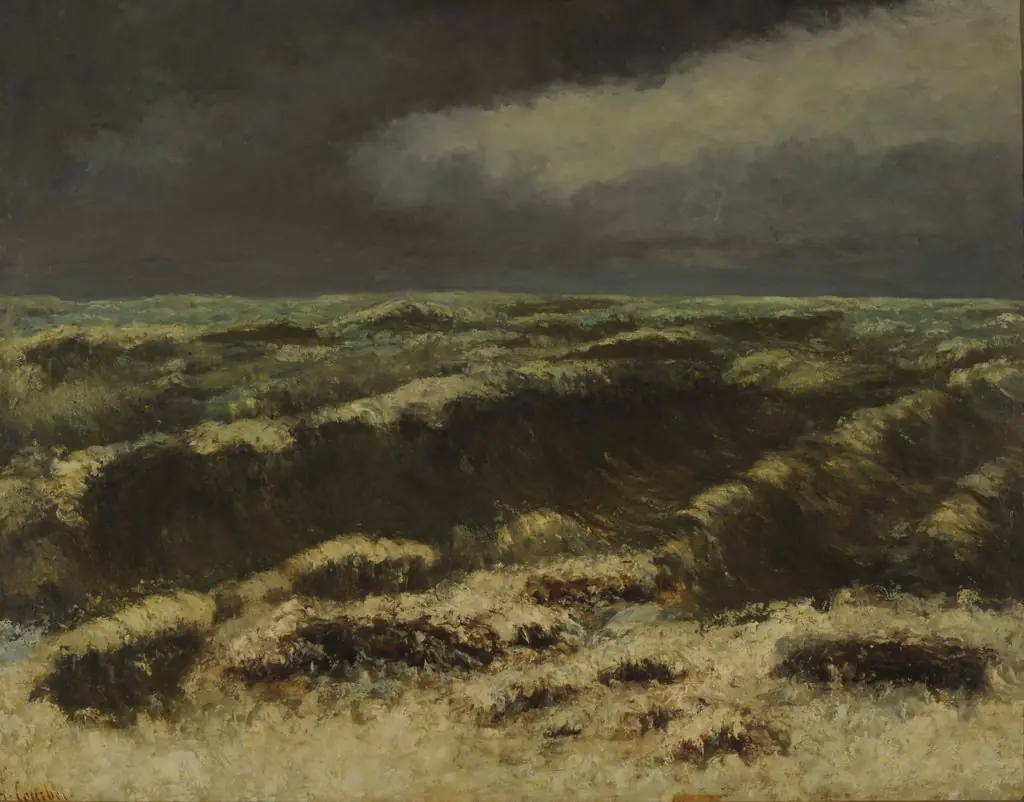
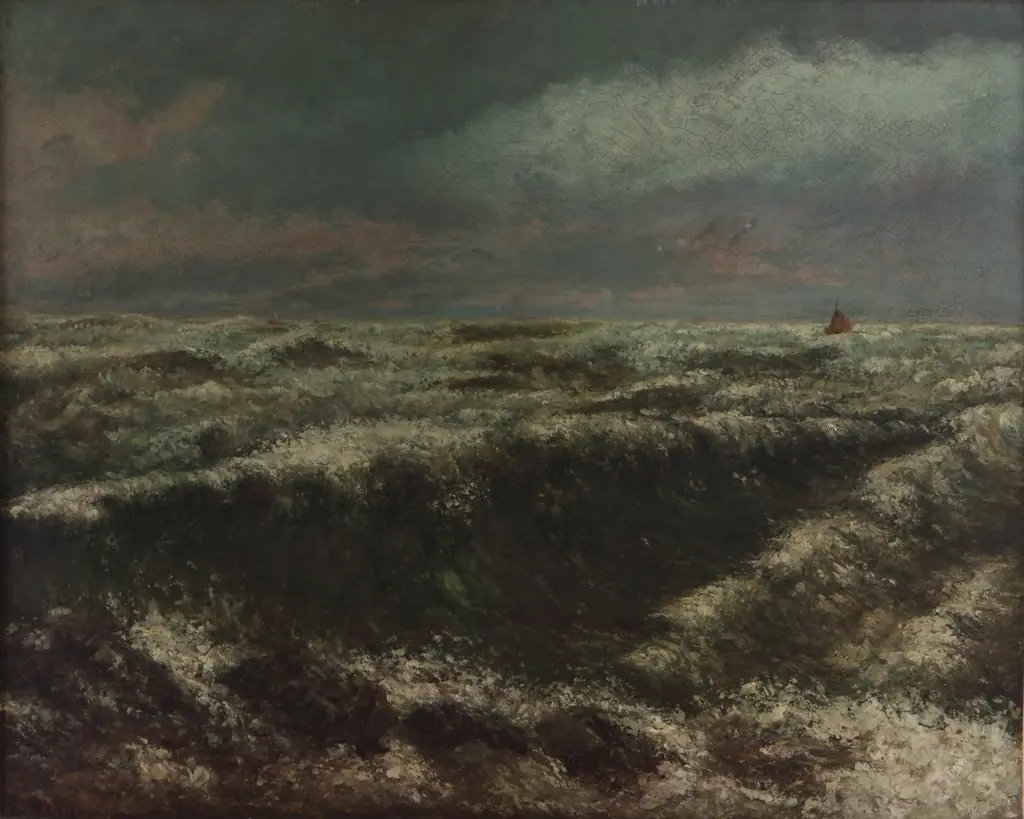
Stylistically, the painting belongs to Courbet's Realist treatment of the Norman coast, where he applied pigment with the vigorous, tactile handling that became a hallmark of his marine views. The composition centers on the dark, heavy rock formations near Trouville, rendered with dense, loaded brushwork that emphasizes the geological weight and weathered surfaces of the cliffs against the sea.
The provenance record does not document a formal conservation report, and no specific condition history is recorded in the available sources.
History & Provenance
Gustave Courbet completed The Black Rocks at Trouville in 1865. The work's early ownership is attributed to Mary Cassatt, who held the painting in Philadelphia and Paris, though records suggest it may have remained within the broader Cassatt family collection rather than being her personal property. By 1943, the London branch of Wildenstein & Co. acquired the canvas, subsequently selling it in 1950 to a private collector in Buenos Aires.
In 1985, Artemis Fine Art in London handled the piece before it entered a private collection in Boston. Later held by a New York collector by 1998 and offered through Salander-O'Reilly Galleries, the painting was sold on May 31, 2011, via Coleman Bancroft LLC to the National Gallery of Art in Washington, D.C.
The Black Rocks at Trouville entered the collection of the National Gallery of Art in Washington, D.C., on May 31, 2011. The acquisition was facilitated through Coleman Bancroft LLC of New York, transferring the work from a private New York collection where it had resided since at least 1998. Prior to this final transfer, the painting's modern provenance included ownership by Mary Cassatt, followed by sales through Wildenstein & Co. in London and Artemis Fine Art.
The work was subsequently held in private collections in Buenos Aires and Boston before returning to New York via Salander-O'Reilly Galleries.
While the painting is documented in the 1985 annual report of Artemis Fine Art, specific public exhibition records prior to its museum accession are not detailed in the available files. The current holding institution confirms the work's status within its permanent collection of oil paintings.
Context
The Black Rocks at Trouville, painted by Gustave Courbet in 1865, exemplifies his realist approach to coastal landscapes and reflects the broader 19th-century European artistic engagement with natural topography. Its provenance traces a complex ownership history, including possession by Mary Cassatt or her family, subsequent sale through Wildenstein & Co., and eventual acquisition by the National Gallery of Art in 2011 after passing through private collections in Buenos Aires, Boston, and New York.[1][2][3] The work is part of the National Gallery of Art's collection in Washington, D.C., where it is studied within the context of Courbet's influence on landscape painting and 19th-century French realism.
Overview
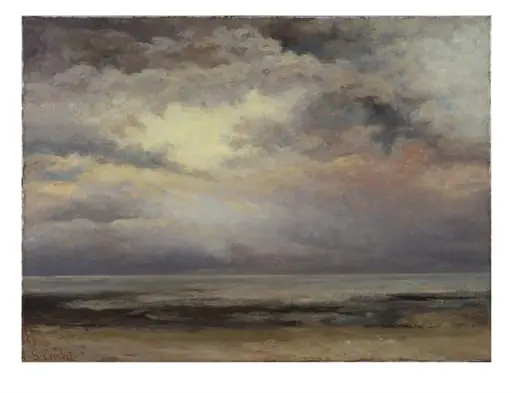
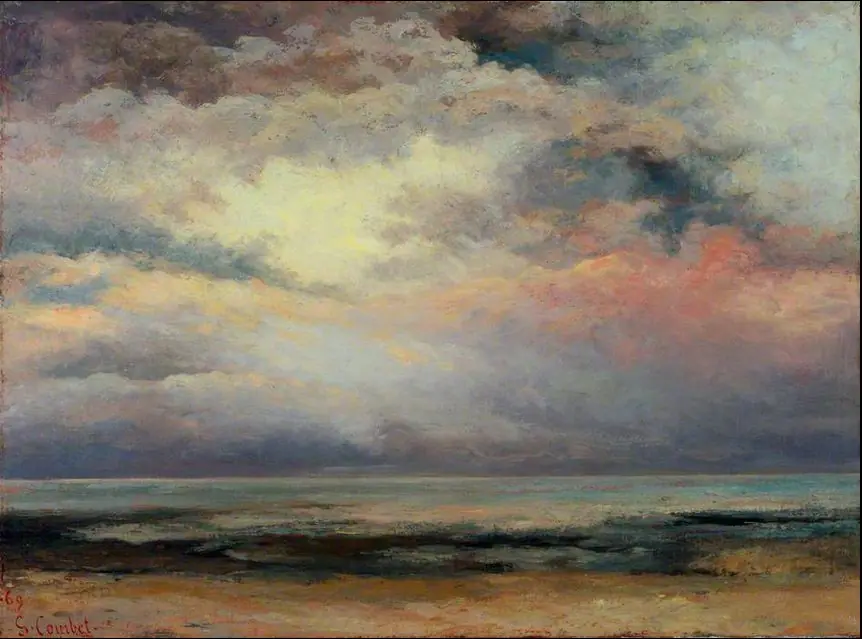
Gustave Courbet’s 1866 oil painting The Black Rocks at Trouville depicts a coastal landscape dominated by a turbulent sky and a stretch of sea. Executed in the realist idiom, the work presents a natural scene without idealisation, focusing on the atmospheric conditions and the texture of the shoreline.
Subject & Meaning
The canvas captures a beach at Trouville, where dark, brooding clouds loom over the water, their reddish‑brown tones suggesting an impending storm. By foregrounding the raw forces of weather, Courbet emphasizes the immediacy of observation and the inherent drama of the natural environment.
Own this work as a print
Artist & collection
Artist
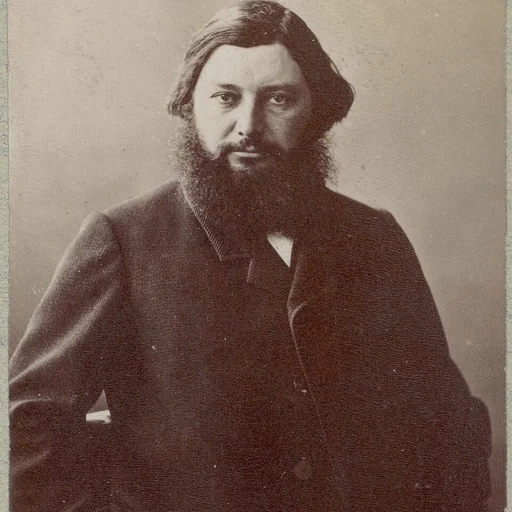
Jean Désiré Gustave Courbet (UK: KOOR-bay; US: koor-BAY; French:; 10 June 1819 – 31 December 1877) was a French painter who led the Realism movement in 19th-century French painting.