Artwork
La fourmi
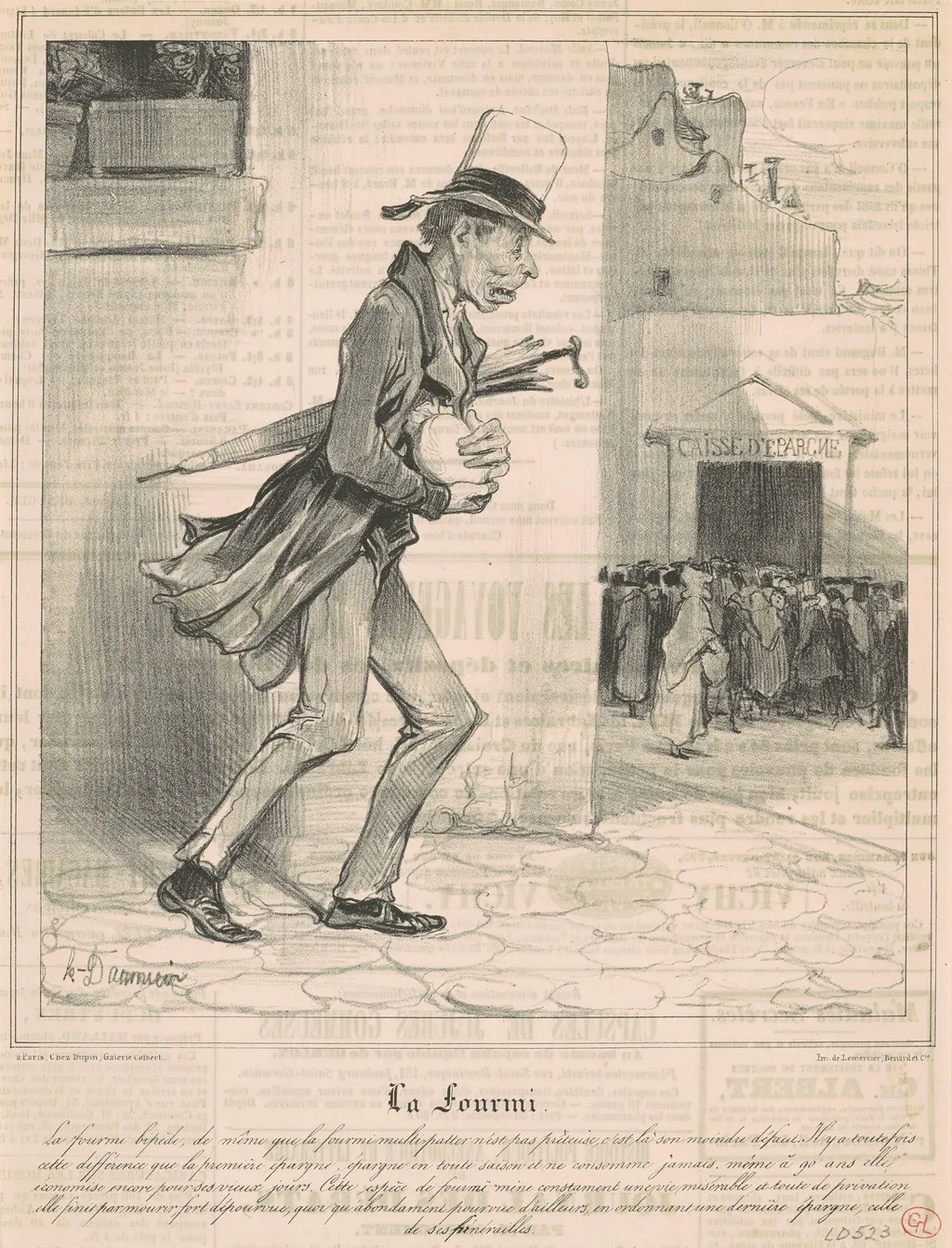
La fourmi is an ink print by the Romanticist artist Honoré Daumier. It dates from 1838 and is held in the collection of the National Gallery of Art.
About this work
Overview
Honoré Daumier’s 1838 lithograph titled La fourmi presents a bustling street scene in Paris. A solitary figure strides forward, clutching a sack against his torso, while a crowd swirls around him near a façade marked “CAISSE D’EPARGNE.” The composition captures a fleeting moment of everyday movement, offering a concise visual record of mid‑19th‑century urban activity.
Subject & Meaning
The central man, burdened with a bag, appears both determined and slightly out of place amid the surrounding pedestrians. By situating him before a savings‑bank building, Daumier hints at themes of labor, thrift, and the pressures of modern commerce. The work balances a light‑hearted observation of city dwellers with an understated critique of the socioeconomic forces shaping their lives.
Technique & Style
Executed in lithography, the print relies on the artist’s direct drawing on a stone surface, allowing for swift, gestural lines and tonal variations. Daumier’s characteristic bold outlines and economical shading convey motion and crowd density without excessive detail, demonstrating the medium’s capacity for rapid, expressive reportage of contemporary scenes.
Context
Created during a period of rapid urban expansion in France, La fourmi reflects the growing visibility of public institutions such as savings banks and the increasing density of street life. Daumier’s work aligns with the realist impulse of the era, documenting ordinary people and the infrastructure that defined the modern French city.
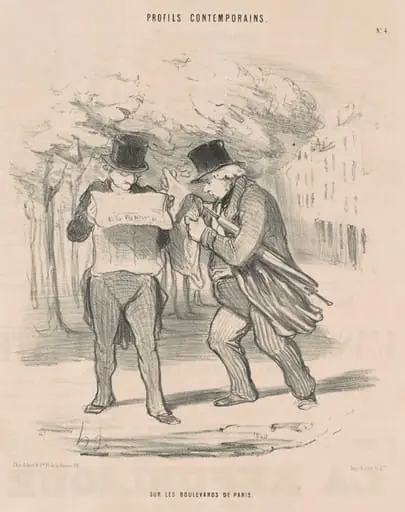
Own this work as a print
Artist & collection
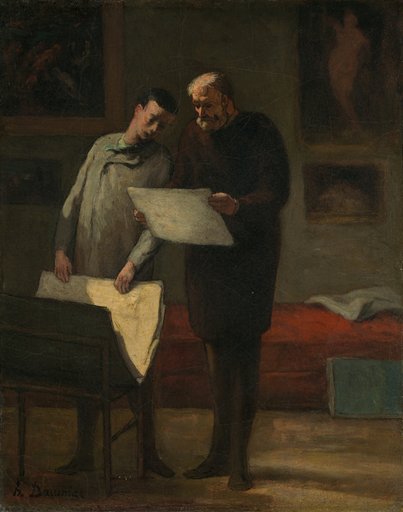
Artist
Honoré-Victorin Daumier (French: ; 26 February 1808 – 10 or 11 February 1879) was a French painter, sculptor, and printmaker, whose many works offer commentary on the social and political life in France, from the…

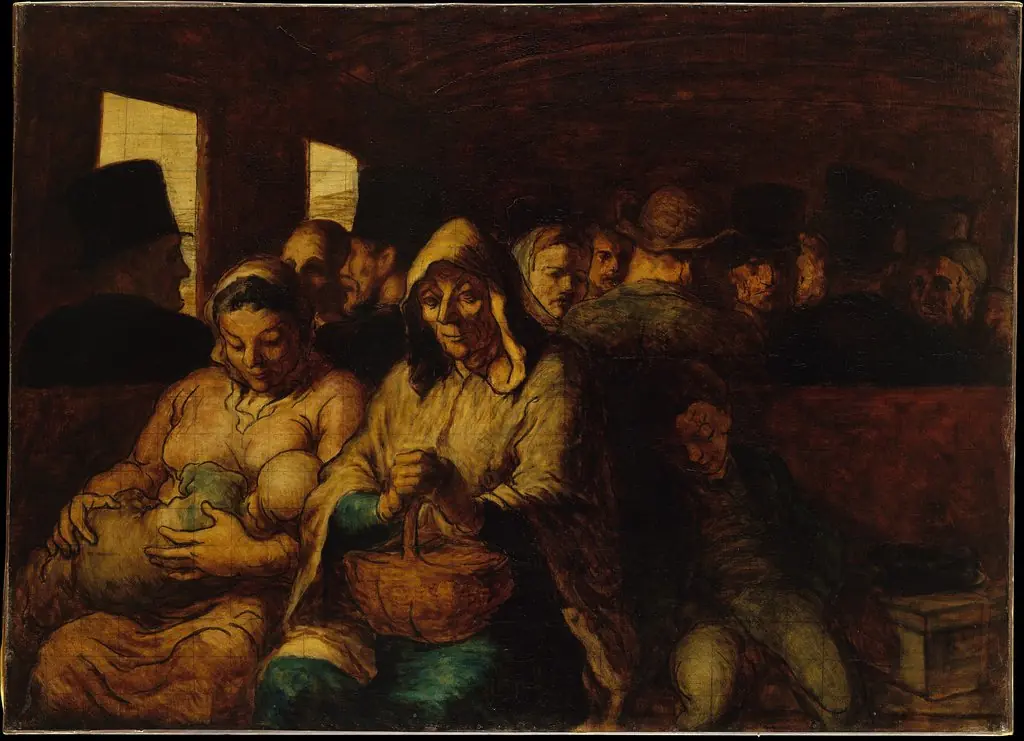
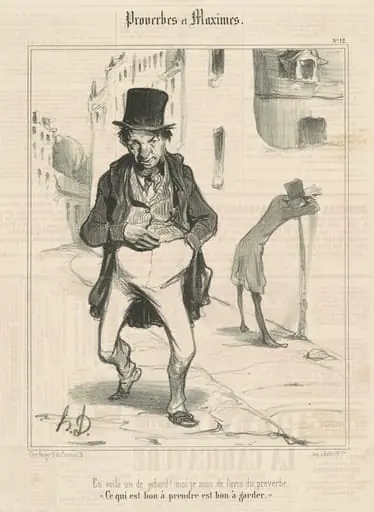 En voila un de jobard! ...
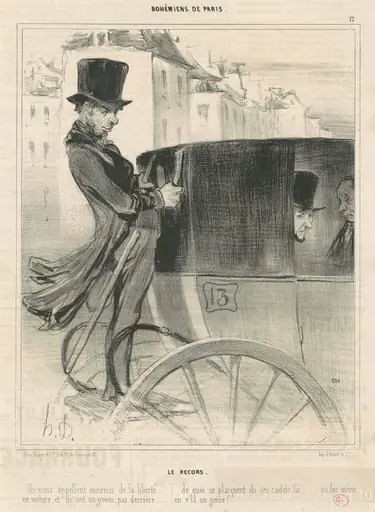 Le recors
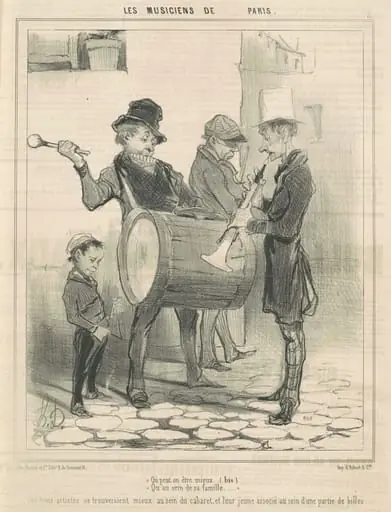 Ou peut on être mieux ...
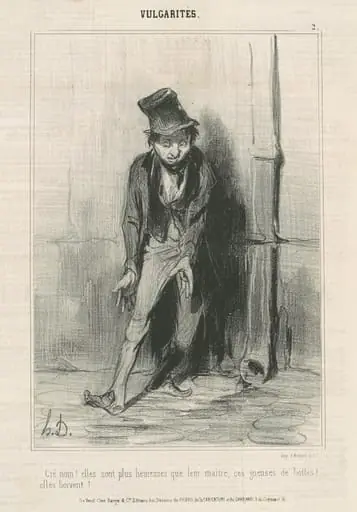 Cré nom: Elles sont plus heureuses ...
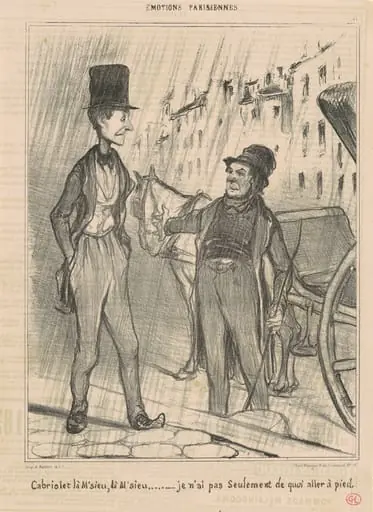 Cabriolet là M'sieu, là M'sieu...
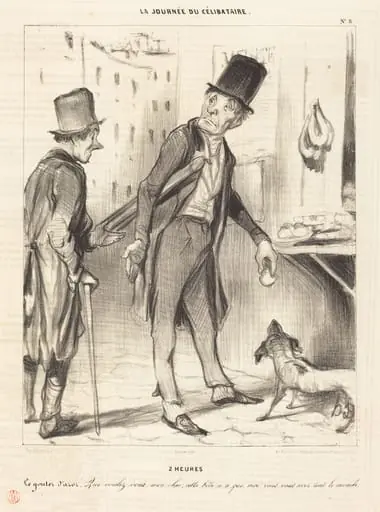 2 heures - Le gouter d'Azor
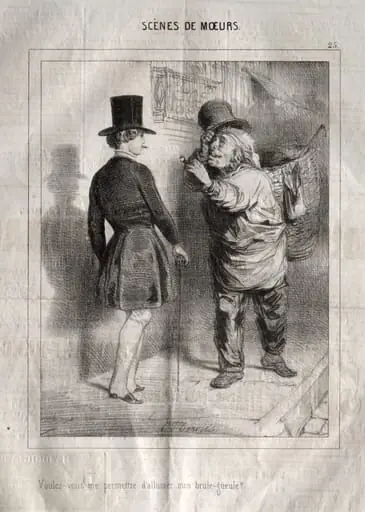 Scènes de Moeurs: Voulez-vous me permettre d'allumer mon brule-gueule?
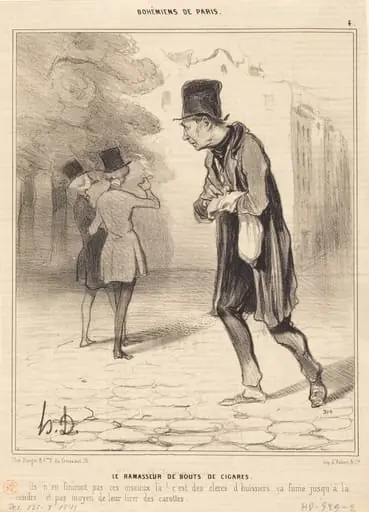 Le Ramasseur de bouts de cigares
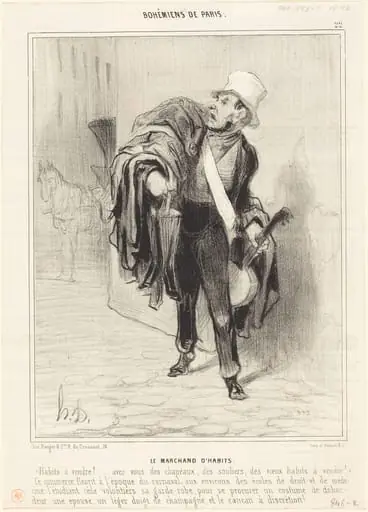 Le Marchand d'habits
 Allant aux renseignements politiques ...