Artwork
The Jester Calabacillas
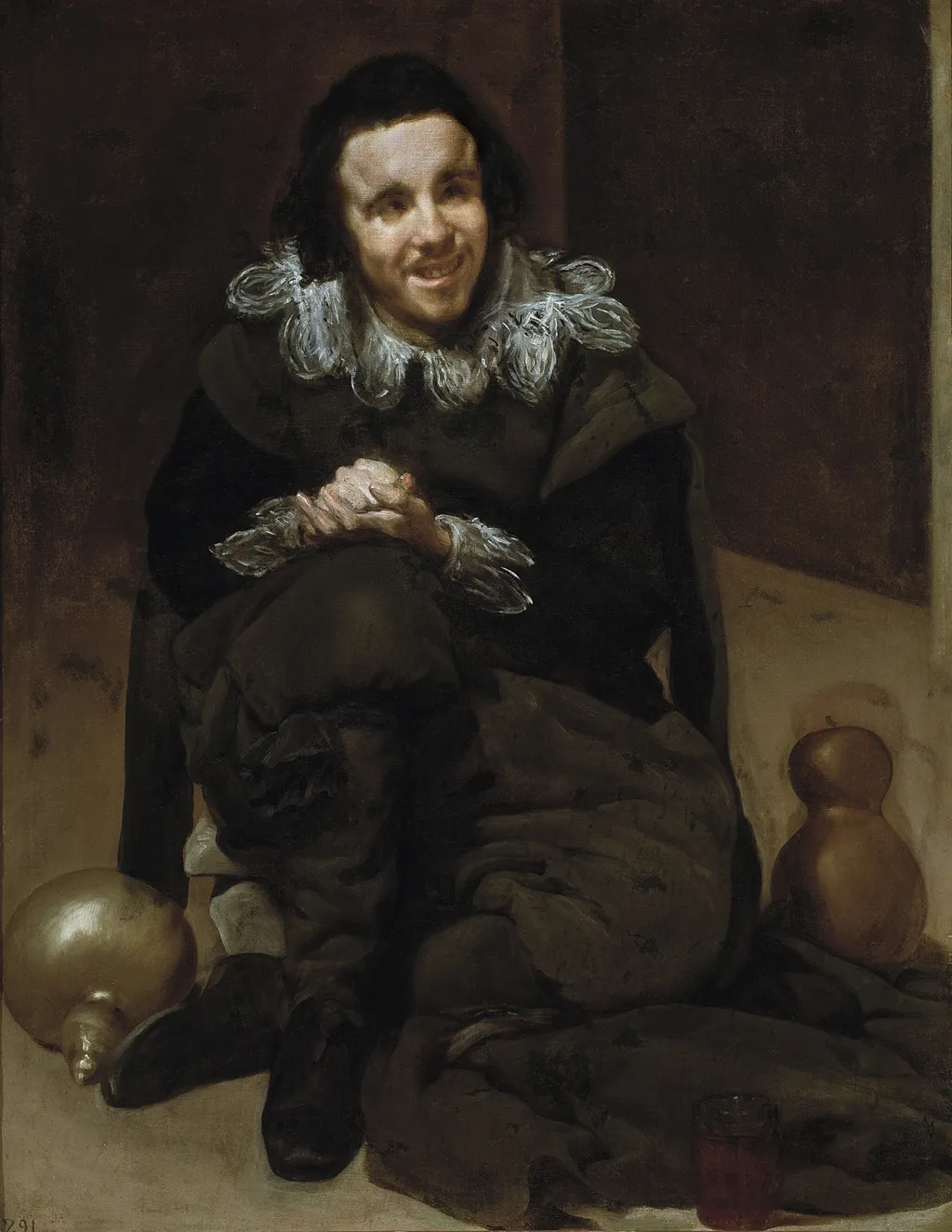
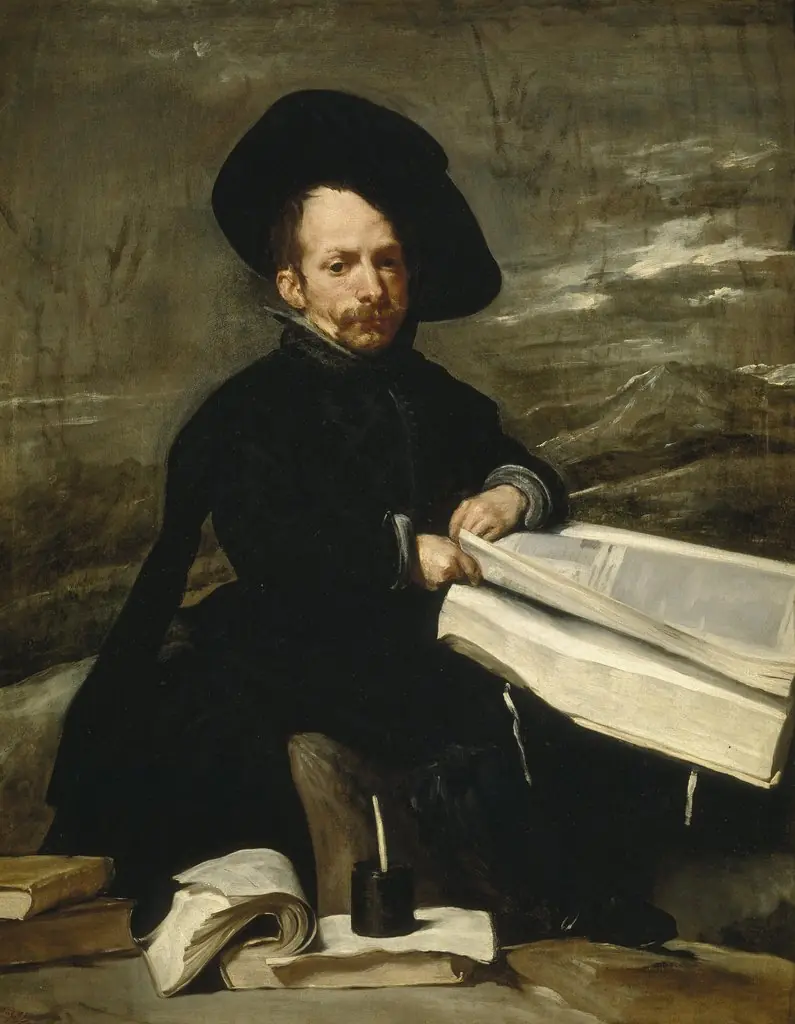
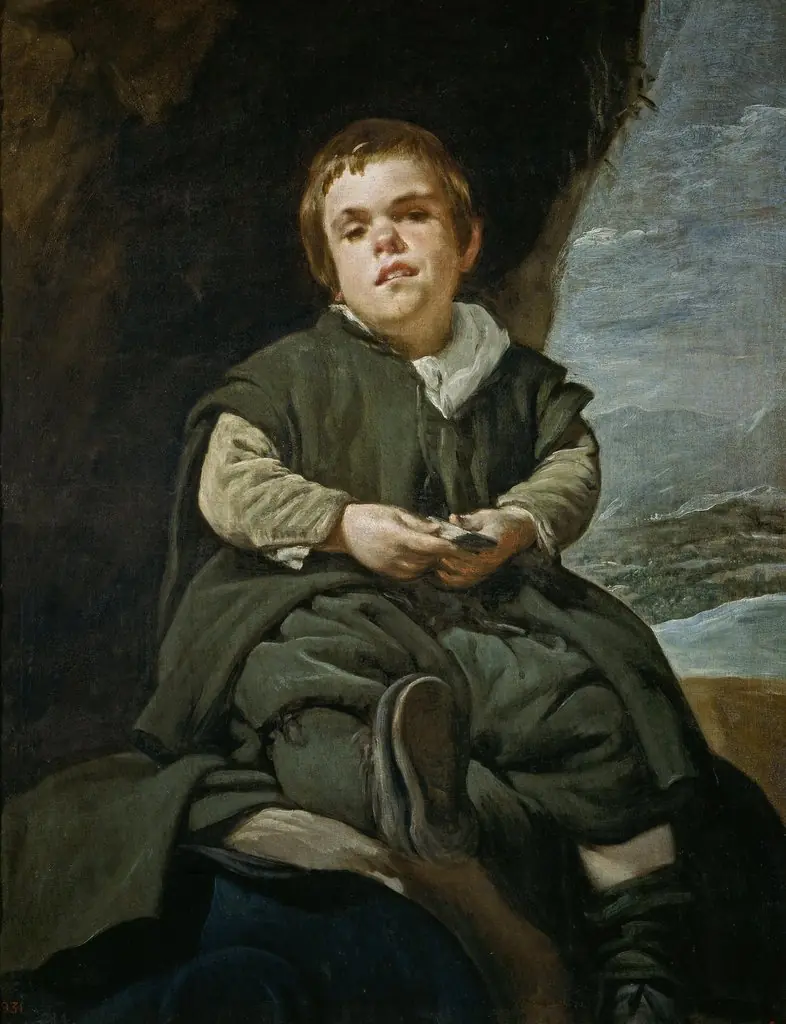
The Jester Calabacillas is an oil painting by the Early Baroque Italian artist Diego Velázquez. It dates from 1635 and is held in the collection of the Museo del Prado.
About this work
The Jester Calabacillas is a portrait by Diego Velázquez. It's an oil painting from 1635.
The subject of the painting is Don Juan Martín Martín, also known as Juan de Calabazas or El Búfón Calabacillas. He was a jester at the court of Philip IV of Spain and had a nickname, Bizco, which means cross-eyed.
You can learn more about the artist who created this portrait, Diego Velázquez.
Subject & Meaning
His attire is a green garment with long sleeves and lace at the cuffs and neck, and a distinctive calabaza (pumpkin) rests on the floor beside him.
The portrait shows a court jester known as Juan Calabazas or El Búfón Calabacillas, depicted seated on low stones with crossed legs, rubbing his hands while holding a glass or small wine barrel and a gourd at his side. His attire is a green garment with long sleeves and lace at the cuffs and neck, and a distinctive calabaza (pumpkin) rests on the floor beside him. The painting emphasizes his physical and possibly intellectual 'smallness', reflecting contemporary Spanish classifications of jesters as 'enanos' and suggesting both dignity and vulnerability. Velázquez renders his cross‑eyed gaze, vacant smile, and isolated posture with delicate brushwork and transparent layers, highlighting the subject's mental fragility and the artist's respectful yet unvarnished portrayal.
Technique & Style
The Jester Calabacillas is an oil painting on canvas measuring 106 by 83 centimeters, created by Diego Velázquez between 1635 and 1639. The work depicts a court jester with a cross-eyed gaze, seated on low stones, hands folded, and dressed in a green garment with lace at the cuffs and neck. He holds a glass of wine and is accompanied by a gourd and a calabash, elements that have led to historical confusion over his identity. The painting is executed with thin, almost transparent layers of pigment and minimal impasto, reflecting Velázquez’s rapid technique and use of extensive binders. Visible pentimenti appear on the figure’s head and the left-hand gourd, applied with the same pigments during the painting process. The brushwork is light and delicate, contributing to a hazy facial rendering and a sense of psychological depth, particularly in the portrayal of the jester’s isolated posture and vacant expression. This work exemplifies Velázquez’s treatment of marginalized figures with dignity and psychological realism, rendered in a style that combines naturalistic detail with subtle tonal modulation.
History & Provenance
The painting is dated to 1635 by internal documentation and is associated with the court of Philip IV of Spain, where the sitter served as a jester. The work was likely commissioned for the Torre de la Parada, a hunting lodge near Madrid, alongside other portraits of jesters in the king’s service. By 1701 it is listed among "Quattro retrattos de diferentes Sujettos y enanos Originales de Uelazquez" in the Torre’s inventory, and in 1722 it is recorded as coming from that residence. It entered the Royal Palace of Madrid by 1747 and remained there through successive inventories, sometimes under the erroneous name "Bobo de Coria."
The painting passed to the Museo del Prado at its founding in 1819 and has been in its holdings ever since.
The Jester Calabacillas is held by the Museo del Prado in Madrid, where it has been part of the collection since the museum's founding in 1819. Historical records trace the work to the Tower of the Parada in 1722 before it was inventoried at the Royal Palace of Madrid under number 1012 in 1772, grouped with other jesters by Velázquez. In the 1789 palace inventory, it was located in a dining room and erroneously labeled "Bobo de Coria," a misidentification that persisted until the 19th century. The painting entered the Prado's official catalogue in 1819 under this incorrect name, though Cruzada Villaamil correctly identified the sitter as Juan Calabazas in 1885 based on the gourds depicted. By the 1910 Prado catalogue, the work was formally recognized under its current title, noting the presence of a gourd on either side of the figure.
Context
Scholarship on The Jester Calabacillas highlights Velázquez's distinctive treatment of court entertainers with the same dignity afforded to royal subjects. The portrait belongs to a series of jester paintings produced for the Torre de la Parada, and its advanced technique, particularly the loose brushwork in the lace, schematic hands, and blurred facial modeling, suggests it may be the last in this group, likely painted shortly before 1639. The work's identification has been contested. Cruzada Villaamil proposed the name "Calabacillas" in 1885 based on the gourds depicted, though earlier inventories variously labeled it "Bobo de Coria" or simply "bufón." Art historians including Diego Angulo Íñiguez have noted possible compositional debts to Albrecht Dürer's engraving El desesperado, while Alfonso E. Pérez Sánchez has argued against a "caught" portrait reading, suggesting instead deliberate allegorical intentions. Fernando Marías has emphasized the painting's psychological complexity, contrasting the figure's casual pose with his isolation and "almost autistic" hand gesture.
Own this work as a print
Artist & collection
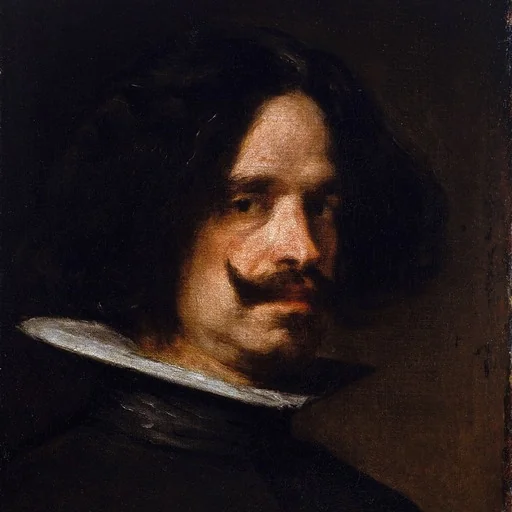
Artist
Diego Rodríguez de Silva y Velázquez was a Spanish Baroque painter, the leading artist in the court of King Philip IV of Spain and Portugal, and of the Spanish Golden Age.