Artwork
The Nun Jerónima de la Fuente
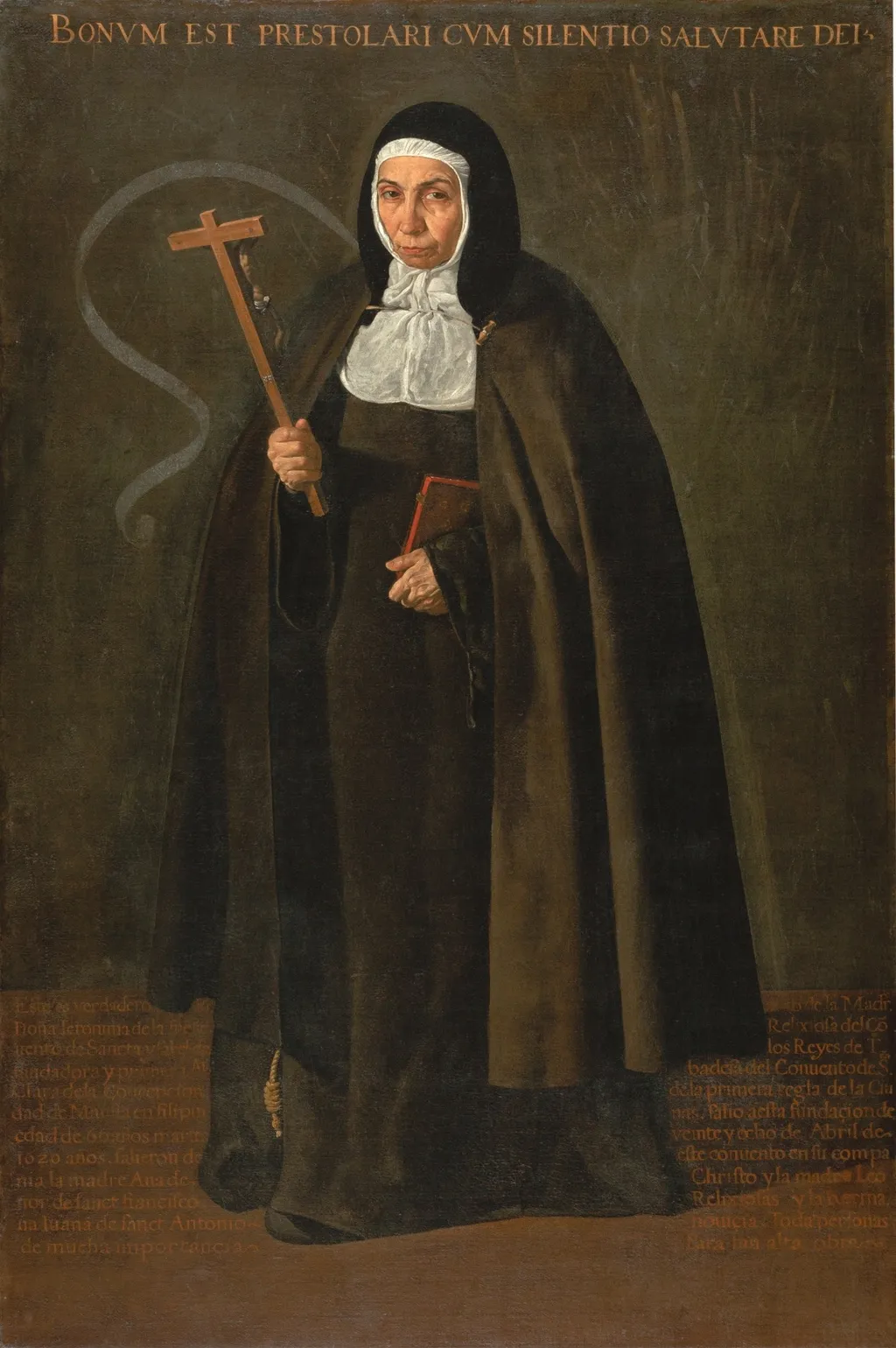
The Nun Jerónima de la Fuente is an oil painting by the Early Baroque Italian artist Diego Velázquez. It dates from 1620 and is held in the collection of the Museo del Prado.
About this work
Subject & Meaning
She stands against a dark void, holding a closed breviary in her left hand and a wooden crucifix in her right, symbols of her religious authority and devotion.
The portrait depicts Jerónima de la Asunción, founder and first abbess of the Poor Clares’ convent in Manila, as stated in the inscription beneath the figure. She stands against a dark void, holding a closed breviary in her left hand and a wooden crucifix in her right, symbols of her religious authority and devotion. Latin inscriptions frame the image: above, a verse from Lamentations (“It is good to await the salvation of God in silence”), and near her mouth, a modified Psalms phrase (“I shall be satisfied as long as he is glorified”), evoking her disciplined silence and contemplative life. The inscriptions and attributes construct her as an exemplar of Franciscan piety, emphasizing obedience and silent endurance rather than the severe self-mortification contemporaneous accounts describe. Velázquez’s austere lighting and unflinching realism elevate her to a sacred model, aligning the portrait with the cult of Jerónima that preceded his fame.
Technique & Style
The painting is executed in oil on canvas and measures 160 cm in height by 110 cm in width.
Velázquez employs a restrained palette dominated by the brown habit of the Poor Clares, with only the flesh tones of the face and lips and the red edges of the closed breviary providing chromatic contrast. Handling shows tight, precise brushwork and a tenebristic lighting that sharply models the nun’s face and hands, emphasizing wrinkles and bone structure with a Caravaggisti clarity. Formal composition is frontal and full-length, with the figure occupying the shallow space against a dark ground, producing a hieratic effect.
The artist reserves delicate touches for small details such as the folds of the white veil and the ribbon securing the mantle, resolving these elements through abbreviated strokes that suggest optical perception rather than minute imitation. A wooden crucifix is held in the right hand, while a small book appears in the left, both rendered with careful attention to material presence.
History & Provenance
Diego Velázquez executed this full-length portrait in June 1620 while the subject, Jerónima de la Asunción, paused in Seville for three weeks en route to establish a convent in the Philippines. The work was likely commissioned by a Franciscan companion or Alvaro de Villegas, vicar of the Santa Isabel convent in Toledo. Originally attributed to Luis Tristán, the painting's true authorship was revealed in 1926 when cleaning prior to an exhibition uncovered Velázquez's signature. Both the primary version and a nearly identical variant originated from the Santa Isabel convent, leaving the site in 1931. The Museo del Prado acquired its version from the convent in 1944, while the second canvas entered a private collection. A third, half-length version resides in London, though its attribution remains debated among scholars.
The full-length portrait is held in the collection of the Museo del Prado in Madrid, having been acquired from the Santa Isabel convent in 1944. Prior to this transfer, the work left the convent in 1931 alongside a second version that entered a private collection. The painting was first brought to modern attention during an exhibition in 1926; at that time, it was attributed to Luis Tristán until a cleaning revealed Velázquez's signature. Technical studies and laboratory analysis conducted by the museum have since confirmed the attribution of the Prado version, distinguishing it from other copies and variants.
Context
Velázquez’s portrait of Jerónima de la Fuente is widely regarded as an early marker of his emergent realism and psychological penetration, situated within Seville’s tenebrist milieu influenced by his father-in-law Francisco Pacheco. Contemporary scholarship notes its Caravaggisti chiaroscuro and unflinching rendering of age and character, aligning the work with the period’s shift toward individualized, morally exemplary portraiture rather than idealized saintly types. The painting’s inscriptions and iconography, combining a Lamentations verse, a Psalms scroll, and a crucifix, were read by contemporaries as encapsulating the nun’s piety and disciplined silence, reinforcing her cult status among Poor Clares and Franciscans. Later art-historical accounts, including those by Jonathan Brown and Vicente Carducho, emphasize its role in consolidating Velázquez’s reputation before his court appointment, contrasting her renown with his then-nascent status.
Legacy
Velázquez's full-length portrait of The Nun Jerónima de la Fuente, painted in June 1620 during her brief stay in Seville, is recognized as one of the earliest known works by the artist and an early visual record of the growing cult of Jerónima, who was already more renowned than Velázquez at the time. Commissioned likely by a Franciscan accompanying her or by the vicar of Santa Isabel convent, the painting entered the Museo del Prado in 1944 after being acquired from the convent, where an almost identical copy remains, while a half-length version is held in a private collection in Santiago de Chile. The work features a dark background, a small book in the nun's left hand, a crucifix in the right, and Latin inscriptions referencing Jerónima's piety, including a quote from Lamentations 3:26. Velázquez's technique employs tight brushstrokes and Caravaggiesque chiaroscuro to emphasize the nun's aged features and authoritative presence, reflecting his realist style influenced by his mentor Francisco Pacheco. The painting's legacy lies in its role in advancing Velázquez's career to court painter and its contribution to the iconography of sainthood, despite omitting contemporary accounts of the nun's self-mortification. Later scholarship, including studies of technical analysis and variant copies, confirms its attribution and highlights its significance in the development of Spanish Baroque portraiture.
Own this work as a print
Artist & collection
Artist
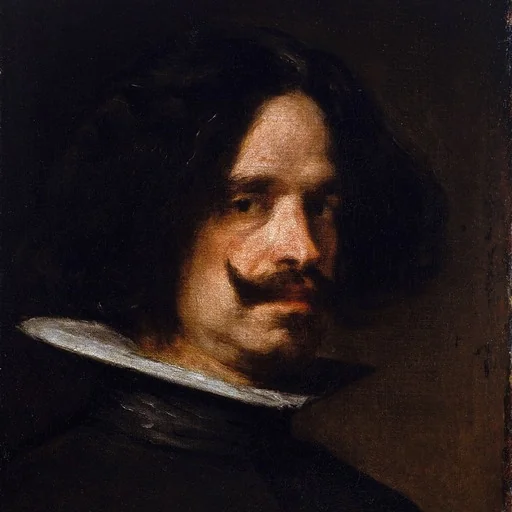
Diego Rodríguez de Silva y Velázquez was a Spanish Baroque painter, the leading artist in the court of King Philip IV of Spain and Portugal, and of the Spanish Golden Age.

 Infante Isabella Clara Eugenia
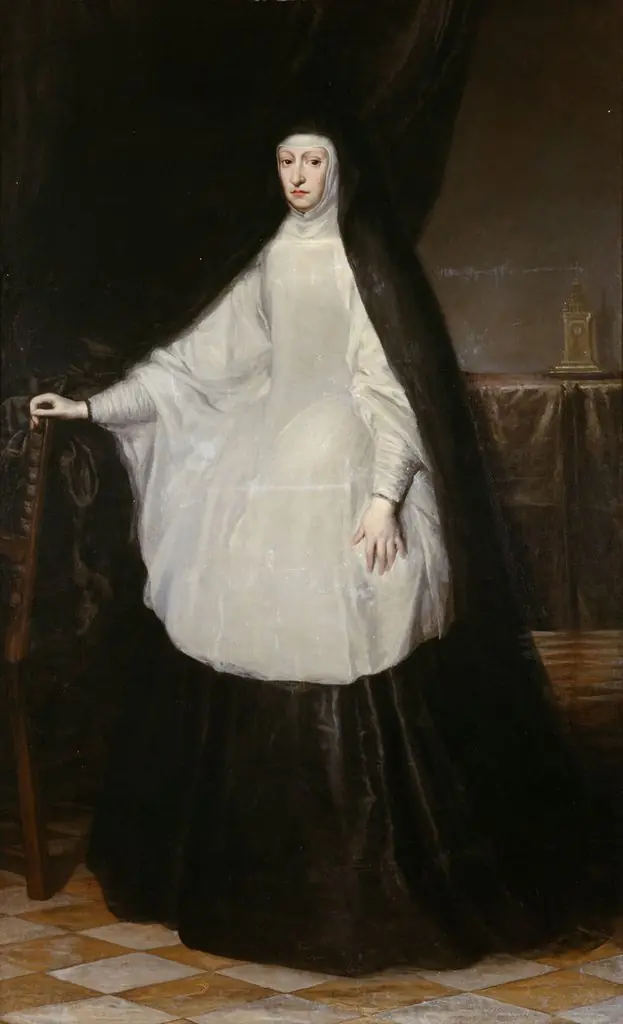 Erzherzogin Maria Anna, Königin von Spanien, als Witwe
 Portrait of Lysbeth Hendriksdr (1536-after 1603). Wife of Bartholomeus van der Wiere
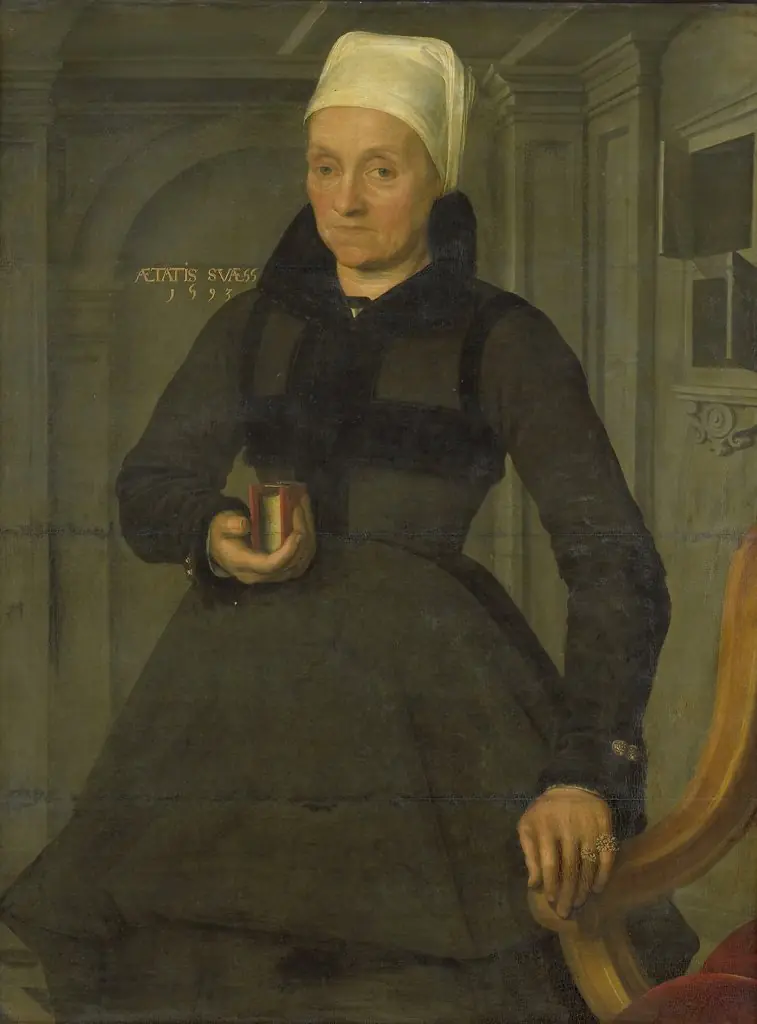 Portrait of Lysbeth Hendriksdr (1536-after 1603). Wife of Bartholomeus van der Wiere
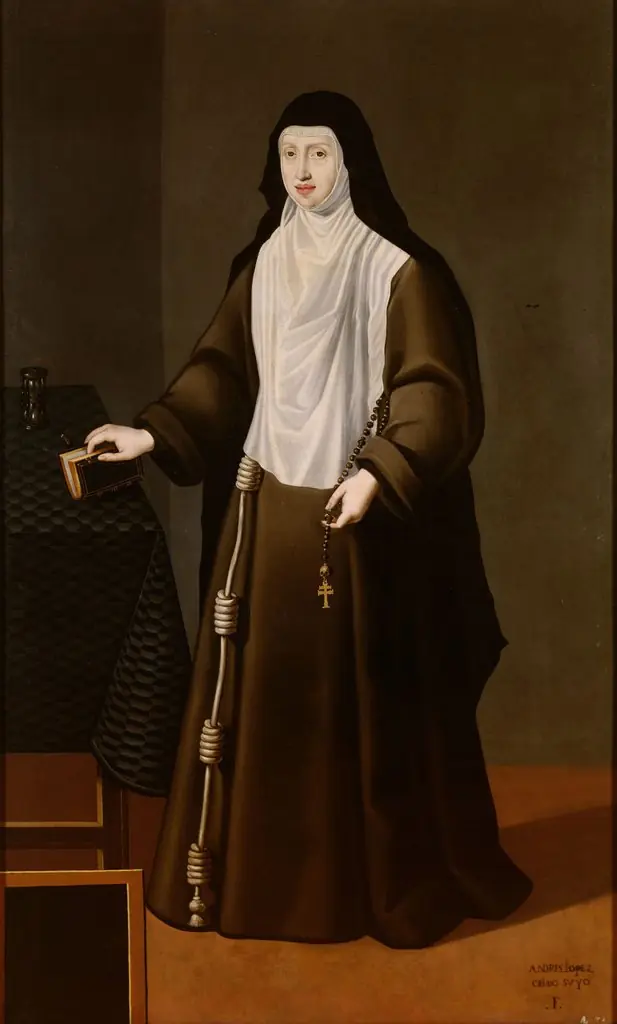 Erzherzogin Margarete (1567-1633), Tochter von Maximilian II. als Nonne in ganzer Figur
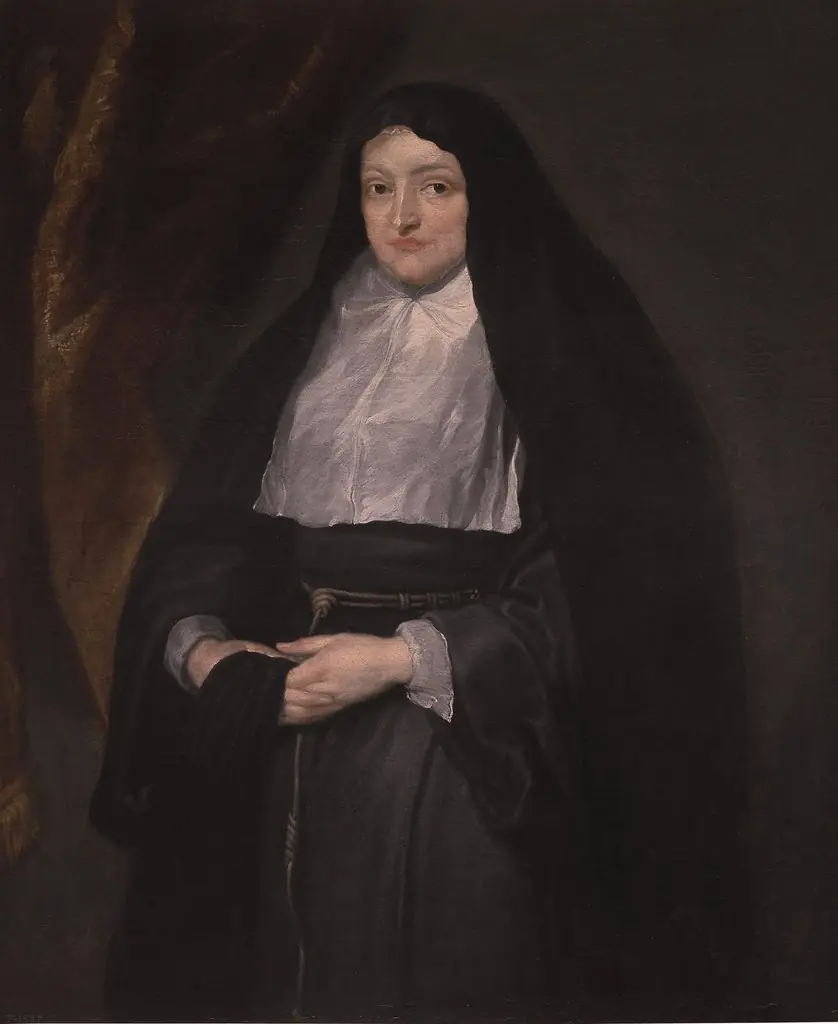 Portrait of Isabel Clara Eugenia as a nun
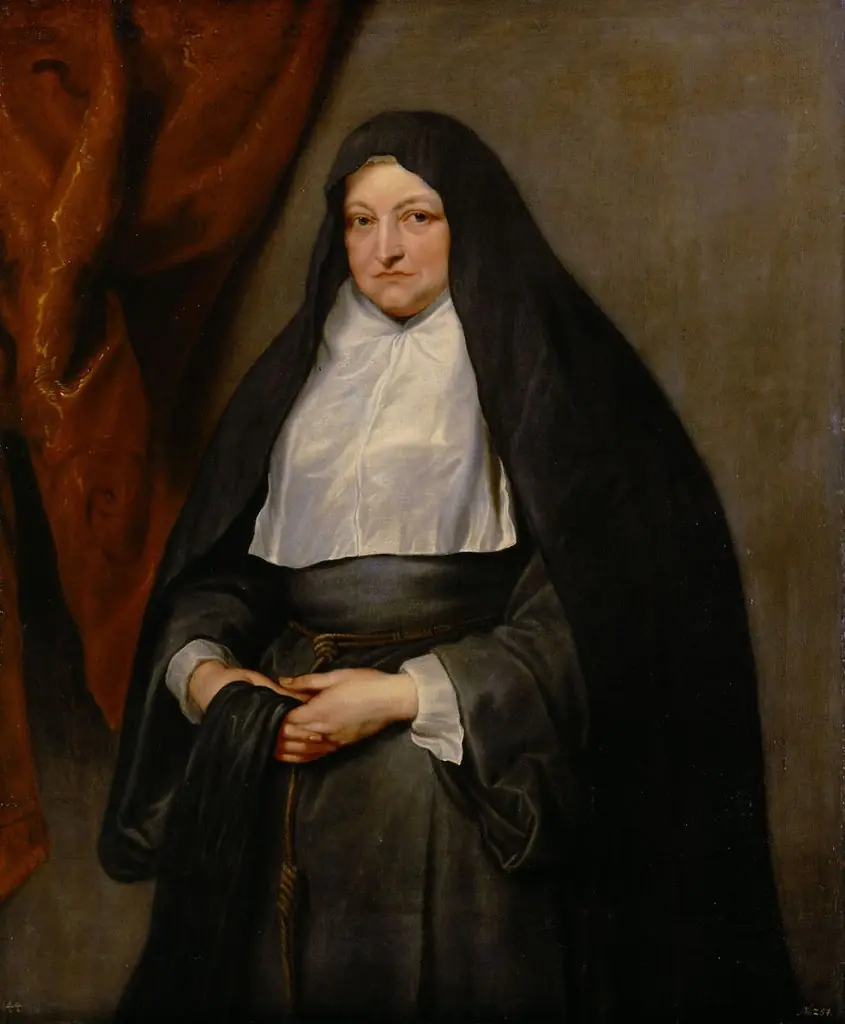 Infantin Isabella Clara Eugenia, portrait as a widow
 Portrait of Katharine Elliot (died 1688), Dresser of Duchess Anne of York and First Woman of the Bedchamber of Queen Mary of Modena, the first and second Wives of James II of England, respectively
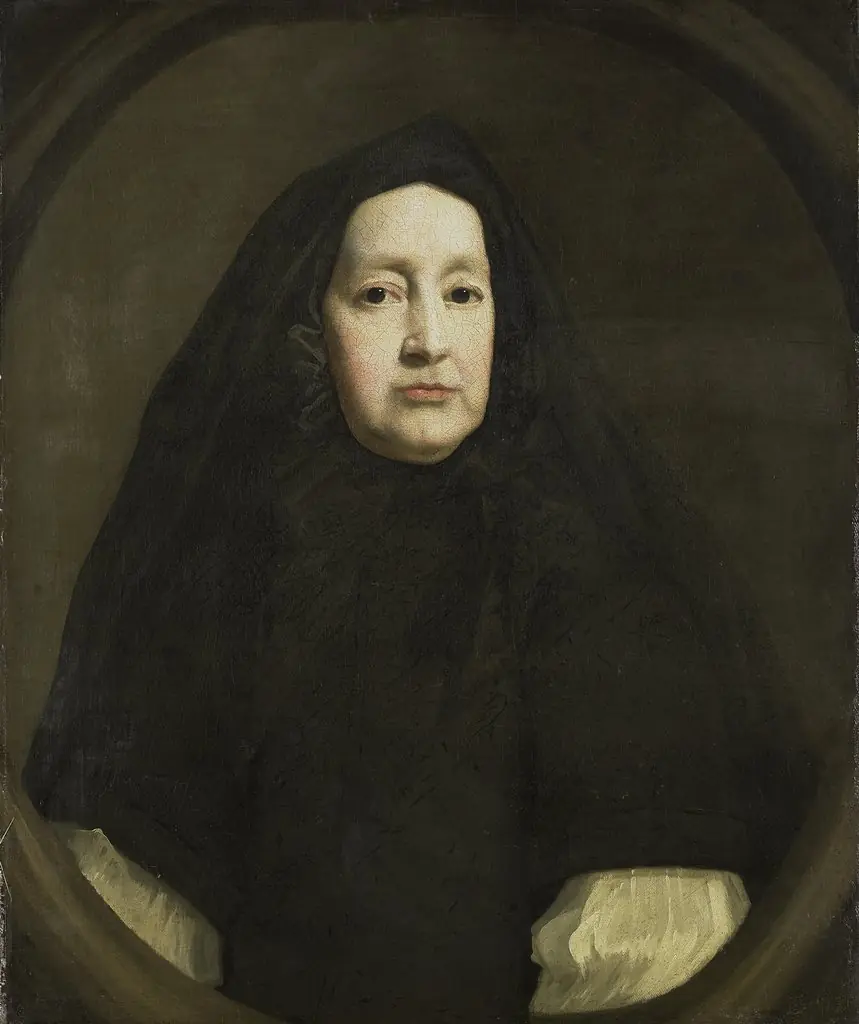 Portrait of Katharine Elliot (died 1688), Dresser of Duchess Anne of York and First Woman of the Bedchamber of Queen Mary of Modena, the first and second Wives of James II of England, respectively
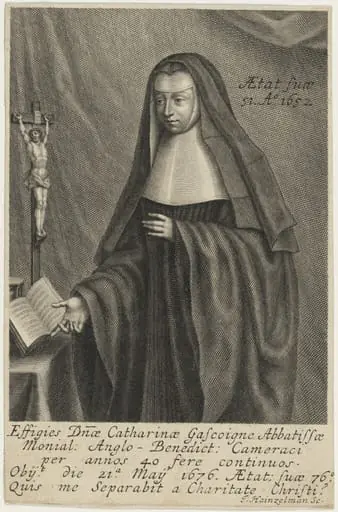 Catherine Gascoigne