Artwork
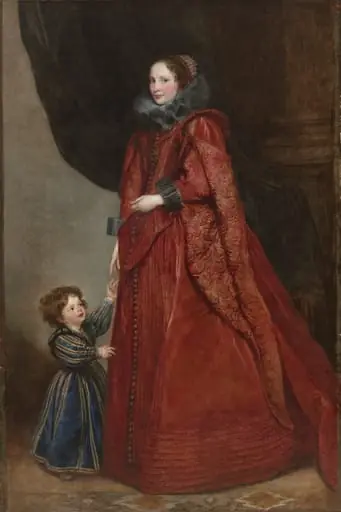
A Genoese Noblewoman and Her Son
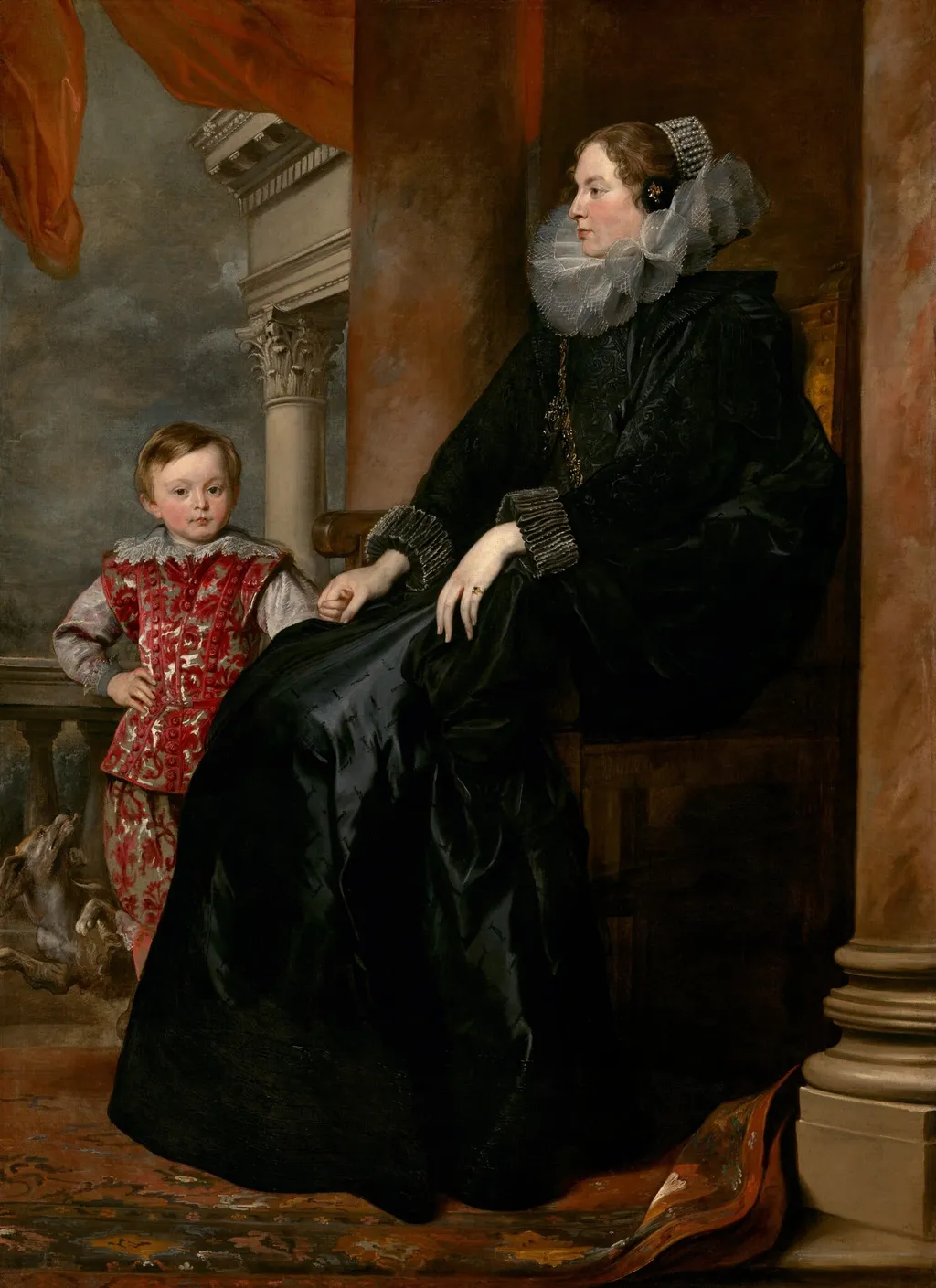
A Genoese Noblewoman and Her Son is an oil painting by the Baroque artist Anthony van Dyck. It dates from 1626 and is held in the collection of the National Gallery of Art.
About this work
Subject & Meaning
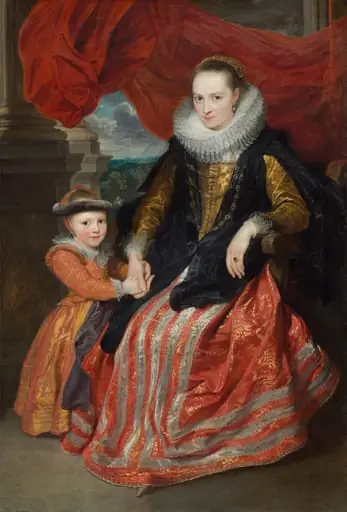
The canvas shows a Genoese noblewoman seated on a terrace while she cradles her young son, a composition that emphasizes their close physical connection.
The canvas shows a Genoese noblewoman seated on a terrace while she cradles her young son, a composition that emphasizes their close physical connection. She wears a dark, possibly mourning, garment and their hands are intertwined at the center of the picture, drawing attention to the maternal bond. The setting and attire reflect the sitter’s aristocratic status and the importance of lineage in early‑17th‑century Genoese society.
Contemporary records suggest the woman may be Paola Adorno, though her exact identity remains unconfirmed. The painting thus serves as a visual statement of family heritage and social prestige.
Technique & Style
Executed in 1626, this Baroque portrait is an oil painting on canvas measuring 191.5 by 139.5 centimeters. The composition features a seated noblewoman and her young son positioned on a terrace, with their clasped hands serving as the visual focal point of the work. Stylistically, the artist contrasts the boy's apparent vitality and maturity against his mother's somber presence; she is clad in a heavy black gown, a sartorial choice that may signify widowhood.
The handling of the figures emphasizes the intimate physical connection between mother and child within a formal setting, characteristic of van Dyck's Genoese period portraiture.
History & Provenance
The painting titled 'A Genoese Noblewoman and Her Son' was executed by Anthony van Dyck in 1626 as an oil on canvas portrait. Its early ownership is documented in Genoa, where it may have been in the collection of Pier Francesco Grimaldi by 1780. The work was probably acquired by George Greville by 1787 and remained in the Greville family, passing through successive earls of Brooke and Warwick Castle until the early twentieth century.
In 1909 it entered the collection of Peter A. B. Widener, and following his death was gifted to the National Gallery of Art in 1942. The composition reflects the Baroque portraiture style typical of van Dyck’s English period.
The painting A Genoese Noblewoman and Her Son is held by the National Gallery of Art in Washington, D.C. Its provenance traces a descent from the Genoese collection of Pier Francesco Grimaldi in the late 18th century, through the aristocratic Greville family of Warwick Castle, to the American financier Peter A. B. Widener, who acquired it in 1909, and finally to the National Gallery of Art, which received it as a gift in 1942. The work remains in the museum’s European paintings galleries, where it is periodically displayed as part of the institution’s permanent collection.
Context
The painting belongs to Anthony van Dyck's Genoese portraiture of 1626, executed during the artist's formative Italian period. Scholarly literature situates the work within the broader Baroque movement and within van Dyck's Genoese commissions, with the painting cited in studies by Didier Bodart, Christopher Brown, and Justus Müller Hofstede, as well as in Gian Pietro Bellori's foundational Vite de' pittori, scultori et architetti moderni. Stefano Zuffi's survey of Baroque art likewise references the canvas.
The sitter's identity, long considered to be Paola Adorno, Marchesa di Brignole-Sale, has been questioned by modern scholarship, including Piero Boccardo's examination of Rubens's and van Dyck's Genoese portraits, which revisits attributions in light of contemporary descriptions such as Ratti's 1780 reference to a "Dama con un bimbo per mano." The work's provenance through the Grimaldi, Greville, and Widener collections reflects its early recognition as a van Dyck masterpiece.
Legacy
The work’s later trajectory helped shape its scholarly reputation. After passing through the Grimaldi, Greville, and Widener collections, it entered the National Gallery of Art in 1942, a transfer documented in provenance records [1]. Its inclusion in major references such as Wikidata identifies it as a Baroque portrait by van Dyck and notes its ownership by Peter A. B. Widener [2], underscoring its recognized status in art historical databases.
Italian Wikipedia further highlights its significance as a representative example of Genoese aristocratic portraiture, discussing possible identification of the sitter [3]. These accounts collectively illustrate how the painting’s documented history and visibility in prominent institutions have contributed to its enduring legacy within Van Dyck studies.
Overview
This oil on canvas painting, "A Genoese Noblewoman and Her Son," was created by Anthony van Dyck around 1626. It presents a formal portrait of an unidentified noblewoman and a young boy, likely her son, from Genoa. The artwork captures the subjects within an elegant interior, reflecting the sophisticated social standing of the Genoese aristocracy during the period. The composition conveys a sense of dignity and refinement.
Own this work as a print
Artist & collection
Artist
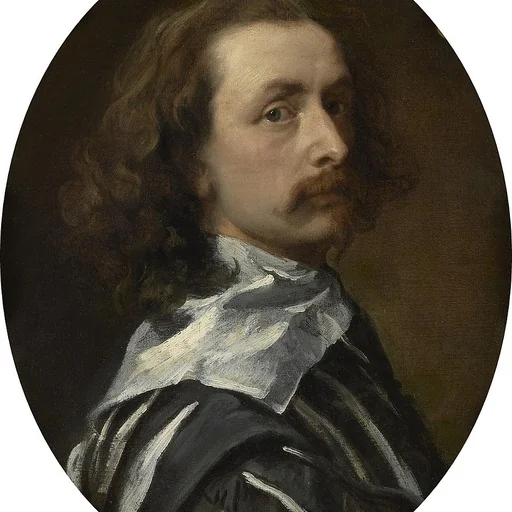
Sir Anthony van Dyck (; Dutch: Antoon van Dijck; 22 March 1599 – 9 December 1641) was a Flemish Baroque artist, who became the leading court painter in England after success in the Spanish Netherlands and Italy.