Artwork
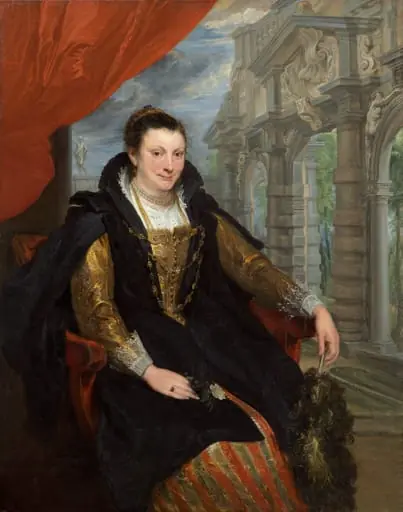
Marchesa Balbi
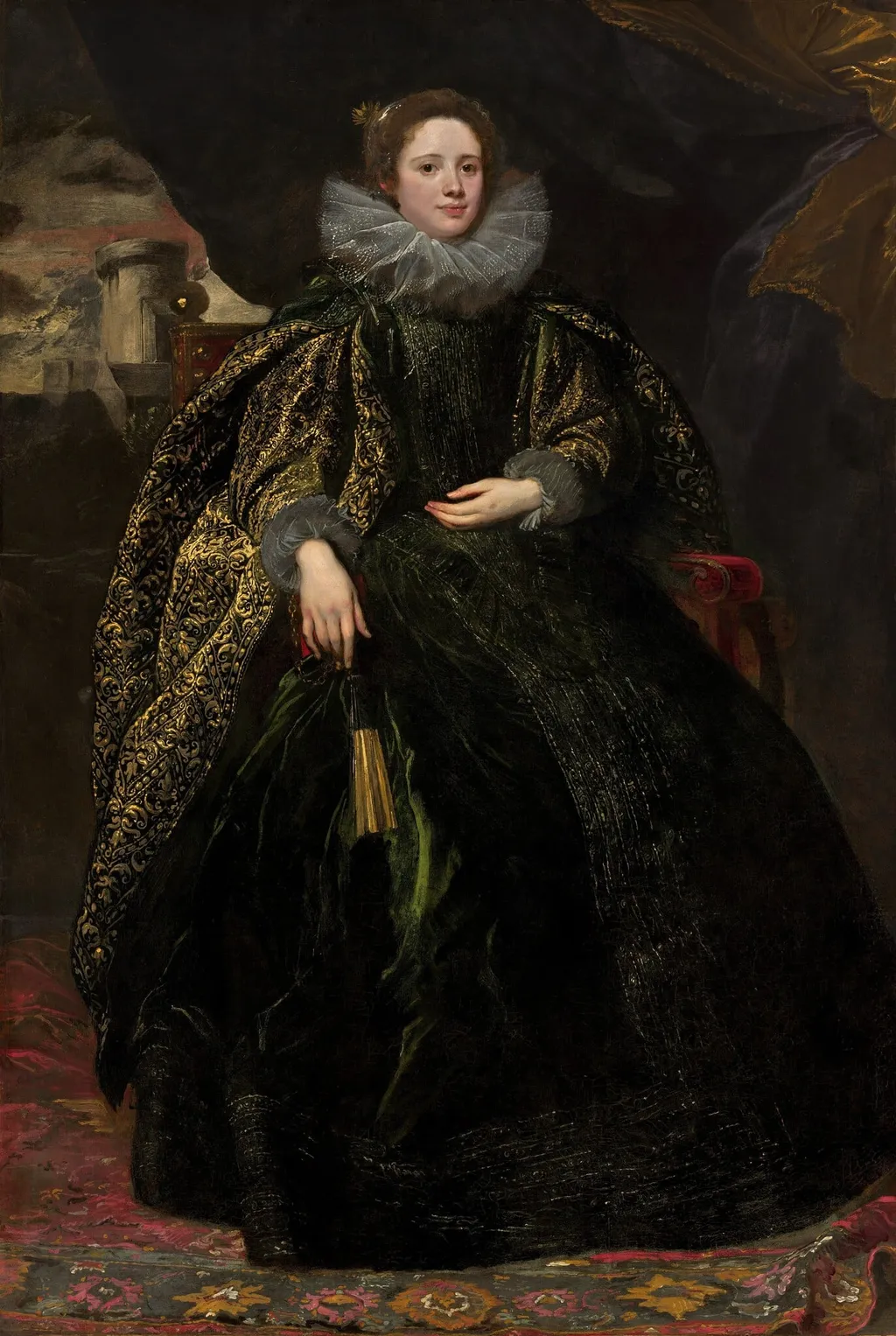
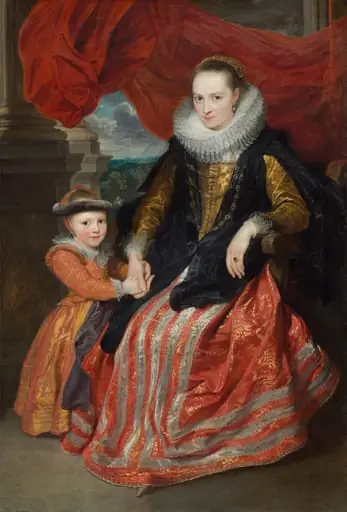
Marchesa Balbi is an oil painting by the Baroque artist Anthony van Dyck. It dates from 1623 and is held in the collection of the National Gallery of Art.
About this work
Technique & Style
The oil medium allows for the detailed rendering of textures and fabrics characteristic of the artist's style during this era.
Created circa 1623, the portrait of the Marchesa Balbi is executed in oil paint on a canvas support. The work measures 196.5 cm in height and 133.8 cm in width, presenting a full-length depiction of the sitter. As a product of Anthony van Dyck's Genoese period, the painting exemplifies his formal approach to aristocratic portraiture.
The oil medium allows for the detailed rendering of textures and fabrics characteristic of the artist's style during this era.
History & Provenance
The work, an oil-on-canvas portrait of Marchesa Balbi, was painted by Sir Anthony van Dyck circa 1623. It remained in the Balbi family in Genoa until 1819, after which it passed through the hands of possibly Auguste de Sivry in Venice. In 1836 Baron John Benjamin Heath sold it in London to Robert Staynor Holford, whose lineage retained the piece until the death of Sir George Lindsay Holford; his estate then sold the painting to Duveen Brothers in February 1926, and Andrew W. Mellon acquired it the same month.
Mellon later deeded the work to the Andrew W. Mellon Educational and Charitable Trust in December 1934, and the painting was gifted to the National Gallery of Art in Washington, D.C., in 1937. The artwork's exhibition history includes discussion within the catalog for the 1992 exhibition Kunst in der Republik Genua 1528–1815, organized by the Schirn Kunsthalle in Frankfurt, and the 1994 publication Van Dyck 350.
Context
The painting is a portrait by Anthony van Dyck from his early Genoese period, reflecting his role in portraiture and influence on later artists. Scholarship discusses its attribution, its place within van Dyck's development, and its reception in Genoese elite circles. Its inclusion in the Mellon collection and later donation to the National Gallery has allowed sustained study, positioning it as an example of van Dyck's integration of Flemish technique with Italian patronage, informing broader narratives of 17th-century portraiture.
Overview
Sir Anthony van Dyck's "Marchesa Balbi," an oil on canvas painting from approximately 1623, presents a formal portrait. This work exemplifies the artist's approach to depicting aristocratic figures during his career. The painting captures a specific individual, whose identity is indicated by the title, rendered with the characteristic techniques of the period.
Subject & Meaning
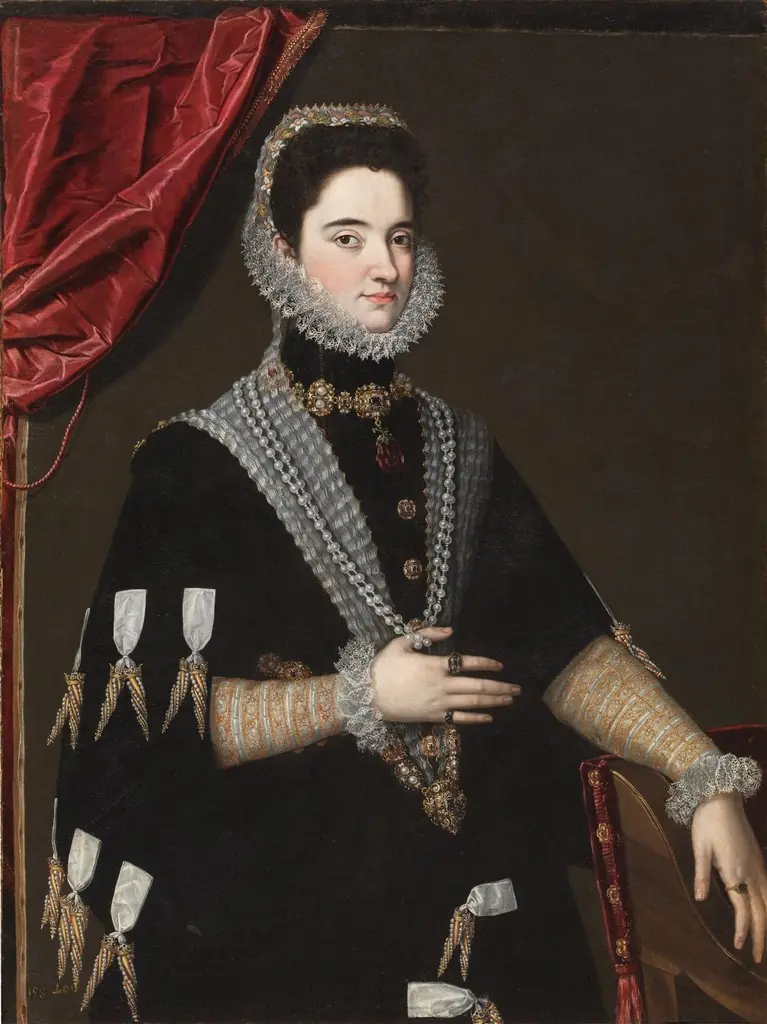
The portrait depicts a woman seated, her posture conveying a sense of composure. She is dressed in a dark gown, complemented by a prominent white collar that frames her face. A cloak, richly adorned with gold trim, is draped over her shoulders, suggesting her social standing and the fashion of the era. The attire emphasizes the sitter's status through its elaborate details.
Own this work as a print
Artist & collection
Artist
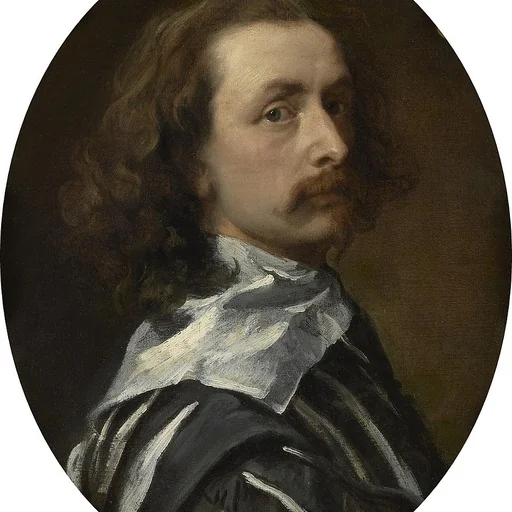
Sir Anthony van Dyck (; Dutch: Antoon van Dijck; 22 March 1599 – 9 December 1641) was a Flemish Baroque artist, who became the leading court painter in England after success in the Spanish Netherlands and Italy.

 Portrait of Margaret of Savoy, Duchess of Mantua
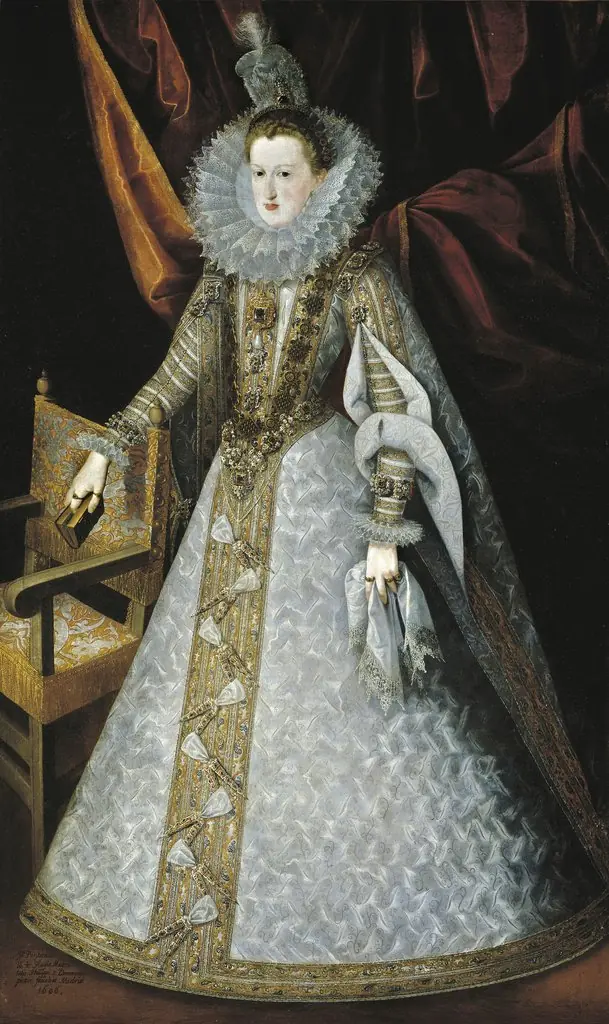 Margaret of Austria
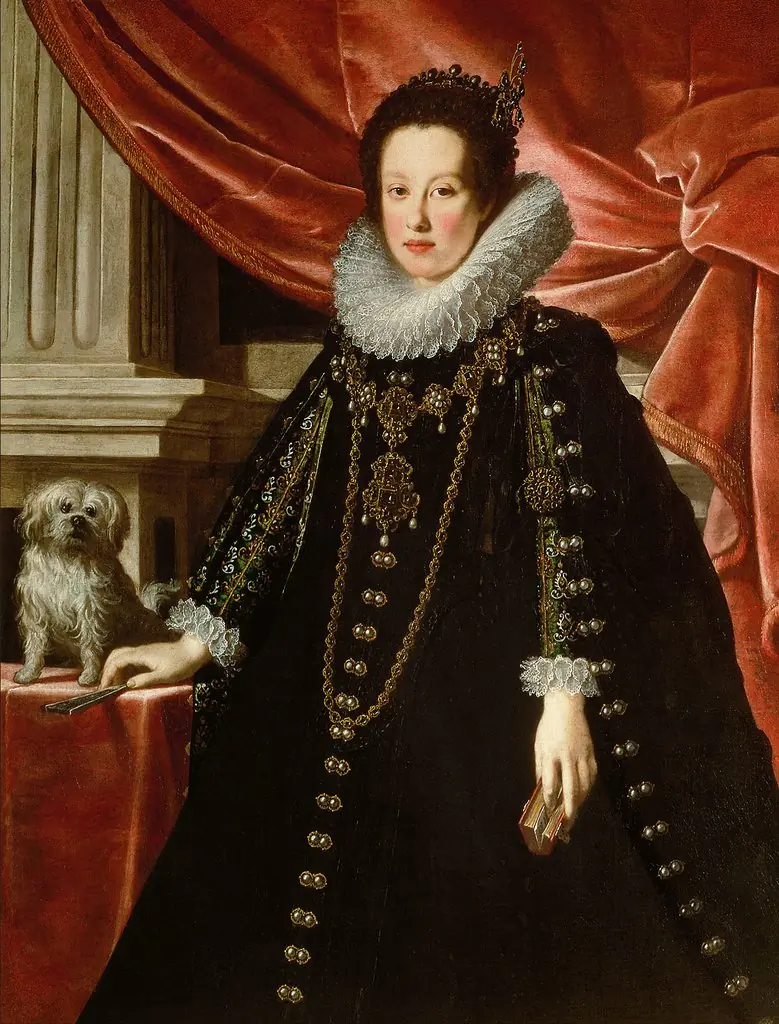 Portrait of Anna de' Medici (1616-1676), Archduchess with her Lapdog
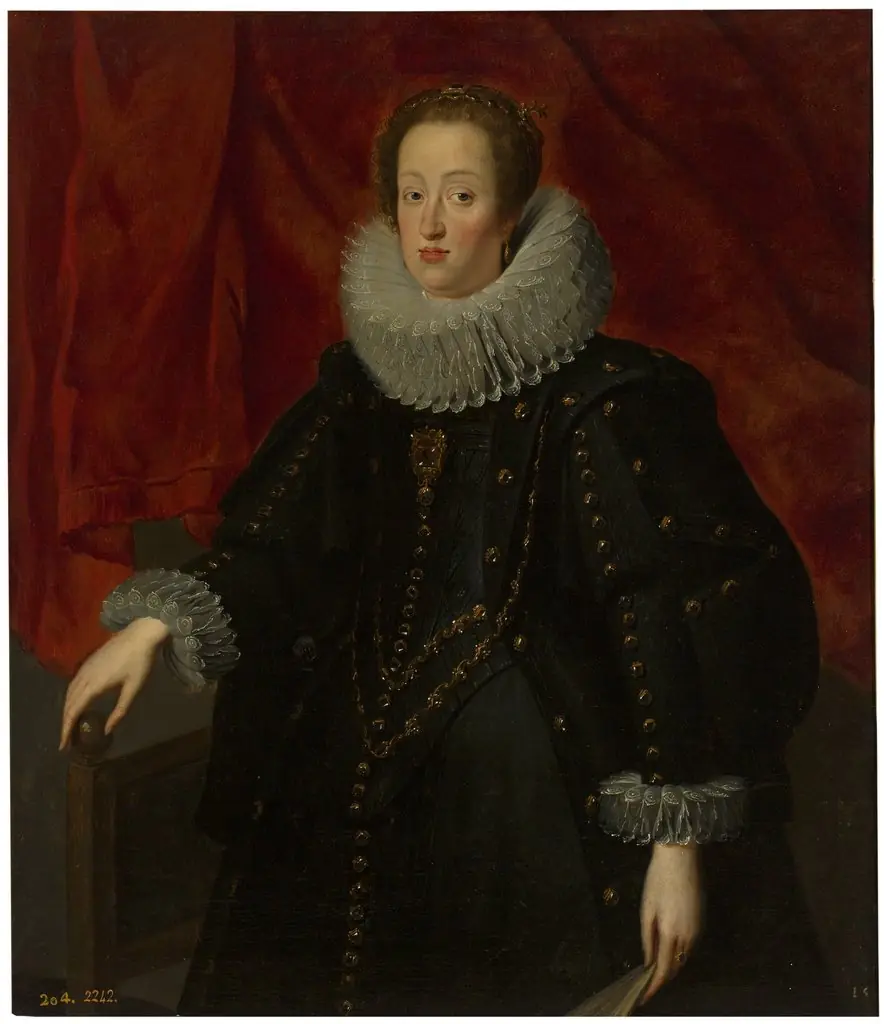 Leonor de Màntua
 Portrait of Elisabeth Renata von Lothringen, wife of Maximilians I. von Bayern
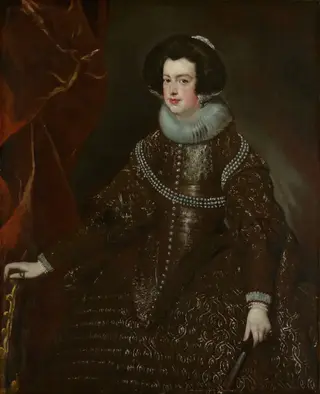 Isabella of Bourbon, Wife of Philip IV of Spain
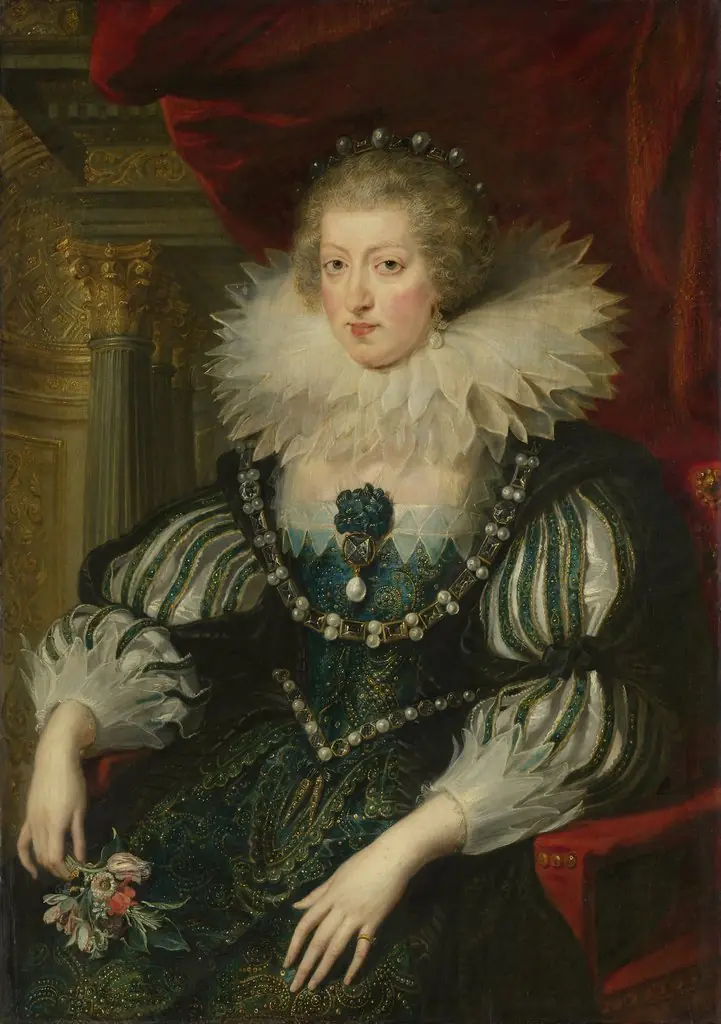 Anne of Austria (1601-66). Wife of Louis XIII, king of France
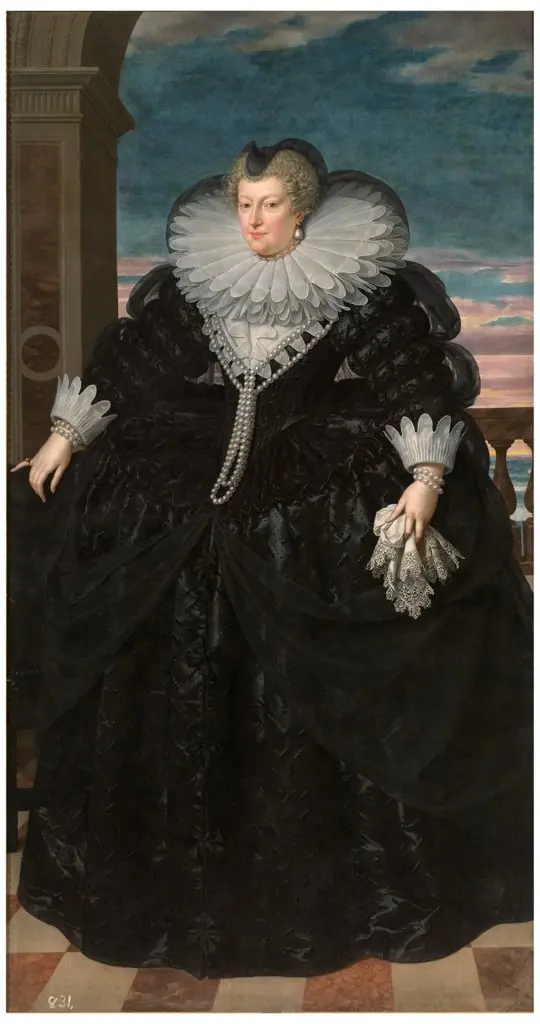 Marie de' Medici as widow
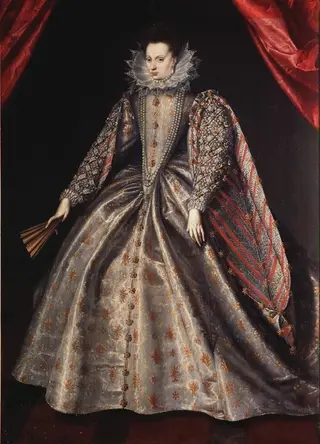 Elisabeth Renata von Lothringen
 Portrait of a Lady