Artwork
Portrait of a Man
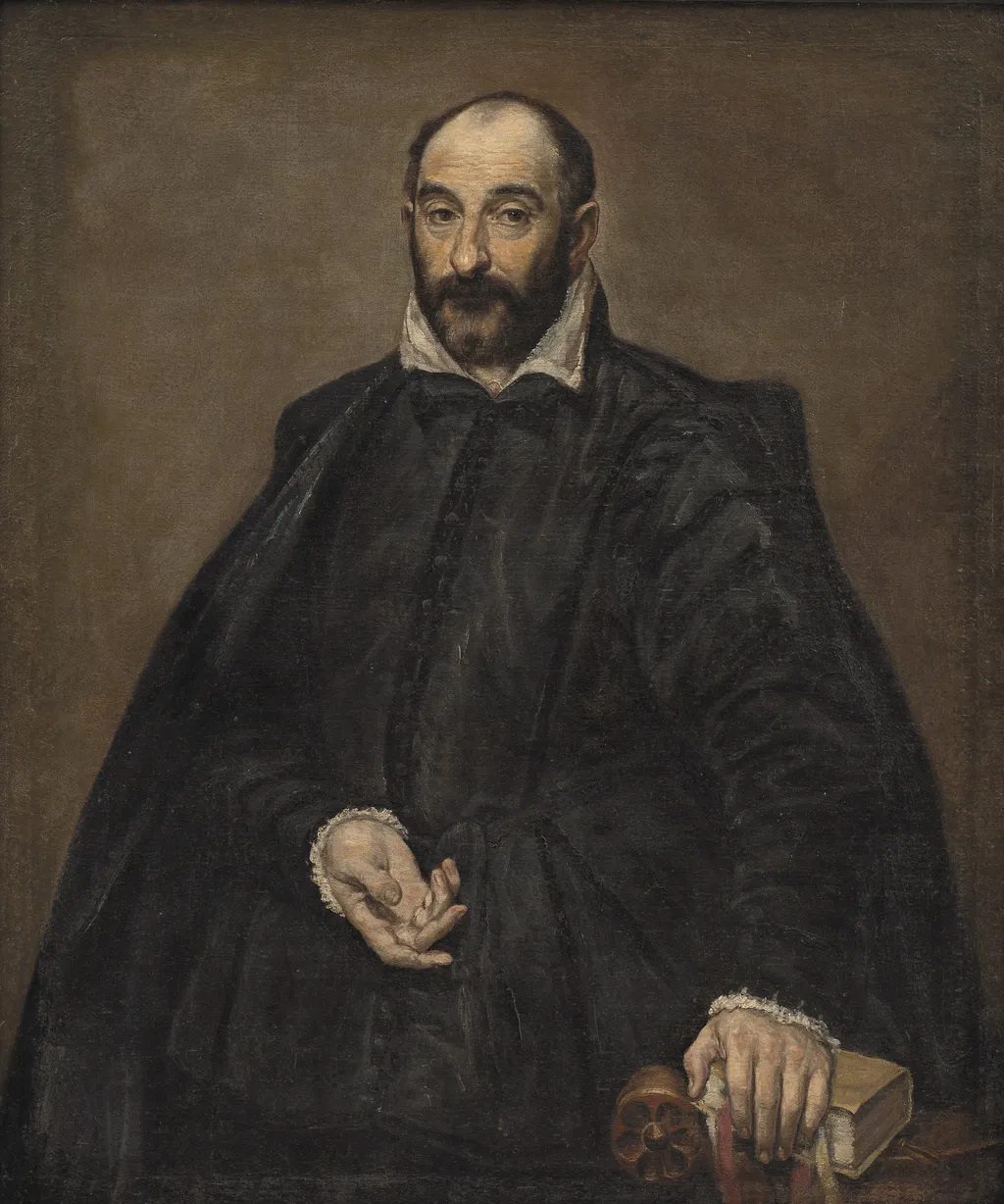
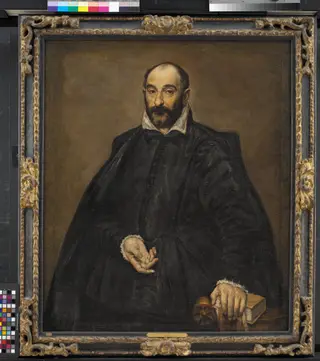
Portrait of a Man is an oil painting by the Mannerist artist El Greco. It dates from 1570 and is held in the collection of the Statens Museum for Kunst.
About this work
Subject & Meaning
The combination of these gestures evokes Horace’s maxim Ut pictura poesis, linking painting to poetry.
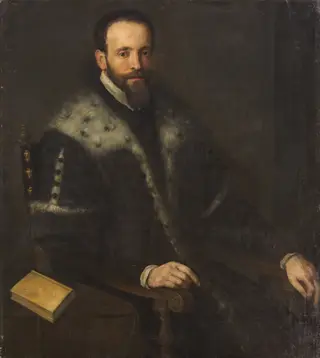
The portrait shows a man seated in three-quarters view, his left hand resting on an open book marked with white and red ribbons, and his right hand raised in a gesture resembling an orator’s. The combination of these gestures evokes Horace’s maxim Ut pictura poesis, linking painting to poetry. The sitter’s identity remains uncertain; scholars have variously proposed Andrea Palladio, Giovanni Battista della Porta, or an unnamed intellectual, but no consensus exists.
The painting’s realistic facial rendering, naturalistic hand gestures, and the use of a plain grey background reflect influences from Titian and Jacopo Bassano while displaying El Greco’s distinctive naturalism. It was created during El Greco’s Roman period, likely between 1570 and 1575, and later entered the collection of the Statens Museum for Kunst in Copenhagen after passing through the collections of Rubens and the Danish royal family.
Technique & Style
The portrait is painted in oil on canvas, measuring 116 by 98 centimeters, and was created between 1570 and 1575 while El Greco was residing in Rome, a period marked by his association with the intellectual circle of the Farnese family and the influence of humanist thought. The work depicts a man in three-quarter view, resting his left hand on a book marked with white and red ribbons and holding a stylus in his right hand, a gesture interpreted as an embodiment of the classical maxim 'Ut pictura poesis.' The painting is distinguished by its striking realism, particularly in the rendering of facial features, and by a restrained composition against a plain gray background, reflecting the impact of Titian's portraiture while incorporating elements of Mannerist style and Bassano's naturalism.
The attribution has evolved over time, initially misidentified as a work by Tintoretto and later recognized as a genuine piece by El Greco, with a signature in Greek letters discovered in 1898. Provenance traces the painting from a 1641 sale in Antwerp, through Paris in 1761, to its acquisition by the Royal Collection in Copenhagen in 1763, where it remains on display at the Statens Museum for Kunst.
History & Provenance
Executed between 1570 and 1775 during El Greco's residence in Rome, this oil painting emerged from an intellectual circle associated with the Farnese family. Originally misattributed to Tintoretto, the work was likely sold in Antwerp in 1641 as part of Peter Paul Rubens's estate. It subsequently appeared in Paris, where it was auctioned on February 11, 1761, from the collection of the Count of Vence, still identified as a piece by Tintoretto.
The Danish royal collection acquired the canvas in 1763 for placement at Christiansborg Palace in Copenhagen. The artist's true identity remained obscured until 1898, when a fragmentary signature in Greek capitals reading "DOMÉNIKOS THEOTOKÓPOULOS" was discovered on the table surface, confirming El Greco's authorship.
The painting is held by the Statens Museum for Kunst (the National Gallery of Denmark) in Copenhagen, having entered the Royal Collection at Christiansborg Palace in 1763. It was previously in Paris, where it was sold on 11 February 1761 as a work by Tintoretto, and likely earlier passed through the estate of Rubens in Antwerp following his death in 1641, again attributed to Tintoretto. The painting is catalogued as number 154 in Harold Wethey's catalogue raisonné and as reference 14 in Tiziana Frati's monograph.
A signature on the table at lower right, in fragmentary Greek capitals reading DOMÉNIKOS THEOTOKÓPOULOS, was discovered in 1898, leading to its reattribution to El Greco.
Context
Painted in Rome between 1570 and 1575, the work reflects El Greco's immersion in the intellectual circle of the Farnese family and Renaissance humanism. Critical analysis highlights the portrait's extraordinary realism, marking a departure from the hieratic style of earlier decades. While the sitter's identity remains debated, scholars Harold Wethey and others have proposed the subject is the scholar Giovanni Battista della Porta, countering earlier suggestions of the architect Andrea Palladio.
The composition synthesizes influences from Jacopo Bassano and Titian, utilizing a three-quarter view against a gray background and specific hand gestures that allude to Horace's dictum "Ut pictura poesis."
The painting's art-historical significance was solidified in 1898 with the discovery of the artist's fragmentary Greek signature, correcting its long-standing misattribution as a work by Tintoretto or a self-portrait. It is catalogued as number 154 in Wethey's raisonné and number 14 in Tiziana Frati's comprehensive study, confirming its status as a key example of the artist's Roman period.
Overview
Executed around 1570, this oil portrait by the Spanish-Mannerist painter El Greco presents a seated figure in a dark interior. The composition is dominated by a deep black robe contrasted with stark white collar and cuffs, while a modestly bound volume rests on the sitter’s right. The background consists of a muted brown tone, lending the work a somber, introspective atmosphere.
Own this work as a print
Artist & collection
Artist
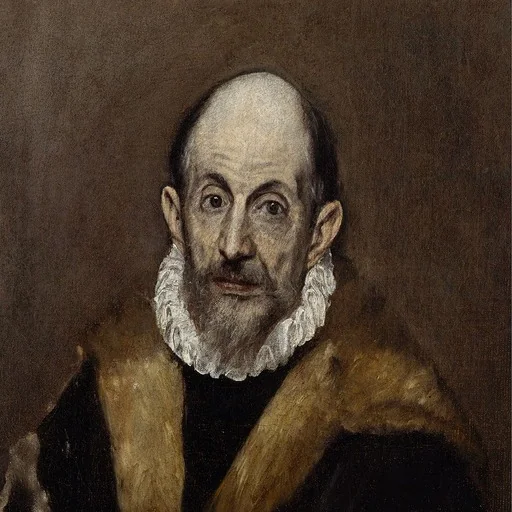
Doménikos Theotokópoulos was born in 1541 in Candia (modern Heraklion), the capital of Venetian-ruled Crete, where he was trained in the post-Byzantine tradition of icon painting.

- Portrait of a Man
 Portrait of a Gentleman
 Portrait of a Man
 Portrait of Rodrigo de la Fuente
 Self-Portrait (?)
 Portrait of a gentleman
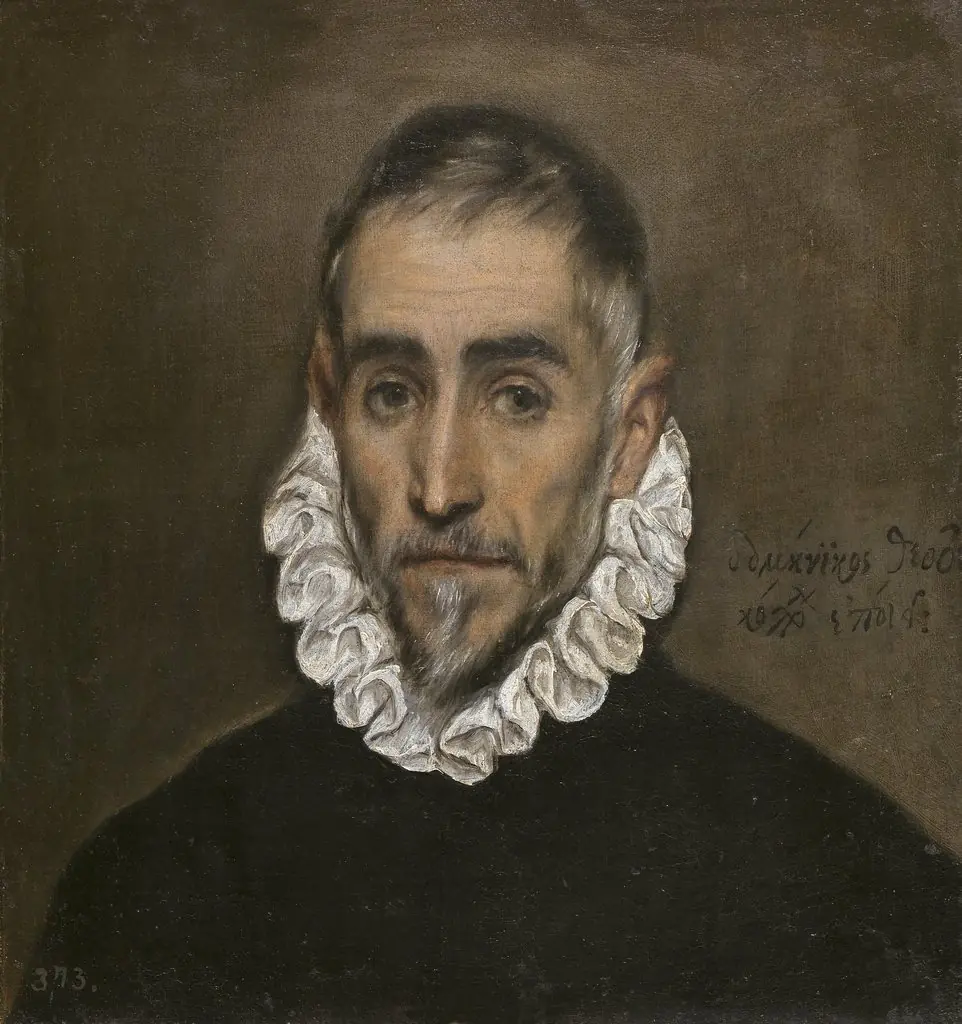 Portrait of an Elderly Man
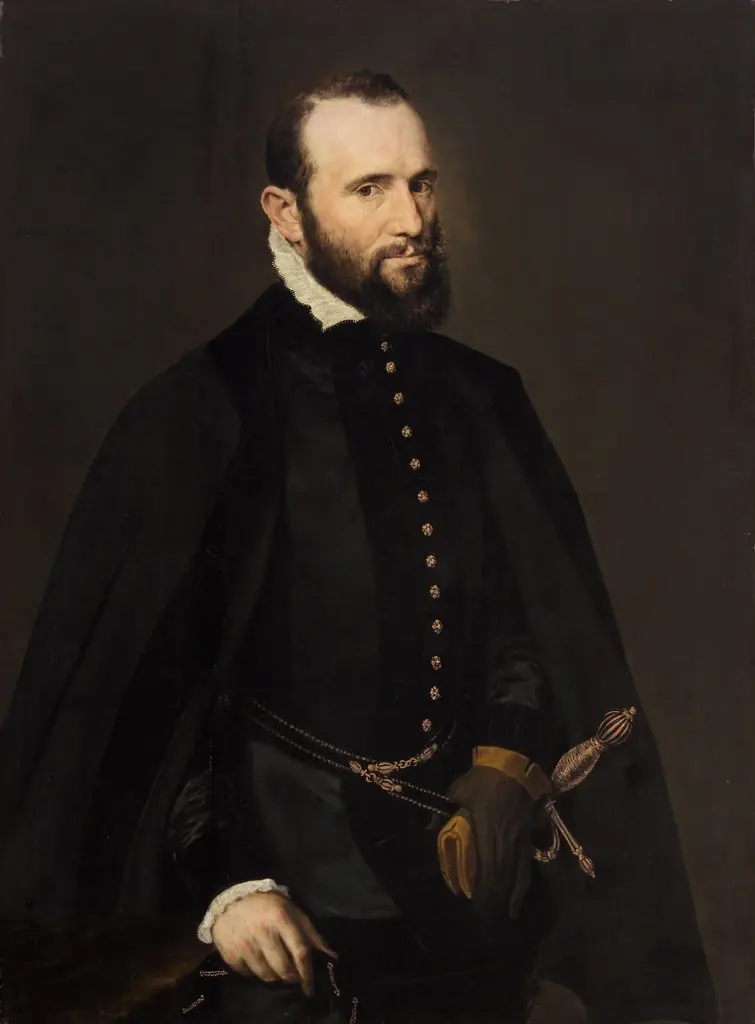 Portrait of a man
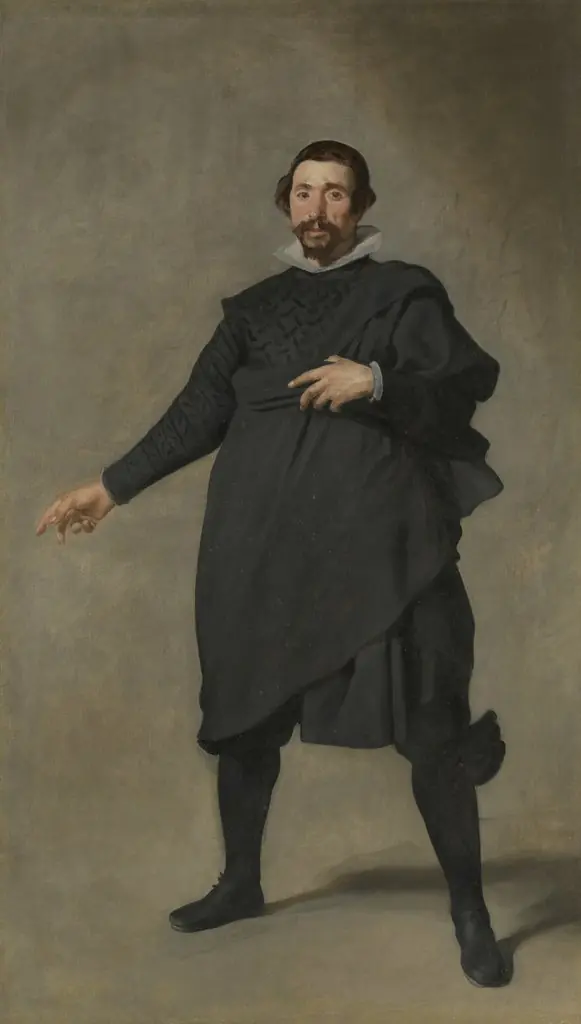 Portrait of Pablo de Valladolid
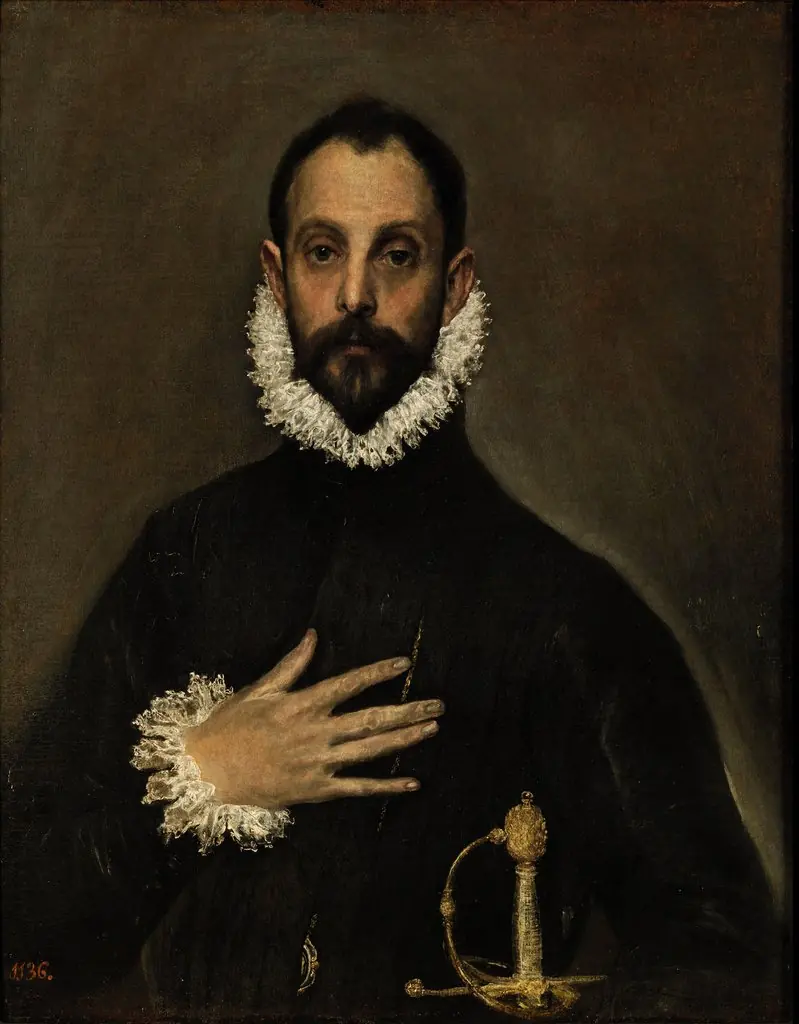 The Nobleman with his Hand on his Chest
 Portrait of Diego Hurtado de Mendoza
 Bildnis eines Mannes im Lehnstuhl