Artwork
The Railway Crossing (Sketch)
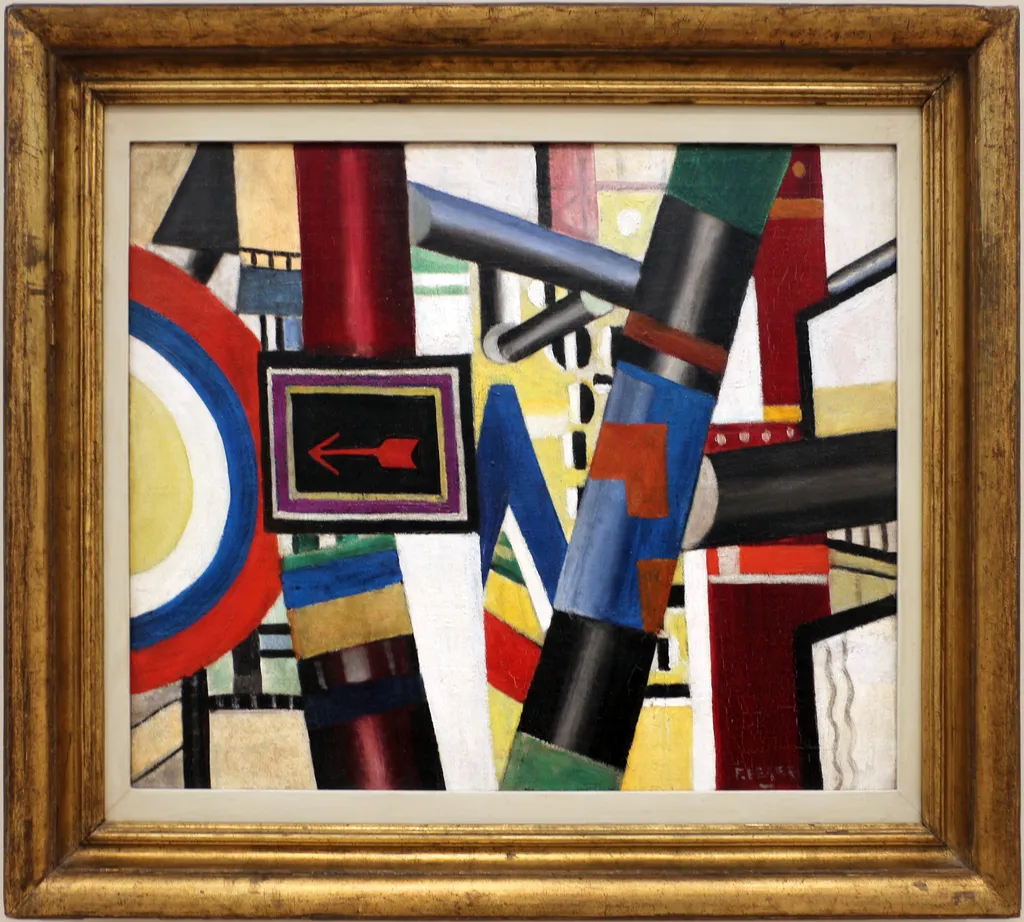
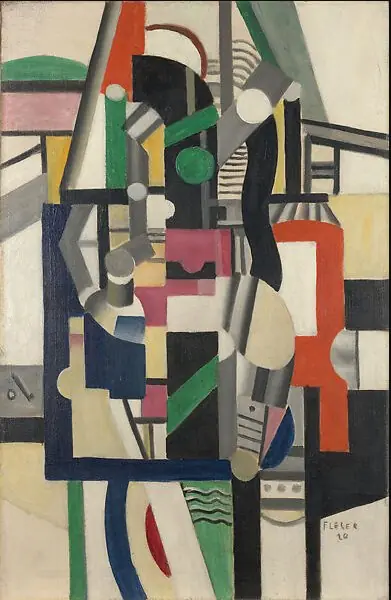
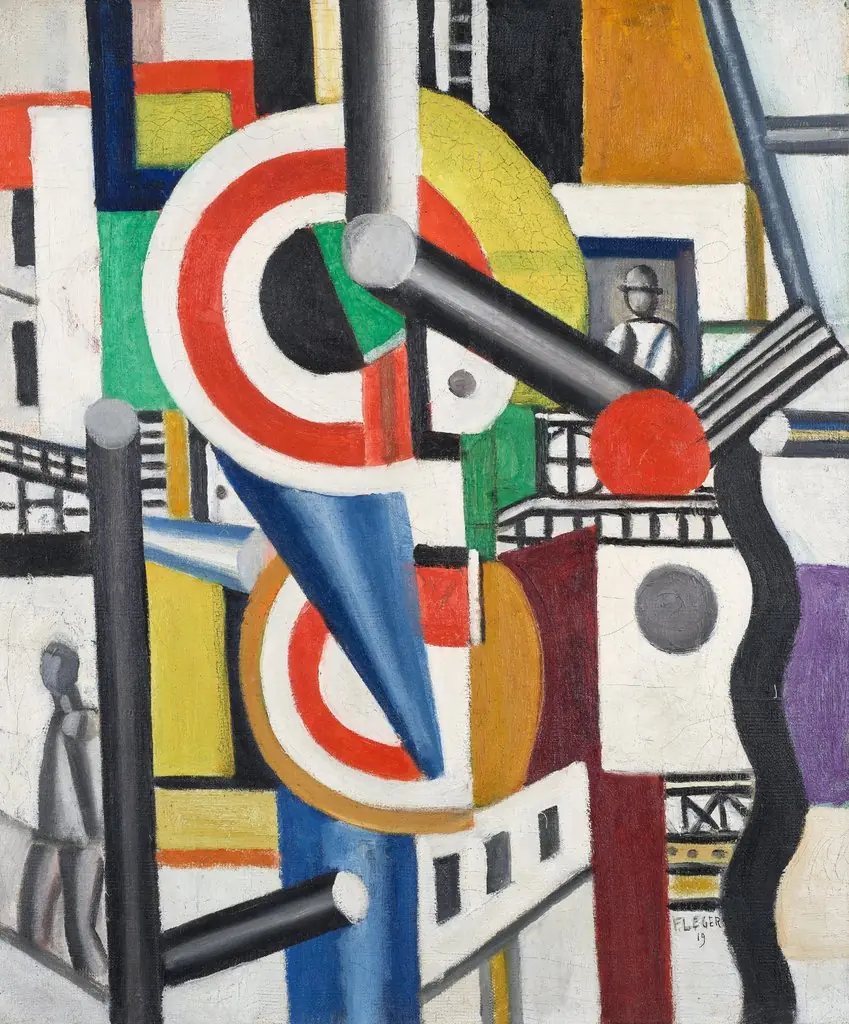
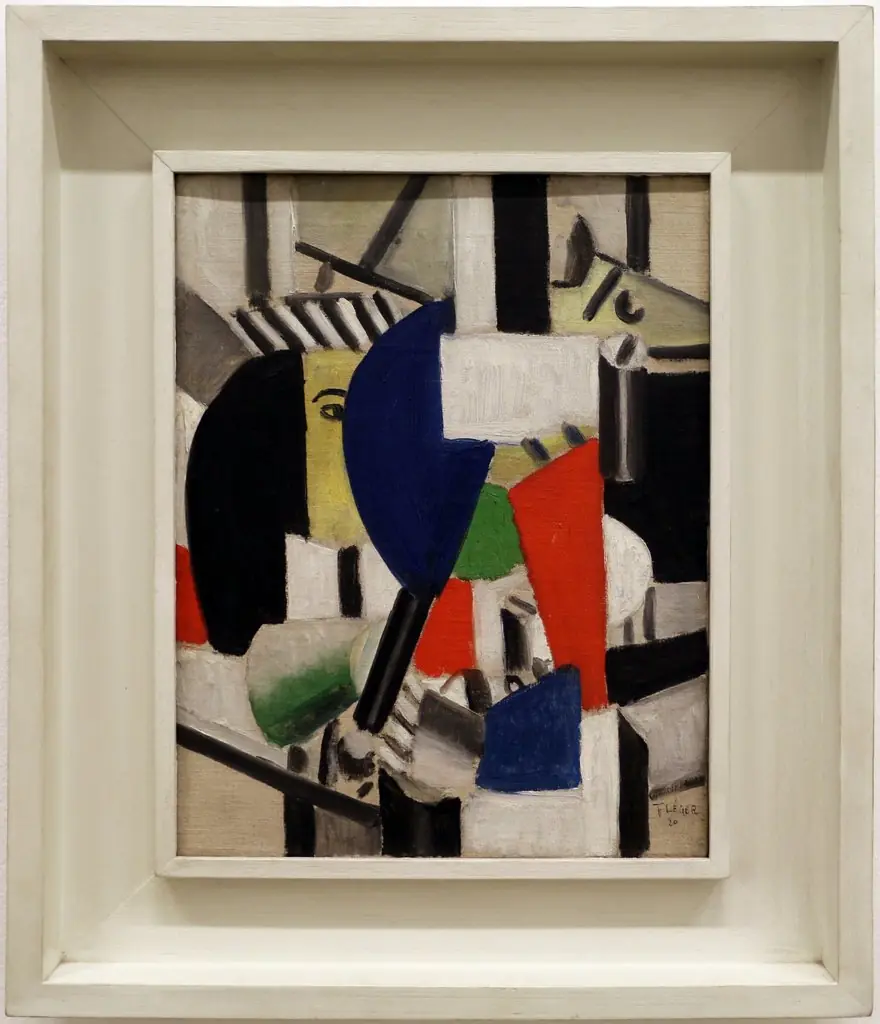
The Railway Crossing (Sketch) is an oil painting by the Cubism Synthetic artist Fernand Léger. It dates from 1919 and is held in the collection of the Art Institute of Chicago.
About this work
Overview
Painted in 1919, The Railway Crossing (Sketch) is an oil work by Fernand Léger that captures the visual rhythm of modern industrial life.
Painted in 1919, The Railway Crossing (Sketch) is an oil work by Fernand Léger that captures the visual rhythm of modern industrial life. Though labeled a sketch, it functions as a fully realized composition, emphasizing abstraction over literal representation. Its bold geometry and saturated hues reflect Léger’s interest in mechanized forms and urban energy, positioning the piece as a bridge between Cubism and early modernist abstraction.
Subject & Meaning
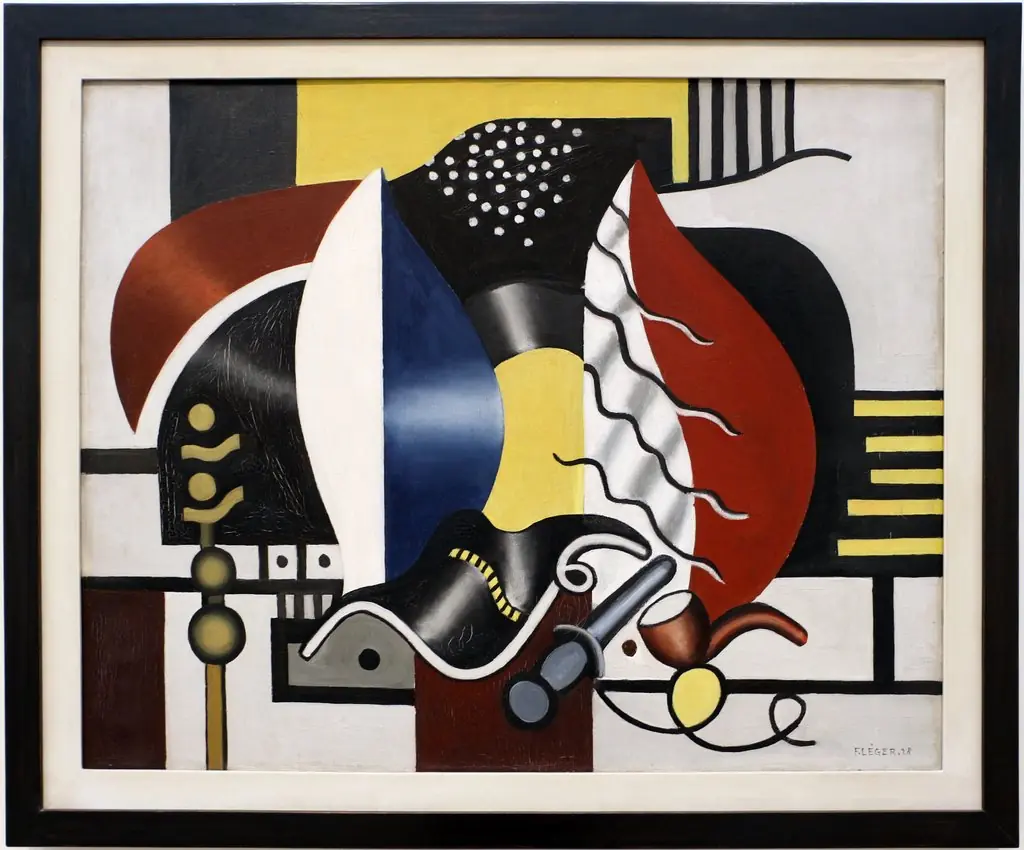
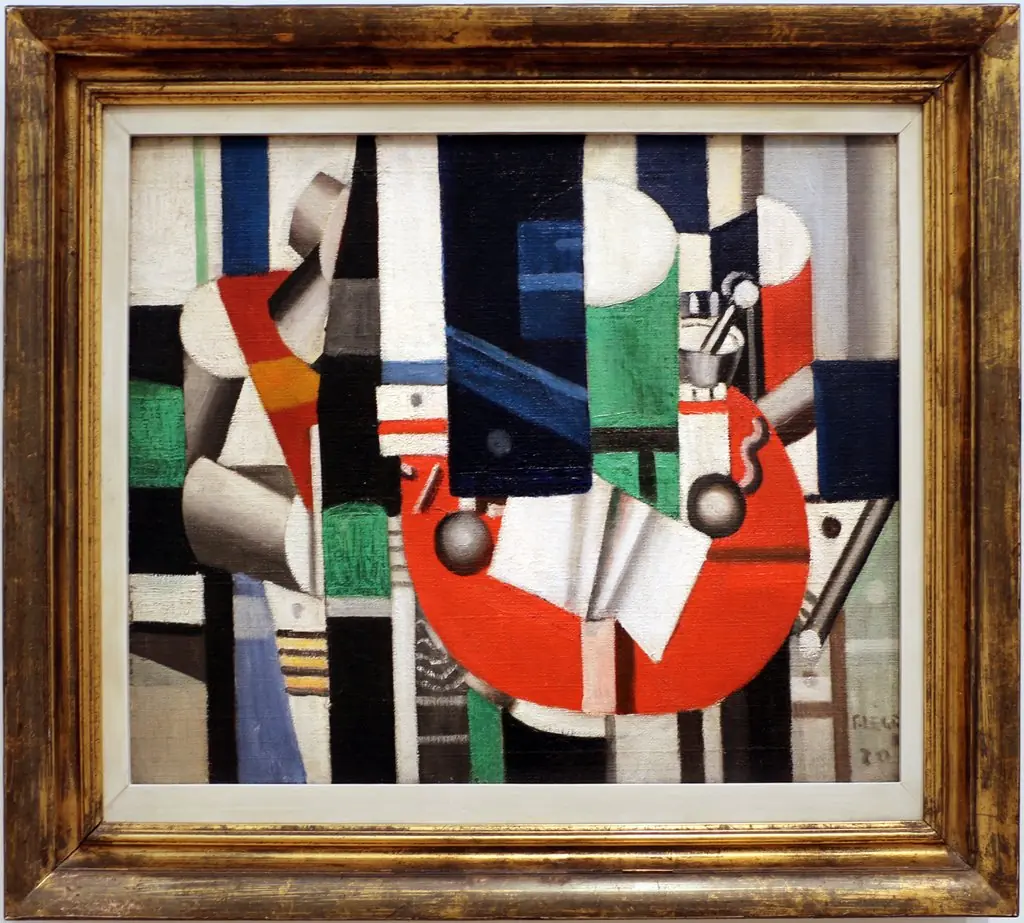
The painting evokes the movement and structure of a railway junction without depicting actual trains or tracks. Instead, intersecting planes and directional cues, like the red arrow on a black rectangle, suggest motion, direction, and mechanical order. The absence of human figures underscores a focus on infrastructure as a living, dynamic system, reflecting postwar fascination with technology and industrial progress.
Technique & Style
Léger employs flat, interlocking shapes in primary colors, red, blue, yellow, against black outlines to construct a sense of spatial tension. Forms overlap and collide, creating rhythmic visual pulses rather than depth. The brushwork is deliberate but unobtrusive; color areas are cleanly defined, emphasizing structure over texture. This approach aligns with his 'mechanical' aesthetic, reducing natural forms to their essential geometric components.
History & Provenance
Created shortly after Léger’s return from military service in World War I, the work emerged during a period of intense artistic experimentation. It entered the Art Institute of Chicago’s collection in 1927, acquired directly from the artist through his dealer, Léonce Rosenberg. Its early acquisition underscores its significance in the American reception of French modernism during the interwar years.
Context
In the aftermath of the war, European artists reimagined the visual language of industry and urban life. Léger, influenced by machinery and architecture, moved away from traditional perspective toward dynamic compositions that mirrored the pace of modern existence. The Railway Crossing (Sketch) aligns with contemporaneous works by artists like Delaunay and Gleizes, who similarly sought to translate movement and structure into abstract form.
Legacy
This painting exemplifies Léger’s enduring contribution to modern art: the elevation of industrial aesthetics into fine art. Its clarity of form and color influenced later movements, including Constructivism and even mid-century graphic design. Though not his most famous work, it remains a key example of how abstraction could convey the vitality of the machine age without literal representation.
Own this work as a print
Artist & collection
Artist
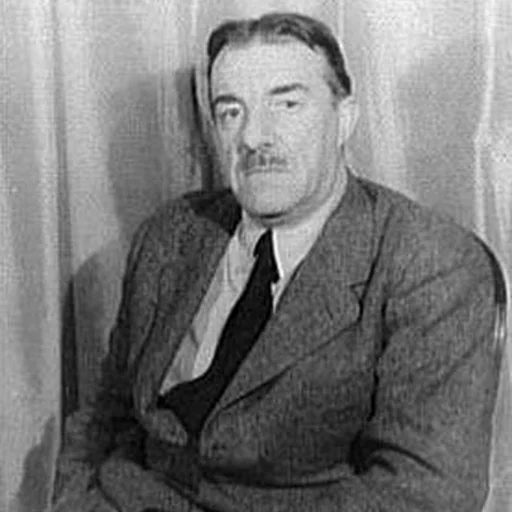
Joseph Fernand Henri Léger was a French painter, sculptor, and filmmaker. In his early works he created a personal form of cubism which he gradually modified into a more figurative, populist style. His boldly simplified…