Artwork
The Rape of Europe
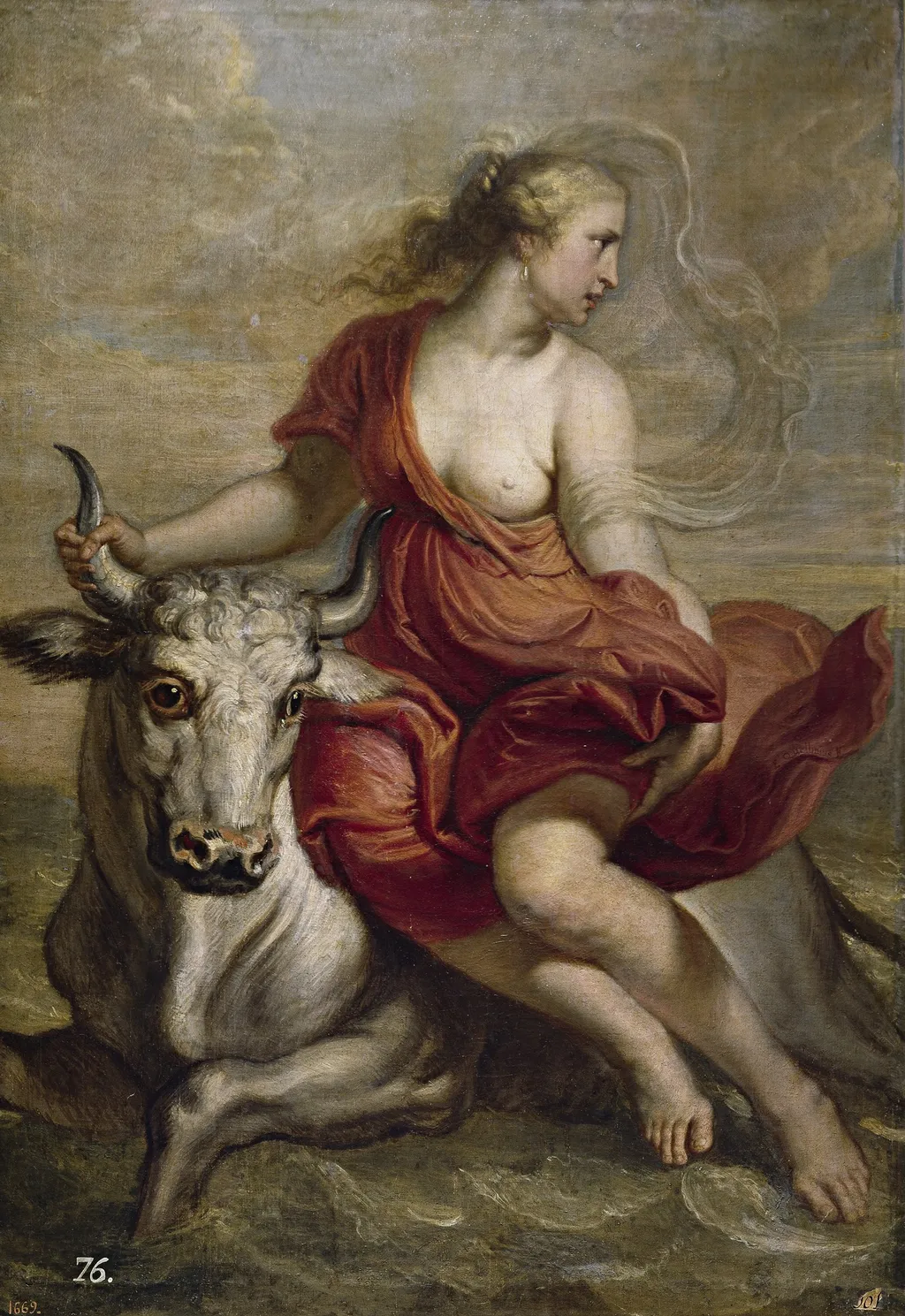
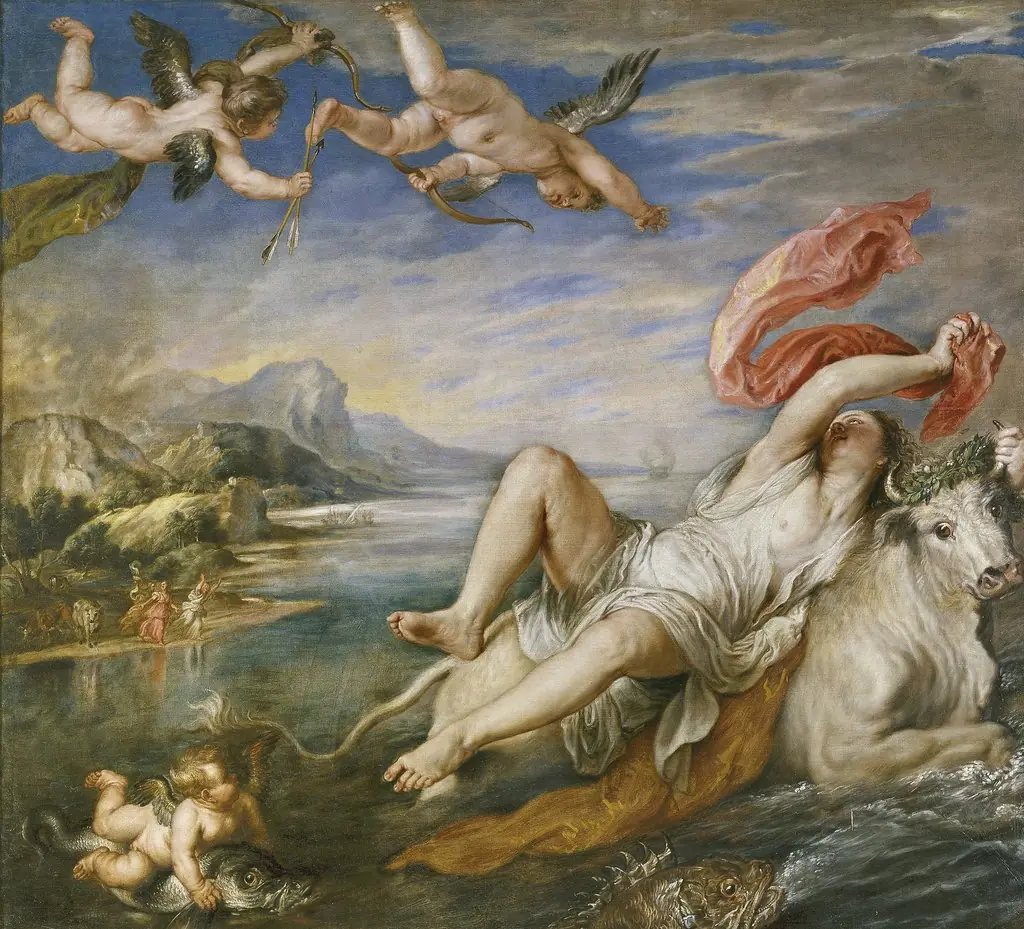
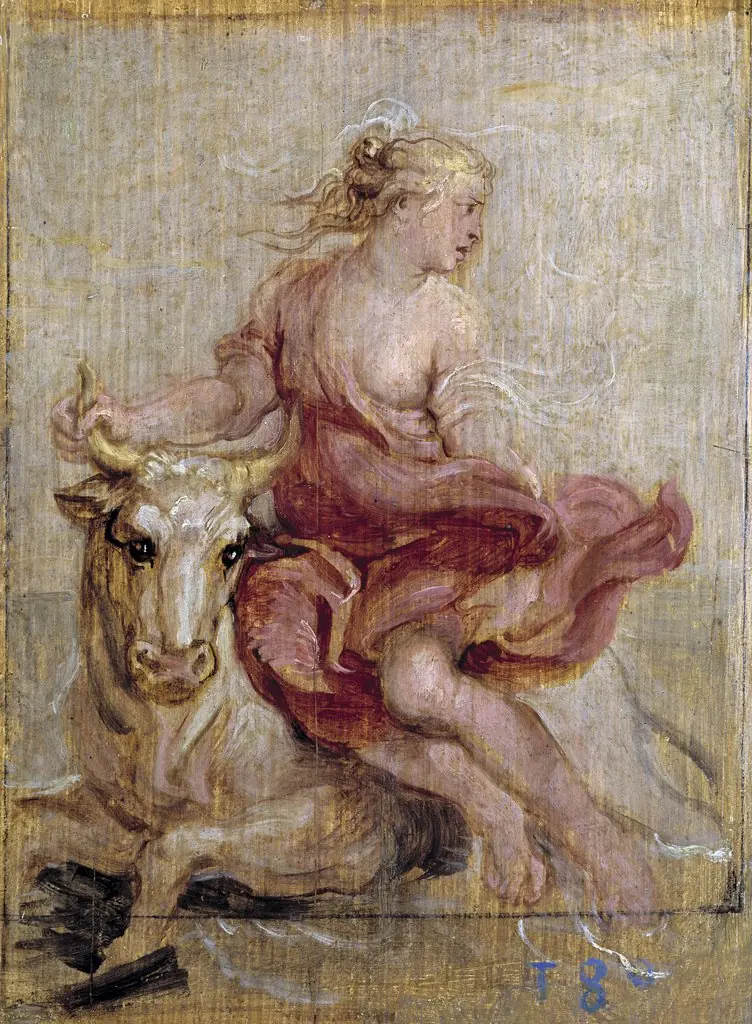
The Rape of Europe is an oil painting by the Flemish Baroque painting artist Peter Paul Rubens. It dates from 1635 and is held in the collection of the Museo del Prado.
About this work
Subject & Meaning
As a mythological painting, the subject centers on the main narrative of the rape of Europa, featuring the specific figures of Europa and the bull.
The work depicts the mythological abduction of Europa, illustrating the moment she is seized by Zeus in the form of a bull. As a mythological painting, the subject centers on the main narrative of the rape of Europa, featuring the specific figures of Europa and the bull. The composition draws upon the classical story of the abduction, presenting the event through the lens of 17th-century Baroque interpretation.
The imagery serves to visualize the ancient tale where the god transforms into an animal to carry the princess away, a theme consistent with the genre of mythological art.
Technique & Style
The Rape of Europe is executed in oil paint on a canvas support, a standard medium for large-scale mythological works of the period. The painting measures 126 cm in height and 87 cm in width. Stylistically, the work depicts the abduction of Europa by a bull, reflecting the mythological genre associated with its creators, Erasmus Quellinus II and Peter Paul Rubens.
The composition focuses on the narrative subject matter, utilizing the fluidity of oil paint to render the figures and the animal within the scene.
History & Provenance
The painting known as The Rape of Europe was created between 1635 and 1636. It is attributed to Erasmus Quellinus II, with Peter Paul Rubens also listed as a creator. The work was executed in oil on canvas and depicts the mythological abduction of Europa by a bull. It is currently held in the collection of the Museo del Prado in Madrid.
The work is part of the Museo del Prado collection, with inventory number P00968.
It has been displayed in the museum's galleries as part of the permanent collection, including exhibitions focused on Baroque masterpieces and mythological works.
The painting was created between 1635 and 1636, reflecting Rubens' mature style in mythological subjects.
Context
The painting known as The Rape of Europe, dated to 1635, is widely recognized as a collaborative work involving Peter Paul Rubens and Erasmus Quellinus II. Housed in the Museo del Prado, the canvas depicts the mythological abduction of Europa by a bull, a subject central to classical narrative painting. The work exemplifies the Baroque interest in dynamic movement and mythological storytelling, situating it within the broader context of Flemish art production in the mid-1630s.
Its attribution to both Rubens and Quellinus reflects the workshop practices of the period, where master artists often collaborated on large-scale mythological commissions.
Overview
The Rape of Europe is a 1635 oil painting by Peter Paul Rubens, exemplifying the Flemish Baroque style through its dramatic scene and vivid color palette.
Own this work as a print
Artist & collection
Artist
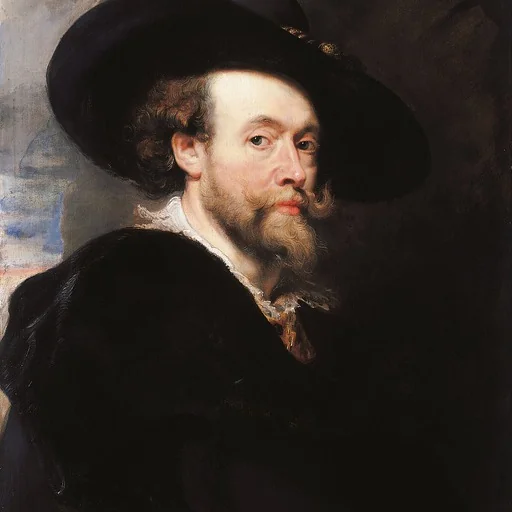
Sir Peter Paul Rubens ( ROO-bənz; Dutch:; 28 June 1577 – 30 May 1640) was a Flemish artist and diplomat.