Artwork
Return of the Prodigal Son
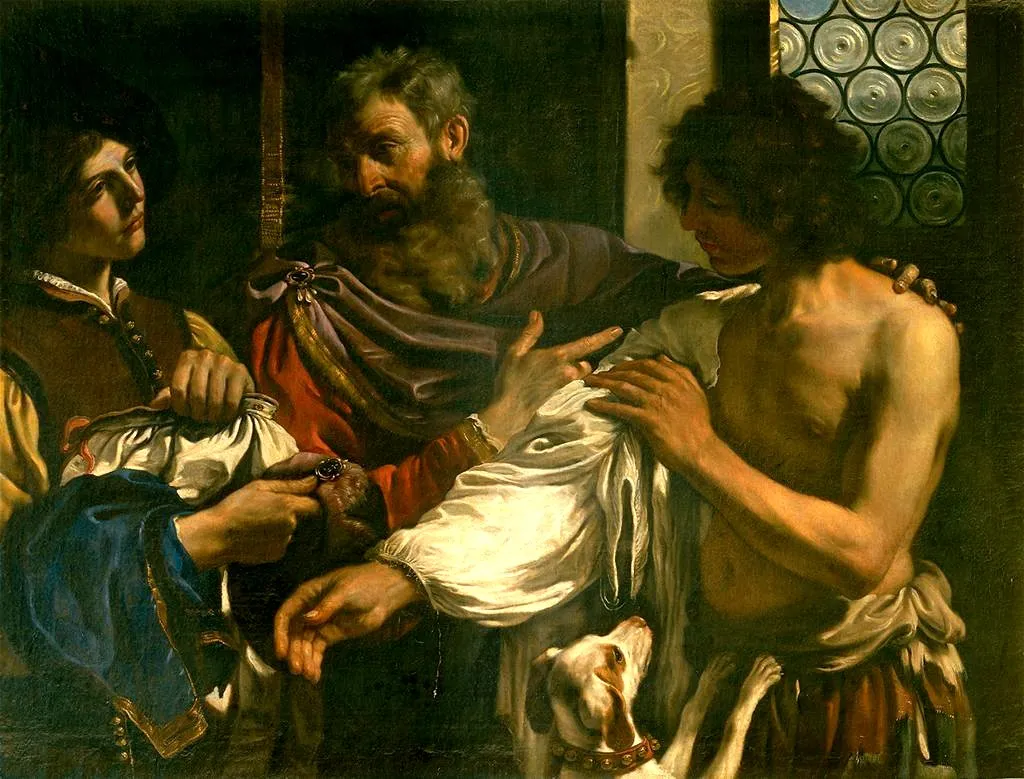
Return of the Prodigal Son is an unspecified painting by the Early Baroque Italian artist Guercino. It dates from 1627 and is held in the collection of the Galleria Borghese.
About this work
Overview
It resides in the Galleria Borghese in Rome and illustrates the biblical parable of the prodigal son’s return.
Painted in 1627 by Giovanni Francesco Barbieri, known as Guercino, this work belongs to his early Baroque phase, marked by emotional intensity and vivid realism. It resides in the Galleria Borghese in Rome and illustrates the biblical parable of the prodigal son’s return. The composition centers on a moment of reconciliation, rendered with theatrical lighting and tactile detail, reflecting the artist’s pre-classical style before his later shift toward restraint.
Subject & Meaning
The scene captures the father’s embrace of his wayward son, who returns humbled and destitute. The father’s gesture conveys forgiveness without words, while the son’s bare torso suggests vulnerability and penitence. A servant in rich robes holds a garment, perhaps preparing for restoration, and a dog at the lower edge adds a quiet note of domestic loyalty. The moment embodies mercy and redemption, central themes in the parable from Luke’s Gospel.
Technique & Style
Guercino employs strong chiaroscuro to isolate the figures against a shadowed interior, heightening emotional focus. Light falls sharply on the father’s hand and the son’s back, contrasting with the cool, dim background. Warm hues in the clothing, especially the servant’s red and purple, anchor the composition, while the dim room and distant window suggest spatial depth. The brushwork is loose and tactile, emphasizing texture in skin, fabric, and wood.
History & Provenance
Commissioned during Guercino’s early Roman period, the painting entered the Borghese collection shortly after its completion. It remained in the family’s possession through the centuries, documented in inventories from the 17th century onward. Unlike later works that reflect classical influence, this piece retains the raw energy of his formative years, aligning with the tastes of Cardinal Scipione Borghese, a noted patron of Caravaggisti.
Context
Created in the wake of Caravaggio’s death, the painting reflects the lingering influence of his dramatic lighting and naturalism. Guercino, though not a direct follower, absorbed these elements to convey spiritual narratives with visceral immediacy. In early 17th-century Rome, religious subjects were often rendered with heightened realism to engage viewers emotionally, a trend this work exemplifies within the broader Counter-Reformation visual culture.
Legacy
The painting stands as a key example of Guercino’s transitional style, bridging the emotional force of Caravaggio and the emerging classical tendencies of his later career. While less celebrated than his later works, it remains a significant study in Baroque narrative painting, illustrating how religious themes were rendered with psychological depth and physical presence during a pivotal moment in Italian art.
Artist & collection
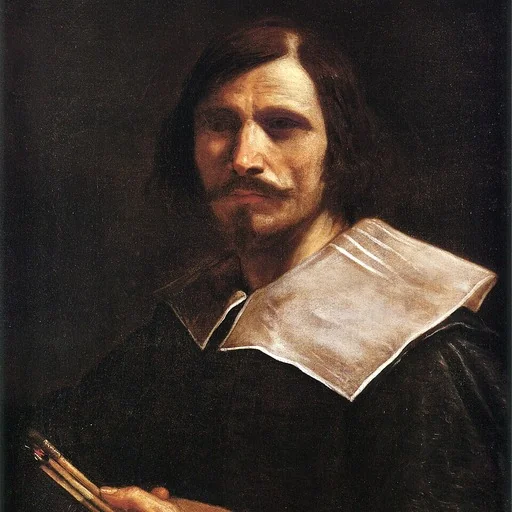
Artist
Giovanni Francesco Barbieri (8 February 1591 – 22 December 1666), better known as (il) Guercino (Italian pronunciation: ), was an Italian Baroque painter and draftsman from Cento in the Emilia region, who was active in Rome and Bologna.